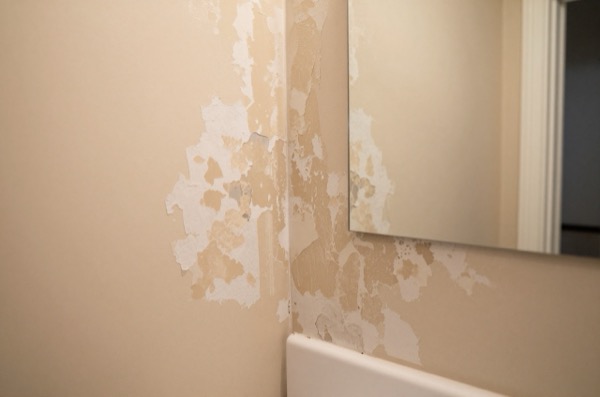
Black spots on bathroom ceilings, dark patches in bedroom corners, mould around window reveals, these are among the most commonly reported problems in UK housing, and they are almost always caused by condensation rather than rising damp or penetrating damp. Understanding which type of damp you are dealing with is the essential first step, because the fixes are completely different and the costs range from under £50 to several thousand pounds depending on what is actually wrong.
The Three Types of Damp: and How to Tell Them Apart
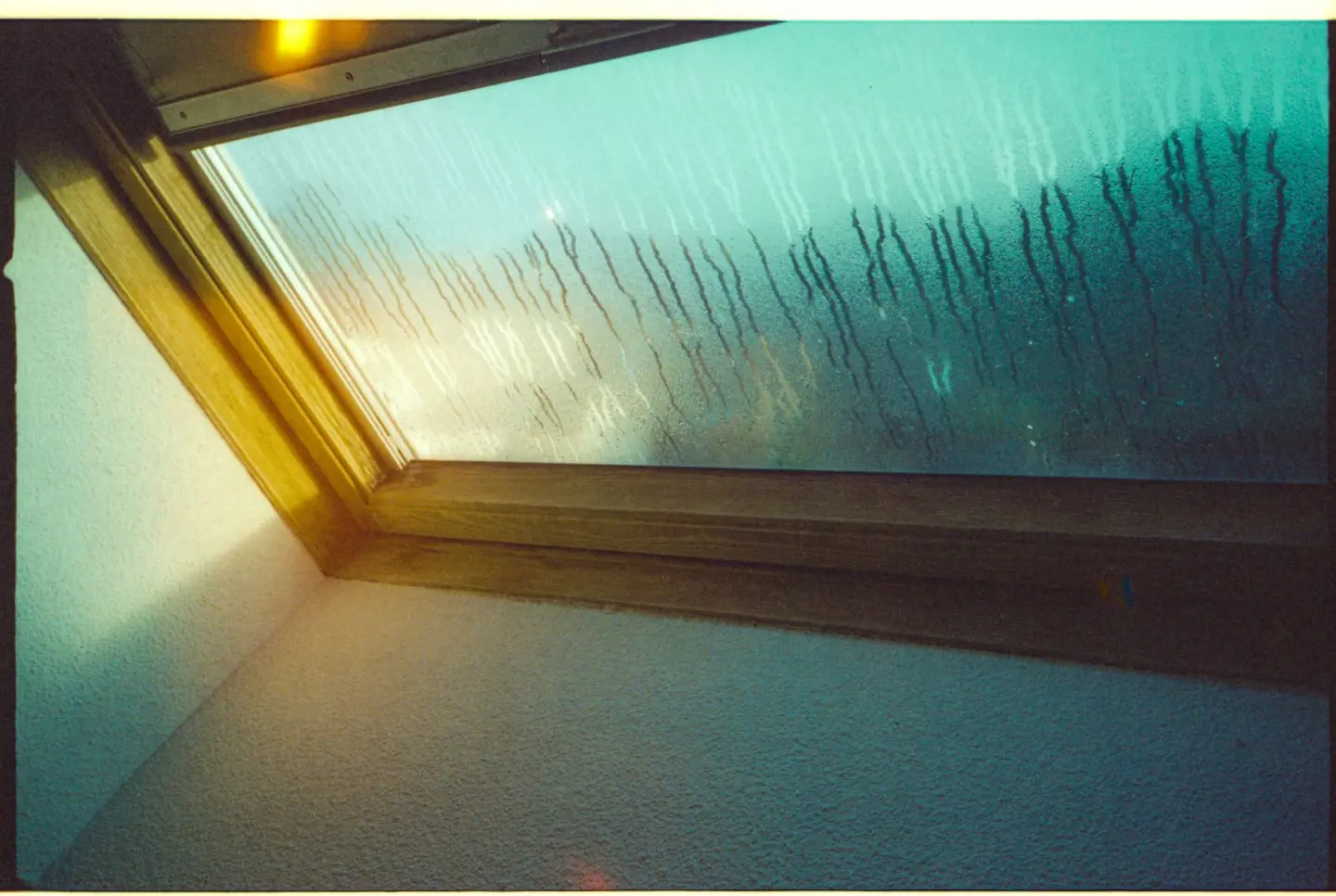
Surface condensation occurs when warm, moisture-laden indoor air contacts a cold surface and the water vapour turns to liquid. Condensation is the most common form of damp in UK homes, and the usual cause of the black mould seen in bathrooms, bedrooms and around windows.1 Condensation mould appears predictably: in corners where air circulation is poor, on exterior walls (especially north-facing), on cold bridges around window reveals, and on ceilings in bathrooms and kitchens.
Rising damp is ground moisture drawn up through masonry or a solid floor by capillary action. It is much less common than condensation and often misdiagnosed, and is usually found in older properties without a functional damp-proof course (DPC).1 Rising damp has a characteristic tide mark, a horizontal stain line on walls, typically up to about a metre above floor level, and is often accompanied by crystalline salt deposits (efflorescence) as ground salts are carried up with the moisture.
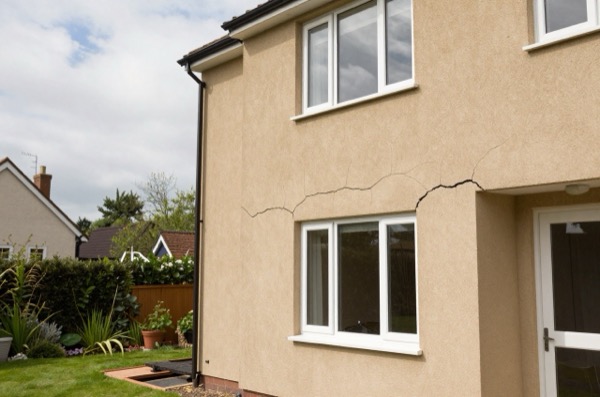
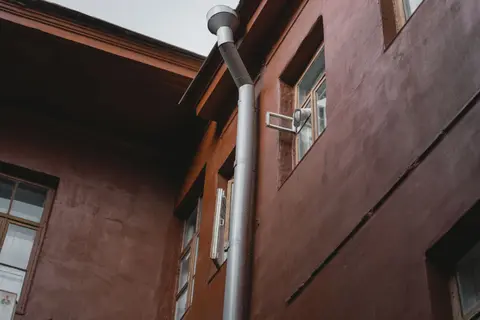
Penetrating damp enters from outside through defects: failed pointing, cracked render, blocked guttering, damaged flashings around chimneys or dormers, or around window frames.1 It appears as isolated wet patches that are typically worse after rain.
| Feature | Surface Condensation | Rising Damp | Penetrating Damp |
|---|---|---|---|
| Location | Corners, cold surfaces, north-facing walls | Base of walls, consistent height | Isolated patches, often near openings |
| Pattern | Diffuse, follows cold areas | Tide mark, horizontal | Irregular, rain-related |
| Salt deposits | No | Often yes | Sometimes |
| Gets worse after rain | No | No | Yes |
| Common misdiagnosis | - | Often misdiagnosed as condensation or vice versa | Confused with rising damp |
Diagnosing Condensation
If the black mould is in corners, on external walls, around window reveals, or on the ceiling above a shower or cooker, condensation is almost certainly the cause. You can confirm this with a simple test: tape a piece of polythene sheeting (about 300 mm × 300 mm) tightly over the affected area with waterproof tape around all edges. Leave it for 24–48 hours. If moisture appears on the room-side surface of the polythene, the moisture is coming from the indoor air (condensation). If moisture appears on the wall-side surface, it is coming through the wall (penetrating or rising damp).
Causes of Condensation in UK Homes
Modern living generates large quantities of water vapour. An average UK household puts about 12 litres of moisture a day into the air from cooking, bathing, laundry, breathing and cleaning, and more than 20 litres where clothes are dried indoors.2 In a well-sealed modern property without adequate ventilation, this moisture has nowhere to go except to condense on cold surfaces.
Key contributing factors:
- Inadequate extraction in kitchens and bathrooms, the two highest-moisture rooms
- Drying laundry indoors, which can add around 4.5 litres of moisture a day to an average house3
- Unventilated tumble dryers exhausting into the room
- Cold bridging, concrete lintels, window reveals and thermal bridges that stay cold while the surrounding wall warms up
- Reduced background ventilation, draught-proofing and new double-glazed windows that have eliminated old air infiltration pathways without providing controlled replacement ventilation
Fixes for Condensation Mould
The effective fix is always a combination of reducing moisture at source and increasing ventilation.1 Anti-mould paint is not a fix, it is a short-term suppressant.
Step 1: Remove existing mould safely
Do not dry-scrub mould. Mist the area lightly with water to suppress spores, then treat it with a mould spray containing bleach or a proprietary fungicidal wash, following the product’s instructions, and allow it to dry.4 Repeat if growth is heavy or comes back. Allow to dry fully, then treat with a fungicidal primer before redecorating. For large areas of mould, wear a respirator mask (FFP3) or get professional help: the respiratory effects of damp and mould can cause serious illness, particularly for people with asthma or other lung conditions.1
Step 2: Improve extraction ventilation
Bathrooms: Building Regulations Approved Document F sets a minimum extract rate for a bathroom of 15 l/s (litres per second) for an intermittent fan, or 8 l/s for a continuous one.5 If your bathroom fan is old, blocked or undersized, replacing it is the single highest-impact intervention. A decent fan costs £30–£80; installation by an electrician typically adds £80–£150. Humidistat-controlled fans (which run automatically when humidity rises) are usually more effective in practice than manual switch fans, because they do not depend on someone remembering to turn them on.
Kitchens: Approved Document F’s minimum intermittent extract rate is 30 l/s for a cooker hood extracting to the outside, or 60 l/s where there is no cooker hood or it does not extract to the outside.5 Ensure the cooker hood duct actually terminates outside, many UK kitchens have recirculating hoods that filter grease but return moisture to the room.
Step 3: Background ventilation
Trickle vents in window frames, small adjustable openings at the top of the frame, provide the background ventilation that prevents humid air from stagnating. If your double glazing does not have trickle vents (common in older installations), opening windows slightly in bedrooms and living rooms, especially overnight, will make a measurable difference. In a more substantial intervention, Positive Input Ventilation (PIV) units, a whole-house low-speed fan unit, usually mounted in the loft, supply a gentle flow of filtered outside air and can greatly reduce condensation in many UK homes. A PIV unit costs about £340–£440 to supply; fitted, expect roughly £450–£1,000 depending on the unit, the wiring and the loft access.
Step 4: Reduce moisture at source
- Use lids on pans when cooking6
- Ensure tumble dryers are externally vented, or use a condenser/heat pump dryer
- Dry laundry outdoors where possible, or in a ventilated utility room
- Run shower extractor fans for at least 15–20 minutes after the shower ends6
Step 5: Address cold bridges
Cold bridges, where structural elements penetrate the insulation layer, are hard and expensive to fix in an existing building. External wall insulation (EWI) is the most effective solution for solid-wall properties but costs £8,000–£20,000 for a typical semi-detached. Internally, plasterboard on dot-and-dab with insulated backing (thermal laminate boards) can warm interior wall surfaces and reduce condensation at a lower cost: typically £20–£45/m² for materials, plus decoration.
When to Investigate for Rising or Penetrating Damp
If the polythene test indicates moisture coming through the wall, or if you have the characteristic tide mark of rising damp, you need a proper independent survey. Be cautious: the damp-proofing industry in the UK has a long history of overselling chemical injection DPC work that is unnecessary or ineffective. Before commissioning any work:
- Get a survey from an independent surveyor (not one employed by a damp-proofing company)
- Ask for moisture readings taken with a calibrated moisture meter
- Consider having a structural engineer or chartered surveyor assess before a specialist damp company
Rising damp genuine remediation (chemical DPC injection plus re-plastering) typically costs £1,500–£4,000 for a two-storey semi-detached. Penetrating damp fixes are usually much cheaper and targeted: re-pointing, replacing a flashing, clearing a gutter or repairing render, typically £200–£1,500 depending on the defect.
Cost Summary
| Fix | Typical Cost |
|---|---|
| Fungicidal wash and repaint | £30–£80 DIY |
| Replacement bathroom extractor fan (supply + fit) | £110–£230 |
| Humidistat extractor fan (supply + fit) | £150–£300 |
| Positive Input Ventilation unit (supply + fit) | £450–£1,000 |
| Insulated plasterboard on cold wall (per m²) | £20–£45 materials7 |
| External wall insulation (full house) | £8,000–£20,000 |
| Chemical DPC injection (rising damp) | £1,500–£4,000 |
| Penetrating damp repair (pointing, flashing, render) | £200–£1,500 |
The cited prices in this table were published in 2023 and brought to 2026. What that means.
For the vast majority of UK homeowners with black spots in bathrooms, bedrooms or corners, the answer is an upgraded extractor fan and better habits around moisture, not a damp-proofing contractor. Spend the diagnostic time first; the money can wait.
The rules in this note are those that apply in England. Scotland, Wales and Northern Ireland have their own building standards and permitted development rights.
References (7)
Figures in this note were checked against the sources below on 30 September 2026. Superscript numbers in the text point to them. Every source the site cites, by topic.
- 1technicalvery strongDepartment for Levelling Up, Housing and Communities and UK Health Security Agency (gov.uk), guidance.RN-D2PRMRThe government's own classification of damp types and the single best citation for the point that damp is a building fault, not a housekeeping failure. Damp is defined as the build up of moisture in a property, and four types are named: condensation, where moisture generated inside the home cools and condenses onto colder parts; penetrating damp, where water gets in from outside due to defects; rising damp, where moisture from the ground rises up through parts of the building; and traumatic damp, caused by leaking waste and heating pipes or overflowing baths and sinks. The health effects predominantly affect the airways and lungs and include cough, wheeze, shortness of breath, airway infections including aspergillosis and worsening of asthma, and can cause serious illness and in the most severe cases death. Children, older people, people with pre-existing health conditions or weakened immune systems, pregnant women and people with mental health conditions are most at risk. The guidance states plainly that it is totally unreasonable to blame damp and mould in the home on lifestyle choices. It was written in response to the coroner's report on the death of two-year-old Awaab Ishak in December 2020 from a severe respiratory infection caused by prolonged exposure to damp and mould in his home.
- 2technicalstrong locallySouth Kesteven District Council, guidance.RN-J3C4HIA council's damp and mould advice giving about 12 litres of moisture a day for an average household, and over 20 litres a day where clothes are dried indoors.
- 3technicalstrong locallyAshfield District Council, guidance.RN-UPMQ50A council's table of daily water vapour sources in an average house, giving about 4.5 litres a day from drying laundry out of roughly 15.7 litres in total.
- 4technicalfairCentre for Sustainable Energy, guidance.RN-M6GPRWAn energy charity's advice sheet on condensation and mould, setting out how to treat visible mould with a bleach-based spray and repeat the treatment.
- 5technicalvery strongMinistry of Housing, Communities and Local Government.RN-QD1SFFTable 1.1 sets minimum intermittent extract rates: kitchen with a cooker hood extracting outside 30 l/s, kitchen without one 60 l/s, utility room 30 l/s, bathroom 15 l/s, sanitary accommodation 6 l/s. Extract terminals and fans other than cooker hoods should be as high as practicable and no more than 400mm below the ceiling; a cooker hood should sit between 650mm and 750mm above the hob if the manufacturer gives no figure. Table 1.7 requires background ventilators of at least 8000mm2 equivalent area in habitable rooms and kitchens for a dwelling, 10,000mm2 for a single-storey dwelling. Background ventilators should be at least 1700mm above floor level and at least 500mm from a fan in the same room. On replacement windows, paragraph 3.14 says new windows must carry background ventilators no smaller than the originals, and paragraph 3.15 gives the fallback minimums where the old size is unknown: 8000mm2 habitable rooms, 8000mm2 kitchen, 4000mm2 bathroom. Paragraph 3.32 confirms that replacing an extractor fan or cooker hood on existing cabling is not notifiable.
- 6technicalfairEnergy Saving Trust, guidance.RN-3G2Z0LCondensation control by the numbers. A household typically produces up to 100 litres of moisture a week, which builds on surfaces or stays in the air unless ventilated out. Run a bathroom extractor for at least 15 minutes after a shower or bath and a cooker extractor for at least 15 minutes after cooking, or where there is no fan open a window for the same period. Leave a gap of at least 10mm under internal doors, measured from the top of the floor covering to the bottom of the closed door, so air can move between rooms. Distinguishes condensation from rising and penetrating damp and sets out the order of works.
- 7coststrong locallyWelwyn Hatfield Borough Council, a government page.RN-CVCUIVA price, true at 2023-06, brought forward on the Construction Output Price Index. Appendix B of a council's repairs and maintenance policy, the rechargeable repairs price list, with the useful note that prices were correct at February 2025 and are uplifted by September CPI each year. A dated and openly indexed schedule, which is better documented than most. Still a landlord recharge including administration, so it reads above a bare trade rate.
-
Understanding and addressing the health risks of damp and mould in the home, UK Health Security Agency and Ministry of Housing, Communities and Local Government, accessed 30 September 2026. gov.uk
-
How can I reduce damp and mould?, South Kesteven District Council, accessed 30 September 2026. southkesteven.gov.uk
-
Damp, mould and condensation in the home, Ashfield District Council, accessed 30 September 2026. ashfield.gov.uk
-
Condensation, damp and mould, Centre for Sustainable Energy, accessed 30 September 2026. cse.org.uk
-
Approved Document F: Ventilation, Volume 1: Dwellings, 2021 edition, HM Government (GOV.UK), accessed 7 September 2026. assets.publishing.service.gov.uk
-
How to get rid of damp, Energy Saving Trust, accessed 30 September 2026. energysavingtrust.org.uk
-
Rechargeable repairs price list 2025, Welwyn Hatfield Borough Council, accessed 30 September 2026. Priced at 2023-06; brought to 2026 on the Construction Output Price Index, housing repair and maintenance (Great Britain), published by Office for National Statistics, a factor of 1.0358. welhat.gov.uk