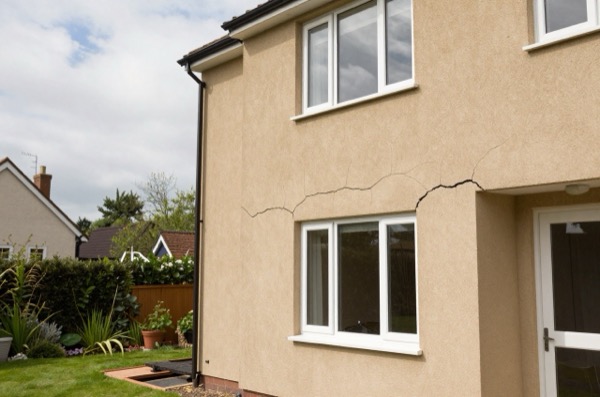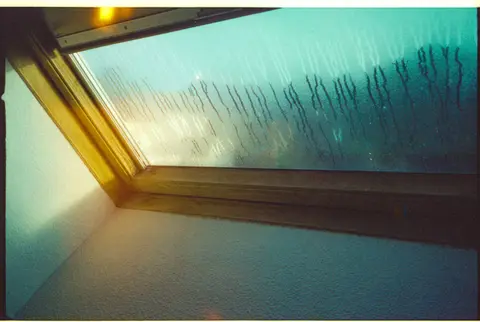
Blocked or leaking gutters are a common cause of damp in UK homes.1 Water overflowing from a blocked gutter saturates the wall below, and a poorly sealed joint can drip onto a fascia board for years before anyone notices. The good news is that most gutter problems are straightforward to diagnose and cheap to fix, often by a competent DIYer in an afternoon.
This guide covers the four main failure modes, how to spot them, the repair options for each, and when full replacement makes more sense than patching.
Common Causes of Gutter Problems
Blockages are the most frequent issue. Leaves, moss, and debris build up in the gutter channel and block the downpipe entry, causing water to back up and overflow. Gutters typically need clearing at least once a year, after autumn leaf fall, and more often if you have overhanging trees.2
Sagging happens when gutter brackets fail, rust, or pull away from a rotten fascia. A sagging section holds standing water and pulls the adjacent joints apart over time.
Leaking joints develop when the rubber seal inside a push-fit uPVC joint degrades with age or when a bolted cast iron joint loses its putty seal. Dripping at a joint during rain is the telltale sign.
Cracks and splits in uPVC guttering are caused by UV degradation, frost damage, or impact. uPVC becomes brittle over time; a heavy branch or a carelessly placed ladder can crack a section. Cast iron can crack through corrosion or frost if standing water is not cleared.
How to Diagnose
You do not always need to be on a ladder to find the problem:
- Watermarks on the wall, a vertical brown stain on render or brickwork below the gutter line suggests overflow or a dripping joint.
- Damp patches on the internal wall, persistent damp at first-floor level that doesn’t correlate with condensation often traces back to gutter overflow saturating the cavity or external leaf.
- Green or black staining on the fascia, algae growth on timber fascias below the gutter indicates persistent dripping, usually from a joint or crack.
- Overflow during rain, watch the gutters during moderate rain. If water pours over the edge rather than flowing to the downpipe, there is a blockage or the gradient is wrong.2
- Downpipe check, pour a bucket of water into the gutter at the highest point and watch whether it reaches the downpipe outlet within a few seconds. Slow travel means blocked gutter or insufficient fall.2
DIY Cleaning: Step-by-Step
Cleaning gutters is safe for most householders with the right ladder and basic precautions. Use a ladder made to EN 131, the current standard for portable ladders (check the label on the stile).3 Set it at a 75° angle: 1 unit out for every 4 units up.4
- Set up the ladder safely against the wall, not against the gutter itself (which can be damaged). Use a standoff bracket to keep the ladder away from the wall and guttering.
- Scoop out debris using a gutter scoop or an old plastic trowel. Work from the end furthest from the downpipe toward it, not away from it. Bag the debris as you go rather than letting it fall.
- Flush with water using a hosepipe or garden sprayer. Check the flow is reaching the downpipe outlet and moving freely. Standing water after flushing indicates a low spot (sagging) or blocked downpipe.
- Clear the downpipe by feeding a drain rod gently from the top or by flushing from a higher point. A blocked downpipe often clears easily; if it doesn’t, the blockage may be at the shoe (the bottom bend) or in the underground drain, try clearing from the bottom first.
- Check joints and brackets while you’re up there. Look for gaps at push-fit joints, loose or missing brackets, and any visible cracks in the gutter channel.
Safety note: never overreach from a ladder.4 Move the ladder along rather than stretching sideways. On a two-storey house, if you are not confident working at height, it is worth paying a professional.
Repair Options
| Problem | DIY Repair | Cost (Materials) |
|---|---|---|
| Leaking push-fit joint | Replace the rubber seal or apply gutter sealant to the joint | £3–£10 per joint |
| Leaking cast iron joint | Rake out old putty, apply new non-setting gutter mastic | £5–£15 |
| Sagging section | Replace the bracket (fascia-fixed or rafter-fixed) | £2–£6 per bracket |
| Small crack in uPVC | Clean and dry, apply gutter repair tape or sealant | £5–£15 |
| Large crack or split section | Replace the affected section (sections slot together) | £10–£30 per metre |
| Blocked downpipe | Drain rod from top or bottom | £0 (DIY) or £40–£80 (professional) |
Gutter sealant (sold under various names, gutter seal, gutter mastic, lap joint sealant) is the go-to product for minor leaks. Apply to a clean, dry surface. Most need time to cure before they are fully waterproof, so check the curing time on the cartridge before relying on a repair in rain.
Professional Cleaning and Repair Costs
| Job | Typical Cost (UK, 2026) |
|---|---|
| Gutter clean, terraced or semi-detached (1 storey) | £60–£100 |
| Gutter clean, semi-detached (2 storey) | £80–£150 |
| Gutter clean, detached house | £100–£180 |
| Gutter repair (joint, bracket, short section) | £80–£200 incl. call-out |
| Full guttering replacement (semi-detached) | £600–£1,500 |
| Full guttering replacement (detached) | £900–£2,500+ |
Some companies now use vacuum gutter cleaning from the ground using a telescopic pole with a camera head, no ladder required, and common for two-storey work. Prices are usually similar to ladder-based cleaning.
uPVC vs Cast Iron vs Aluminium
| uPVC | Cast Iron | Aluminium | |
|---|---|---|---|
| Cost (supply, gutter length only) | From about £3/m | From about £31/m | From about £31/m |
| Weight | Very light | Heavy | Light |
| Maintenance | Low | High (paint regularly) | Low |
| Lifespan (rough guide) | 20–30 years | 50–100+ years | 30–50 years |
| Appearance | Functional, plain | Traditional, heritage | Modern or heritage profiles |
| Planning (conservation areas) | Check, may need approval | Generally acceptable | Depends on profile |
| Repairability | Easy (clip sections) | Moderate (putty joints) | Easy |
As a guide to supply prices in September 2026, a 4m length of FloPlast 112mm uPVC half-round gutter cost £10.50 at Wickes, about £2.60 per metre before brackets and fittings.5 A 1.83m length of primed 115mm cast iron half-round gutter cost £47.37 plus VAT from Rainclear Systems, about £31 per metre with VAT.6 A 3m length of 115mm aluminium half-round gutter in matt black cost £78.63 plus VAT from the same supplier, also about £31 per metre with VAT.78 (2024 price, brought to 2026)
uPVC is the default choice for most modern UK houses and is the cheapest to buy and install. It does not rust, requires no painting, and sections are easily replaced. However, it degrades in UV over decades, and Historic England does not generally accept wholesale replacement in uPVC on listed and other designated buildings.9
Cast iron is the original material and still the best choice for Victorian and Edwardian properties, particularly in conservation areas or if you want to maintain the character of the building. It must be repainted every few years to prevent rust; with that maintenance, cast iron can last far longer than modern replacement materials.9 On a listed building, Historic England expects any new sections to match the original profile and material.9
Aluminium guttering, particularly seamless or half-round aluminium, sits between the two: lighter than cast iron, longer-lived than uPVC, and available in profiles that can mimic cast iron. It does not rust and can be painted. Historic England accepts powder-coated or heavy cast aluminium on some historic buildings where like-for-like replacement is not possible.9
When to Replace Rather Than Repair
Repair is almost always cheaper than replacement, but there are situations where full replacement is the better call:
- uPVC guttering that is visibly degraded (chalky, brittle, multiple cracks), patching will fail quickly
- Cast iron with significant rust through the metal wall rather than surface rust
- Fascia boards that have rotted, which require replacement before new guttering can be fixed
- Multiple failed joints across an entire run, at this point, the rubber seals have all degraded and replacement is more economical than re-sealing each joint
- Guttering that does not meet current capacity for heavy rainfall (common in older properties with undersized half-round or ogee profiles, consider uprating to 115mm or 125mm profiles)
Replacing guttering like for like does not normally need a Building Regulations application. Nor does it need planning permission: works of maintenance that do not materially affect the external appearance of a building are not development.10 Changing the profile or material is different on a listed building, where it may need listed building consent, and in a conservation area covered by an Article 4 direction; check with your local authority before ordering materials.9
References (10)
Figures in this note were checked against the sources below on 30 September 2026. Superscript numbers in the text point to them. Every source the site cites, by topic.
- 1technicalvery strongHistoric England, guidance.RN-PI071KHistoric England's technical advice on looking after gutters and downpipes. It explains that rainwater systems need regular inspection and maintenance to protect a building from water penetration.
- 2technicalvery strongHistoric England, guidance.RN-V263DPHistoric England's home maintenance checklist. It advises clearing gutters, hoppers and pipes after leaf fall, at least every autumn and preferably more often.
- 3technicalvery strongHealth and Safety Executive, guidance.RN-RQ6ROGHSE's ladder guidance, product standards page. It names EN 131 as the standard for portable steps and ladders, the older BS 2037 and BS 1129 having been withdrawn.
- 4technicalvery strongHealth and Safety Executive, guidance.RN-21AA4HThe HSE rules a DIY note should quote whenever a job involves a ladder, in HSE's own words. For a leaning ladder, use the 1 in 4 rule: the ladder should be one space or unit of measurement out for every four spaces or units up, which is a 75 degree angle. Do not work off the top three rungs, and make sure the ladder extends at least 1 metre or three rungs above the point where you are working. Maintain three points of contact when climbing and wherever possible at the work position. Secure the ladder, for example by tying it, to prevent it slipping outwards or sideways. Only carry light materials and tools. For stepladders, do not stand and work on the top three steps, including a step forming the very top of the stepladder, unless there is a suitable handhold, and maintain three points of contact at the working position, meaning two feet and one hand. HSE frames ladders as suitable for low-risk, short-duration tasks only, which is the test to apply before recommending one for a whole-roof or whole-wall job.
- 5costsupplier figureWickes.RN-8IAM2CA price, true at 2026-09. Wickes product page for a 4 m length of FloPlast 112 mm half-round uPVC gutter. It lists the retail price of £10.50, which Wickes shows as £2.63 per metre.
- 6costsupplier figureRainclear Systems.RN-QZW9RXA price, true at 2026-09. Rainclear Systems (an agent of Alumasc) product page for a primed cast iron half-round gutter length. It lists £47.37; the site states all prices exclude VAT, so about £31 per metre with VAT.
- 7costsupplier figureRainclear Systems.RN-353D21A price, true at 2026-09. Rainclear Systems product page for a 3 m aluminium half-round gutter length. It lists £78.63; the site states prices exclude VAT, so about £31 per metre with VAT.
- 8costvery strongValuation Office Agency, a government page.RN-RSLGJ5A price, true at 2024-04, brought forward on the Construction Output Price Index. The Valuation Office Agency's Rating Cost Guide 2026: estimated replacement costs per square metre for building types, used by the VOA for contractor's basis rating valuations. Each code gives a construction description, the unit of measurement and an ERC at a UK mean location factor of 1.00. It is official, free and unusually comprehensive, and it is a replacement cost for rating rather than a market tender price, which is why the guidance notes matter as much as the table.
- 9technicalvery strongHistoric England, guidance.RN-FE0I2HHistoric England's advice on replacing and upgrading rainwater goods on historic buildings. It says wholesale replacement in PVCu is not generally acceptable on a designated building.
- 10technicalvery strongThe National Archives (legislation.gov.uk), legislation.RN-M6VJS2Section 55(1) defines development as the carrying out of building, engineering, mining or other operations in, on, over or under land, or the making of any material change in the use of any buildings or other land. Section 55(2)(a) excludes works to a building which affect only the interior of the building or which do not materially affect the external appearance of the building, which is why internal renovation does not need planning permission.
-
Inspection, Maintenance and Repair of Rainwater Systems, Historic England, accessed 30 September 2026. historicengland.org.uk
-
Maintenance Checklist, Historic England, accessed 30 September 2026. historicengland.org.uk
-
Safe use of ladders and stepladders: Product standards, Health and Safety Executive, accessed 30 September 2026. hse.gov.uk
-
Safe use of ladders and stepladders: Types of ladder and using them safely, Health and Safety Executive, accessed 30 September 2026. hse.gov.uk
-
FloPlast 112mm Black Half Round Gutter - 4m, Wickes, accessed 30 September 2026. Priced at 2026-09 and left there. wickes.co.uk
-
115mm (4.5”) Half Round Cast Iron Gutter 1.83m Length - Primed, Rainclear Systems, accessed 30 September 2026. Priced at 2026-09 and left there. rainclear.co.uk
-
115mm (4.5”) x 3m SnapIT Aluminium Half Round Gutter - RAL 9005M Matt Black, Rainclear Systems, accessed 30 September 2026. Priced at 2026-09 and left there. rainclear.co.uk
-
Rating Cost Guide 2026, code 30F120, Valuation Office Agency, accessed 30 September 2026. Priced at 2024-04; brought to 2026 on the Construction Output Price Index, housing repair and maintenance (Great Britain), published by Office for National Statistics, a factor of 1.0239. assets.publishing.service.gov.uk
-
Upgrades or Alterations to Rainwater Goods, Historic England, accessed 30 September 2026. historicengland.org.uk
-
Town and Country Planning Act 1990, section 55: Meaning of development, The National Archives, accessed 30 September 2026. legislation.gov.uk