Cracks in walls are one of the most common sources of anxiety for homeowners, yet the vast majority are entirely harmless. Understanding what you are looking at, crack width, direction, location and whether it is active or dormant, is the key to deciding whether to get the filler out yourself or reach for the phone to call a structural engineer.
The yardstick most UK surveyors and insurers use comes from BRE Digest 251, which groups cracks up to 5 mm wide as aesthetic damage that needs only redecoration.1 Cracks wider than 5 mm, cracks that are still widening, or any crack where the two sides have moved out of line need professional assessment.1
Types of Wall Crack and What They Mean
Not all cracks behave the same way, and their pattern tells you a great deal about the cause.
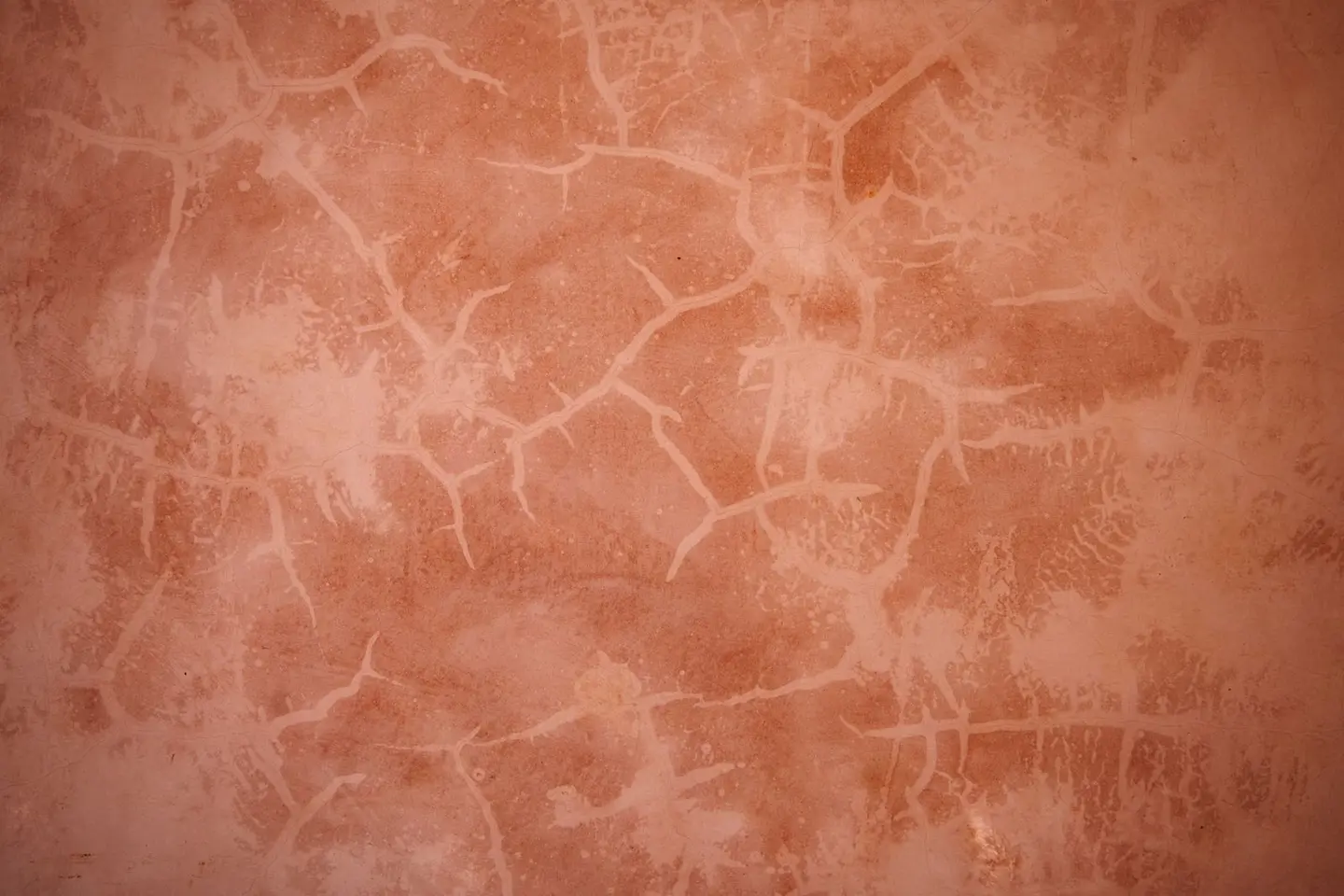
Hairline and shrinkage cracks are by far the most common. They appear in plaster, render, and drylining as the building dries out or as seasonal moisture changes cause slight thermal movement. They have no structural significance. In new homes, NHBC notes that shrinkage cracks appear as mortar, plaster and concrete dry out, and are usually a constant width of less than 2 mm.2
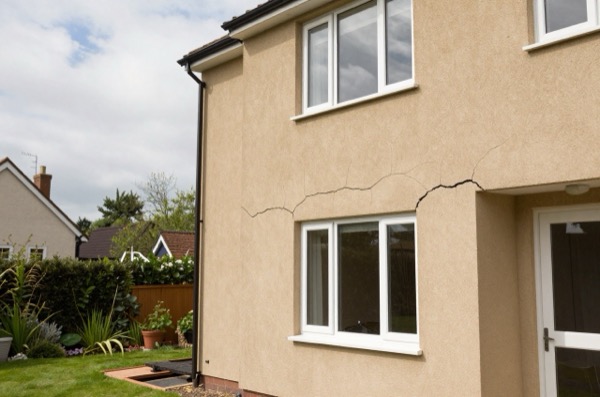
Diagonal cracks running at roughly 45° from the corners of windows and door frames are the next most frequent type. Openings concentrate stress, so a small diagonal crack here often comes from drying shrinkage, thermal movement or slight deflection of the lintel; NHBC notes that thermal movement cracks are commonly found around a concrete or steel lintel.2 If the crack is less than 1 mm and has been stable for over a year, it is generally monitored rather than acted upon. A growing crack, or one with step displacement, warrants investigation.
Stair-step cracks following the mortar joints in brickwork are a classic sign of differential movement, one part of the foundation moving relative to another. Caused most often by subsidence, heave, or localised foundation failure, these should always be professionally assessed if wider than 2 mm.
Vertical cracks through brickwork or blockwork are often thermal or moisture movement, particularly in a long wall without movement joints, or, in older properties, the separation of a chimney breast, bay or other attached structure. NHBC notes that thermal movement cracks in walls are usually vertical and a constant width.2
Horizontal cracks in a wall need a closer look. In a cavity wall, horizontal cracks along the mortar joints are often the first sign of corroding wall ties.3 At or below damp-proof course level, they can also indicate lateral ground pressure or frost-damaged brickwork in older properties. Horizontal cracks in a basement or retaining wall may point to significant structural stress.
Crack Classification Table
The Building Research Establishment (BRE) Digest 251 provides a widely used classification system.4 The table below summarises its six categories:
| BRE Category | Crack Width | Description | Typical Action |
|---|---|---|---|
| 0, Negligible | < 0.1 mm | Hairline, visible only on close inspection | Redecorate |
| 1, Very slight | 0.1–1 mm | Fine cracks, no external weathering risk | Fill and redecorate |
| 2, Slight | 1–5 mm | Cracks easily filled; may recur | Fill; monitor if recurring |
| 3, Moderate | 5–15 mm (or several > 3 mm) | Requires some opening up; weatherproofing affected | Structural engineer assessment |
| 4, Severe | 15–25 mm | Structural repair needed; brickwork distorted | Structural engineer; extensive repair |
| 5, Very severe | > 25 mm | Major rebuilding likely | Structural engineer; urgent |
In BRE’s own summary, categories 0 to 2 are aesthetic damage, categories 3 and 4 affect weather-tightness and the operation of doors and windows, and category 5 affects stability and is likely to need structural intervention.1
Common Causes of Wall Cracks
Settlement is downward movement caused by the weight of the building compressing the soil beneath it, and it happens mainly in the first years after construction.5 It is usually slight and fairly uniform, producing mostly fine cracks at stress concentrations.
Subsidence is when the ground beneath a building sinks, pulling the foundations down with it, and it often affects one part of the building more than another.5 Clay shrinkage, often driven by tree roots drawing moisture out of the soil in dry spells, is one of the most common causes of subsidence.5 The British Geological Survey describes clay shrink-swell as the most damaging geohazard in Britain today.6 Other causes include leaking drains, mine workings, and inadequate foundations in sandy or made-up ground.
Thermal movement affects materials differently. Brick, concrete, and timber all expand and contract at different rates. Long, unbroken external walls without movement joints will crack at their weakest point, typically a narrow pier between windows.
Lintel failure occurs when the steel or concrete beam over a door or window corrodes, deflects, or was undersized from the outset. Corroding steel expands as it rusts and can force the surrounding concrete or masonry apart.
Damp and frost action cause localised spalling and cracking, particularly in older solid-wall properties where soft brick or lime mortar absorbs moisture and then expands on freezing.
How to Tell If a Crack Is Active
Monitoring is simple and cheap. Stick a small plaster or polyfilla tell-tale across the crack and mark the date. Check it monthly through summer and winter. If it breaks or the crack dimension changes measurably (more than 0.5 mm over 12 months), the crack is active and professional advice is warranted.
You can also photograph the crack next to a ruler at regular intervals. A crack that opens during dry summer months and closes again in wet weather is typical of shrinkable clay, which moves with the weather, especially near large trees.6
Costs and When to Call a Professional
| Action | Typical Cost (2026) |
|---|---|
| DIY filler (Category 0–1 cracks) | £5–£25 materials |
| Plasterer to fill and skim (minor cracks) | £100–£300 per room |
| Structural engineer crack assessment | £300–£600 |
| Crack monitoring report (with telltales) | £150–£350 |
| Underpinning per linear metre (if required) | £1,000–£2,000 |
Call a structural engineer, not a builder, if:
- Any crack is wider than 5 mm
- There is displacement (the two sides of the crack are at different levels or depths)
- Cracks are growing rapidly (more than 1 mm over a few weeks)
- You see stair-step cracks in brickwork and the ground nearby has trees or has recently had large trees removed
- Doors or windows have become difficult to open or close alongside new cracking
- You are buying or selling the property and want a professional opinion for the conveyancing process
Crack Repair Methods
For harmless cosmetic cracks in plaster, the standard approach is to open the crack slightly with a scraper or oscillating tool, brush out loose material, apply a flexible filler (an acrylic or fine surface filler rather than rigid Polyfilla for cracks that may move slightly), let it dry fully, and sand before redecorating. Rigid fillers applied to active cracks will simply crack again.
For hairline cracks in external render, a brush coat of exterior masonry paint often suffices, though flexible crack filler designed for render performs better.
For structural repairs, repointing, stitching with stainless steel helical bars, or lintel replacement, a competent builder or specialist masonry contractor is appropriate. Underpinning requires a structural engineer’s specification and an experienced groundworks contractor.
Homeowners should bear in mind that most home insurance policies cover subsidence, heave and landslip, but check your policy wording for exclusions such as settlement.5 If a claim is possible, document cracks thoroughly before any repair and notify your insurer before carrying out work.
References (6)
Figures in this note were checked against the sources below on 30 September 2026. Superscript numbers in the text point to them. Every source the site cites, by topic.
- 1technicalstrongBRE (Building Research Establishment), guidance.RN-RIEVFHThe free BRE article that explains the crack category system a surveyor will actually use, published 15 April 2014 by Rupert Pool. It records that BRE assessed 130 properties that had suffered subsidence in order to help building surveyors identify when ground movement had occurred and when structural intervention was necessary, and that the study produced the six crack categories published in BRE Digest 251, linking crack width and number to the appropriate repair. The working interpretation it gives is the citable part: categories 0, 1 and 2, with crack widths up to 5mm, are aesthetic issues needing only redecoration; categories 3 and 4 are serviceability issues affecting the weather-tightness of the building and the operation of doors and windows; and category 5 is a stability issue likely to require structural intervention. It is explicit that this is a simplification, that other factors including whether crack widths are increasing over time affect the classification, that Digest 251 itself should be consulted for any assessment, and that a building professional should be consulted where damage is significant. It also notes that subsidence insurance claims have historically risen after periods of very dry weather.
- 2technicalstrongNHBC, guidance.RN-6ONV2ONHBC guidance for owners of new homes. It explains that mortar, plaster and concrete shrink as they dry, causing minor cracks that are usually of constant width and under 2 mm.
- 3technicalgoodProperty Care Association, guidance.RN-NV7WQXThe PCA's homeowner guidance on cavity wall ties, confirming that earlier ties were usually mild steel and corrode and expand when damp.
- 4technicalstrongBRE Electronic Publications, guidance.RN-BHTZZ6The primary document behind every crack category a surveyor quotes, and the reference a note should name rather than repeating the categories second hand. Digest 251 was written by R Driscoll, published by BRE with a publication date of 01 January 1995 for the revised edition, ISBN 1860810454, and runs to 8 pages. Its description states that it discusses the assessment and classification of visible damage resulting from structural distortion, and that it includes a table classifying cracks from category 0, hairline cracks of less than about 0.1mm width, to category 5, cracks usually greater than 25mm width. Its indexed keywords are cracks, distortion, bulge, foundation movement and subsidence. The store page also notes that the two photographs of wall cracking scanned poorly into the PDF and may need contrast adjustment. Those two anchor figures, 0.1mm at category 0 and 25mm at category 5, are the ones a cracks note can cite with confidence.
- 5technicalfairFinancial Ombudsman Service, guidance.RN-W2BY99The Financial Ombudsman Service's guide to ground movement claims. It defines settlement as downward movement from the building's own weight compressing the soil within ten years of construction.
- 6technicalfairBritish Geological Survey, guidance.RN-F2KFAOThe British Geological Survey's explainer on clay shrink-swell. It describes tree roots drying clay so that it shrinks and causes uneven settlement or subsidence.
-
Assessing cracks in houses, BRE, accessed 30 September 2026. bregroup.com
-
Cracking in your home, NHBC, accessed 30 September 2026. nhbc.co.uk
-
Cavity wall ties, Property Care Association, accessed 30 September 2026. property-care.org
-
Assessment of damage in low-rise buildings, with particular reference to progressive foundation movement (DG 251, revised 1995), BRE, accessed 30 September 2026. bregroup.com
-
Subsidence and other types of ground movement, Financial Ombudsman Service, accessed 30 September 2026. financial-ombudsman.org.uk
-
Swelling and shrinking soils, British Geological Survey, accessed 30 September 2026. bgs.ac.uk