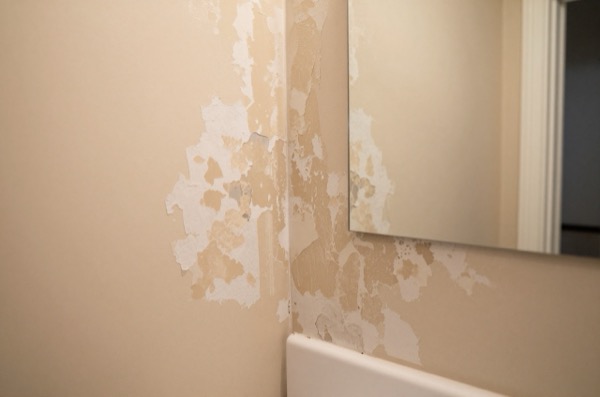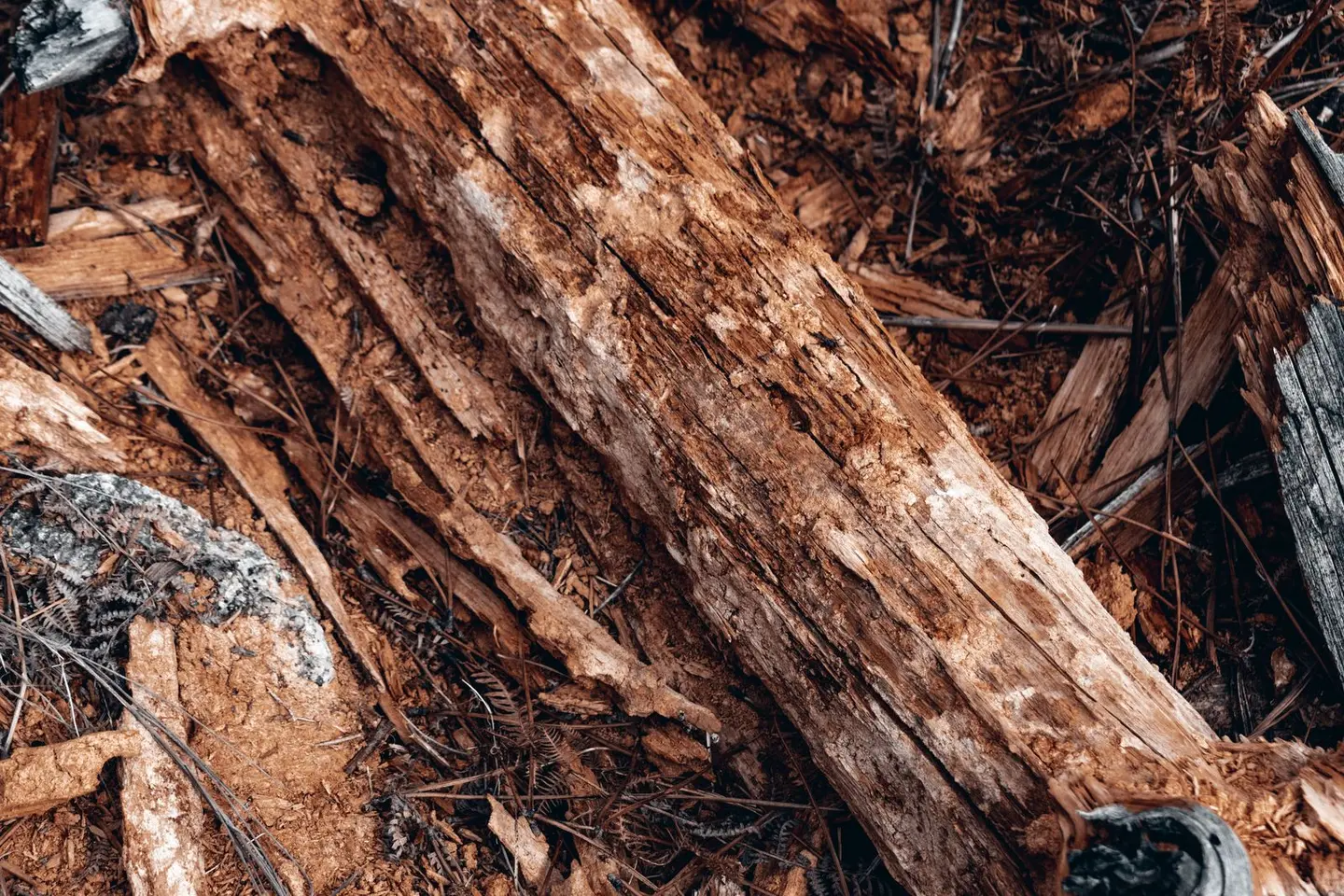
Timber decay in UK homes falls into two broad categories, dry rot and wet rot, and confusing them is a costly mistake. Dry rot is a serious, aggressive fungal infection that can spread across damp masonry and destroy structural timber some distance from where it started. Wet rot, while destructive at the location of moisture, is self-limiting and straightforward to treat once the water source is fixed. The distinction matters enormously for treatment scope and cost.
The Fundamental Difference
Both dry rot and wet rot are caused by fungi that break down the cellulose and/or lignin in timber, but they behave very differently.
Dry rot (Serpula lacrymans) is so-called because decayed timber can look and feel dry by the time the damage is found, shrunken and cracked in a characteristic brick-like pattern. It still needs damp to start: fungal decay always arises because the wood has become wet, above 20% moisture content.1 More critically, Serpula lacrymans grows strands (often called rhizomorphs) that supply water and nutrients to its growing edge, and its fine threads penetrate mortar joints and plaster layers, so it can spread across damp masonry to reach timber some distance from the original outbreak.1 It was once thought to wet up dry areas as it went, but this happens infrequently: in most outbreaks the fungus is confined to places where both timber and walls are damp.1
Wet rot is a broad term for many fungal species, the most common being Coniophora puteana (cellar fungus) and Fibroporia vaillantii, that need persistently wet timber.1 Wet rot rarely spreads far beyond the damp timber, and it stops once the timber dries out. It is essentially confined to the zone of dampness.
Identifying Dry Rot
Dry rot has a distinctive set of signs that, once seen, are difficult to confuse:
- Cuboidal or brick-like cracking of the timber, the wood splits in both directions, breaking into roughly square or rectangular blocks. It is a strong sign, although some wet rots crack in a similar cuboidal way.1
- Silky grey mycelium on or around the affected timber, sometimes with lilac or yellow tinges
- Orange-brown sporophore (fruiting body), a flat or bracket-shaped pancake-like fruiting body with a rusty orange centre and white fleshy edges, often producing clouds of reddish-brown spores
- Strands (rhizomorphs), grey root-like strands, sometimes as thick as a pencil, running across masonry and plaster and through mortar joints
- Musty, mushroom-like smell, distinctive and often noticed before visible signs are present
- The timber sounds hollow when tapped and crumbles easily
Identifying Wet Rot
Wet rot signs are distinct from dry rot:
- Timber appears dark, soft, or spongy rather than cracked in a cuboidal pattern
- Longitudinal cracking along the grain (rather than the brick-like pattern of dry rot), if present
- Mycelium is fine, thread-like, and white or olive-brown, less visible than dry rot mycelium; some wet rots form slender strands, but not the thick grey strands of dry rot
- Little spread beyond damp timber, wet rot occasionally grows over damp masonry but stays close to the source of wetting
- The decay is directly correlated with the moisture source, follow the wet rot to find the leak, failed flashing, or blocked gutter
- Timber may spring back when pressed if early-stage, or feel spongy and break apart if advanced
Comparison Table
| Feature | Dry Rot (Serpula lacrymans) | Wet Rot (e.g. Coniophora puteana) |
|---|---|---|
| Moisture required | Above 20%, in damp timber and walls | Above 20%, usually persistently wet timber |
| Crack pattern | Cuboidal (brick-like, across and along grain) | Longitudinal (along grain) or none |
| Mycelium colour | Silky grey, white, lilac or yellow tinges | White, olive, or brown; fine threads |
| Fruiting body | Fleshy, rusty-orange, flat pancake | Rarely visible; resupinate if present |
| Strands (rhizomorphs) | Yes, thick strands spread over and through damp masonry | Occasionally, slender |
| Spread potential | Can spread across damp masonry to reach other timber | Contained to the damp zone |
| Smell | Musty, mushroom-like | Earthy or musty |
| Treatment complexity | High, opening up, isolating timber from damp walls, targeted masonry treatment | Lower, fix moisture source, replace timber |
Why Dry Rot Treatment Is More Extensive
Because Serpula lacrymans can spread through damp masonry, effective treatment must deal with the walls as well as the timber. The Property Care Association’s guidance describes the usual approach:
- Open up and cut out decayed timber, with a safety margin of apparently sound timber beyond the last visible sign of infection; the surveyor sets the margin member by member, as a standard margin may be too little for a wall plate and too much for a floorboard.1
- Treat affected masonry locally where walls show mycelium, with a surface masonry biocide, fungicidal plugs, pastes or gels in drilled holes, or a localised ‘toxic box’ of irrigation around the outbreak. Widespread irrigation of walls can rarely be justified, because soaking the wall extends its drying time, and drying is the primary control against dry rot.1
- Isolate and replace timber: timber in contact with damp, infected walls should be isolated or re-supported (joist hangers, steel, sleeper walls), and replacement timber should be pre-treated to BS 8417.1
- Address the moisture source: the long-term cure is removing excess water from the building fabric, and masonry biocides are only a control measure.1
- Ventilate the treated area well during and after remediation, particularly subfloors and roof voids.1
Any masonry treatment and replacement structural timber should be specified by a surveyor or structural engineer with rot remediation experience, and carried out by a Property Care Association (PCA) member contractor.
Treating Wet Rot
Wet rot treatment is more straightforward, and the brickwork does not need sterilising.1 The usual steps are:
- Identify and fix the moisture source, this is the critical first step; all else is futile without it. Check gutters, flashings, downpipes, roofing, plumbing, and ground drainage.
- Remove affected timber, wet rot that has advanced beyond surface-deep softening requires the removal and replacement of the timber member
- Allow to dry out: dry the area, with improved ventilation, until the wood is below 20% moisture content, and allow adequate drying time before closing it up.1
- Apply wood hardener and filler for minor decay, proprietary two-part epoxy consolidant and filler systems can be used for minor wet rot in non-structural joinery (window sills, fascia boards, cill timbers). Not appropriate for structural members.
- Replace structural timber where significantly weakened, and treat new timber with a preservative
Cost Guide
| Work | Typical Cost (2026) |
|---|---|
| Independent survey and report | £250–£500 |
| Wet rot treatment, minor joinery (epoxy repair) | £100–£500 per window or door |
| Wet rot treatment, structural timber replacement | £300–£3,000 depending on extent |
| Dry rot treatment, small isolated outbreak | £1,500–£3,500 |
| Dry rot treatment, moderate infestation (e.g. one room) | £3,000–£7,000 |
| Dry rot treatment, severe or multi-room | £7,000–£20,000+ |
| Masonry biocide treatment (per m²) | £15–£40 |
These ranges are wide because the extent of masonry involvement, the accessibility of the affected area, and the structural replacement required vary enormously.
When to Call a Specialist
Any suspected dry rot must be assessed by a specialist, ideally from a company that is PCA-registered and that employs a CSRT (Certificated Surveyor in Remedial Treatment). Because treatment inevitably involves opening up wall and floor structures, it is advisable to have an independent structural engineer verify the structural integrity of retained timbers and specify any replacement members.
Wet rot in non-structural joinery (window frames, sills, fascia) can be assessed and treated by a competent main contractor. Wet rot in floor joists, roof rafters, or other structural members warrants a specialist assessment to confirm the extent of decay and structural adequacy.
Building Regulations
Dry rot and wet rot repairs do not routinely require Building Regulations approval when carried out as like-for-like repairs. However, replacing or altering structural timber can count as a material alteration, which is building work under the regulations, so check with Building Control whether notification is needed.2 Replacement timber should be preservative-treated in line with BS 8417:2024, the current code of practice for the preservation of wood, published in August 2024 to replace the 2011 edition.3 Where the repair involves basement or other below-ground walls, waterproofing falls under BS 8102:2022, the code of practice for protecting below-ground structures against water ingress.4
As with all specialist remediation work, retain the contractor’s guarantee documentation, specialist contractors usually give a long-term written guarantee, which some back with insurance, and this documentation has value at the point of future sale.
References (4)
Figures in this note were checked against the sources below on 30 September 2026. Superscript numbers in the text point to them. Every source the site cites, by topic.
- 1technicalgoodProperty Care Association, guidance.RN-FXHDLCPCA guidance note on fungal decay in buildings, identifying dry rot (Serpula lacrymans) as the most serious form of timber decay.
- 2technicalvery strongThe National Archives, legislation.RN-ZCMRHVRegulation 3 of the Building Regulations 2010, the meaning of building work. Lists what counts: erecting or extending a building, providing or extending a controlled service or fitting, material alteration, work required by a material change of use, and inserting insulation into a cavity wall. If a job is not on this list it is not building work, so this is the first place to check whether approval is needed at all.
- 3technicalstrongBSI (British Standards Institution), a standard.RN-1YSDSKSTATUS: CURRENT. BS 8417:2024 published 15 August 2024, superseding BS 8417:2011+A1:2014. Gives recommendations and guidance for the preservative treatment of wood to provide protection against biodeterioration in end-use situations. Covers solid wood and glued laminated wood (Glulam); excludes wood-based panel products, physically or biologically modified wood, and curative treatments. It takes into account the natural durability and treatability of the wood, the use class as defined in BS EN 335, and the desired service life, and recommends penetration and retention levels for different timber components. This is the source of the Use Class 2 / Use Class 4 language on treated batten and fence post labelling, and of the stated desired service lives (30 or 60 years) manufacturers quote. Treatment certificates quoting BS 8417:2011 predate the 2024 rewrite.
- 4technicalstrongBSI.RN-UTBMKQThe current edition of the UK waterproofing code, published 31 March 2022, superseding BS 8102:2009. It gives recommendations and guidance on dealing with and preventing the entry of water from external sources into structures partly or wholly below ground, and it recognises three types of protection which a specification must name: Type A waterproofing barrier materials applied to the structure, Type B structurally integral watertight construction, and Type C drained cavity construction. It requires the waterproofing strategy to be set at the earliest planning and design stage, covering structural design, overall weatherproofing design, waterproofing design, construction sequencing and buildability, and it treats external drainage and openings as part of the strategy rather than as details. It also sets out evaluation of groundwater conditions, consideration of harmful ground gases, and the risk assessment that drives the choice of grade. Descriptors include basements, tanking, vapour barriers, render, ground-water drainage and site investigations. This is the standard to cite for a basement shower room or a below-ground floor build-up.
-
Guidance Note: Fungal Decay in Buildings, Property Care Association, accessed 30 September 2026. property-care.org
-
The Building Regulations 2010, regulation 3: Meaning of building work, The National Archives, accessed 30 September 2026. legislation.gov.uk
-
BS 8417:2024 Preservation of wood. Code of practice, BSI, accessed 30 September 2026. knowledge.bsigroup.com
-
BS 8102:2022, Protection of below ground structures against water ingress. Code of practice, BSI, accessed 14 September 2026. knowledge.bsigroup.com