Efflorescence is the white or grey powdery staining that appears on brick, block, render, and concrete. It forms when soluble salts dissolved in water migrate to the surface and crystallise as the water evaporates. On new builds it often disappears on its own within the first year or two. On older properties it can be a sign of persistent water ingress that needs addressing before the cosmetics.
The good news is that the deposit itself is rarely damaging. The bad news is that it keeps coming back until you deal with the source of moisture.
What Causes Efflorescence?
Water is always the root cause. It dissolves naturally occurring salts in the brick, mortar, or backing material and carries them to the surface. Common triggers include:
- New construction drying out, freshly laid brickwork holds a lot of moisture; efflorescence in the first 1–2 years is almost always benign.
- Driving rain penetration, facing brickwork that gets saturated on a regular basis will effloresce repeatedly.
- Rising damp, groundwater wicking up through an absent or failed damp-proof course brings calcium and sulphate salts with it.
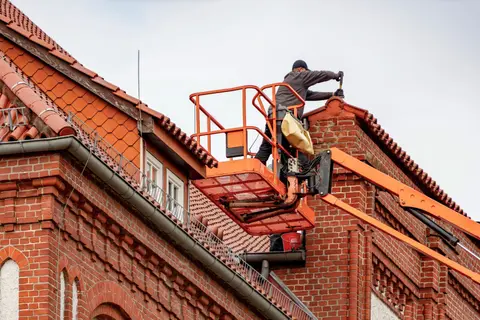
- Leaking gutters or downpipes, concentrated water running down a wall saturates a localised patch.
- Poor pointing, open or eroded mortar joints let water in rather than shedding it.
- Condensation in cavity walls, less common but possible with poor cavity insulation detailing.
How to Diagnose the Severity
Before reaching for the cleaning brush, identify what you are dealing with:
- Superficial bloom, thin white haze, appears in spring/summer, no damp indoors, mortar joints intact. This is almost certainly benign first-year efflorescence. Monitor it.
- Persistent staining, reappears within weeks of cleaning, same patch. Investigate gutters, downpipes, pointing, and window sills above.
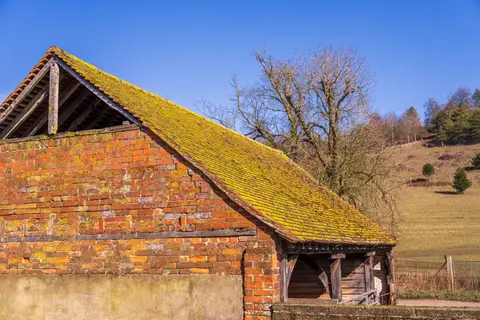
- Cryptofluorescence (sub-surface), salts crystallise beneath the brick face and cause the surface to spall. This is more serious and usually indicates prolonged saturation. Professional assessment is advisable.
- White tide-mark at low level, rising damp pattern. Check whether a DPC is present and intact.
When to call a professional
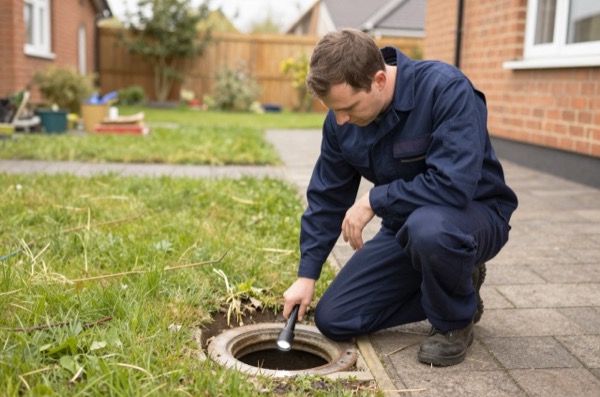
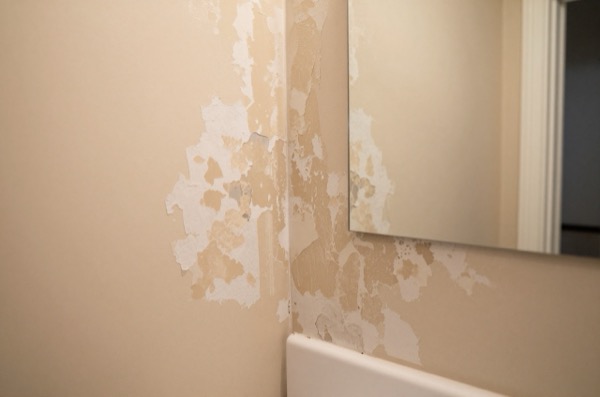
If efflorescence is at low level (below 1 m), if internal plaster shows damp or staining, or if the brick face is spalling, get a damp specialist or structural engineer to assess before you spend money on surface treatments.
How to Remove Efflorescence: DIY Methods
For the majority of cases, dry, powdery surface deposits on otherwise sound brickwork, removal is straightforward.
Dry brushing (first attempt) Use a stiff-bristled nylon or natural fibre brush (not wire on softer handmade bricks). Brush vigorously when the wall is fully dry. Collect and dispose of the dust rather than hosing it into joints. This is the correct first step; applying water too early can push salts back in.
Dilute acidic wash (stubborn staining) A 5–10% solution of white wine vinegar in water, or proprietary efflorescence remover (phosphoric or hydrochloric acid-based), applied with a stiff brush:
- Wet the wall with clean water first to prevent the acid soaking too deep.
- Apply the solution and allow to dwell for 5–10 minutes.
- Scrub and rinse thoroughly with clean water.
- Neutralise with a dilute bicarbonate of soda solution if using hydrochloric acid products.
Always test on an inconspicuous area first. Acid treatments can bleach or etch softer limestone-based mortars and some brick types.
Pressure washing Effective but use with caution, high pressure can erode soft mortar joints and cause more problems than it solves. Keep pressure below 1,200 psi and use a fan tip at an angle, never straight on.
Preventing Recurrence
Cleaning removes what is already there; prevention stops it coming back.
- Repoint open or eroded joints with a mortar matching the original specification (a harder OPC mortar on a lime-mortared Victorian wall will cause cracking and more damp).
- Repair gutters and downpipes, a blocked gutter can deposit hundreds of litres of water per hour onto a wall.
- Check window sill overhangs and sill flashings, water should drip clear of the wall.
- Apply a breathable masonry water repellent, silane/siloxane-based treatments (not paint or film-forming sealers) allow moisture vapour out while repelling liquid water. These last 10–15 years when correctly applied.
- Address DPC failure if rising damp is the cause, remedial DPC injection costs £500–£2,000 depending on wall length and method.
Cost Summary
| Task | DIY Cost | Contractor Cost |
|---|---|---|
| Dry brush (tools only) | £0–£15 | n/a |
| Dilute acid clean, 1 elevation | £10–£30 (materials) | £150–£400 |
| Pressure wash, 1 elevation | £50–£100 (hire) | £100–£250 |
| Full-house chemical clean (contractor) | - | £300–£800 |
| Silane/siloxane water repellent (contractor) | £30–£80/litre (DIY) | £400–£1,200 (full house) |
| Repointing (contractor, per m²) | - | £25–£55/m² |
| Remedial DPC injection | - | £500–£2,000 |
All prices are indicative 2026 ranges inclusive of VAT.
Building Regs and Standards
Efflorescence itself is not a Building Regulations matter, but the underlying causes often are. Where damp penetration is linked to a defective DPC, this falls under Part C of the Building Regulations (Site preparation and resistance to contaminants and moisture). Approved Document C is also where the commonest cause of a bridged DPC is written down: in an external wall the damp-proof course should be at least 150 mm above the level of the adjoining ground, so a raised path, a new patio or a flower bed banked against the wall will defeat it.1
Two different standards cover the repair itself. A physical DPC built into masonry falls under BS 8215:1991, which is still current.2 That code explicitly does not deal with the installation of chemical DPCs; those sit under BS 6576:2005+A1:2012 instead, so an injection job specified “to BS 8215” has been specified against the wrong standard.3 Where injection systems are used, follow the BBA certificate conditions of the chosen product as well.
When to Call a Professional
Bring in a qualified damp surveyor, meaning one holding the Property Care Association’s own surveyor qualifications: CSRT or CSTDB for damp and timber, or CSSW, the ABBE/PCA Level 3 Certificated Surveyor in Structural Waterproofing, for anything below ground.4 Call one in if:
- Efflorescence keeps returning to the same patch despite cleaning and obvious repairs
- You see brick face spalling or cryptofluorescence
- Internal walls adjacent to the affected area show damp, staining, or mould
- You are buying a property and want an independent view
An independent damp survey typically costs £150–£400 and is worth every penny before committing to expensive remedial works. Be aware that some damp-proofing contractors have a commercial interest in recommending work, an independent RICS-qualified surveyor will give you an unbiased opinion.
Summary
Efflorescence on brick is common, often cosmetic, and usually manageable with a stiff brush and patience. The key questions are whether it is recurring, whether there is associated spalling, and whether there is any internal damp. Answer those first, fix the source of moisture, then clean. Doing it the other way round is expensive and temporary.
The rules in this note are those that apply in England. Scotland, Wales and Northern Ireland have their own building standards and permitted development rights.
References (4)
Figures in this note were checked against the sources below on 9 September 2026. Superscript numbers in the text point to them. Every source the site cites, by topic.
- 1technicalvery strongMinistry of Housing, Communities and Local Government.RN-NPO8FJThe statutory figures behind a damp diagnosis, and the numbers to quote when a note explains why ground levels or a bridged damp proof course cause rising damp. Paragraph 5.2 requires that in an external wall the damp-proof course should be at least 150mm above the level of the adjoining ground (Diagram 8) unless part of the building protects the wall, and that in an external cavity wall the cavity should be taken down at least 225mm below the level of the lowest damp-proof course, or a damp-proof tray provided (Diagram 9a). For suspended timber ground floors it requires a ventilated air space of at least 75mm from the ground covering to the underside of any wall-plates and at least 150mm to the underside of the suspended timber floor or insulation, with ventilation openings on two opposing external walls of not less than 1,500mm2 per metre run of external wall or 500mm2 per square metre of floor area, whichever is greater; for suspended concrete floors the clear ventilated space is at least 150mm with the same opening sizes. Section 2.39 onwards covers radon, referring to BRE Report BR 211 for protective measures. The 2013 edition was published on 3 September 2013 with changes in effect from 1 October 2013.
- 2technicalstrongBSI (BSI Knowledge catalogue), a standard.RN-EU4DHIDated 28 February 1991, this contains recommendations for the selection, design and installation of damp proof courses in both solid and cavity masonry construction, and is the code behind DPC practice referenced alongside Approved Document C. Its scope notes mark the boundaries clearly: BS 8215 does not cover waterproofing of underground structures such as basements where water is under hydrostatic pressure (see BS 8102), does not deal with the installation of chemical DPCs (see BS 6576), does not cover control of condensation (see BS 5250) and does not cover surface treatment of masonry with water repellents (see BS 6477). Those cross references are useful for a note that needs to say which standard governs which damp problem.
- 3technicalstrongBSI, a standard.RN-JJCK5NSTATUS: CURRENT. BS 6576:2005+A1:2012, published 16 November 2005 with the A1 amendment in 2012, is the code of practice for diagnosing rising damp in walls of existing buildings and for installing chemical damp-proof courses. It covers chemical treatment of rising damp in solid walls, cavity walls (unfilled or filled) and random rubble-filled walls, and sets out the essential precautions and procedures for installing a chemical DPC. It excludes walls where treatment is inappropriate, such as stud walls, and walls below ground or under hydrostatic pressure, which go to BS 8102. This is the standard to cite for an injected DPC: BS 8215:1991, the code usually quoted, expressly does not cover the installation of chemical DPCs and points here instead.
- 4technicalgoodProperty Care Association, guidance.RN-EB3RPENames the qualification a homeowner should ask a damp or waterproofing surveyor for, and expands the abbreviation that notes usually leave unexplained. CSSW is the Certificated Surveyor in Structural Waterproofing, described as a nationally recognised professional qualification for individuals diagnosing defects connected to water entering structures below ground level, and the industry benchmark for structural waterproofing professionals. Successful candidates receive the ABBE/PCA Level 3 Certificated Surveyor in Structural Waterproofing, awarded through ABBE, the Awarding Body for the Built Environment. The companion damp and timber qualification is CSTDB, Certificated Surveyor of Timber and Dampness in Buildings, which supersedes the older CSRT; the PCA pages for that one moved and returned 404 on 9 September 2026, so CSRT versus CSTDB still needs checking by hand.
-
Approved Document C, Site preparation and resistance to contaminants and moisture, 2004 edition incorporating 2010 and 2013 amendments, Ministry of Housing, Communities and Local Government, accessed 9 September 2026. assets.publishing.service.gov.uk
-
BS 8215:1991 Code of practice for design and installation of damp-proof courses in masonry construction, BSI, accessed 9 September 2026. knowledge.bsigroup.com
-
BS 6576:2005+A1:2012 Code of practice for diagnosis of rising damp in walls of buildings and installation of chemical damp-proof courses, BSI, accessed 9 September 2026. knowledge.bsigroup.com
-
Surveyor in Structural Waterproofing: training to qualification, Property Care Association, accessed 9 September 2026. property-care.org