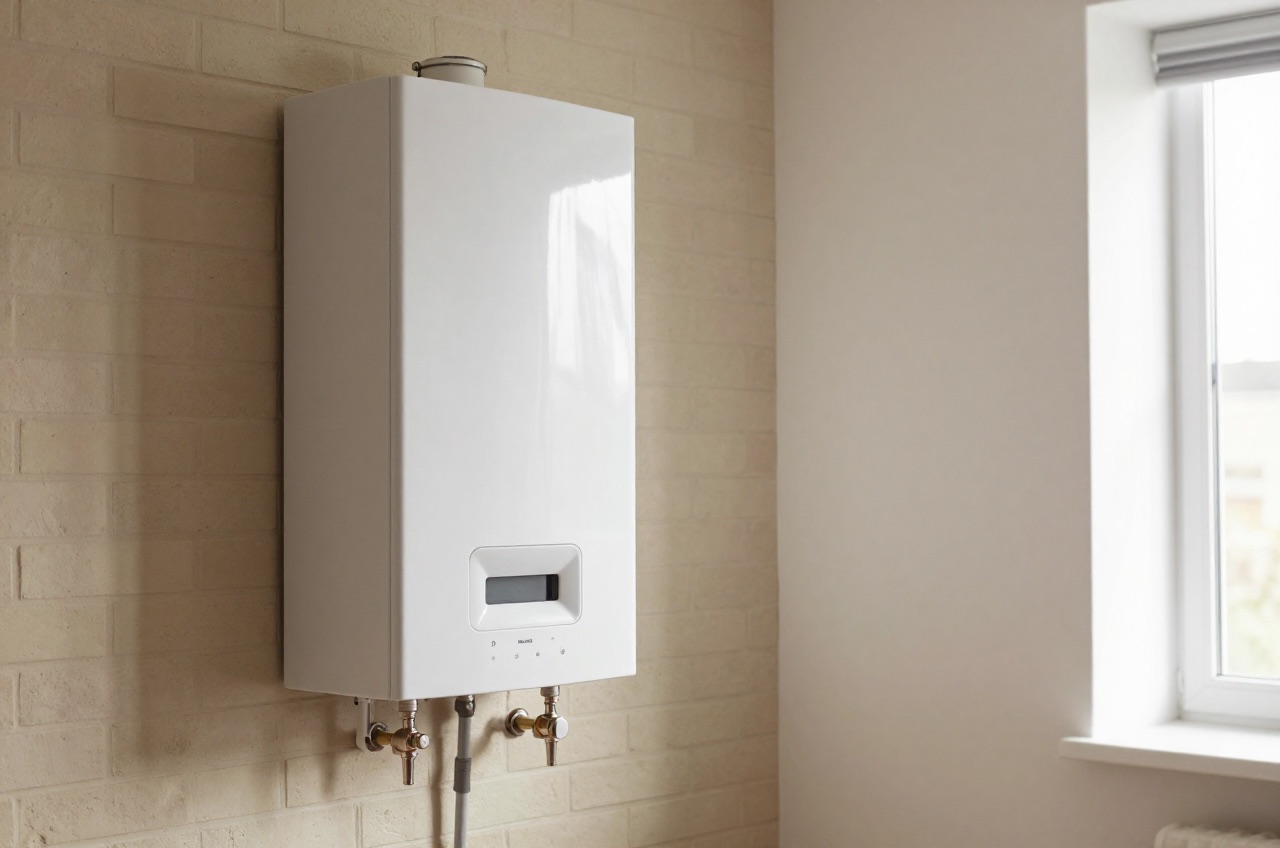
When your boiler stops working, particularly in winter, it ranks as one of the most stressful household emergencies. The good news is that many boiler faults are straightforward to diagnose and, in some cases, fix yourself without calling an engineer. This guide covers the most common boiler problems in UK homes, what they mean, and realistic 2026 repair costs.
Quick Diagnosis: What Is Your Boiler Doing?
| Symptom | Likely Cause | First Step |
|---|---|---|
| No heat or hot water | Lockout fault, pilot light, ignition | Check display for fault code |
| Hot water only, no heating | Diverter valve stuck | Call engineer |
| Low pressure (below 1 bar) | Leak or pressure relief valve activated | Repressurise if no leak visible |
| Boiler lights then switches off | Flame failure, condensate blockage | Check condensate pipe in winter |
| Banging or kettling noise | Limescale on heat exchanger | Power flush or descale |
| Boiler keeps losing pressure | Leak in system or expansion vessel fault | Check visible pipework; call engineer |
| Error code on display | Varies by manufacturer | See manual or brand website |
Common Boiler Faults Explained
1. Low Boiler Pressure
A combi or system boiler is normally set to between 1.0 and 2.0 bar (displayed on the pressure gauge).1 If the pressure falls too low, the boiler shows a low-pressure fault (F1 on an Ideal Logic, for example) and stops firing.1
Cause: Small leaks in radiators or pipework; a faulty pressure relief valve; expansion vessel pressure loss.
Fix: If there is no visible leak, you can repressurise the boiler yourself via the filling loop, a grey or silver braided hose usually located beneath the boiler. Consult your user manual for the exact procedure; it takes around five minutes. If pressure drops again within a week, there is a leak requiring an engineer to trace and repair.
2. Condensate Pipe Frozen (Common in Winter)
Modern condensing boilers produce acidic condensate water that drains via a plastic pipe, often run outside through an external wall to a drain. Where the pipe has to run outside, Worcester Bosch advises that it should be insulated, as short as possible and at least 32 mm in diameter.2 In freezing temperatures, this pipe can ice over, causing the boiler to lock out with a gurgling noise.
Fix (DIY safe): Pour warm (not boiling) water over the external section of the pipe.3 You can also use a heat wrap or warm cloth. Once cleared, press the reset button. If the pipe freezes repeatedly, a qualified engineer can re-route it to a less exposed position, a minor job costing £100–£200.
3. Ignition or Flame Failure
The boiler fires but the burner does not stay lit (flame failure error). Common codes include Worcester Bosch EA 227 or EA 229, Baxi E133 and Ideal F2 (flame loss).1
Causes: Faulty ignition leads, spark electrode worn, blocked gas valve, or low gas pressure. Before booking an engineer, check that your other gas appliances work, that the gas is on at the meter and, on a prepayment meter, that there is credit.1
Cost: Ignition electrode replacement £150–£280; gas valve replacement £250–£450.
4. Diverter Valve Failure
On a combi boiler, the diverter valve switches water flow between the central heating and the domestic hot water plate heat exchanger. A worn diverter valve is a very common fault, usually presenting as hot water but no heating, or lukewarm hot water only.
Cost: £200–£400 including parts and labour. It is one of the most frequently replaced combi boiler components.
5. Pump Failure
The circulation pump moves heated water around the radiators and towel rails. Signs of failure include no heat despite the boiler firing, or a humming noise with no water movement.
Cost: Pump replacement £200–£350 for most domestic boilers; premium variable-speed pumps cost more.
6. Printed Circuit Board (PCB) Failure
The PCB is the boiler’s control board. Faults can be intermittent and hard to diagnose. Replacing a PCB on a boiler over 10 years old is rarely economical as the part cost alone can be £300–£500, plus labour.
Cost: PCB replacement £350–£600+ depending on boiler model. If the quote approaches this range on an older boiler, get a replacement boiler quote before authorising the repair.
7. Kettling and Limescale
A banging, rumbling, or popping sound from the boiler (especially in hard-water areas like London, the South East, and the Midlands) usually indicates limescale deposits on the heat exchanger. Water boils locally on the scaled surface, producing steam and noise, “kettling”.
Fix: A power flush (£400–£700 for a typical home) or a chemical descale (£150–£300) clears the system. A magnetic filter fitted to the return pipe prevents future sludge accumulation.
8. Radiators Not Heating Evenly
Cold spots at the top of radiators indicate trapped air, bleed the radiator with a bleed key (£2 at any hardware store). Cold at the bottom suggests sludge accumulation; a power flush or system inhibitor treatment resolves this.
Boiler Repair Costs: 2026 UK
| Repair | Typical Cost | Notes |
|---|---|---|
| Engineer call-out + diagnostics | £80–£150 | Often deducted from repair cost if work proceeds |
| Repressurise and trace leak | £100–£200 | Includes leak repair on a simple joint |
| Condensate pipe clear and re-route | £100–£200 | Winter emergency |
| Ignition electrode replacement | £150–£280 | Common wear part |
| Diverter valve | £200–£400 | Most common combi fault |
| Pump replacement | £200–£350 | Standard 15/60 pump |
| Gas valve | £250–£450 | Includes setting up |
| Heat exchanger | £400–£700 | Major repair; consider boiler age |
| PCB replacement | £350–£600+ | Model-specific; verify part availability |
| Power flush (8-10 radiators) | £400–£700 | Includes inhibitor and magnetic filter |
| Annual service | £80–£130 | Extends life and maintains warranty |
Gas Safe Requirement
Anyone paid to do gas work in your home, including any repair to gas pipework, the gas valve, the burner, or the flue, must be a Gas Safe registered engineer competent in that type of work.4 The law also forbids anyone who is not competent from doing gas work, so this is not a DIY job.5 Check the back of the engineer’s Gas Safe Register ID card, which lists the work they are qualified for, and confirm their registration on the Gas Safe Register website (gassaferegister.co.uk) before they begin work.4
Boiler servicing (not just repairs) must also be done by a Gas Safe engineer, and HSE advises servicing gas appliances at least once a year.4 Annual servicing is a condition of most boiler manufacturer warranties.
Should You Repair or Replace?
Use the following to guide the decision:
- Boiler under 7 years old: Repair nearly always makes sense; parts are available and the unit has significant life remaining.
- Boiler 7–12 years old: Repair if the cost is below one-third of a new boiler price (typically £800–£1,000 threshold); otherwise compare replacement quotes.
- Boiler over 12 years old: Major repairs (heat exchanger, PCB, gas valve) are rarely cost-effective. A new A-rated condensing boiler uses noticeably less gas than an old G-rated non-condensing unit, which helps offset the cost of replacement.
A new gas combi boiler (supply, installation, flue, controls) costs £2,000–£3,500 for most three-bedroom homes.
The Boiler Upgrade Scheme
The UK Government’s Boiler Upgrade Scheme (BUS) offers grants of:
- £7,500 toward an air source heat pump6
- £7,500 toward a ground source heat pump6
These grants apply to properties in England and Wales, and for applications made since 28 April 2026 a valid EPC is no longer required.7 Since 2024 you no longer have to install any loft or cavity wall insulation the EPC recommends before applying.8 If your boiler is on its last legs, obtaining a heat pump quote alongside a boiler quote makes practical sense in 2026.
Emergency Cover and Annual Contracts
Boiler cover policies (offered by British Gas HomeCare, OVO, YourRepair, and others) typically cost £20–£50/month and include annual servicing plus unlimited call-outs. They make most sense for older boilers out of manufacturer warranty. Compare the total annual premium against the statistical likelihood of repair costs for your boiler’s age and model.
If you have a home emergency add-on on your buildings insurance, this often covers the first call-out for a boiler breakdown, check your policy before paying separately.
References (8)
Figures in this note were checked against the sources below on 29 September 2026. Superscript numbers in the text point to them. Every source the site cites, by topic.
- 1technicalsupplier figureIdeal Heating, guidance.RN-HVMTXVIdeal Heating's homeowner troubleshooting guide for the Logic Combi. It gives the 1 to 2 bar installation pressure and explains what a falling pressure means.
- 2technicalsupplier figureWorcester Bosch, guidance.RN-RA7TOAWorcester Bosch's homeowner leaflet on frozen condensate pipes. It sets out how an external condensate pipe should be run, including insulation, fall and a minimum 32 mm diameter.
- 3technicalsupplier figureWorcester Bosch, guidance.RN-EUQFDEWorcester Bosch's homeowner advice page on frozen condensate pipes. It explains how to thaw the pipe safely with warm water and then reset the boiler.
- 4technicalvery strongHealth and Safety Executive, guidance.RN-RJTAHSHSE's gas safety answers for homeowners and occupiers: what to do if an appliance is suspected unsafe, and the advice that all gas appliances, flues and pipework be installed, maintained and serviced annually by a Gas Safe registered installer. HSE is the enforcing authority for gas safety, so this is the regulator's own position.
- 5technicalvery strongThe National Archives (legislation.gov.uk), legislation.RN-UFY1XPRegulation 3(1) makes it unlawful for any person to carry out work in relation to a gas fitting or gas storage vessel unless he is competent to do so, and 3(2) places the duty to ensure that on the employer, on every other employer or self-employed person with any control over the work, and on anyone who required the work to be done at a place of work under their control. Regulation 3(3) goes further: no employer may let an employee, and no self-employed person may themselves, carry out work on a gas fitting or service pipework unless that employer or self-employed person is a member of a class of persons approved by the Health and Safety Executive, which in practice is registration with the Gas Safe Register. Regulation 3(4) exempts only replacing a hose or regulator on a portable or mobile space heater and replacing the hose connecting a re-fillable cylinder to installation pipework. Regulation 3(7) makes it an offence to falsely pretend to be a member of an approved class. This is the legal basis for saying a boiler must be fitted by a Gas Safe registered engineer.
- 6costvery strongGOV.UK.RN-9EFNVZA price, true at 2026-09. The grant values: £7,500 towards an air source heat pump, £7,500 towards a ground source heat pump including water source heat pumps and those on shared ground loops, and £5,000 towards a biomass boiler. A further £1,500 is available until March 2027 where the property is heated by oil or LPG and has no mains gas connection. Only one grant is available per property. Capacity limits are 45kWth for an individual system, 70kWth for multiple heat pumps and 300kWth for shared ground loops. Hybrid systems pairing a gas boiler with a heat pump are not eligible, and an existing low carbon heating system cannot be replaced under the scheme.
- 7technicalvery strongOfgem, guidance.RN-YCPKNQOfgem's guidance for property owners on BUS applications made from 28 April 2026. It explains that an EPC is optional, with other evidence accepted where there is none.
- 8technicalvery strongDepartment for Energy Security and Net Zero, guidance.RN-AWHPHIThe March 2024 DESNZ response to the consultation on amending the Boiler Upgrade Scheme regulations: a higher grant for ground source heat pumps, retention of the requirement for a valid EPC from the last 10 years, and removal of the requirement to install recommended loft and cavity wall insulation first (in force May 2024).
-
Ideal Logic Combi boiler troubleshooting guide, Ideal Heating, accessed 30 September 2026. idealheating.com
-
Dealing with frozen condensate pipes, Worcester Bosch, accessed 30 September 2026. worcester-bosch.co.uk
-
How to thaw a frozen boiler condensate pipe, Worcester Bosch, accessed 30 September 2026. worcester-bosch.co.uk
-
Gas safety: home owners, Health and Safety Executive, accessed 30 September 2026. hse.gov.uk
-
The Gas Safety (Installation and Use) Regulations 1998, regulation 3: Qualification and supervision, legislation.gov.uk, accessed 30 September 2026. legislation.gov.uk
-
Apply for the Boiler Upgrade Scheme: What you can get, GOV.UK (Department for Energy Security and Net Zero), accessed 15 September 2026. Priced at 2026-09, so no calibration is needed. gov.uk
-
Boiler Upgrade Scheme: Property Owner Guidance V5.1, Ofgem, accessed 30 September 2026. ofgem.gov.uk
-
Boiler Upgrade Scheme regulations: government response, Department for Energy Security and Net Zero, accessed 29 September 2026. assets.publishing.service.gov.uk