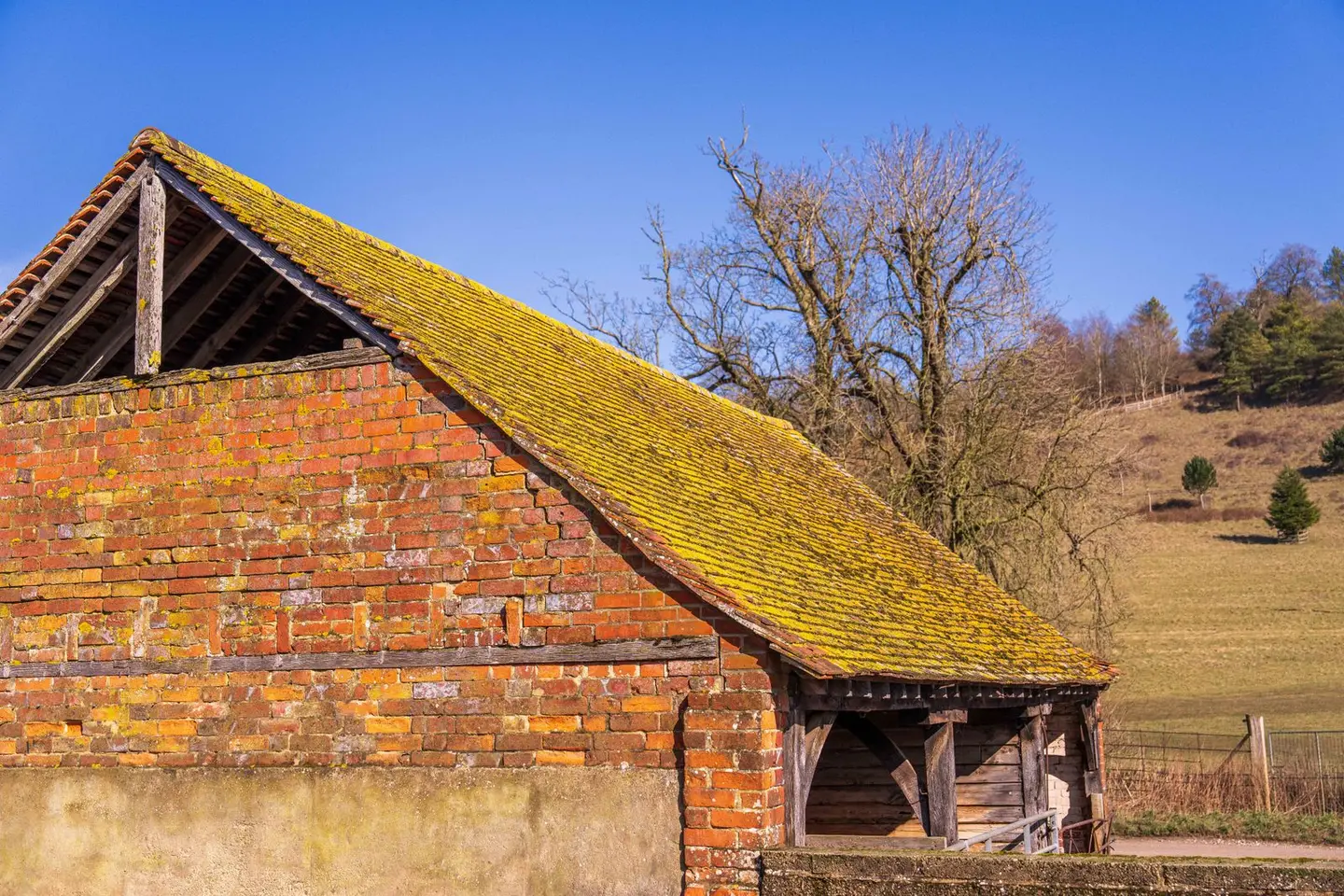
Moss on a UK roof is almost universal, our mild, damp climate is ideal for it, and in modest quantities it is largely cosmetic. The problems start when moss builds up thick enough to lift tile edges (allowing water ingress), block valleys and gutters, and retain moisture against the tile surface, accelerating weathering of both concrete and clay tiles.
The method you choose for removal matters considerably. Pressure washing is fast and dramatic to watch, but it is opposed by most roofing professionals and some tile manufacturers on the grounds that it can damage tiles, strip surface coatings, and drive water into the roof. Understanding why that is, and what the alternatives actually achieve, helps you make a sensible decision.
Why Moss Grows on Roofs
Moss colonises roof surfaces that offer sustained moisture and a stable anchor point. North-facing slopes, roofs shaded by trees, and roofs with a shallow pitch all dry slowly and tend to support heavier growth. Concrete tiles are more susceptible than natural slate because their rougher surface texture gives moss better purchase.
Age also matters: newer tiles have smoother, harder surfaces. As tiles weather over 15–25 years, the surface becomes more porous and moss gains a foothold more easily.
Methods Compared
| Method | Effectiveness | Risk to tiles | Longevity | Professional cost (semi-detached) |
|---|---|---|---|---|
| Biocide spray (soft chemical treatment) | High, kills and loosens moss | Very low | 3–5 years | £150–£350 |
| Manual scraping / brushing | High, physical removal | Low if done carefully | 2–4 years (without biocide follow-up) | £200–£400 |
| Pressure washing | High immediately | Moderate to high | Low, rapid regrowth | £150–£300 |
| Long-run zinc or lead strip at ridge | Ongoing prevention only | None | 10–20 years (passive) | £300–£600 (materials + fitting) |
Biocide Treatment (Recommended Method)
A biocidal treatment uses an algaecide and moss killer applied by low-pressure spray to the entire roof surface. The chemical kills the moss within 4–8 weeks; dead moss then gradually sheds naturally over the following months as rain washes it down. Some contractors follow up with a light manual brush after 6–8 weeks.
Advantages:
- Does not require high pressure on the tile surface
- Kills rather than just displaces the moss (which simply regrows if the root system is left in place)
- Can be combined with a follow-up fungicidal wash for algae and lichen
- Usually comes with a 3–5 year guarantee against regrowth from reputable contractors
What to expect: The roof will look worse before it looks better. Dead brown moss remains on the tiles for several months as it loosens. Some homeowners expect an instant clean result, biocide treatment is not that. The end result (after natural rain washing) is as clean or cleaner than pressure washing, but takes longer to achieve.
Products: Use a proprietary treatment that is authorised for moss control. Moss control is regulated under the plant protection products rules, so any product sold with a moss claim has to be authorised before it can lawfully be marketed or used, and its label carries the authorisation number. Check for one before you buy, and do not substitute household chemicals: sodium hypochlorite and household bleach are not authorised for this job, and the runoff attacks planting, gutters and metalwork.1 Authorised consumer concentrates cost roughly £15–£30 per litre and yield 5–10 litres of working solution. Always follow the label directions and sheet over the planting below. If you would rather keep chemicals off the roof altogether, manual removal is the alternative.
Manual Removal (Scraping and Brushing)
A roofer can manually scrape and brush moss from tiles using a long-handled stiff brush, working from the ridge down to avoid dislodging tiles. This is labour-intensive but very effective and carries essentially no risk of tile damage when done carefully.
Used alone without a biocidal follow-up, regrowth is faster because the root system (rhizoids that penetrate surface pores) is not killed. Combining manual removal with a biocide wash immediately afterwards gives the most complete result.
Pressure Washing: Should You Do It?
The case against:
- High-pressure water directed under tile laps can drive water into the roof and saturate insulation or damage ceiling finishes below
- Fragile or ageing concrete tiles crack under jet pressure, this is particularly an issue for tiles over 20 years old
- Some tile manufacturers (including Marley Eternit and Redland) state that pressure washing voids their product guarantees
- Removed moss and water runoff can block gutters and downpipes in large quantities
- The high-water usage and potential chemical runoff raises environmental concerns
The case for:
- Fast, a 60–80 m² roof can be cleaned in a day
- Instantly visually effective
- Cheaper upfront than multi-visit biocide treatments
- Effective on algae and lichen as well as moss
Verdict: Pressure washing is an acceptable method on newer concrete or clay tiles (under 15 years old) in reasonable structural condition, at appropriately low pressure (typically 100–140 bar maximum) and with the lance angled to direct water across, not under, tile laps. It is not recommended for older or fragile tiles, natural slate, fibre cement, or any tile where the surface coating is already compromised.
If a contractor proposes pressure washing at very high pressure without assessing tile condition first, that is a red flag.
Preventing Moss Regrowth
The most effective long-term prevention is a zinc or lead strip fitted at the ridge. When it rains, metal ions leach from the strip and flow down the roof surface, creating a mildly toxic environment for moss and algae. Over 12–24 months, the effect extends 3–5 metres down the slope from the strip.
A 6-metre length of 150 mm zinc strip costs approximately £25–£40 (supply) and fits under the ridge tile. A roofer fitting strips to a full ridge of 6–8 metres would charge roughly £150–£300 including ridge tile re-bedding where needed.
Re-applying biocide every three to four years is the alternative, less permanent but effective and well suited to roofs where ridge access is difficult.
Safety: Never DIY on a Roof Without Proper Access
Working on a pitched roof without scaffolding or a properly secured roof ladder is extremely dangerous and is responsible for a significant number of serious accidents each year. Unless you have safe, secured access, scaffolding, a PASMA-rated platform, or at minimum a secured roof ladder and full non-slip footwear, this is work to engage a professional for.
A professional roofer will include scaffold or cherry-picker hire in their quote for any roof-level work. The £150–£400 professional cost for moss treatment is a sensible investment not just for quality of work but for safety.
References (1)
Figures in this note were checked against the sources below on 14 September 2026. Superscript numbers in the text point to them. Every source the site cites, by topic.
- 1technicalvery strongHealth and Safety Executive.RN-5C3ZFKHSE guidance for home gardeners on plant protection products, and the legal position most people do not realise applies to a bottle of weedkiller. Amateur gardeners using home and garden pesticides do not need formal training: products approved for amateur use carry labels written to be straightforward and safe to follow. Professional pesticides used in commercial or agricultural settings require proper training and must never be used by untrained home gardeners. Before buying online or abroad, check the HSE garden database that the product is legal in the UK; products not authorised domestically may never have been assessed for safety, and using or storing them can lead to prosecution. Pesticides must be kept in their original containers - both a legal requirement and a safety measure - stored somewhere cool and temperature-stable away from children and pets, not in a shed or greenhouse where temperatures swing. Never store a diluted solution; mix only what is needed for immediate use. Never pour a product down a sink or toilet. Empty containers, both concentrate and ready-to-use, can now go into household recycling; sachets, cardboard boxes and other packaging go into non-recycling waste. For part-full or unwanted containers, use the local council hazardous waste service or the Garden Chemicals Safe Disposal guidance.
-
Using pesticides in your garden, home or allotment, Health and Safety Executive, accessed 10 September 2026. hse.gov.uk