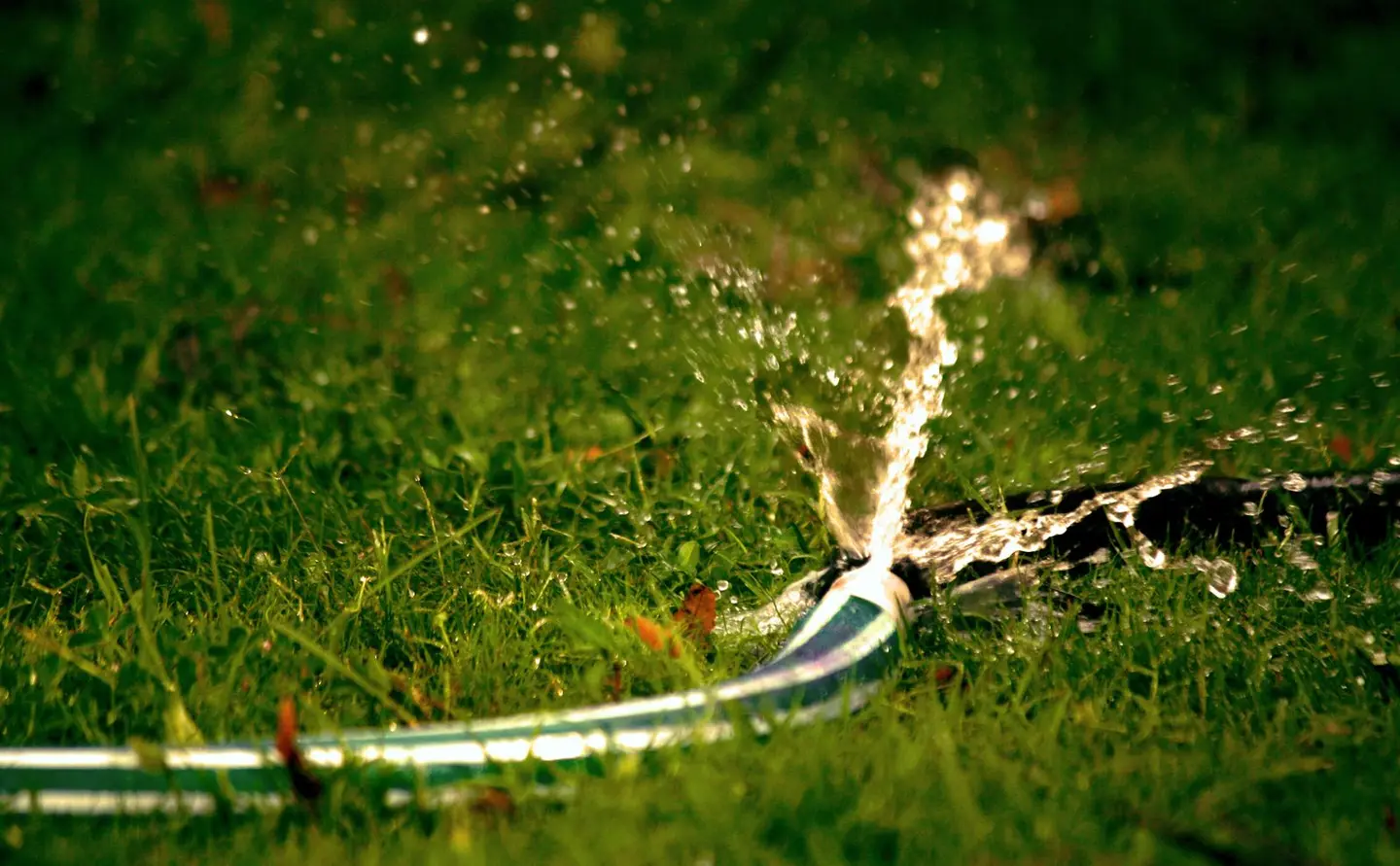
An irrigation system is one of the most practical investments a UK garden can have, not because the climate is dry, but because UK summers have become more unpredictable, hosepipe restrictions are increasingly common during drought conditions, and timed systems consistently use less water than hand-watering while producing better results. Even in the UK, vegetable plots and containers dry out faster than most gardeners realise during warm spells, and irregular watering is a primary cause of split tomatoes, bolting lettuce, and blossom-end rot in courgettes.
The question is which system suits your garden, water supply, and budget.
Types of Irrigation System
Drip Irrigation (Micro-Drip)
Porous tubes or drip emitters deliver water directly to the root zone of each plant at a controlled, slow rate. Because water goes straight to the soil rather than being sprayed into the air, evaporation losses are minimal, typically 30–50% less water use than overhead sprinklers. Drip systems are the best choice for:
- Vegetable beds and raised beds
- Established border plants with defined planting positions
- Greenhouse and polytunnel growing
- Pots, planters, and containers
A basic DIY drip kit (Hozelock, Pope, or equivalent) for a 20 m² raised bed typically costs £35–£80 and takes 2–3 hours to install. More sophisticated systems with individual pressure-compensating emitters work on slopes and in long runs without delivering more water at the bottom than the top.
Soaker Hoses
A porous rubber or polyester tube that seeps water along its entire length. Cheap (£0.50–£1.50/m) and easy to install under mulch. Effective for hedges, rows of soft fruit, and border plantings where individual emitters would be excessive. Less controllable than drip emitters for mixed planting.
Limitation: soaker hoses degrade faster than rigid drip pipework and can block with lime deposits in hard-water areas. Flush annually and inspect for pinhole splits.
Micro-Spray and Pop-Up Sprinklers
Micro-spray heads cover a small, defined radius (0.3–2 m); pop-up sprinklers retract into the ground between cycles. Used for lawns and large bed areas where drip would require too many individual emitters.
Pop-up in-ground systems require dedicated pipework buried at 200–300 mm depth, a backflow preventer, and a controller with solenoid valves for each zone. This is the most sophisticated domestic system and is generally installed by a specialist.
Seeping Hose / Leaky Pipe
Similar in principle to soaker hose but specifically designed for UK conditions. Often recycled rubber. Weeping pipe from the base of a water butt or connected to a tap with low pressure (1–3 bar).
System Components
A complete irrigation system comprises:
| Component | Function | Typical cost |
|---|---|---|
| Controller / timer | Schedules watering cycles; multi-zone models handle multiple valve zones | £25–£250 |
| Solenoid valve | Electrically controlled valve opens/closes each zone | £15–£40 each |
| Backflow preventer | Prevents irrigation water from entering the mains supply (required by Water Regulations) | £10–£30 |
| Pressure regulator | Reduces mains pressure (3.5–5 bar) to system working pressure (1–2 bar for drip) | £8–£20 |
| Filter | Prevents emitters and valves clogging with debris | £8–£20 |
| Mainline pipe | 25 mm or 32 mm MDPE for buried supply; 13–16 mm polyethylene tube for surface runs | £0.50–£1.50/m |
| Drip emitters / micro-sprays | Individual delivery points | £0.30–£2.50 each |
| Connectors and fittings | Tees, elbows, end plugs | £0.20–£1.50 each |
Cost Guide
| System type | Supply only | Professionally installed |
|---|---|---|
| Basic drip kit, small raised bed | £30–£601 | N/A, DIY suitable |
| Drip system, medium garden (50 m²) | £80–£200 | £400–£800 |
| Drip + timer, large vegetable garden | £150–£350 | £600–£1,500 |
| In-ground pop-up lawn system, per zone | £300–£600 materials | £500–£1,200/zone installed |
| Full in-ground system, large garden | £1,000–£3,000 materials | £2,500–£8,000 installed |
In-ground systems add excavation, pipe bedding, and reinstatement of lawn or hard landscaping, the largest component of the installed cost.
Hosepipe Bans and Water Regulations
UK water companies can impose temporary use bans (TUBs) during drought conditions under the Water Industry Act 1991. These bans typically restrict use of hosepipes for garden watering. However, drip irrigation and seeping hose systems connected via a tap are almost always exempt, provided they are left running without continuous attendance (i.e. not manually held). Check your water company’s specific TUB wording each time, exemptions are not universal.2
Water Regulations (Water Supply (Water Fittings) Regulations 1999) require a backflow preventer at any point where an irrigation system is connected to the mains supply, to prevent contaminated water being drawn back into the drinking supply. This is non-negotiable and must be installed on any permanent tap or hose union connection to an irrigation system.
Water meters: if you are on a water meter, an automated drip system will typically reduce your measured consumption compared to hand-watering, gardeners consistently overwater with a hosepipe.
Rainwater Harvesting Integration
Connecting irrigation to a water butt or underground rainwater tank avoids mains water entirely for garden use. A 210 L water butt can sustain drip irrigation in a 20–30 m² vegetable garden through several dry days. Underground tanks (1,000–5,000 L) with submersible pumps can supply a whole-garden system for a season in a mild year. Costs for underground tanks range from £600 to £3,000 installed.
Water butts connected to downpipes require a filter (typically a first-flush diverter) to keep the tank clean and prevent algae and debris clogging emitters.
Setting Up a Basic DIY Drip System
A practical approach for a 4 × 2.5 m raised vegetable bed:
- Tap connection: fit a Y-connector to the outdoor tap, a timer to one branch, and a backflow preventer below the timer.
- Pressure reducer + filter: connect in line before the mainline enters the bed.
- Mainline: run 13 mm polyethylene tube along the length of the bed, capped at the far end.
- Laterals: every 300–400 mm, punch a barbed T-connector into the mainline and run a 6 mm lateral to each planting position.
- Emitters: push a 2 L/hr emitter into the lateral end at each plant.
- Program the timer: start at 06:00 (minimises evaporation), run for 20–30 minutes daily in warm weather. Adjust based on plant response.
Total cost for this setup: £50–£90. Time to install: 2–3 hours.
Maintenance
- Annual flush: at the start of the season, disconnect and flush all mainlines and laterals. Inspect for splits or blockages.
- Lime scale: in hard-water areas (South East England predominantly), emitters can clog with calcium carbonate. Soak removed emitters in dilute white vinegar overnight to dissolve deposits.
- Winterisation: drain and store above-ground polyethylene pipework before the first frost. In-ground systems need zone valves opened to drain; controllers should be set to rain/off mode.
- Filter cleaning: rinse the inline filter every 4–6 weeks during peak season.
References (2)
Figures in this note were checked against the sources below on 14 September 2026. Superscript numbers in the text point to them. Every source the site cites, by topic.
- 1costsupplier figureWickes Building Supplies Ltd.RN-9ATQ7HA price, true at 2026-09. the retail price Wickes Building Supplies Ltd publishes for Terms & Conditions, which is the supply figure the cost book records for this item
- 2technicalvery strongThe National Archives (legislation.gov.uk), legislation.RN-PS0WRUThe statutory right that decides whether garden or driveway surface water can go to the sewer at all. Subsection (1) gives the owner or occupier of premises, and the owner of a private sewer, the right to have their drain or sewer communicate with the public sewer and to discharge foul water and surface water, subject to the section. Subsection (4) lets the sewerage undertaker refuse within 21 days of notice where the drain or sewer does not satisfy the standards reasonably required by the undertaker, or where the communication would be prejudicial to the undertaker's sewerage system. Subsection (2) prohibits connections that would allow discharge of liquid from a factory (other than domestic sewage or surface or storm water), any liquid whose discharge is prohibited by an enactment, foul water into a surface-water sewer or (without approval) surface water into a foul sewer, and any direct connection into a storm-water overflow sewer. The undertaker may require the lateral drain to vest under section 102. Disputes about the reasonableness of a refusal or requirement are determined by the Authority under section 30A.
-
Terms & Conditions, Wickes Building Supplies Ltd, accessed 16 September 2026. Priced at 2026-09, so no calibration is needed. wickes.co.uk
-
Water Industry Act 1991, section 106: Right to communicate with public sewers, The National Archives, accessed 14 September 2026. legislation.gov.uk