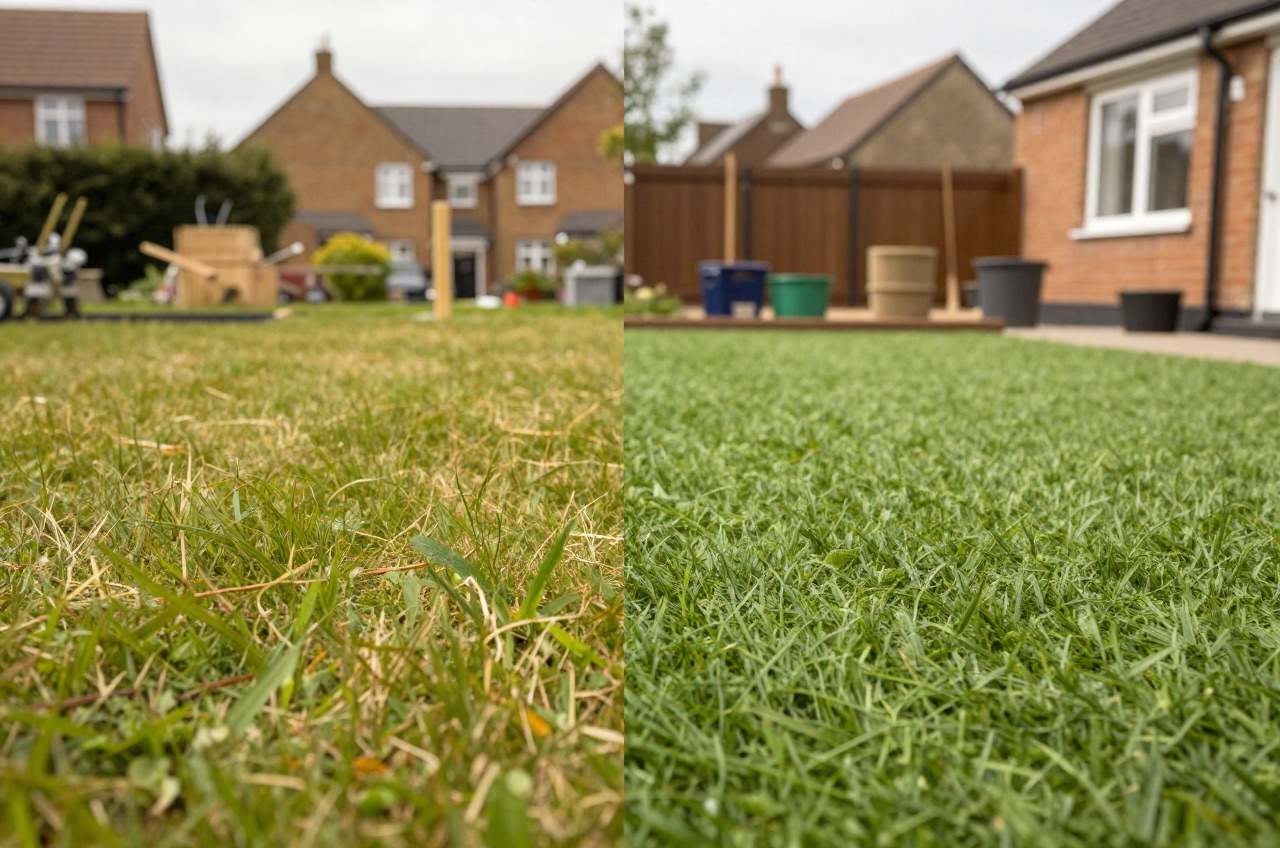
Artificial grass has become one of the most popular garden upgrades in the UK over the past decade, largely because British weather makes maintaining a presentable natural lawn genuinely difficult. But it is not automatically the better choice, the right decision depends on your budget, how you use the garden, and whether you have children or pets. Here is an honest comparison of costs and trade-offs.
Costs at a Glance
Installation cost depends heavily on garden size, existing ground conditions, and the quality of the product chosen.
| Product/Type | Material cost (£/m²) | Typical installed cost (£/m²) |
|---|---|---|
| Budget artificial grass (25–30mm pile) | £5–£101 | £15–£22 |
| Mid-range artificial grass (30–37mm pile) | £10–£18 | £22–£30 |
| Premium artificial grass (40mm+, realistic finish) | £18–£30 | £28–£42 |
| Seeded natural turf (new) | £1–£3 | £5–£10 |
| Turfed lawn (roll-on) | £3–£6 | £12–£20 |
| Overseeded/renovated existing lawn | £1–£4 | £4–£8 |
A typical 40m² rear garden in London or the South East will cost roughly £800–£1,600 for mid-range artificial grass installed, or £500–£800 for roll-on natural turf. In the North of England and Wales, labour costs tend to be 15–25% lower.
What Is Included in Artificial Grass Installation?
A proper artificial grass installation is not simply rolling out a mat. A reputable installer will:
- Remove existing vegetation and topsoil (typically 75–100mm deep)
- Lay a compacted MOT Type 1 sub-base (50–75mm)
- Install a weed membrane
- Bed a sharp sand layer to create a level, free-draining surface
- Lay and fix the grass, joining seams invisibly
- Infill with kiln-dried sand or crumb rubber to support the pile
Skipping the sub-base is the most common cause of artificial grass failure, the lawn will become uneven and waterlogged within a few years. Never accept a quote that omits it unless your ground conditions genuinely do not require it (rare in clay-heavy UK soils).
Pros and Cons of Artificial Grass
Advantages:
- Evergreen appearance regardless of weather or usage
- No mowing, fertilising, or watering required
- Durable under heavy foot traffic and pets
- Allergen-free for grass pollen sufferers
- Suitable for awkward, shaded areas where natural grass struggles
Disadvantages:
- Higher upfront cost than seeding or turfing
- Can overheat in direct sun (surface temperatures can exceed 40°C in summer)
- Not biodegradable, typically ends up in landfill at end of life
- Does not support biodiversity or pollinators
- Requires occasional brushing and rinsing, especially with dogs
- Most products carry a 5–10 year manufacturer warranty, but real lifespan varies
Pros and Cons of Natural Turf
Advantages:
- Lower upfront cost, especially for seeded lawns
- Environmentally positive, supports insects, absorbs CO₂, reduces surface water run-off
- Self-repairs over time
- Cooler surface temperature in summer
- Adds genuine kerb appeal for resale
Disadvantages:
- Requires weekly mowing from March to October
- Can deteriorate badly in shade, heavy use, or drought
- Annual maintenance costs of £150–£400/year (mowing, scarifying, aeration, overseeding, feeding)
- Needs 4–6 weeks to establish from seed; 2–4 weeks from turf before use
Artificial Grass Specifications to Check
When comparing products, look at these technical details:
- Pile height: 30–37mm is most natural-looking for general use; below 25mm looks very short and sparse; 40mm+ is plush but may flatten over time
- Dtex (yarn weight): Higher dtex (typically 11,000–14,000 for quality products) means thicker, more resilient fibres
- Stitch rate: More stitches per 10cm row = denser finish = more realistic
- Drainage rate: Aim for at least 30 litres/m²/hour; poor drainage creates puddles and odour problems with pets
- UV stability: All outdoor products should carry a UV-stabilisation rating confirming colour-fastness for at least 10 years
Planning Permission and Building Regulations
Laying artificial grass in your garden does not require planning permission for most residential properties. However, if you are covering the front garden (particularly in relation to permeable surfacing requirements under PD rights), the rules differ. The Flood and Water Management Act 2010 and local planning policies encourage permeable surfacing. Artificial grass is technically permeable through its drainage holes and sub-base, but some local authorities may take a view. Check with your local planning authority if in doubt.
Which Is Right for You?
Choose artificial grass if: you want a low-maintenance, year-round green space; you have pets that churn up natural grass; your garden gets little direct sun or heavy footfall; or you live in a property where you want a smart appearance without ongoing effort.
Choose natural turf if: you want to support wildlife and biodiversity; you have children who will benefit from a cooler, natural play surface; your budget is limited and you are prepared to invest time in maintenance; or you are considering resale value and want a traditional garden.
Getting Quotes
Always get at least three written quotes from installers. Ask each one to specify:
- Sub-base depth and material
- Weed membrane specification
- Pile height and dtex of the product
- Whether edging boards and fixings are included
- What the warranty covers and for how long
A gap of £5–£10/m² between quotes is common; a gap larger than that usually means one contractor is cutting corners on the sub-base or using inferior material.
References (1)
Figures in this note were checked against the sources below on 14 September 2026. Superscript numbers in the text point to them. Every source the site cites, by topic.
- 1costsupplier figureB&Q (Kingfisher plc).RN-CNJYCMA price, true at 2026-09. the retail price B&Q publishes for a 40 mm pile artificial grass roll, which is the supply figure the cost book records for this item
-
Artificial Grass 40mm Pile Pet-Friendly Thick Natural Realistic High Density Fake Grass Turf for Garden, UV Resistant (4m x 1m), B&Q (Kingfisher plc), accessed 16 September 2026. Priced at 2026-09, so no calibration is needed. diy.com