A well-maintained lawn is one of those things that only looks effortless when it is done right. The UK climate, mild, damp winters and occasionally hot, dry summers, creates its own rhythm of lawn care, and understanding that rhythm is 80% of the job. The other 20% is having the right kit and not cutting corners in autumn when the grass looks dormant but is actually recovering.
Most problems with UK lawns, patchy growth, moss, thatch build-up, compaction, stem from doing the wrong thing at the wrong time of year rather than from neglect alone. This guide sets out what to do and when, with realistic costs for both DIY and professional approaches.
The UK Lawn Calendar
| Month | Key Tasks |
|---|---|
| Jan–Feb | Rest. Check drainage. Remove leaves and debris. |
| March | First cut (high setting). Apply pre-emergent weed control if needed. |
| April | Lower mowing height gradually. Apply spring/summer fertiliser (high N). Reseed bare patches. |
| May–June | Mow weekly. Water in drought. Treat weeds as needed. |
| July–Aug | Mow less in heat. Raise cut height. Reduce irrigation to encourage deep roots. |
| September | Scarify. Aerate. Apply autumn fertiliser (high K, low N). Overseed thin areas. |
| October | Last cuts. Tidy edges. Top-dress if needed. |
| November | Lay turf if required (soil still warm enough to root). Brush off worm casts. |
| Dec | Rest. Keep off frozen or waterlogged grass. |
Mowing
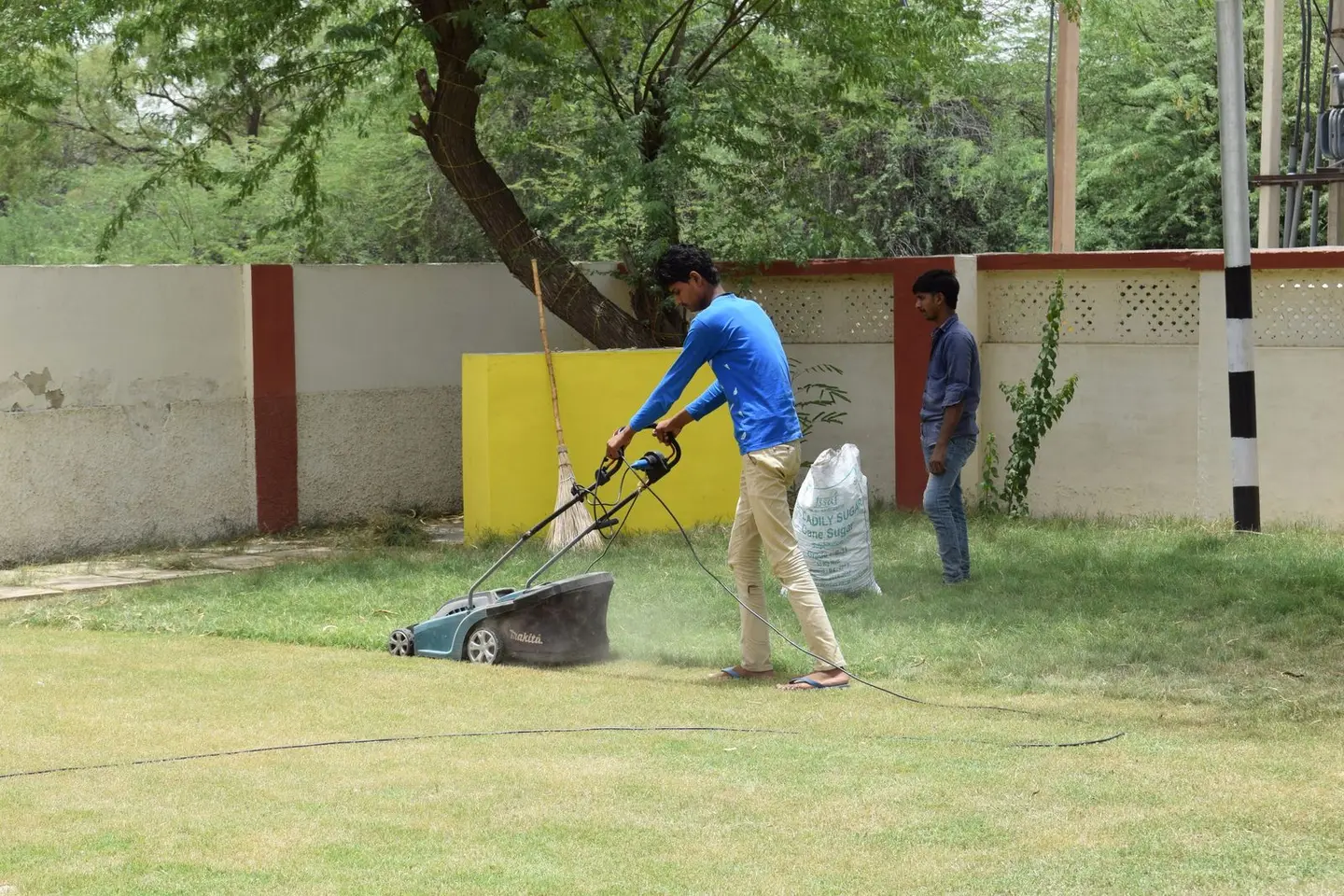
The single most important factor in lawn health is cutting height and frequency. Never remove more than one-third of the grass blade in a single cut. Cutting too short stresses the grass, opens it to moss and weed invasion, and causes yellowing in dry spells.
Target heights by season:
- Spring/autumn: 30–40 mm
- Summer: 40–50 mm (or higher in drought)
- First and last cuts of year: 50–60 mm
A rotary mower suits most UK family lawns. A cylinder mower gives a finer finish but requires a flat, well-prepared lawn. Robot mowers (£300–£2,500) work well on flat, clearly defined plots with no trees or garden beds creating complex navigation obstacles.
Feeding
Spring/summer fertiliser (high nitrogen, N:P:K around 20:10:10) should go on in April and again in June. Nitrogen drives leaf growth and colour. Apply at the manufacturer’s rate, typically 25–35 g/m². Do not apply in drought, as it can scorch grass if not watered in.
Autumn fertiliser (low nitrogen, high potassium, around 3:6:12) goes on in September. Potassium hardens cell walls and improves frost resistance. This feed is as important as the spring one and is frequently skipped by homeowners who think the lawn doesn’t need help when it’s slowing down for winter.
Approximate feeding costs (for an average 50 m² lawn):
- Granular fertiliser (spring or autumn, 50 m²): £8–£15 per application
- Liquid lawn food: £6–£12 per application
Scarifying and Aerating
Scarifying removes the layer of thatch, dead grass, moss and organic debris, that builds up between the soil surface and the living grass. A thatch layer over 10 mm restricts water and nutrient penetration and encourages moss. Scarify once in September using a spring-tine scarifier (manual: £30–£60, electric: £60–£150, hire: £30–£50/day). The lawn will look alarming immediately afterwards, bare and brown. This is normal; it will recover within three to four weeks.
Aeration relieves compaction, the main cause of waterlogging and poor drainage. Drive a garden fork 150 mm into the lawn at 150 mm intervals across the whole area, or hire a hollow-tine aerator (£40–£60/day) which pulls plugs of soil to the surface. Do this in September after scarifying, then brush dry sharp sand (or top-dressing compost) into the holes.
Reseeding and Overseeding
Bare patches are best repaired in April or September when soil temperatures are above 8°C. Steps:
- Scarify or scratch the bare area with a rake
- Apply a thin layer of top-dressing compost (10 mm)
- Broadcast seed at 30–35 g/m² (use a mix appropriate to your lawn’s shade and use)
- Rake in lightly, water and keep moist for 14–21 days
- First cut when seedlings reach 50 mm, set the blade high
Grass seed costs £5–£15 per kg; a 1 kg bag covers 25–30 m².1
Moss and Weeds
Moss is a symptom, not the problem. It grows where the grass is weak: compacted soil, poor drainage, shade, low pH or over-cutting. Apply iron sulphate (lawn sand or moss killer) to kill the moss, then address the underlying cause, otherwise it will return within a season.
Broadleaf weeds (dandelion, clover, plantain) can be spot-treated with selective lawn herbicide containing MCPA or mecoprop-P. Do not apply in drought or frost, and keep off the lawn for 24–48 hours after application. Weed-and-feed products combine fertiliser with herbicide and are convenient but tend to be less effective than separate applications.
Professional Lawn Care
Lawn care companies such as Greensleeves, GreenThumb and independent local operators offer treatment programmes that typically include four to six visits per year covering fertilisation, weed control, moss treatment and disease management.
| Service | Typical Cost (average UK garden, 50 m²) |
|---|---|
| Single treatment visit | £40–£80 |
| Annual programme (4–6 visits) | £180–£400 |
| Scarification (professional) | £80–£200 |
| Aeration (professional) | £60–£150 |
| Lawn renovation (scarify + aerate + seed) | £200–£450 |
| Full new lawn (turf, 50 m², supply & lay) | £600–£1,200 |
Professional programmes make most sense for larger gardens (over 100 m²), lawns where presentation really matters (front gardens of rental properties or commercial premises), or owners who genuinely do not have the time or inclination to follow the seasonal schedule themselves.
Common Mistakes
- Cutting too short. The most common cause of moss, weeds and a yellow lawn in summer.
- Ignoring autumn care. Skipping the September feed, scarify and aerate means the lawn enters winter weakened and takes longer to recover in spring.
- Watering lightly and frequently. Encourages shallow roots. Water deeply and infrequently (20–25 mm twice a week in drought) to push roots down.
- Mowing wet grass. Tears rather than cuts, spreads disease and clogs the mower. Wait until the dew has lifted.
- Applying spring fertiliser in late summer. Forces soft leafy growth just before the first frost, which then dies back badly and can invite fungal disease.
A good lawn is the product of consistent, seasonal attention over several years. The investment is modest, £50–£150/year in materials, and the results are cumulative.
References (1)
Figures in this note were checked against the sources below on 14 September 2026. Superscript numbers in the text point to them. Every source the site cites, by topic.
- 1costsupplier figureWickes Building Supplies Ltd.RN-ACKNGYA price, true at 2026-09. Wickes Building Supplies Ltd, Miracle Gro Multi Purpose Grass Seed 33m2 1kg. Held in the cost register as a price source; the passage quoted against it reads: Miracle-Gro Multi-Purpose Grass Seed 33m2 - 1kg :: £14 | £11 ... Gro-Sure Fast Acting Lawn Seed 50m2 - 1.5kg :: £16.50 | £0.33 per m2 ... Gro-Sure Smart Seed La
-
Miracle-Gro Multi-Purpose Grass Seed 33m2 - 1kg, Wickes, accessed 21 September 2026. Priced at 2026-09, so no calibration is needed. wickes.co.uk