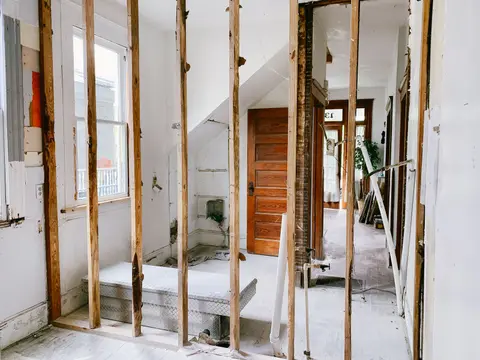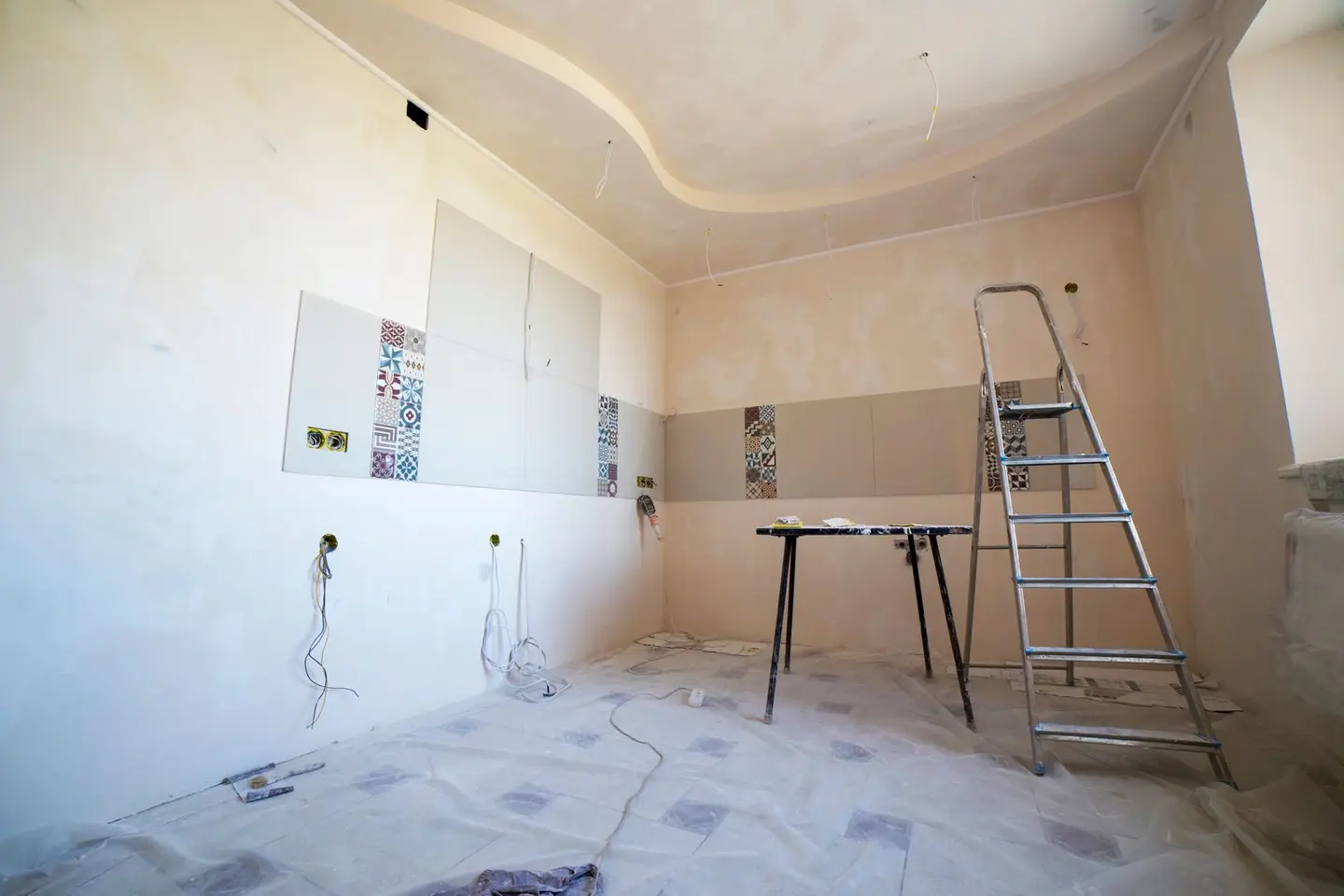
Building your own home is the most direct route to getting exactly what you want from a property, and in the UK it is more accessible than many people realise. There are no authoritative statistics, but estimates put self-build and custom build completions at roughly 10,000–15,000 homes a year across the UK.1 The end product often values above build cost, the process can be financed through specialist products, and the VAT savings on a new build are substantial. But it requires navigating planning, securing a plot, managing a build programme, and making hundreds of design decisions under budget pressure. This guide gives you the framework to decide whether it is right for you.
Self-Build vs Custom Build: What’s the Difference?
The two terms are often used interchangeably, but they describe genuinely different involvement levels:
| Route | What you do | Typical cost | Who it suits |
|---|---|---|---|
| Full self-build (labour) | Design, manage, and physically build much of the home yourself | £1,000–£1,800/m² | Experienced tradespeople, high time availability |
| Self-build (managed) | Commission an architect and manage subcontractors yourself | £1,500–£2,400/m² | Project managers, confident clients |
| Package/kit build | Choose from a manufacturer’s system, they supply structure | £1,600–£2,600/m² | Those who want design certainty and speed |
| Custom build | Developer provides serviced plot, you customise the design | £2,000–£3,000/m² | Those who want less risk and less management |
The Right to Build legislation (the Self-build and Custom Housebuilding Act 2015, as amended by the Housing and Planning Act 2016) requires every local authority in England to maintain a register of people seeking self-build or custom build plots, and to grant sufficient permissions to meet demand within three years.2 Registering is often free, although councils may charge a fee on a cost-recovery basis, and it can give useful intelligence on how active your local authority is.2
Finding a Plot
Plot availability varies enormously by region. Useful search routes:
- Plotsearch and Plotfinder, dedicated listing sites, though many plots sell off-market
- Local authority Right to Build register, councils must grant permission for enough serviced plots to meet register demand3
- Community Land Trusts, occasionally offer serviced plots, often with affordability covenants
- Agricultural land with permission, occasionally achievable but requires specific planning circumstances (rural exception sites, for example)
- Demolishing an existing dwelling, planning permission for a replacement dwelling is often more straightforward than on a greenfield site
As a rough guide, expect to pay £50,000–£150,000 for a single-plot in much of Scotland, the Midlands, and North of England, and £200,000–£500,000+ in the South East and London suburbs. The plot typically represents 25–40% of the total project cost.
Always check whether the plot has full planning permission, outline permission, or simply planning potential. Full planning with detailed drawings is the safest purchase; planning potential requires you to assume that risk yourself.
Planning Permission
If you are buying a plot with existing detailed planning permission, you inherit those drawings. If you want to change the scheme significantly, you will need to submit your own application. Outline permission settles only the principle of development and is granted subject to conditions requiring later approval of the reserved matters, so a plot with outline permission still needs a reserved matters application, or a fresh full application, before you can build.4
Key planning considerations for new dwellings:
- National Planning Policy Framework (NPPF), the government’s national planning policy, which councils must take into account. If a council cannot demonstrate a five-year housing land supply, the presumption in favour of sustainable development applies, which can make a new home easier to justify.5
- Local Plan, check your district’s local plan to understand allocated sites and housing targets.
- Highways, new access or significant change to existing access usually requires consultation with the highway authority.
- Biodiversity Net Gain, the 10% uplift required of most development in England since 2024, does not apply to self-build and custom build applications, which are exempt.6
- Building Regulations, entirely separate from planning. All new dwellings in England must meet Part L (energy) standards, which set a target emission rate, a target primary energy rate and a target fabric energy efficiency rate for each new home; many self-builders aim for Passivhaus or similar.7
An architect or planning consultant fee for a new dwelling application typically runs to £5,000–£15,000 depending on complexity.
Finance: Self-Build Mortgages
Mainstream residential mortgages do not work for self-build because the property does not exist as security at outset. Specialist self-build mortgages release funds in stages aligned with the build programme:
- Arrears stage payment, most common; lender releases funds after each stage is completed and independently valued. Lower risk to lender, requires you to fund each stage from savings first.
- Advance stage payment, funds released before each stage begins. Higher interest rates but far more practical for those without large cash reserves.
Typical stages: land purchase, foundations complete, wall plate level, roof weathertight, first fix complete, second fix/completion.
Loan-to-value ratios on self-build mortgages typically top out at around 75–85%. The Ecology Building Society, for example, lends up to 80% on a repayment basis for energy-efficient self-build projects.8 Specialist self-build brokers such as BuildStore and BuildLoan are worth using.
VAT Reclaim: Do Not Overlook This
New homes sold by a developer are zero-rated for VAT, and the HMRC DIY Housebuilders VAT Refund Scheme puts self-builders in a similar position.9 On completion you can reclaim the VAT you paid on building materials incorporated in the home, using the online service or form VAT431NB.9 For work completed on or after 5 December 2023, you have six months from completion to submit the claim, and you can make only one claim.10
Eligible items include most building materials incorporated into the structure. Architects’ fees and other professional fees cannot be reclaimed through the scheme.11
On a typical £400,000 build programme, VAT on eligible materials commonly runs to £20,000–£40,000, a significant cash return at the end of the project. Keep every receipt.
Labour supplied by VAT-registered contractors on new builds is charged at zero rate anyway, so there is no reclaim needed there.9
Programme and Contingency
A realistic build programme for a self-managed single dwelling:
| Phase | Typical duration |
|---|---|
| Design, planning, procurement | 6–18 months |
| Groundworks and foundations | 4–8 weeks |
| Structure (timber frame / masonry) | 8–16 weeks |
| Weathertight (roof, windows) | 4–8 weeks |
| First fix (services, insulation) | 6–10 weeks |
| Second fix and fit-out | 8–16 weeks |
| Commissioning, snagging, completion | 4–6 weeks |
Total on-site programme: 9–18 months for most single-dwelling self-builds. Add 6–12 months for planning and procurement and you should expect 18–30 months from site acquisition to move-in.
Build-cost contingency: allocate 10–15% as a minimum. First-time self-builders should budget 15–20%. The most common budget overruns occur in groundworks (unexpected site conditions), services (connection charges from utility companies, which can run well into five figures where a plot is far from the mains), and fit-out (specification creep).
Key Decisions to Make Early
- Structural system, timber frame, structural insulated panels (SIPs), insulating concrete formwork (ICF), or traditional masonry. Each has different speed, cost, and thermal performance profiles.
- Heating system, heat pump (air or ground source) is now the mainstream choice for new builds. The Future Homes and Buildings Standards come into force in England on 24 March 2027 and are designed to ensure new homes are built with low carbon heating.12 A self-build is built to the previous rules only if a building notice, initial notice or full plans application is given before 24 March 2027 and work starts before 24 March 2028.12
- Contractor model, main contractor (single point of responsibility, higher cost), or direct labour (trade management, lower cost, higher time commitment).
- Project management, will you manage the build yourself, appoint a project manager, or use a turnkey package supplier?
Self-build rewards careful preparation. The combination of a home designed entirely to your brief and the potential for the finished home to be worth more than it cost makes it one of the most financially and personally rewarding routes to home ownership available in the UK.
References (12)
Figures in this note were checked against the sources below on 2 October 2026. Superscript numbers in the text point to them. Every source the site cites, by topic.
- 1technicalfairUniversity of Cambridge, Department of Land Economy, guidance.RN-LNRA2VA University of Cambridge evidence review of UK self-build and custom housebuilding. It notes there are no authoritative statistics and reports estimates of about 10,000 to 15,000 completions a year.
- 2technicalvery strongMinistry of Housing, Communities and Local Government, guidance.RN-H36ZL1Planning practice guidance (published 1 April 2016, updated 8 February 2021) on the Right to Build registers. Applicants must be aged 18 or over; authorities have 3 years from the end of each base period (which runs 31 October to 30 October) to grant permission for enough serviced plots to match register demand. A serviced plot is defined as one with access to a public highway and connections for electricity, water and waste water. Authorities may charge register fees on a cost-recovery basis only, and an exemption can be sought where demand exceeds 20 per cent of the land identified for future housing.
- 3technicalvery strongThe National Archives (legislation.gov.uk), guidance.RN-0KXQ9JThe statutory text of section 2A of the Self-build and Custom Housebuilding Act 2015. It places a duty on councils to give development permission on enough serviced plots to meet register demand.
- 4technicalvery strongMinistry of Housing, Communities and Local Government, guidance.RN-G5VBDSPlanning Practice Guidance on making a planning application: what a valid application must contain, the national and local validation requirements, pre-application advice, and what happens when a council says an application is invalid. The source for why an application can sit for weeks without the clock starting.
- 5technicalvery strongMinistry of Housing, Communities and Local Government, guidance.RN-UY4LW2The government's planning practice guidance on housing land supply. It explains that where a council cannot show a 5-year supply, the NPPF presumption in favour of sustainable development applies.
- 6technicalvery strongDepartment for Environment, Food and Rural Affairs, guidance.RN-IM04HJGOV.UK guidance listing the developments exempt from mandatory biodiversity net gain in England: householder applications (extensions, conservatories, loft conversions), developments of 0.2 hectares or below, de minimis developments, temporary developments, self-build and custom build, and others.
- 7technicalvery strongMinistry of Housing, Communities and Local Government.RN-L0FCJXThe in-force U-value tables a DIY insulation or door note must quote, with the exact numbers. Table 4.2, limiting U-values for new fabric elements in existing dwellings, sets roof 0.15, wall 0.18, floor 0.18, swimming pool basin 0.25, window 1.4 or Window Energy Rating Band B minimum, rooflight 2.2, doors with more than 60 per cent of the internal face glazed 1.4 or Doorset Energy Rating Band C minimum, and other doors 1.4 or Doorset Energy Rating Band B minimum. Table 4.3, for existing elements, gives a roof threshold of 0.35 and an improved value of 0.16, which is the figure a loft insulation note needs: paragraph 4.12 says a retained element whose U-value is higher than the column (a) threshold, for example through a loft or garage conversion, should be upgraded to the column (b) value. Paragraph 4.13 allows a lesser upgrade only where the improved value is not technically or functionally feasible or would not achieve a simple payback of 15 years or less. Paragraph 4.8 requires a replacement element to be no worse than the one it replaces as well as meeting Table 4.2. Paragraph 4.10 gives the heritage exception: where character must be maintained, a centre pane U-value of no more than 1.2 or low-emissivity secondary glazing. Note 9 records that the timber window concession of 1.6 or Band C ended on 14 June 2023. The 2021 edition came into force on 15 June 2022; a 2026 edition exists at https://assets.publishing.service.gov.uk/media/69c122a6cfa346b9d4704a55/ADL1_2026.pdf.
- 8technicalsupplier figureEcology Building Society, guidance.RN-F2HSU5The Ecology Building Society's product page for its self-build mortgage. It confirms the lender offers up to 80% loan-to-value on a repayment basis for energy-efficient self-build projects.
- 9technicalvery strongHM Revenue & Customs, guidance.RN-Q24A2AHMRC guidance (published 5 December 2023, updated 6 November 2025) on claiming back VAT on building materials for a self-built new home. Claims must be made no more than 6 months after completion for builds completed on or after 5 December 2023 (3 months for earlier completions). Sets out what a VAT invoice must show, including the customer's name and address on invoices over £250, and gives processing times of 3 weeks for online claims and 6 weeks by post.
- 10technicalvery strongHM Revenue & Customs, guidance.RN-H7G3T3The DIY housebuilders' scheme lets someone building a new home, or converting a non-residential building into one, reclaim VAT on building materials. Work completed before 5 December 2023 had to be claimed within 3 months of completion; work completed on or after that date must be claimed within 6 months. Only one claim can be made per person and the HMRC DIY enquiries line is 0300 322 7073.
- 11technicalvery strongHM Revenue & Customs, guidance.RN-77JNIWHMRC's A to Z of goods and services that are allowable and disallowable in a VAT refund claim under the DIY housebuilders scheme, including building materials, fitted items, appliances and professional fees (disallowed).
- 12technicalvery strongMinistry of Housing, Communities and Local Government, guidance.RN-WMRZGFThe government's circular letter to building control bodies announcing the Future Homes and Buildings Standards: the Building Regulations etc. (Amendment) (England) Regulations 2026 and the 2026 editions of Approved Documents L and F. It gives the purpose (new buildings built with low carbon heating and high energy efficiency), the in-force date of 24 March 2027 (24 September 2027 for higher-risk building work), and the transitional arrangements, under which work notified before 24 March 2027 and started before 24 March 2028 stays under the previous rules.
-
Self-build and Custom Housebuilding in the UK: An Evidence Review, University of Cambridge, Department of Land Economy, accessed 30 September 2026. landecon.cam.ac.uk
-
Self-build and custom housebuilding (Planning Practice Guidance), Ministry of Housing, Communities and Local Government, accessed 30 September 2026. gov.uk
-
Self-build and Custom Housebuilding Act 2015, section 2A: Duty to grant planning permission etc, legislation.gov.uk, accessed 30 September 2026. legislation.gov.uk
-
Making an application (Planning Practice Guidance), Ministry of Housing, Communities and Local Government, accessed 2 October 2026. gov.uk
-
Housing supply and delivery (Planning Practice Guidance), Ministry of Housing, Communities and Local Government, accessed 30 September 2026. gov.uk
-
Biodiversity net gain: exempt developments, Department for Environment, Food and Rural Affairs, accessed 29 September 2026. gov.uk
-
Approved Document L, Conservation of fuel and power, Volume 1: Dwellings, 2021 edition incorporating 2023 amendments, Ministry of Housing, Communities and Local Government, accessed 14 September 2026. assets.publishing.service.gov.uk
-
Self-build 80% Mortgage, Ecology Building Society, accessed 30 September 2026. ecology.co.uk
-
VAT refunds for new builds if you’re a DIY housebuilder, HM Revenue & Customs, accessed 30 September 2026. gov.uk
-
Building a new home and VAT, GOV.UK, accessed 30 September 2026. gov.uk
-
Goods and services you can claim for under the VAT DIY Scheme, HM Revenue & Customs, accessed 29 September 2026. gov.uk
-
The Future Homes and Buildings Standards: Building Circular 01/2026, Ministry of Housing, Communities and Local Government, accessed 29 September 2026. gov.uk