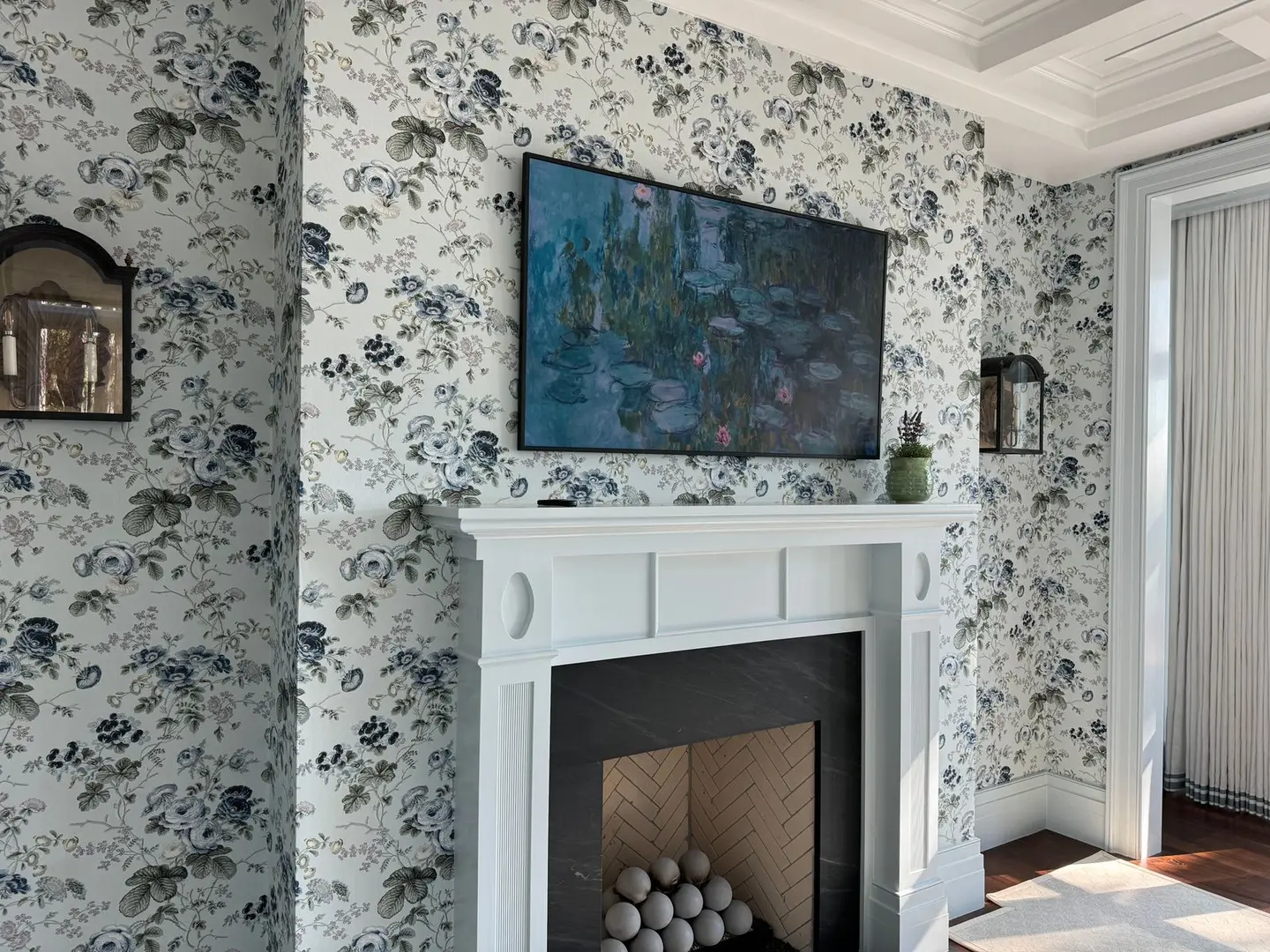
Whether to wallpaper or paint is one of the first decisions you make when decorating a room. Paint is faster, easier to change, and cheaper to apply, but wallpaper offers texture, pattern depth, and an impactful quality that flat paint cannot replicate. Many rooms benefit from a combination: painted walls with a single wallpapered feature wall, or painted woodwork against a fully papered room.
Once you have decided on wallpaper, calculating the right number of rolls is critical. Too few means running out mid-room; too many is wasted money, especially with mid-range to premium papers. This guide walks through both the decision and the calculation.
Wallpaper vs Paint: A Practical Comparison
| Factor | Wallpaper | Paint |
|---|---|---|
| Materials cost (per m²) | £1.50–£30+ | £0.50–£3 |
| Labour cost (professional) | £300–£700 per room | £200–£500 per room |
| DIY difficulty | Moderate to high | Low to moderate |
| Lifespan | 10–20 years (quality paper) | 5–10 years before refresh |
| Hiding surface imperfections | Good (especially textured paper) | Limited |
| Pattern and texture options | Extensive | Limited (specialist finishes aside) |
| Reversibility | Moderate, strip-able papers come off cleanly | Very easy |
| Effect on small rooms | Can feel heavy; work with vertical stripes to add height | Opens space with light colours |
| Moisture resistance | Low (specialist bathroom papers available) | High (with correct product) |
Choose paint when: you want flexibility to change colour easily, the room is small, you want to minimise disruption, or the walls are in excellent condition.
Choose wallpaper when: you want pattern, texture, or a statement finish; the walls have minor imperfections a lining paper can bridge; or you want a premium finish that lasts longer between decorations.
UK Wallpaper Roll Sizes
Standard UK wallpaper rolls measure 10 m long × 520–530 mm wide (many are 10.05 m), approximately 5.2–5.3 m² per roll. A typical budget roll, such as Anaglypta’s Royal Oak blown vinyl, is 10 m × 52 cm and covers 5.2 m².1 Some premium and designer papers are 10 m × 700 mm (7 m²/roll) or shorter (e.g., 9 m, 8 m). Always check the dimensions on the roll’s specification label before calculating.
| Roll Type | Typical Dimensions | Area Per Roll |
|---|---|---|
| Standard UK roll | 10 m × 520 mm | ~5.2 m² |
| Wide UK roll | 10 m × 700 mm | ~7.0 m² |
| Shorter roll (some imported papers) | 9 m × 520 mm | ~4.7 m² |
| Paste-the-wall (non-woven) | 10 m × 530–600 mm | 5.3–6.0 m² |
| Grasscloth / natural materials | Varies | Verify per product |
Understanding Pattern Repeat
Straight match (also called a drop of 0): the pattern matches horizontally across joins. Each strip lines up without offset. Waste is minimal, usually only the short piece trimmed from the top and bottom of each drop.
Half-drop match: the pattern on every other strip is offset by half the repeat length.2 This is a common format for decorative papers. You cut alternating strips from two rolls simultaneously to minimise waste.
Free match / random: no repeat alignment needed. Textures, grasscloths, and some abstract designs fall here. Waste is lowest with these papers.
The pattern repeat length determines how much is wasted per drop.2 With a 64 cm repeat and 2.5 m drops, each drop has to use a whole number of repeats: 4 × 0.64 m = 2.56 m of paper per drop, as in the worked example below. Where the drop length falls just above a multiple of the repeat, the waste per drop approaches a full repeat. On papers with large repeats (50 cm+), waste can be 20–30% of total paper used.
| Pattern Repeat | Waste Factor to Add |
|---|---|
| 0 (straight/free match) | 0–5% |
| 1–25 cm | 5–10% |
| 25–50 cm | 10–20% |
| 50–75 cm | 15–25% |
| 75 cm+ | 20–35% |
How to Calculate Wallpaper Rolls: Step by Step
Step 1, Measure wall height
Measure floor to ceiling. Add 100 mm for trimming top and bottom (50 mm each end). This is your drop length.
Example: 2.4 m ceiling height → drop length = 2.5 m
Step 2, Calculate drops per roll
Divide roll length by drop length (ignoring repeat for now):
10 m ÷ 2.5 m = 4 drops per roll (straight match)
Step 3, Adjust for pattern repeat
For a half-drop with a 53 cm repeat:
Round your drop length up to the next multiple of the repeat:
2.5 m ÷ 0.53 m = 4.7 → round up to 5 repeats × 0.53 m = 2.65 m effective drop length
10 m ÷ 2.65 m = 3.77 → 3 drops per roll (round down)
Step 4, Count the drops needed around the room
Measure the total perimeter of the room in millimetres. Divide by roll width (e.g., 520 mm):
For a room with 15 m perimeter: 15,000 ÷ 520 = 28.8 → 29 drops
Step 5, Calculate rolls needed
29 drops ÷ 3 drops per roll = 9.7 → 10 rolls
Always add one extra roll as contingency, for cutting errors, future repairs, and to cover the possibility of a slight dye lot difference if you need to reorder. For rooms over 12 rolls, add two spare rolls.
Worked Example: A Standard Bedroom
Room perimeter: 14.5 m
Ceiling height: 2.4 m → drop length with trim: 2.5 m
Wallpaper: 10 m × 520 mm roll, 64 cm half-drop repeat
- Effective drop length: next multiple of 0.64 m above 2.5 m → 3 × 0.64 m = 1.92 m (not enough); 4 × 0.64 m = 2.56 m ✓
- Drops per roll: 10 ÷ 2.56 = 3.9 → 3 drops per roll
- Total drops needed: 14,500 ÷ 520 = 27.9 → 28 drops
- Rolls needed: 28 ÷ 3 = 9.3 → 10 rolls + 1 spare = 11 rolls
| Item | Value |
|---|---|
| Room perimeter | 14.5 m |
| Drop length (with trim) | 2.5 m |
| Pattern repeat | 64 cm (half drop) |
| Effective drop length | 2.56 m |
| Drops per roll | 3 |
| Drops required | 28 |
| Rolls required | 10 |
| Recommended purchase | 11 rolls |
Feature Walls: One Wall Only
A single feature wall is a cost-effective way to introduce wallpaper without committing to a full room. Measure only that wall’s width and height, follow the same calculation, and you will typically need 2–4 rolls, plus the spare, for a bedroom or living room wall 3–5 m wide with a 2.4 m ceiling.
When mixing wallpaper with paint on other walls, paint the remaining three walls first, cut into the wallpaper edge precisely to give a clean finish.
Wallpaper Cost Summary
| Paper Type | Cost Per Roll | Rolls for Medium Room | Total Material Cost |
|---|---|---|---|
| Budget vinyl | £8–£15 | 11 | £88–£165 |
| Mid-range pattern | £18–£40 | 11 | £198–£440 |
| Premium / designer | £45–£120+ | 11 | £495–£1,320+ |
| Natural grasscloth | £60–£150 | 11 | £660–£1,650 |
Add professional hanging at £20–£35 per roll (labour only) for a fully papered room, or typically £300–£700 for a professional decorator to paper a typical room including preparation and lining paper if needed, in line with the labour figure in the comparison table.
Order all rolls from the same production batch (the batch number is on each roll’s label), because rolls from different batches can differ slightly in colour and pattern.3
References (3)
Figures in this note were checked against the sources below on 30 September 2026. Superscript numbers in the text point to them. Every source the site cites, by topic.
- 1technicalsupplier figureToolstation, guidance.RN-WEOOLCA merchant product page for a mainstream UK wallpaper roll. It states the standard 10 m by 52 cm roll size and 5.2 m2 coverage.
- 2technicalsupplier figureGraham & Brown, guidance.RN-4MUV6LA UK wallpaper maker's guidance on pattern matches. It explains that a half-drop pattern repeats at the ceiling line on alternate strips.
- 3technicalsupplier figureGraham & Brown, guidance.RN-IDW5KFA UK wallpaper maker's note on batch numbers. It says the batch number is on the roll label and mixed batches can differ in colour and pattern.
-
Anaglypta Royal Oak Precision Blown Vinyl 10m x 52cm, Toolstation, accessed 30 September 2026. toolstation.com
-
Wallpaper FAQ, Graham & Brown, accessed 30 September 2026. grahambrown.com
-
What is a batch number, Graham & Brown, accessed 30 September 2026. support.grahambrown.com