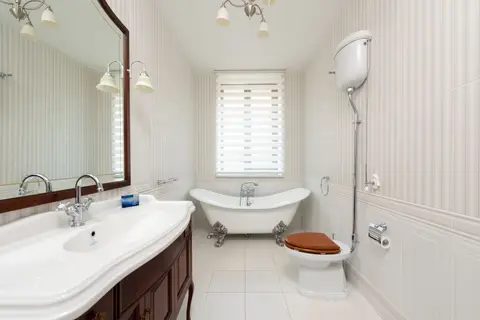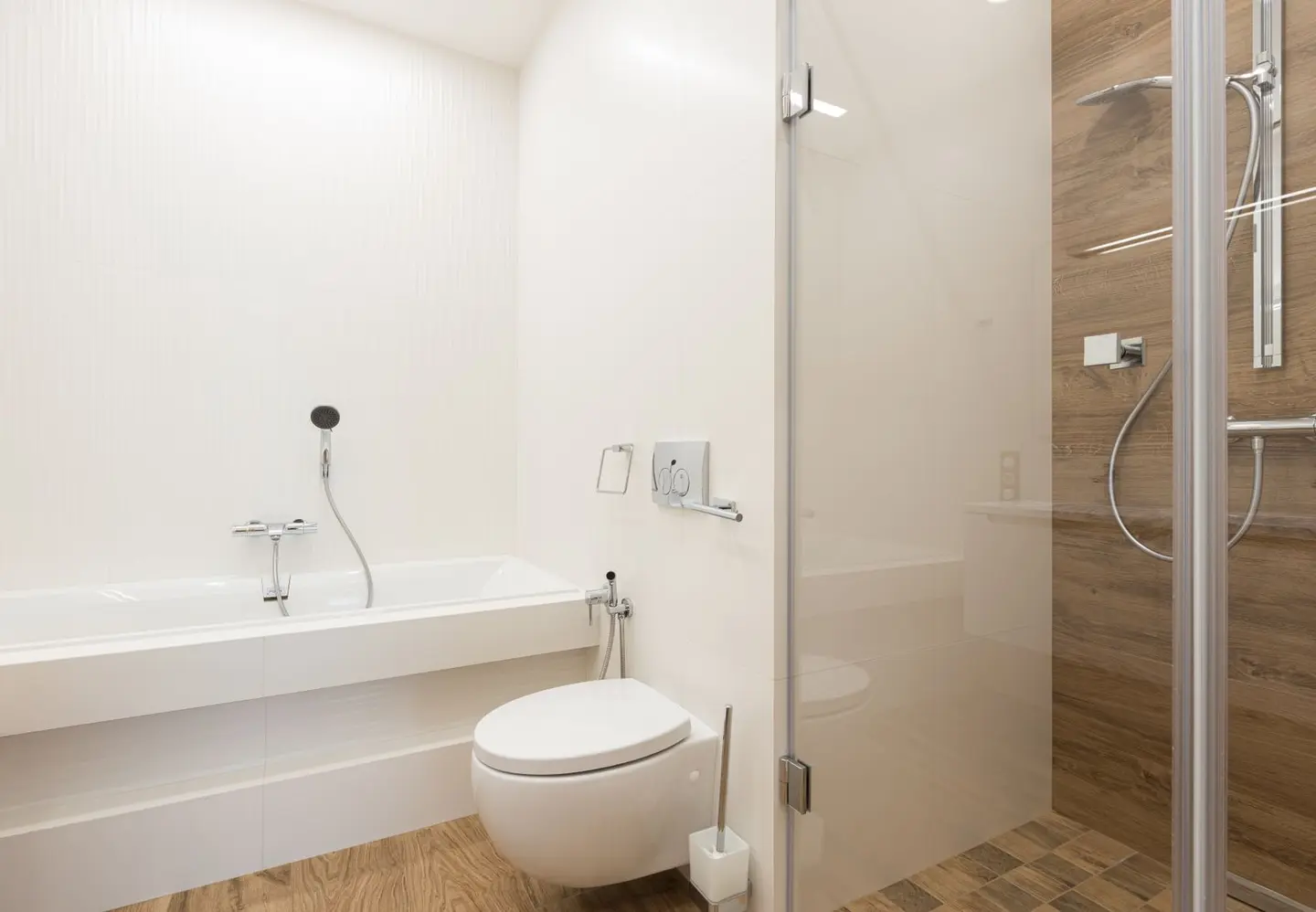
A toilet flush button that does not work properly is one of the most common household plumbing complaints, and usually one of the easiest to fix. In most cases you do not need a plumber: the fault lies in the actuator plate, the flush valve, or the link rod connecting them, and you can usually replace any of these for roughly £5–£65 in parts.
This guide covers dual-flush concealed cisterns and also traditional exposed cisterns with single or dual button/lever mechanisms. Since 1 January 2001 the water fittings rules have capped the single flush of a newly installed WC at 6 litres.1 Most modern cisterns meet this with a dual flush.
Tools and Materials You’ll Need
- Adjustable spanner or slip-joint pliers
- Flathead and Phillips screwdrivers
- Replacement actuator plate or flush valve (see below for sizing)
- Towel and small container (to catch any residual water)
- Rubber gloves (optional)
You do not need to turn off the water supply to fix the button mechanism in most cases, though it is sensible to isolate the supply if you are replacing the complete flush valve.
Diagnosing the Problem
Before buying parts, identify what is actually failing:
Button is completely unresponsive: Usually the actuator plate (the button plate visible on the wall or cistern lid) has broken or disconnected from the flush valve rods below. Remove the plate to investigate.
Button sticks down or is hard to press: Often debris under the button plate, a bent actuator rod, or a flush valve that is sticking in the open position. Can sometimes be freed without replacing anything.
Only one flush option works (on dual-flush): The dual-flush valve has two separate rods, one for full flush, one for half flush. If only one works, the corresponding rod has disconnected or the actuator plate button is broken on one side.
Toilet flushes continuously or runs: This is not a button fault, it is a fill valve or flush seal issue. See a separate guide on running toilets.
Step 1: Access the Actuator Plate
On concealed cisterns (button on the wall above the toilet), the actuator plate clips or screws into the frame:
- Insert a flathead screwdriver into the side slot of the button plate (usually on the right) and gently lever the plate away from the frame. Some plates have a central cap that unscrews first.
- On dual-flush plates, you should see two rods (or a single plate with two sections) that pass through the frame into the cistern.
- Inspect the rods, they connect to the flush valve inside the cistern. If a rod has snapped or pulled free of the plate, this is the fault.
Step 2: Check and Reconnect the Actuator Rods
The actuator rods sit on top of the flush valve inside the cistern and simply push down to trigger the flush. They are not fixed permanently, they just rest in position.
- Push the plate back against the frame and try pressing each button while watching the rods through the opening. Each rod should move freely and push the top of the flush valve down cleanly.
- If a rod is not reaching the valve, the valve may have shifted position, or the cistern is not mounted at the right depth for the plate.
- Many flush valves have adjustable height, loosen the lock ring at the base of the valve and adjust the height so the rods engage properly. Retighten and test.
Step 3: Replace a Broken Actuator Plate
If the plate itself is cracked or a button is broken:
- Identify the cistern before ordering: Geberit flush plates bear the name of the concealed cistern they fit, such as Sigma or Omega, so a plate from one series will not suit the other.2
- Common actuator plate brands include Geberit (very widely used in UK concealed cisterns), Valsir, Grohe, and Tece. Geberit’s Sigma01 and Sigma10 are common plate designs for its Sigma cisterns.
- A replacement actuator plate typically costs about £30–£65 depending on the maker and finish (white plastic, chrome, brushed stainless). Order by cistern model if known: check inside the cistern access opening for a model number.
- Clip the new plate into the frame and test both flush options.
Step 4: Replace the Flush Valve (If Needed)
If the problem is the flush valve itself (button engages but water doesn’t flush, or the cistern fills but won’t empty), you’ll need to isolate the water supply:
- Turn off the isolation valve on the supply pipe (usually a flat-head screw on the pipe below the cistern, turn 90° to isolate). If there is no isolation valve, turn off at the stopcock.
- Flush the remaining water from the cistern to empty it.
- Remove the actuator plate and access the cistern through the front panel.
- The flush valve sits in the centre of the cistern. On many concealed cisterns it unclips or twists out of its base; on exposed cisterns it is often held by a locking ring or back nut. Release it, disconnect any overflow pipe, and lift out the valve.
- Take the old valve to a plumbers’ merchant or photograph the model number to order a replacement. Common UK flush valves: Geberit, Fluidmaster, Thomas Dudley. A replacement Geberit flush valve typically costs £20–£60. Its Type 290 dual flush valve for ceramic cisterns, for example, was listed at £54.68 by a marketplace seller on B&Q’s website in September 2026.3
- Fit the new valve, hand-tighten the lock ring, reconnect the overflow, refit the actuator rods, turn the water back on, and test.
Step 5: Bleeding Air and Testing
After any work inside the cistern:
- Allow the cistern to fill fully (2–4 minutes) before testing the flush
- Test both full and half flush if dual-flush
- Check around the base of the flush valve for any drips once the cistern is full
- Refit the actuator plate and test again through the button mechanism
Common Mistakes to Avoid
Buying the wrong actuator plate: check the cistern maker and series before ordering. Geberit is very common in UK concealed cisterns, but plates are made to suit a particular maker’s cistern series, so a Valsir or Grohe cistern needs its own plates.
Overtightening the valve lock ring, hand-tight plus a quarter turn is sufficient. Overtightening cracks the plastic.
Not isolating the supply before working on the flush valve, the cistern will refill mid-job.
Confusing flush valve problems with fill valve problems, if the cistern doesn’t fill after flushing, or runs constantly, the fill valve (ballcock or float valve) is the culprit, not the flush button.
When to Call a Plumber
Most toilet flush button repairs are genuinely DIY-friendly. Call a plumber if:
- The cistern itself is cracked or leaking from the body
- There is evidence of water damage to the wall behind a concealed cistern
- The cistern itself needs replacing, which is rare: Geberit, for example, guarantees spare parts availability for 50 years, so worn internals can usually be renewed2
- You are not confident working around the water supply
Plumbers commonly charge around £60–£120 per hour in 2026, so a one-hour flush button fix on a call-out could cost roughly £65–£185 including parts. Given that the parts alone cost roughly £5–£65, this is a worthwhile job to attempt yourself first.
References (3)
Figures in this note were checked against the sources below on 30 September 2026. Superscript numbers in the text point to them. Every source the site cites, by topic.
- 1technicalvery strongThe National Archives, guidance.RN-MY6E6ESchedule 2 to the Water Supply (Water Fittings) Regulations 1999, which applies in England and Wales. It caps WC flush volumes and requires backflow prevention on every water system.
- 2technicalsupplier figureGeberit UK, guidance.RN-ZYYU39Geberit UK page on its concealed cisterns; it settles that flush plates are matched to the cistern series named on them, so the cistern must be identified before ordering.
- 3costsupplier figureB&Q.RN-579JNBA price, true at 2026-09. B&Q marketplace product page for the Geberit Type 290 dual flush valve (282.350.21.2); it gives the retail price, within the note's £20–£60 range for a Geberit flush valve.
-
The Water Supply (Water Fittings) Regulations 1999, Schedule 2, The National Archives, accessed 30 September 2026. legislation.gov.uk
-
Concealed cisterns for toilets, Geberit UK, accessed 30 September 2026. geberit.co.uk
-
Geberit 282.350.21.2 Toilet Cistern Dual Flush Valve for Ceramic Cisterns, B&Q, accessed 30 September 2026. Priced at 2026-09 and left there. diy.com