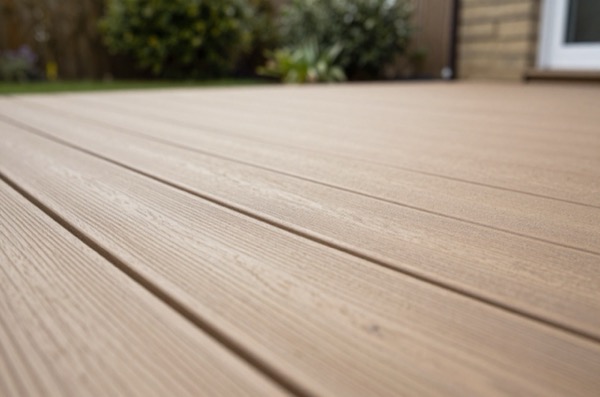
Staining decking protects the timber from UV damage, water ingress, and mould, and in the UK’s wet climate, untreated decking can turn grey and slippery within a single season. Done properly, a stain job lasts 2–4 years on softwood and up to 5 years on dense hardwoods like Balau or Garapa.
The preparation stage is the most important part. Rushed prep leads to poor adhesion and peeling within months, regardless of how good the stain is.
Decking Oil vs Stain vs Paint
These terms are often used interchangeably in marketing, but they behave differently:
| Product Type | Penetration | Finish | Best For |
|---|---|---|---|
| Decking oil | Penetrating | Natural/clear to tinted | Hardwoods, fresh softwood |
| Decking stain | Penetrating | Tinted, UV protection | Most softwoods and hardwoods |
| Decking paint/solid colour | Film-forming | Opaque | Very weathered or rough timber |
For most UK garden decks, a penetrating stain is the right choice, it lets the timber breathe, won’t peel, and is easy to reapply. Solid paints look good initially but tend to peel and flake and are hard to maintain without stripping.
Composite decking does not take conventional stain, it has its own maintenance products. Check the manufacturer’s guidance before applying anything.
What You’ll Need
- Deck cleaner or brightener (£8–£18 per litre, diluted)
- Pressure washer or stiff deck brush
- Belt sander or orbital sander with 60–80 grit paper (for rough decking)
- Decking stain (£15–£40 per litre, budget 8–12 m² per litre per coat)
- Wide brush (75–100 mm) or a pad applicator/roller with extension pole
- Masking tape for edges near walls or fencing
- Gloves and old clothes
Step 1: Choose the Right Day
Temperature must be above 10°C throughout the job and for 24 hours after application. Most UK products specify 8–12°C minimum, but warmer is better, stain in direct mid-afternoon summer sun can dry too fast and streak.
Rain within 24–48 hours of application ruins the job. Check a 3-day forecast. Early morning or overcast conditions on a dry day are ideal.
Step 2: Clear and Clean
Move all furniture and pots off the decking. If decking has been down more than a year or shows any greening, algae, or grey weathering, you must clean it thoroughly first.
For lightly weathered decking: Dilute a deck cleaner at the manufacturer’s ratio and scrub with a stiff brush, working with the grain. Rinse thoroughly with a hose.
For heavily weathered or green decking: A deck brightener or oxalic-acid-based cleaner restores the natural timber colour before staining. Apply, leave for 15–30 minutes, then scrub and rinse. Pressure washing (maximum 80–100 bar for softwood, use a fan tip) speeds up rinsing but can raise the grain.
Allow decking to dry completely, typically 24–48 hours of dry weather. Staining damp timber traps moisture and causes adhesion failure.
Step 3: Sand if Needed
New pressure-treated timber often has a rough or slightly furry surface. Existing decking may have raised grain after cleaning. A light sand with 60–80 grit (with the grain) opens the timber and improves stain penetration.
Vacuum or brush away all dust before staining.
Step 4: Apply the Stain
First coat:
- Stir the stain thoroughly, pigments settle.
- Apply with a wide brush along the grain of each board, working 2–3 boards at a time to maintain a wet edge.
- Brush out any drips or pooling immediately, puddled stain dries sticky.
- Work away from doorways so you don’t get trapped on wet decking.
For large areas, a pad applicator on an extension pole is faster and easier on your back. Pour stain into a tray and work methodically.
Drying time: most products are touch-dry in 2–4 hours in warm conditions, but allow 6–12 hours before walking on it, and 24 hours before replacing heavy furniture.
Second coat: Most stains specify two coats on new or stripped wood, one coat for maintenance. Apply the second coat within the window specified on the tin, typically 4–24 hours after the first. Going outside this window may cause adhesion issues.
Coverage and Cost
| Deck Size | Stain Required (2 coats) | Approximate Cost |
|---|---|---|
| 10 m² (small deck) | 2–2.5 litres | £30–£100 |
| 20 m² (medium deck) | 4–5 litres | £60–£200 |
| 40 m² (large deck) | 8–10 litres | £120–£400 |
Coverage varies significantly by timber type, rough-sawn or pressure-treated timber is more absorbent than planed smooth hardwood.
Hardwood vs Softwood: Key Differences
Softwood (pine, spruce, treated timber): More absorbent, takes stain readily, needs reapplication every 2–3 years. Check for knots, seal these separately with a knotting solution if they’re oozing resin, otherwise stain won’t adhere over them.
Hardwood (Balau, Ipe, Garapa, Teak): Denser and less absorbent. Contains natural oils that resist penetration. Sand lightly before staining and consider a teak cleaner or pre-treatment to open the grain. Allow freshly installed hardwood to weather for 2–3 months or degrease with acetone/white spirit before the first stain application.
How to Maintain Stained Decking
- Sweep regularly to prevent leaf debris sitting wet on the surface (causes staining and rot).
- Re-oil or re-stain when water stops beading on the surface, typically every 2–3 years for softwood, 3–5 for hardwood.
- Spot-treat any areas that look grey or dull before the whole deck needs stripping.
You don’t need to strip back to bare wood for every maintenance coat, clean thoroughly and apply a single maintenance coat to still-adherent stain.
When to Hire a Professional
Staining decking is very much a DIY-friendly job. However, consider hiring a professional if:
- The deck is multi-level or large (over 50 m²) and you don’t have the time
- There’s significant rot that needs treating or boards replacing first
- You want a spray finish (sprayers deliver faster, more even coverage but require masking everything nearby)
A landscape gardener or painter/decorator will typically charge £3–£6 per m² for staining, plus materials, so £200–£500 for an average deck.