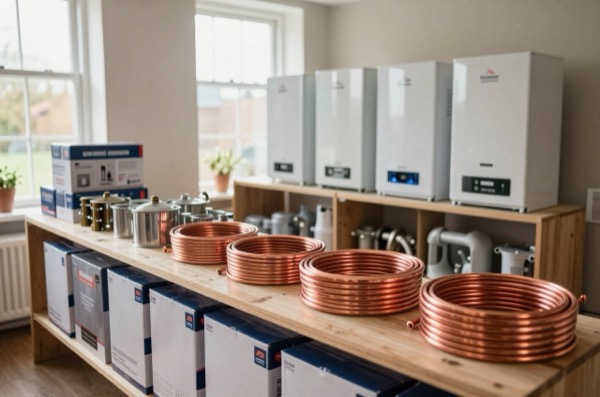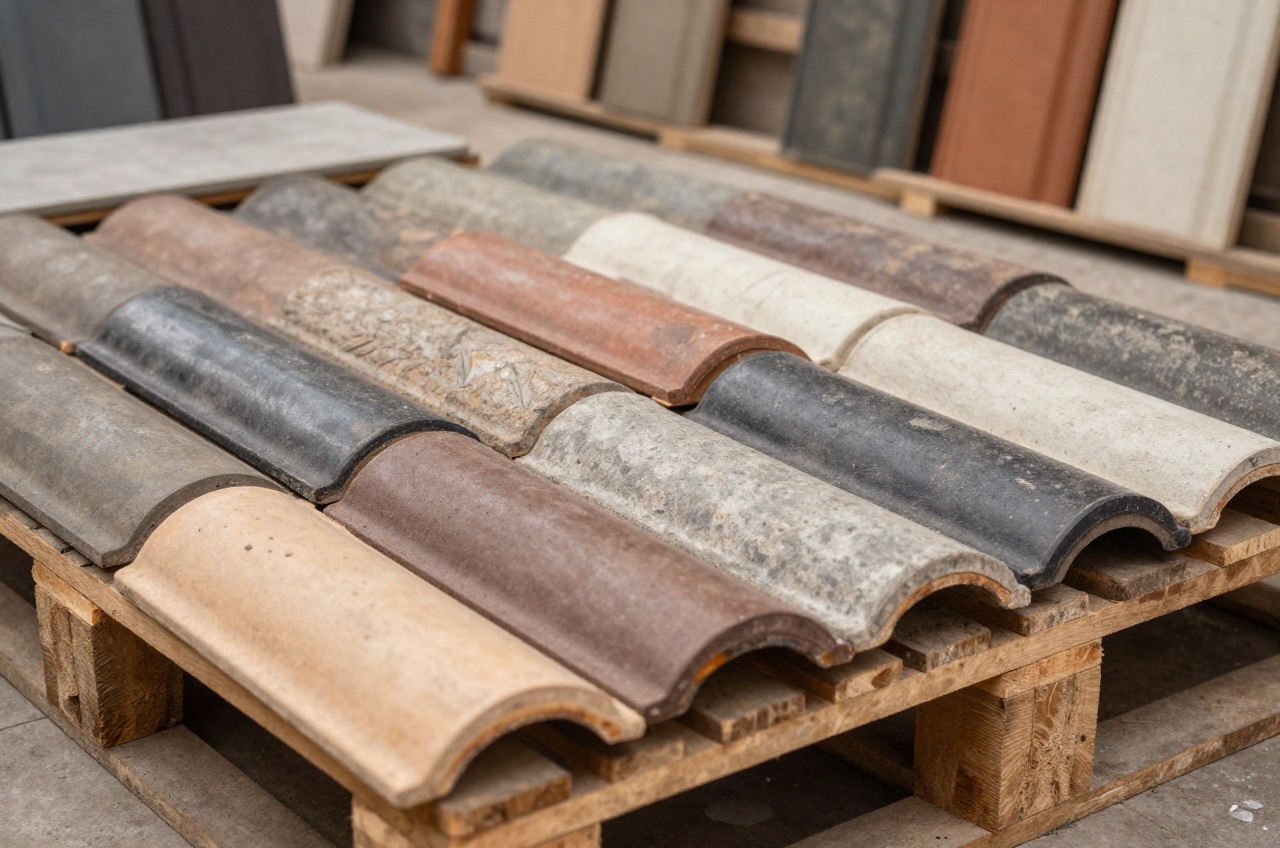
Reclamation yards sit at the intersection of sustainability, aesthetics, and practicality. They stock materials recovered from demolitions, refurbishments, and salvage operations, reclaimed brick, roof slates, timber, stone flags, period fittings, doors, fireplaces, and much more. For matching older buildings or achieving a character that new materials rarely replicate, they are often the only practical option.
The trade-off is that buying reclaimed materials takes more effort than ordering new. Stock is finite and unrepeatable, quality varies, and pricing is inconsistent. This guide explains how reclamation yards work in the UK, what things typically cost, how to assess quality, and where to find what you need.
What Reclamation Yards Stock
Reclamation yards range from small rural operations with a few thousand items to large commercial salvage businesses with substantial warehousing. Common stock includes:
Reclaimed brick, the most common purchase. Handmade and wire-cut bricks from 19th and early 20th century demolitions, Victorian engineering bricks, and older stock bricks. Particularly sought for extensions, outbuildings, and repairs where matching existing brickwork is essential.
Roof slates, natural Welsh, Westmorland, or Lake District slates from demolished properties. Also imported blue-grey slates, often from Spain. Used for matching existing roof covering or for general re-roofing where the natural look is required.
Stone flags and setts, reclaimed Yorkshire stone, sandstone, and granite setts for paths, drives, and floors. These are difficult to source new at equivalent quality or price.
Structural and joinery timber, old-growth pine, oak, and other hardwoods from floor joists, roof timbers, and structural frames. Reclaimed hardwood beams are widely used as feature elements. For a genuinely structural application the timber has to carry a strength grade, and a reclaimed beam arrives with none: softwood is visually graded to BS 4978:2007+A2:2017 into GS or SS, and structural timber generally is marked to BS EN 14081-1:2016+A1:2019.123 Building control will ask, so agree who is regrading the timber before you buy it.
Period fittings and fixtures, fireplaces, cast-iron radiators, doors, windows, ironmongery, sanitary ware, and architectural ironwork. Supply is unpredictable; popular items sell quickly.
Typical Prices
Reclaimed material pricing is driven by scarcity, condition, and how fashionable the item is. The following ranges are indicative for 2025–2026 and vary significantly by region and yard.
| Material | Typical price range | Notes |
|---|---|---|
| Reclaimed handmade brick | £1.00–£3.00 each | Older or rarer types at upper end4 |
| Reclaimed common brick | £0.40–£1.20 each | Condition and cleanliness affects price5 |
| Natural Welsh slate (used) | £1.50–£4.00 each | Size and condition dependent |
| Yorkshire stone flags | £20–£60 per m² | Thickness and condition vary |
| Reclaimed oak beam (per m) | £25–£80 per metre | Section size and grade dependent |
| Reclaimed pine floorboards | £15–£40 per m² | Width and condition dependent |
| Cast-iron fireplace (surround) | £200–£1,500+ | Period and style |
| Reclaimed roof tiles (clay) | £0.50–£2.00 each | Handmade higher |
As examples, one reclamation yard lists reclaimed Derbyshire handmade bricks at £1.60 each, excluding VAT.6 Another lists 20 × 10 inch reclaimed Welsh slates at £2.55 each plus VAT.7
These are yard prices. Online platforms and specialist dealers sometimes charge considerably more for cleaned, graded, or curated stock.
Matching Existing Materials
Matching is the most common reason to visit a reclamation yard, and it requires preparation before you go.
Bring a sample. For bricks, bring two or three loose examples from the building (from a demolition area or hidden corner). Brick size, colour, texture, and the proportion of iron spotting or lime inclusions vary enormously. A yard that appears to have matching bricks can be tested directly against your sample in natural daylight, artificial lighting in a yard can be misleading.
Know your quantities, with contingency. Reclaimed stock does not get restocked. Order at least 10–15% more than your calculated requirement, and ask whether the yard can reserve additional stock from the same lot while you confirm. Many yards will hold material for a short period.
Check the mortar colour. Lime mortar on reclaimed materials can look similar to historic pointing on your existing building. New pointing with Portland cement will not match period brickwork, and it can do harm: houses built before the early 20th century were almost always laid in lime mortar, and a cement-rich mortar harder than the bricks can crack and damage them.8 Using reclaimed bricks with the wrong mortar type is a common oversight.
For slates, measure the existing slates on your roof before visiting, thickness, length, and width all matter. Welsh slate and Westmorland slate are different materials with different appearance and pricing.
Quality Checks
Reclaimed materials vary in quality and some require more work than others. What to check:
Bricks, Look for spalling (face breaking away), deep cracks, excessive lime bloom, and frost damage. Turn bricks over: both faces should be sound. If buying for face work, reject any with significant pitting or cracking on the face side. Bricks with old mortar still attached need to be cleaned before use, cleaning is time-consuming and adds cost if you are paying labour.
Slates, Tap slates to check for a clear ring (a dull thud suggests delamination or cracking). Check the nail holes, elongated or split holes mean the slate has been stressed. Examine edges for chipping. Usable slates should be sound across the full face.
Timber, Check for active woodworm (fresh frass or live larvae), rot (soft or discoloured areas, particularly at end grain), and structural defects (deep checking, shakes, or knots that compromise structural capacity). Reclaimed hardwood that has been kept dry is generally excellent; softwood that has been exposed to moisture is often compromised.
Cast iron and ironwork, Check for cracks, which are difficult and expensive to repair. Surface rust is normal and usually treatable; structural cracks are not.
VAT on Reclaimed Materials
Reclamation yards that are VAT-registered (registration becomes compulsory once taxable turnover for the last 12 months passes £90,000) charge VAT at the standard rate of 20% on most sales.910
There is a second possibility worth asking about. Reclaimed materials are second-hand goods, and second-hand goods are exactly what HMRC’s VAT margin scheme exists for: the yard accounts for VAT at 16.67%, one-sixth, on the difference between what it paid and what it sells for, rather than on the whole price. The scheme is barred only where the yard was itself charged VAT on the item, and for precious metals, investment gold and precious stones.11 Building materials are not on that exclusion list, so a yard buying salvage from private sellers or non-registered demolition contractors may well be selling on the margin. Private sellers on platforms like eBay or Gumtree may not be VAT-registered at all; factor this in when comparing prices.
The VAT on the building work is a separate question from the VAT on the materials, and one myth is worth killing here: a listed building attracts no VAT relief of its own. The zero rate for approved alterations to a protected building was withdrawn on 1 October 2012, which is why HMRC’s manual chapter on it is headed “rules prior to 1 October 2012”.912 Renovating a home that has stood empty for two years or more is the relief that does still exist, at the reduced rate of 5%.9 Consult your contractor or accountant.
Where to Find Reclamation Yards
Local search is usually most practical, delivery charges for heavy materials can exceed the material cost over long distances. Search for “reclamation yard,” “architectural salvage,” or “builders salvage” in your county.
Salvo (salvoweb.com) is a long-running directory and marketplace for architectural salvage dealers and reclamation yards, with a searchable directory and wanted listings.13 It also posts theft alerts for stolen garden and architectural items, worth checking before buying anything valuable from an unknown seller.13
Online marketplaces, eBay, Gumtree, and Facebook Marketplace carry individual listings from private sellers, yards, and clearance sellers. Prices vary wildly; always check descriptions and ask for photographs of the specific items before travelling or paying.
Specialist dealers, some yards focus on a single category (period ironmongery, reclaimed timber, Victorian tiles) and have better stock depth for that niche. These are worth seeking out if you have a specific requirement.
Always visit in person if possible before committing to a large purchase. Stock photographs on websites rarely capture condition accurately, and the difference between “restorable” and “usable as is” can be significant.
References (13)
Figures in this note were checked against the sources below on 2 October 2026. Superscript numbers in the text point to them. Every source the site cites, by topic.
- 1technicalgoodTRADA, guidance.RN-AGTH9YTRADA's introduction to structural timber. It states that timber for structural use must be strength graded, visually or by machine, in accordance with BS EN 14081, which is why ungraded reclaimed timber needs regrading before structural use.
- 2technicalstrongBSI (British Standards Institution), a standard.RN-QWYQ8TSTATUS: CURRENT. BS 4978:2007+A2:2017 was published 30 November 2017 and is the live edition, superseding BS 4978:2007+A1:2011, BS 4978:2007 and the older BS 4978:1988 Specification for softwood grades for structural use. It specifies the methodology for visual strength grading of softwood for structural use and sets the permissible limits of characteristics (knots, slope of grain, fissures, wane, distortion, rate of growth) for two visual grades: GS (General Structural) and SS (Special Structural). These are grades, not strength classes: the strength class a graded piece maps to (C16, C24 and so on) depends on species and is assigned via BS EN 1912 and BS EN 338, so a note saying a timber is graded C24 to BS 4978 is conflating the two. The catalogue page confirms number, title, date, status and grades; the limit tables are paywalled.
- 3technicalstrongBSI (British Standards Institution), a standard.RN-TXD8LASTATUS: CURRENT, and it is the replacement for the withdrawn BS EN 519. BS EN 14081-1:2016+A1:2019 was published 31 August 2019, ISBN 978 0 539 06 228 1, and supersedes BS EN 14081-1:2016. It sets the requirements for strength graded structural timber of rectangular cross section produced by sawing, planing or similar, covering BOTH visually and machine graded timber, and it gives the test methods, the Assessment and Verification of Constancy of Performance and the marking rules, which is what makes a C16 or C24 stamp on a joist meaningful. It excludes fire retardant treated timber, thermally or chemically modified timber and structural finger jointed timber. Parts 2 and 3 add machine grading type testing and factory production control. Cite this with BS 4978 (visual grading rules), BS EN 338 (strength classes) and BS EN 1912 (assignment of grade and species to class). Catalogue page confirms number, title, date, status, supersession and scope.
- 4costsupplier figureThe Brick Centre (thebrickcentre.co.uk).RN-XRX8KKA price, true at 2026-09. The Brick Centre (thebrickcentre.co.uk)'s published price for the item the cost register files as "reclaimed facing brick, supply only", which is the figure a cost footnote on this page points at.
- 5costsupplier figureBeesley and Fildes.RN-BAXAXBA price, true at 2026-09. A builders merchant's product page for a 73 mm reclaimed common brick, sold in full packs of 416 and priced per brick both excluding and including VAT. A common is the plain backing brick rather than the facing one that shows, which is why it is cheaper than the reclaimed facings the register holds beside it, and the page states the pack quantity, which is what makes a per-brick figure checkable.
- 6costsupplier figureJim Wise Reclamation.RN-CJPEI1A price, true at 2026-09. A reclamation yard's product page for reclaimed handmade clay bricks at £1.60 each excluding VAT. It replaces a register pairing that priced a reclaimed wirecut brick for the handmade row.
- 7costsupplier figureThe Beechfield Reclamation Co.RN-XIHJPQA price, true at 2026-09. A reclamation yard's product page for used 20 × 10 inch Welsh roof slates at £2.55 each plus VAT. It replaces a register pairing that priced a new Brazilian slate for the used Welsh slate row.
- 8technicalvery strongLABC, guidance.RN-4TIKSZLABC's repointing guidance: pre-20th-century homes almost always used lime mortar, and cement-rich mixes harder than the masonry can damage the bricks.
- 9technicalvery strongHM Revenue and Customs, guidance.RN-9KXRWLThe section that kills the persistent claim that work to a listed building is VAT free. With effect from 1 October 2012 the zero rate for the first grant of a major interest in a substantially reconstructed protected building was withdrawn in cases where zero rating relied on three-fifths of the work, measured by cost, being approved alterations. The transitional relief that softened the change expired on 30 September 2015, and was only ever available where a relevant consent was applied for or a written contract entered into before 21 March 2012, or where 10 per cent of the substantial reconstruction was complete before that date. Zero rating survives only where the first grant of a major interest relates to a protected building substantially reconstructed from a shell. Defines a major interest as the freehold, in Scotland the absolute interest, or a lease of over 21 years, though not less than 20 years in Scotland. Ordinary alteration work to an occupied listed home is therefore standard rated at 20 per cent.
- 10technicalvery strongHM Revenue and Customs (GOV.UK), a government page.RN-J2B1F3When a business must register for VAT: the taxable turnover threshold, the backward and forward look tests, and voluntary registration. This is why a small builder's quote may carry no VAT at all while a larger firm's carries 20% on the same work, which is a genuine price difference and not a discount.
- 11technicalvery strongGOV.UK, guidance.RN-ZSNSIEThe guidance that kills the common claim that second-hand building materials get no VAT treatment of their own. Margin schemes let a business pay VAT at 16.67 per cent, one sixth, on the DIFFERENCE between what it paid for an item and what it sells it for, rather than on the full selling price. Eligible goods are second-hand goods, works of art, antiques and collectors' items. The scheme cannot be used for any item on which the business was itself charged VAT, nor for precious metals, investment gold or precious stones. Building materials are not on the exclusion list, so reclaimed brick, slate, timber and fittings bought in without VAT can legitimately be sold on the margin, and a reclamation yard's quote may be on either basis. Separate schemes exist for second-hand vehicles, houseboats and caravans, horses and ponies, pawnbroking and high volume low value goods (global accounting). Records of the purchase and sale of each item must be kept.
- 12technicalvery strongHM Revenue and Customs, guidance.RN-26FMBTHMRC's internal manual chapter on the approved alteration zero rate, whose very title fixes the date the relief ended: the rules it explains are those prior to 1 October 2012, so a note that still tells readers to claim zero-rated VAT on approved alterations to a listed home is out of date by more than a decade. Manual published 19 March 2016 and updated 4 August 2026. The chapter contents show what the old test required and remains useful for pre-2012 work and for understanding the terms still used: VCONST08100 the basic conditions for zero-rating, VCONST08200 whether the work is to a protected building, VCONST08300 whether the work is an approved alteration, VCONST08350 whether the work is approved, VCONST08450 the distinction between alterations and repair or maintenance, VCONST08550 incidental alterations, VCONST08600 structures in the curtilage of a building, VCONST08700 certificates, VCONST08750 services excluded from zero-rating and VCONST08800 apportionment.
- 13technicalsupplier figureSalvo Ltd, guidance.RN-7ABEWZSalvo's own site, running since the 1990s, with a directory of salvage yards, listings and wanted alerts; it corrects the domain and describes the service.
-
Learn more about structural timber, TRADA, accessed 2 October 2026. trada.co.uk
-
BS 4978:2007+A2:2017 Visual strength grading of softwood. Specification, BSI Knowledge, accessed 9 September 2026. knowledge.bsigroup.com
-
BS EN 14081-1:2016+A1:2019 Timber structures. Strength graded structural timber with rectangular cross section. General requirements, BSI Knowledge, accessed 9 September 2026. knowledge.bsigroup.com
-
The Brick Centre Terms of Service, The Brick Centre (thebrickcentre.co.uk), accessed 2 October 2026. Priced at 2026-09, so no calibration is needed. thebrickcentre.co.uk
-
73mm Reclaimed Brick Common (416 per pack), price per brick supplied in full packs only, Beesley and Fildes, accessed 18 September 2026. Priced at 2026-09, so no calibration is needed. beesleyandfildes.co.uk
-
Reclaimed Derbyshire Handmade Bricks 230mm x 70mm (9 x 2¾ Inch), Jim Wise Reclamation, accessed 2 October 2026. Priced at 2026-09 and left there. jimwisereclamation.co.uk
-
20 x 10 Reclaimed Welsh Slates, The Beechfield Reclamation Co, accessed 2 October 2026. Priced at 2026-09 and left there. beechfieldreclamation.co.uk
-
Getting to the point about repointing brickwork, LABC, accessed 30 September 2026. labc.co.uk
-
Buildings and construction (VAT Notice 708), HM Revenue and Customs, accessed 9 September 2026. gov.uk
-
Register for VAT: when to register, GOV.UK, accessed 9 September 2026. gov.uk
-
VAT margin schemes, GOV.UK, accessed 9 September 2026. gov.uk
-
VCONST08000: Approved alteration of a protected building (rules prior to 1 October 2012), HM Revenue and Customs, accessed 9 September 2026. gov.uk
-
SalvoWEB: architectural salvage and reclaimed materials marketplace, Salvo Ltd, accessed 30 September 2026. salvoweb.com