A retractable patio awning is one of the most effective ways to make an outdoor space usable in UK summer conditions, providing shade, reducing glare, and allowing you to stay outside when light rain threatens. Costs range widely depending on size, mechanism type, and fabric quality. This guide sets out the main options, realistic 2026 prices, and what to check before buying.
Types of Patio Awning
Open-Roll (Bar) Awning
The most basic type. When retracted, the fabric rolls onto an exposed tube. There is no cover for the fabric when retracted, which means it is exposed to UV and bird droppings. Lifespan is typically 5–10 years. Cheaper to buy and install, but requires more frequent cleaning and re-treatment.
Semi-Cassette Awning
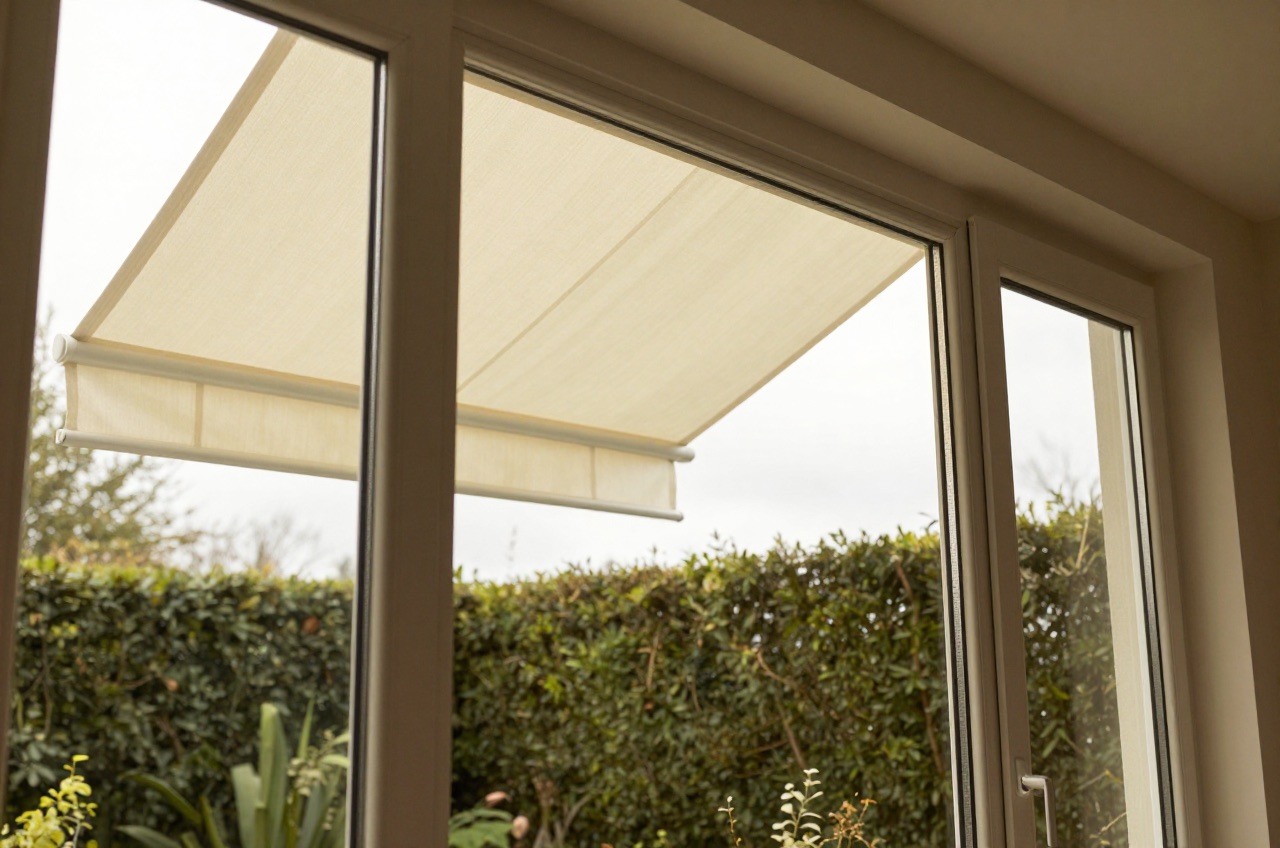
The roller mechanism is housed in a half-shell casing that covers the top of the roll when retracted. The arms (the hinged lateral extensions that support the awning when extended) are not housed. A reasonable mid-range choice, better fabric protection than open-roll, less expensive than a full cassette.
Full Cassette Awning
The entire awning, roller, fabric, and arms, retracts into a sealed aluminium cassette. This is the best protection for the fabric: it is shielded from UV, rain, and debris when not in use. Full cassette systems have a significantly longer fabric and mechanism lifespan (15–25 years for good-quality systems) and are the only type recommended for year-round installation in the UK climate.
Pergola-Style Fixed Awning
A fixed overhead structure, usually powder-coated aluminium or timber, with a retractable or louvred roof. Much more substantial than a wall-mounted awning and effectively an outdoor room covering. These are covered separately; costs start at £4,000 for a basic aluminium louvred pergola.
Cost Guide
Prices below are for supply and professional installation to a masonry or timber wall. Excludes electrical supply for motorised units.
| Awning Type | Width 3 m | Width 4 m | Width 5–6 m |
|---|---|---|---|
| Open-roll, manual | £700–£1,100 | £900–£1,400 | £1,100–£1,800 |
| Open-roll, electric | £1,100–£1,600 | £1,300–£2,000 | £1,500–£2,500 |
| Semi-cassette, manual | £900–£1,400 | £1,100–£1,800 | £1,300–£2,200 |
| Semi-cassette, electric | £1,300–£2,000 | £1,600–£2,500 | £1,900–£3,200 |
| Full cassette, electric | £1,600–£2,800 | £2,000–£3,500 | £2,500–£4,500 |
| Full cassette, electric + wind sensor | £1,900–£3,200 | £2,300–£4,000 | £2,800–£5,500 |
2026 UK prices, supply and installation by an awning specialist. Width refers to the awning’s face width when extended. Projection (the depth the awning reaches out from the wall) typically ranges from 2.0–3.5 m.
What Drives the Price
Width and projection: wider awnings and those with greater projection require heavier arms, larger roller tubes, and more fabric. Cost scales roughly linearly with width.
Cassette type: the cassette housing adds material cost and complexity. A full cassette at 5 m width might cost £600–£900 more than an open-roll equivalent.
Fabric quality: standard polyester-acrylic fabric is fine for seasonal use. Premium Sunbrella or equivalent solution-dyed acrylic fabrics have dramatically better UV resistance, colour fastness, and water resistance, and cost £30–£80/m² more to specify. For a permanent installation, the premium is well worth paying.
Motorisation: electric operation is a significant convenience on larger awnings, operating a 5 m wide awning manually requires meaningful effort in wind. Motor units add £200–£400 to the cost. Wi-Fi- or app-enabled motors add a further £150–£300.
Sensors: wind sensors (retracting the awning automatically when wind speed exceeds a threshold) and sun sensors (extending at set light levels) are add-ons costing £150–£350 each. A wind sensor is strongly recommended for any electric awning, leaving an awning extended in gusts above 40 km/h risks frame damage.
Wall type: fixings into masonry (brick, block) are straightforward. Timber-framed walls, render systems, or lightweight cladding may need additional backing plates or structural support, adding labour cost.
Electrical Requirements
Motorised awnings require a 240V supply run to the wall or soffit fixing point. If there is no existing external socket or switched spur nearby, an electrician will need to run a cable. This typically costs £150–£400 depending on the route. The motor supply must be on a weatherproof external-rated circuit and should ideally be on its own dedicated circuit with a local isolator switch.
Planning Permission
In England, installing a domestic garden awning does not normally require planning permission, it is treated as a domestic ancillary structure. Exceptions:
- Listed buildings: any addition to the external fabric may require Listed Building Consent.
- Conservation areas: awnings visible from the street may need consent in some conservation areas, particularly if they are to be permanently fixed.
- Flats and leasehold properties: check your lease terms and managing agent requirements before installation.
Commercial properties and hospitality venues require planning permission and must comply with advertising regulations if the awning includes branding.
Choosing an Awning Specialist
Awnings are a specialist product, most general builders do not stock or install them. Look for:
- Membership of the Textile Services Association (TSA) or access to manufacturers’ training certifications (e.g., Markilux, Weinor, Somfy)
- A physical showroom where you can see fabric samples and cassette mechanisms before ordering
- Written warranty on fabric (minimum 5 years; 10 years for premium acrylic) and mechanism (minimum 2 years parts)
- Experience installing to your specific wall type
Get two or three quotes with matching specifications, cassette type, projection, fabric weight, motor brand, before deciding. A notably cheaper quote is likely using lighter arms, thinner fabric, or a lower-quality motor.
Maintenance
Retractable awnings require minimal maintenance:
- Cleaning: brush off debris and clean fabric with a soft brush and soapy water two to three times per year. Do not use pressure washers, which damage the coating.
- Lubrication: annual light oiling of hinge points and arm pivots. Most cassette awning suppliers include this in a service visit.
- Winter storage: in the UK, a full cassette awning can remain in place year-round in a retracted position. Open-roll awnings in exposed positions should be retracted and ideally taken down over winter to prevent UV and frost damage.
A well-maintained full cassette awning from a reputable supplier should last 15–25 years with normal seasonal use.