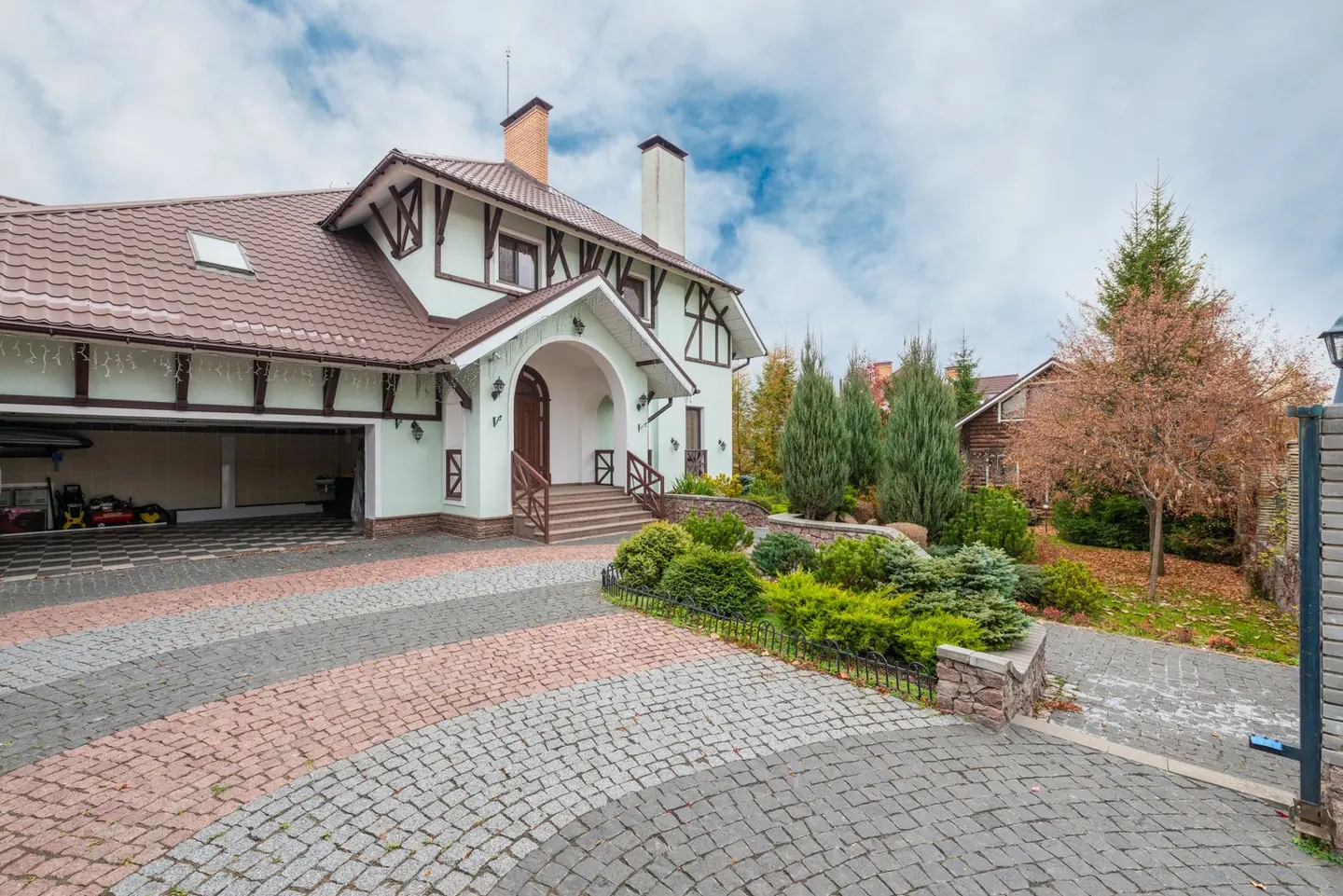
A concrete block paving driveway costs £80–£150 per m² installed across most of the UK in 2026, and clay pavers can take that to about £200 per m². For a standard single-car driveway of around 35–45 m², that puts the total at roughly £2,800–£6,750, depending on sub-base depth, edging, drainage, and your location. Prices in London and the South East run 15–25% higher than the national midpoint.
The distinction between “brick” and “block paving” matters for cost: clay pavers cost roughly three to four times as much as concrete block pavers, but they tend to keep their colour where concrete can fade. Most driveways described as “brick” are actually concrete block pavers, a practical choice that looks similar and costs less.
Cost Breakdown by Component
| Cost element | Typical cost range | Notes |
|---|---|---|
| Excavation and muck away | £8–£18/m² | Depends on depth required and soil type |
| Type 1 MOT sub-base (150–200 mm) | £12–£25/m² | Standard for most domestic driveways; loose-tipped load, bulk bags cost more |
| Sharp sand laying course (30–50 mm) | £3–£6/m² | For bedding block paving |
| Concrete edgings / kerbs | £25–£55/linear m | Perimeter restraint essential for pavers |
| Concrete block paving (standard) | £27–£35/m² supply | 50 mm thick is standard for driveways; multiple colour options |
| Clay brick pavers | £90–£125/m² supply | Colourfast; traditional appearance |
| Permeable/porous block paving | £25–£55/m² supply | Required for some front garden driveways |
| Labour (laying, compacting, jointing) | £30–£50/m² | Varies by pattern complexity and access |
| Skip hire (2 runs typical) | £250–£450 | For excavated spoil |
| Driveway drainage channel | £150–£350 installed | Required where gradient drains to highway |
These are supply-and-fix figures for a standard residential driveway. Decorative or complex patterns (herringbone, circular feature), contrasting banding, or difficult access will push labour costs toward the higher end. Interpave, the concrete paving trade body, lists 50 mm blocks for driveways, patios, pathways and footways, with thicker blocks for roads and heavier traffic.1
Average Total Cost by Driveway Size
| Driveway size | Approx. area | Budget (concrete block) | Mid-range | Premium (clay brick) |
|---|---|---|---|---|
| Small single-car | 20–30 m² | £1,600–£2,700 | £2,400–£3,600 | £2,800–£5,900 |
| Standard single-car | 35–50 m² | £2,800–£4,500 | £4,000–£6,000 | £4,900–£9,800 |
| Double-car | 50–70 m² | £4,000–£6,300 | £5,500–£8,400 | £7,000–£13,700 |
| Large double + turning area | 80–100 m² | £6,400–£9,000 | £8,000–£12,000 | £11,100–£19,500 |
The clay column adds the extra cost of clay pavers, roughly £59–£105 per m² once 8% waste is allowed for, to the concrete block figures. Prices include VAT at the standard rate of 20%. VAT exemptions do not apply to driveway installation (unlike some building works).2
What Drives the Price
Sub-base depth is the most variable cost. A lightly loaded residential driveway on stable, well-drained ground may require only 100 mm of compacted Type 1 MOT. Heavy clay soils, poor drainage, or a driveway that will carry a van or large vehicle regularly may require 200–250 mm, significantly increasing excavation and material costs. Interpave’s design example for a driveway on firm clay uses a 200 mm sub-base, a 50 mm laying course and 50 mm blocks.1
Pattern complexity directly affects labour time. A standard stretcher bond (all bricks running in the same direction) is the fastest to lay. Herringbone (45° or 90°) takes longer and creates more off-cuts, increasing both labour and material waste, but it is the stronger choice for a driveway: Interpave’s guidance says herringbone is the most effective laying pattern for areas used by vehicles.1 Circular features or decorative panels add further premium.
Edgings are non-negotiable for block paving, without a rigid perimeter restraint, the paving will spread and become uneven. Concrete kerb edgings at £25–£55/linear m are the standard solution. Haunching (the concrete backing to the kerb) is included in a proper installation.
Location affects both labour rates and material delivery costs. Inner London contractors typically charge £40–£60/m² for laying, versus £28–£40/m² in the Midlands or North.
Access and site conditions, narrow side passages, restricted lorry access, steps, or soft ground all add cost and time.
Typical Day Rates for Driveway Pavers
| Worker | Day rate (2026, inc. VAT) |
|---|---|
| Experienced block paving contractor | £250–£380/day |
| Labourer (mixing, shifting, clearing) | £150–£220/day |
| Groundworker (excavation, sub-base) | £220–£320/day |
| Mini-digger operator (if required) | £350–£500/day (inc. machine) |
A two-person team typically lays 20–35 m² of block paving per day on a straightforward driveway, rising to 40–50 m² on a large open site with good access. A 40 m² single-car driveway including excavation and sub-base preparation usually takes 2–4 days for an experienced crew.
Planning Permission and SUDS Regulations
Planning permission is not required for a driveway in England if the surface is permeable (water drains through the paving) or if drainage is directed to a lawn or border, not to the highway. Under Class F of the Town and Country Planning (General Permitted Development) (England) Order 2015, impermeable front garden driveways larger than 5 m² do require planning permission unless the run-off is directed to a permeable or porous area within the property.3
In practice, this means:
- Permeable block paving (open-jointed paving with free-draining joints, laid on a permeable sub-base) does not require planning permission
- Impermeable clay brick or standard concrete block with a surface gradient directing water to the highway typically requires planning permission
- A drainage channel (ACO drain or similar) that discharges to a soakaway, rain garden or other permeable area within the property keeps impermeable paving within permitted development; piping the run-off to a sewer or road drain does not3
Most reputable driveway contractors will flag this requirement. Class F carries no extra restriction in conservation areas, but permitted development rights can be withdrawn by an Article 4 direction, check with your local planning authority.4
Building Regulations do not apply to standard driveway works. However, if the drive crosses a footway or verge to reach the road, the council must build or authorise the vehicle crossing under section 184 of the Highways Act 1980 and can recover its costs from you.5 Published council prices for building a standard domestic crossing start at about £1,575 and run to around £3,050, plus an application fee of roughly £175–£300.6
Worked Example: 40 m² Single-Car Driveway
A typical three-bedroom semi-detached house front garden, 8 m wide × 5 m deep (40 m²), with clay soil, in the Midlands:
| Item | Qty | Unit cost | Total |
|---|---|---|---|
| Excavation (200 mm depth) and muck away | 40 m² | £14/m² | £560 |
| Type 1 MOT sub-base (200 mm compacted, about 17 tonnes) | 40 m² | £21/m² | £840 |
| Sharp sand laying course (40 mm) | 40 m² | £4/m² | £160 |
| Concrete edging (perimeter ~26 linear m) | 26 lm | £35/lm | £910 |
| Concrete block paving (standard, 50 mm) | 40 m² + 8% waste | £27.50/m² | £1,188 |
| ACO drainage channel at threshold | 1 | £280 | £280 |
| Labour, 2 operatives, 3 days | 6 man-days | £290/day | £1,740 |
| Skip hire (2 skips) | 2 | £180 | £360 |
| Total (inc. VAT) | £6,038 |
Type 1 is heavy: Wickes says an 800 kg bulk bag covers about 7.7 m² at 50 mm deep, so a 200 mm sub-base needs roughly 0.4 tonnes per square metre, or about 17 tonnes for this drive.7 At about £50 a tonne including VAT for a loose-tipped load, that is about £21 per m². This is a realistic figure for a clay-soil drive that needs a 200 mm sub-base and a drainage channel, and it sits at the top of the per-m² range above. Using clay pavers at £90–£125/m² instead would add roughly £2,700–£4,200 in materials. A simpler site (shallower dig, better access, sandy soil) could come in at £4,000–£4,500; a more complex installation could reach £6,500–£7,000.
Tips for Getting the Best Price
- Get three quotes minimum; driveway prices vary considerably between contractors
- Ask each contractor to specify the sub-base depth and material, a thin sub-base is a false economy that leads to settlement and uneven paving within a few years
- Check whether the contractor belongs to a manufacturer’s installer scheme (Marshalls runs one) or a trade body such as the British Association of Landscape Industries (BALI)
- Avoid paying more than a 10–15% deposit upfront; stage payments on completion of sub-base and final completion are standard
- Schedule work for spring or autumn, summer demand pushes prices up and some contractors rush jobs to fit more in
Block paving is a competitive market, and negotiating a combined deal (driveway plus patio, or two neighbouring properties) often yields a 5–10% discount on labour.
References (7)
Figures in this note were checked against the sources below on 6 October 2026. Superscript numbers in the text point to them. Every source the site cites, by topic.
- 1technicalgoodInterpave, guidance.RN-15FQJ7Interpave's guide to concrete block paving. Its table of typical applications gives 50 mm blocks for driveways, patios and footways and 60 mm or more for roads and heavier traffic.
- 2technicalvery strongHM Revenue & Customs (GOV.UK), guidance.RN-4W7T33Sets the three UK VAT rates: standard 20% on most goods and services, reduced 5% on some goods and services such as children's car seats and home energy, and zero 0% on zero-rated goods such as most food and children's clothes. The standard rate rose to 20% on 4 January 2011 from 17.5%. Some supplies are exempt rather than rated, including postage stamps and financial and property transactions. This is the reference for converting a merchant's ex-VAT trade quote into the figure a homeowner actually pays.
- 3technicalvery strongThe National Archives (legislation.gov.uk), legislation.RN-4C9X4BClass F permits the provision within the curtilage of a dwellinghouse of a hard surface for any purpose incidental to the enjoyment of the dwellinghouse, or its replacement in whole or in part. Condition F.2 applies where the hard surface would lie between a wall forming the principal elevation and a highway and its area would exceed 5 square metres: the surface must then be made of porous materials, or provision made to direct run-off water to a permeable or porous area or surface within the curtilage.
- 4technicalvery strongThe National Archives (legislation.gov.uk), legislation.RN-3LA2VCArticle 4(1) allows the Secretary of State or the local planning authority, where satisfied that it is expedient that development should not be carried out without permission, to direct that the permission granted by article 3 does not apply to all or any development of a Part, Class or paragraph of Schedule 2 in a specified area, or to any particular development. The procedures for making, modifying or cancelling a direction are set out in Schedule 3, and a direction does not affect development for which prior approval was granted before it took effect.
- 5technicalvery strongThe National Archives (legislation.gov.uk), UK Public General Act 1980 c.66, legislation.RN-H1OGTFThe statutory basis for a dropped kerb application, which is a highways matter and separate from planning permission. Section 184(1) lets the highway authority serve notice on the owner or occupier where the footway or verge is being used as a crossing, proposing to execute works for the construction of a vehicle crossing or to impose conditions on its use. Section 184(6) applies Schedule 14 to objections against that notice. Section 184(7) lets the authority recover the expenses reasonably incurred in carrying out the works from the owner or occupier of the premises, which is why the householder pays for the crossing even when the council builds it. Section 184(17) makes it an offence to use a footway as a crossing in contravention of conditions imposed, with a fine not exceeding level 3 on the standard scale.
- 6coststrong locallyManchester City Council.RN-M6TKZHA price, true at 2026-09. Manchester City Council's dropped kerb page. It gives a starting cost of £1,575 for a new crossing of about 3 m, and notes that classified roads need planning permission.
- 7technicalsupplier figureWickes.RN-T7X0W6Wickes' product page for an 800 kg jumbo bag of MOT Type 1 at £75 excluding delivery, which supports the bulk bag price range in the cost table.
-
Concrete Block Paving: guide to the properties, design, construction, reinstatement and maintenance of concrete block pavements, edition 2, Interpave, accessed 30 September 2026. paving.org.uk
-
VAT rates, GOV.UK, accessed 10 September 2026. gov.uk
-
The Town and Country Planning (General Permitted Development) (England) Order 2015, Schedule 2, Part 1, Class F: hard surfaces incidental to the enjoyment of a dwellinghouse, legislation.gov.uk, accessed 10 September 2026. legislation.gov.uk
-
The Town and Country Planning (General Permitted Development) (England) Order 2015, Article 4: directions restricting permitted development, legislation.gov.uk, accessed 10 September 2026. legislation.gov.uk
-
Highways Act 1980, section 184: vehicle crossings over footways and verges, legislation.gov.uk, accessed 10 September 2026. legislation.gov.uk
-
Dropped kerbs: definition and requirements, Manchester City Council, accessed 30 September 2026. Priced at 2026-09 and left there. manchester.gov.uk
-
Suburban Build MOT Type 1 - Jumbo Bag, Wickes, accessed 6 October 2026. wickes.co.uk