Carpet remains the most popular floor covering in UK bedrooms and living rooms, and it comes in a bewildering variety of types, fibres, and grades. At its simplest: expect to pay £8–£20/m² for a serviceable synthetic carpet, £20–£35/m² for quality wool-blend options, and £35–£50/m² or more for premium pure wool. Add £7–£20/m² for fitting and underlay.
The right carpet for your project depends on three things: pile type, fibre, and usage grade. Get those right and the aesthetics will take care of themselves.
Pile Types
Twist Pile (Cut Pile)
The most common carpet type in UK homes. Individual fibres are cut at the top and twisted together. The twist adds resilience, the fibres spring back after compression. Twist level is measured in “twists per inch” (TPI); 4–5 TPI is standard domestic, 6+ TPI is heavy-duty. Higher twist = better recovery = longer lifespan.
Twist pile suits living rooms, bedrooms, and hallways. It is easy to clean and widely available at all price points.
Loop Pile (Berber)
Fibres form continuous loops rather than being cut. The result is a flat, dense surface that is highly durable and hides footprints and vacuum marks well. Berber-style loop pile in grey or beige tones has become very popular for open-plan spaces.
The downside: snagging. Pets with claws and high heels can catch a loop and pull a visible run through the carpet. Not ideal for homes with cats or dogs.
Cut and Loop Pile (Textured / Pattern)
Combines cut and looped fibres in the same carpet, creating sculptural patterns or tonal variations. Good for hiding wear and traffic patterns. The mixed construction means the carpet tends to retain its appearance longer in moderate-use areas.
Velvet / Saxony Pile
A dense cut pile where the fibres stand upright and very close together. Luxurious underfoot and visually impressive, but shows every footprint and vacuum line. Best reserved for bedrooms with light traffic.
Fibres: Wool vs Synthetic
| Fibre | Pros | Cons | Typical Cost |
|---|---|---|---|
| Pure wool | Naturally resilient, warm, good stain resistance, sustainable | More expensive, may felt if cleaned incorrectly | £30–£50/m² |
| 80/20 wool-nylon | Combines wool’s look with nylon’s durability | Slightly less eco-friendly | £20–£35/m² |
| Polypropylene (PP) | Cheap, waterproof, UV-stable, easy to clean | Flattens quickly, lower resilience, feels synthetic | £8–£18/m² |
| Nylon (PA) | Very durable, good soil resistance, holds colour well | Less warm than wool, higher CO₂ footprint | £15–£28/m² |
| Polyester (PET) | Soft, good colour range, often made from recycled bottles | Prone to pilling, matts down under heavy use | £12–£22/m² |
For living rooms and bedrooms, an 80/20 wool-nylon blend is widely considered the best value balance of performance and feel. Polypropylene is practical for playrooms, utility areas, and rental properties.
Usage Grades (European Classification)
All carpets sold in the UK should be classified under EN 1307 (or the equivalent BS standard). The class tells you the use the product has been tested for:
| Class | Label | Typical Application |
|---|---|---|
| 21 | Light Domestic | Spare bedrooms, occasional use |
| 22 | General Domestic | Bedrooms, studies |
| 23 | Heavy Domestic | Living rooms, dining rooms |
| 31 | Light Contract | Home offices, light commercial |
| 32 | General Contract | Offices, hotels |
| 33 | Heavy Contract | Retail, hospitality, hallways |
For a family living room or a busy hallway, you should not go below Class 23. Stairs benefit from Class 31 or above. Do not be tempted by a Class 21 carpet because it looks good in the showroom, it will flatten and wear within 2–3 years under daily family use.
Underlay: Not Optional
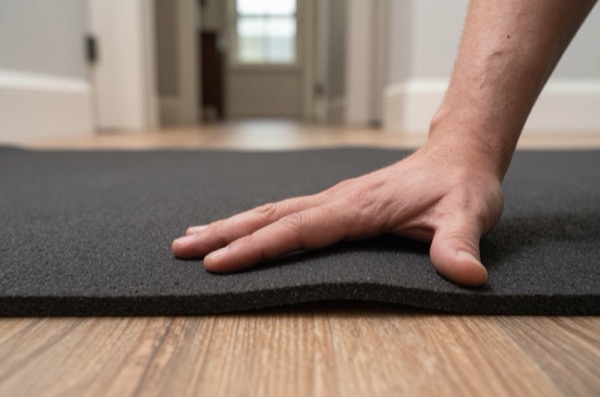
Carpet underlay is as important as the carpet itself. It extends the life of the carpet by absorbing impact, provides thermal and acoustic insulation, and makes the carpet feel more luxurious underfoot. A good carpet on cheap underlay will wear faster and feel worse than a budget carpet on quality underlay.
| Underlay Type | Typical Thickness | Cost | Best For |
|---|---|---|---|
| Foam / PU foam | 8–12 mm | £3–£6/m²1 | Bedrooms, light use |
| Sponge rubber | 10–12 mm | £4–£7/m² | Living rooms |
| Crumb rubber | 8–10 mm | £5–£9/m² | Stairs, hallways |
| Felt | 9–11 mm | £4–£8/m² | Period properties (traditional method) |
For stairs, always use a firmer crumb rubber or felt underlay, foam underlay compresses under the stair nosing edge and can create a trip hazard over time.
Cost Summary
| Scenario | Supply + Underlay | Fully Fitted |
|---|---|---|
| Budget PP twist (bedroom, 12 m²) | £140–£240 | £220–£360 |
| Mid-range 80/20 wool-nylon (living room, 25 m²) | £600–£1,000 | £900–£1,400 |
| Premium pure wool (master bedroom, 20 m²) | £750–£1,200 | £1,050–£1,700 |
| Stair carpet (13 stairs, runner) | £200–£450 | £350–£650 |
Carpet fitters typically charge £4–£8/m² for fitting, plus a minimum call-out of £60–£100. Stair carpeting takes longer per m² and is usually quoted at £8–£15 per tread.
Stair Carpets: Special Considerations
Stairs are the most demanding location for carpet, concentrated wear at nosing edges, directional traffic, and repeated bending at each tread. Key rules:
- Choose Class 31 or above
- Use a firmer underlay (crumb rubber or felt)
- Twist pile at 5+ TPI
- 80/20 wool-nylon is the traditional and practical choice
- Avoid loop pile entirely on stairs (snagging and trip risk)
- Consider a runner rather than wall-to-wall if you want to show off the stair timber
Questions to Ask Before Buying
- What grade/class is the carpet?
- What is the fibre composition?
- What twist count (TPI) does it have?
- Is the underlay included in the price, and what type?
- Is the fitting price inclusive of door-bar strips and stair rods?
- What is the warranty and what does it cover?
A reputable carpet retailer will answer all of these without hesitation. If they cannot or will not, go elsewhere.
References (1)
Figures in this note were checked against the sources below on 14 September 2026. Superscript numbers in the text point to them. Every source the site cites, by topic.
- 1costsupplier figureWickes.RN-IECY8QA price, true at 2026-09. the retail price Wickes publishes for FloorSure Gold 10mm Carpet Underlay - 15m2, which is the supply figure the cost book records for this item
-
FloorSure Gold 10mm Carpet Underlay - 15m2, Wickes, accessed 16 September 2026. Priced at 2026-09, so no calibration is needed. wickes.co.uk