Herringbone and parquet flooring have surged in popularity across UK homes over the past decade, moving from period restorations into new-build extensions and modern open-plan kitchens. The appeal is the visual energy of the pattern, that interlocking zigzag or block arrangement that makes a room feel deliberately considered rather than just floored.
But patterned wood floors cost noticeably more to install than straight planks, and the range in quality between a budget engineered board and a premium solid-wood block is enormous. This guide covers the main patterns, materials, realistic 2026 costs, and what distinguishes a well-laid herringbone from one that will look tired within a few years.
Pattern Types Explained
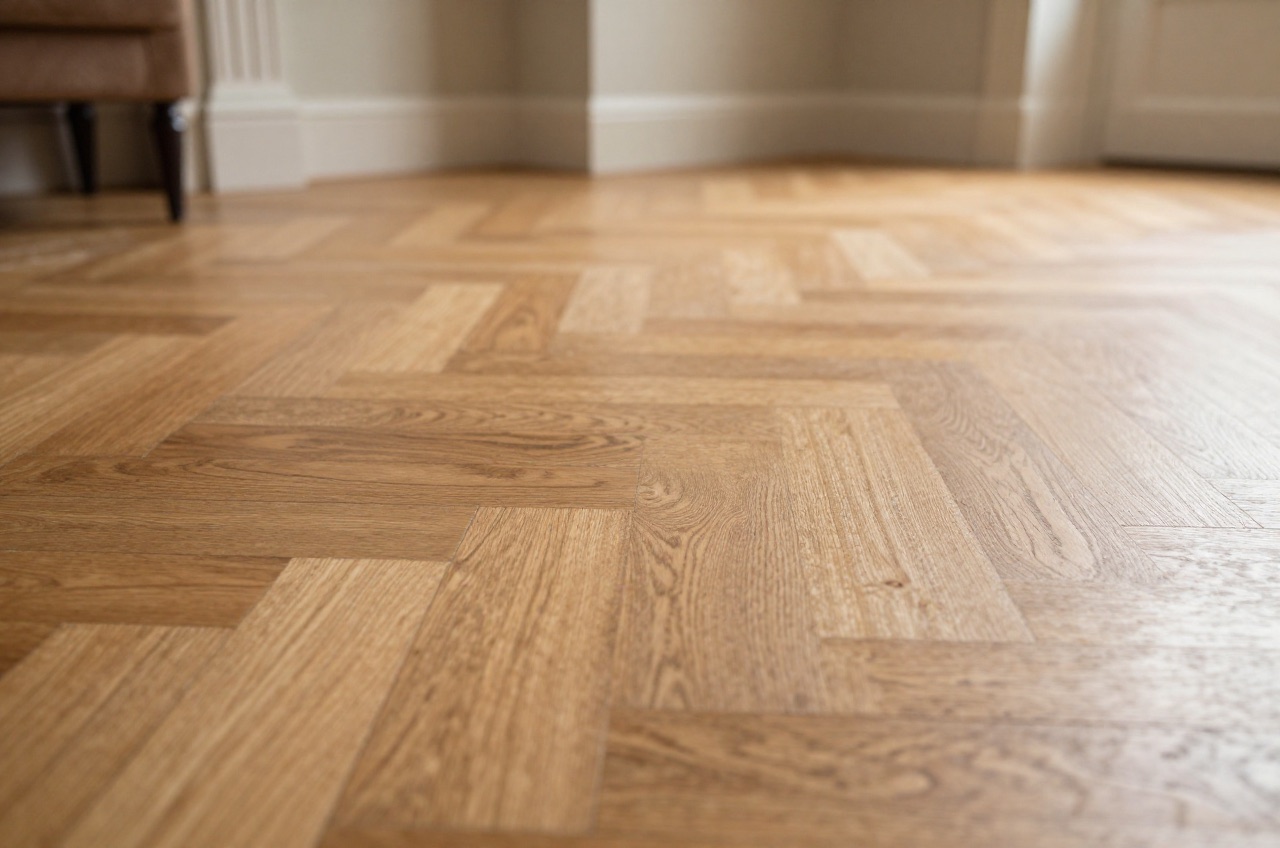
Herringbone is the most common patterned wood floor in UK homes. Rectangular planks or blocks are laid at 90° to each other in a V-shaped zigzag. The key feature is that the short end of one piece meets the long side of the adjacent piece. This creates the classic broken-arrow effect. Standard herringbone blocks are typically 70 × 280 mm or 90 × 360 mm, with a 1:4 or 1:4.5 ratio of width to length.
Chevron looks superficially similar but is technically different. Each piece is cut at an angle (typically 45°) at both ends so the planks meet point-to-point at the apex of the V, rather than end-to-side. Chevron requires precisely mitred ends and is slightly harder to install, which shows in the price. It gives a sharper, more symmetrical arrow effect.
Basket weave groups pairs of parallel blocks at alternating 90° angles to create a woven appearance. It uses more material due to cut waste and is rarely done in engineered board, it suits solid square blocks better.
Versailles / Chantilly panel is the most complex: a square panel made up of multiple diagonal strips framed by a border. Historically used in French châteaux; occasionally seen in high-end UK residential projects. Expect bespoke pricing.
Traditional parquet block uses small solid wood blocks (typically 230 × 70 × 22 mm or 230 × 50 × 20 mm) laid in a variety of patterns including herringbone, brick-bond, or basket weave. The blocks are fully interchangeable and can be relaid when sanding is no longer viable.
Material Options
Solid Wood Parquet Blocks
Traditional parquet blocks are sawn from a single piece of timber, usually 20–22 mm thick. Common species in the UK are oak, ash, maple, pine (reclaimed), and walnut. They can be sanded and refinished multiple times over decades, a properly maintained solid floor can genuinely last a century.
The drawbacks: solid wood moves with humidity and temperature, making it unsuitable for underfloor heating (UFH) without very careful acclimatisation. It must also be glued directly to a concrete substrate (not floated), which requires a perfectly flat, dry screed (moisture content below 75% RH or 2.5% CM).
Supply cost: £25–£80/m² for oak; £50–£150/m² for walnut or exotic species.1
Engineered Wood Herringbone
Engineered boards have a real wood veneer (typically 3–6 mm for herringbone planks) bonded to a multi-layer plywood or HDF core. The cross-ply construction stabilises the board against movement, making it compatible with UFH and suitable for floating installation over underlay.
Engineered herringbone planks are typically sold in packs of individual pieces rather than full-length boards, in sizes like 90 × 360 mm or 120 × 600 mm. Wear layer thickness matters: below 3 mm, the floor cannot be sanded; 4–6 mm allows one or two light sands over its lifetime.
Supply cost: £18–£60/m² for engineered oak herringbone; £35–£90/m² for premium species or wide-plank formats.2
LVT Herringbone
Luxury vinyl tile (LVT) herringbone has become a mainstream option for kitchens and hallways. It is fully waterproof, warm underfoot, forgiving of subfloor imperfections, and significantly cheaper. The visual quality has improved considerably, at 2–3 m distance, quality LVT is difficult to distinguish from engineered wood.
LVT herringbone is not refinishable and typically has a design life of 15–25 years before the wear layer degrades. Supply cost: £12–£35/m².3
Cost Breakdown
| Option | Supply (£/m²) | Installation (£/m²) | Total Installed (£/m²) |
|---|---|---|---|
| LVT herringbone | £12–£35 | £15–£25 | £27–£604 |
| Engineered oak herringbone | £18–£60 | £35–£55 | £53–£115 |
| Engineered premium / wide plank | £35–£90 | £40–£60 | £75–£150 |
| Solid oak parquet blocks | £25–£80 | £45–£70 | £70–£150 |
| Solid walnut / exotic parquet | £50–£150 | £50–£80 | £100–£230 |
Installation costs are higher for patterned floors than straight planks (typically 15–25% more) because each piece must be individually placed and pressed, borders require careful setting out, and waste is higher, typically 10–15% extra material versus 5–7% for straight laying.
What Drives the Price
Room size and shape: Small or awkward rooms with alcoves, bay windows, or multiple doorways increase waste and setting-out time. A 20 m² L-shaped room costs proportionally more per square metre than a simple 20 m² rectangle.
Subfloor condition: A concrete screed needs to be flat to within ±3 mm under a 2 m straightedge and below 75% RH before laying. Timber subfloors often need sheets of 18 mm exterior-grade plywood to stiffen them. Budget £8–£18/m² for subfloor prep if needed.
Border and feature strips: Many herringbone installations look best with a solid wood border (a straight-laid frame around the edge). This adds cost in both material and time, typically £15–£30 per linear metre for supply and fitting.
Finishing: Pre-finished boards carry a factory lacquer or oil. Site-finished floors are sanded and oiled or lacquered after laying, adding £8–£18/m² but giving a seamless look. An oiled finish is easier to spot-repair; lacquer is more durable in high-traffic areas.
Installation: What to Check
The pattern must be set out from the centre of the room outward, with a datum line carefully established before the first piece is laid. An experienced floor layer will spend 30–60 minutes on setting out before touching any material, if a fitter starts from a wall, the pattern will be noticeably off-centre.
Adhesive for solid parquet and engineered glue-down must be a flexible MS polymer or polyurethane adhesive (not standard PVA or tile adhesive). The floor should be taped and weighted overnight after laying.
For engineered floating herringbone over UFH, the total floor build-up thickness must be factored into door heights and transitions, most herringbone boards plus underlay sit 12–18 mm proud of the substrate.
Maintenance
Oil-finished parquet can be spot-repaired with matching hard-wax oil, a key advantage over lacquered floors where a scratch means full recoating. Sand and re-oil every 5–10 years depending on traffic. Avoid steam mops and excessive water on all wood floors; a damp (not wet) cloth or specialist wood floor cleaner is correct.
Herringbone patterns tend to show grit and crumbs in the V-grooves more than straight planks, so regular sweeping is more important. A soft brush head or dedicated hard-floor vacuum setting prevents grit from being dragged across the surface.
References (4)
Figures in this note were checked against the sources below on 14 September 2026. Superscript numbers in the text point to them. Every source the site cites, by topic.
- 1costsupplier figureFlooring Superstore.RN-Y521PZA price, true at 2026-09. Flooring Superstore, Unfinished Light Oak Herringbone Parquet Solid Wood Flooring. Held in the cost register as a price source; the passage quoted against it reads: £49.99 m2 £39.99 m2 ... 10MM BOARD THICKNESS ... 1 Pack will cover 2.16 m2 ... Add 1 Pack - £86.38
- 2costsupplier figureFlooring Superstore.RN-Z0VXBAA price, true at 2026-09. A Flooring Superstore product page for engineered oak herringbone, the Ashbury range in a brushed and lacquered frosted oak. Held as a supplier's own published price for engineered herringbone board, which is what the note uses it for: the supply-only rate per square metre before fitting. A retail price from one merchant, so real but not independent.
- 3costsupplier figureBuilder Depot.RN-S1CBP9A price, true at 2026-09. the retail price Builder Depot publishes for Vinyl Flooring, Vinyl Floor Tiles, LVT Flooring, which is the supply figure the cost book records for this item
- 4costsupplier figureCountryLife Flooring.RN-E1Z1X4A price, true at 2026. CountryLife Flooring publishing its own price guidance for this work. A trade supplier writing about what it charges is evidence of the market rate and not a quotation, and the cost book treats it as one figure among several rather than on its own
-
Unfinished Light Oak Herringbone Parquet Solid Wood Flooring, Flooring Superstore, accessed 21 September 2026. Priced at 2026-09, so no calibration is needed. flooringsuperstore.com
-
Ashbury Herringbone Frosted Oak Brushed & Lacquered Engineered Wood Flooring, Flooring Superstore, accessed 25 September 2026. Priced at 2026-09 and left there. flooringsuperstore.com
-
Vinyl Flooring, Vinyl Floor Tiles, LVT Flooring, Builder Depot, accessed 15 September 2026. Priced at 2026-09, so no calibration is needed. builderdepot.co.uk
-
Flooring Cost Guide 2026, Prices Per m2 (UK), CountryLife Flooring, accessed 15 September 2026. Priced at 2026, so no calibration is needed. countrylifeflooring.co.uk