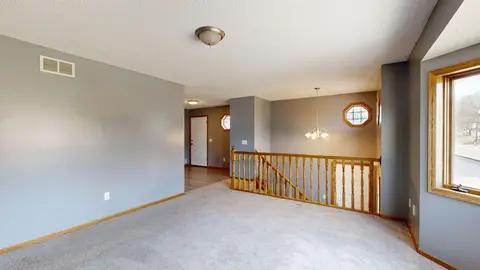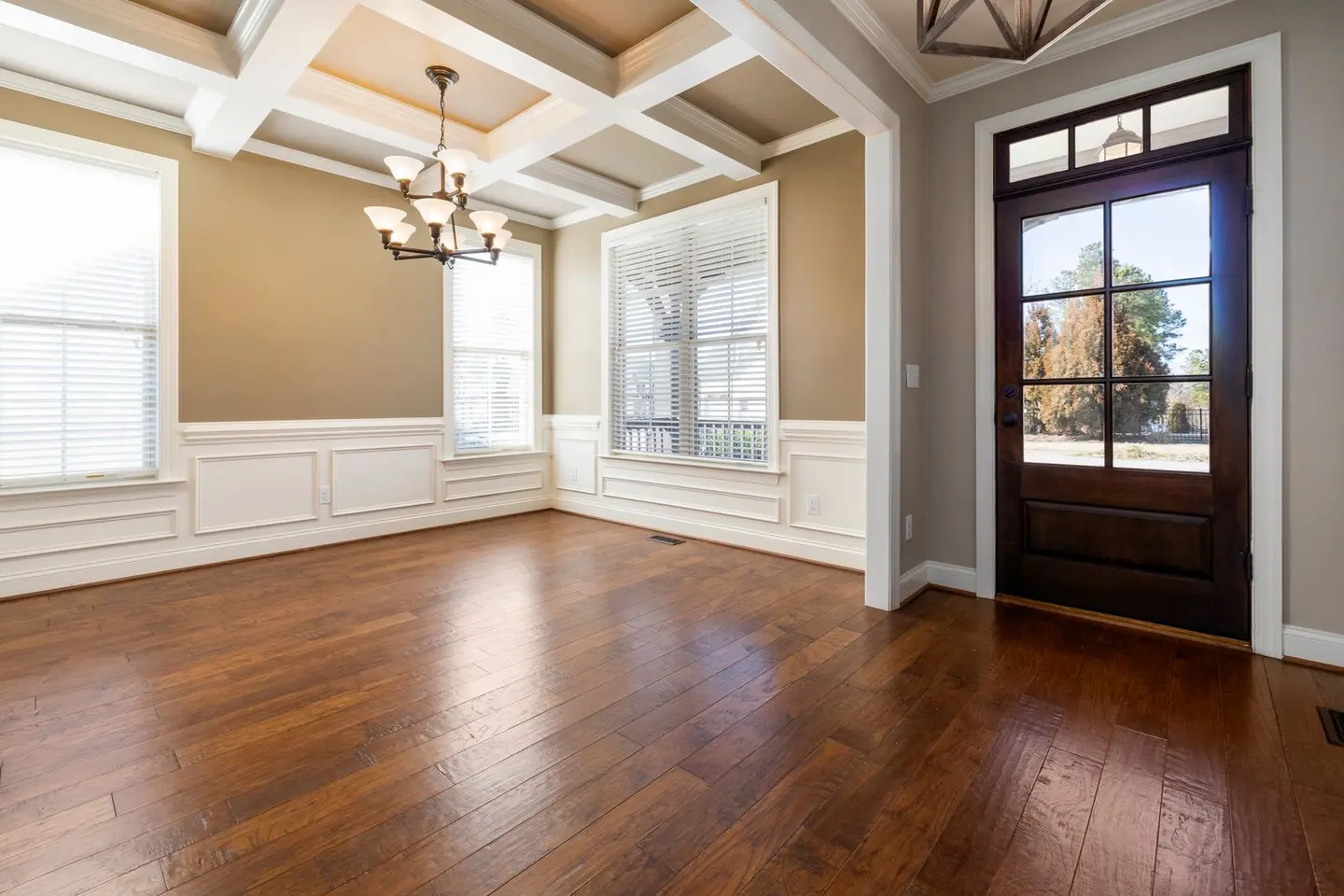
The question of solid wood versus engineered wood comes up in almost every UK renovation that involves timber flooring. The honest answer is that for most residential projects in 2026, especially those with underfloor heating or any degree of humidity variation, engineered wood is the better technical choice. Solid wood still has a place, but it demands the right conditions.
Solid wood flooring costs £35–£120/m² fully fitted. Engineered wood costs £25–£80/m². The price gap is smaller than many people expect; the performance gap is larger.1
What the Products Actually Are
Solid wood is milled from a single piece of timber from top to bottom, typically 18–22 mm thick. Every millimetre is real wood. This means it can be sanded and refinished more times than almost any other product, 5 to 8 times over a lifetime is realistic.
Engineered wood is a hardwood veneer (2–7 mm) bonded to a cross-ply plywood or HDF core. The top surface is indistinguishable from solid wood in look and touch; the multi-layer core is what provides dimensional stability.
The Core Issue: Moisture Movement
Timber is hygroscopic, it absorbs and releases moisture with changes in relative humidity. In the UK, indoor RH swings from around 40–50% in winter (central heating drying the air) to 60–70% in summer. This causes wood to expand and contract across its grain.
For a solid 18 mm oak board at 120 mm wide, seasonal movement can reach 1.5–2.5 mm per board. Across a 4 m wide room of 150 mm boards, that represents 40–65 mm of total movement, impossible to accommodate without expansion gaps that look unsightly at skirting boards, or worse, buckling at the centre of the room.
Engineered wood, with its cross-ply core, limits movement to roughly 0.5–1 mm per board under the same conditions, one-third to one-fifth as much.
Head-to-Head Comparison
| Feature | Solid Wood | Engineered Wood |
|---|---|---|
| Typical thickness | 18–22 mm | 12–20 mm |
| Wear layer | Full depth | 2–7 mm veneer |
| Sanding potential | 5–8 times | 1–4 times (veneer-dependent) |
| Seasonal movement | High (2–3 mm/board) | Low (0.5–1 mm/board) |
| UFH suitability | Poor–Marginal | Good (glue-down) |
| Moisture tolerance | Low | Moderate |
| Install methods | Secret nail, glue-down | Click float, glue-down, secret nail |
| Maximum board width (stable) | 100–130 mm | 150–220 mm |
| Supply cost (mid-range oak) | £28–£55/m² | £20–£40/m² |
| Fully fitted cost | £45–£100/m² | £35–£70/m² |
| Lifespan (well maintained) | 50–100 years | 25–60 years |
Underfloor Heating: A Clear Winner
Solid wood and underfloor heating are a difficult combination. The heat cycles drive moisture in and out of the boards repeatedly; over time this causes gapping, cupping, or splitting. Most solid wood flooring manufacturers restrict board widths to 90–130 mm when used over UFH, and some void warranties entirely.
Engineered wood, glued directly to the heated subfloor with a flexible adhesive, handles UFH well. The plywood core has a lower coefficient of thermal expansion and tolerates cycling far better. Most engineered products specify a maximum surface temperature of 27°C and a thermal resistance of ≤ 0.15 m²·K/W, achievable with a standard glue-down install and no additional underlay.2
If you have or plan to install UFH, choose engineered wood.
Sanding and Longevity
This is where solid wood wins decisively. A 20 mm solid oak board has roughly 18 mm of usable wood above the tongue. After the first sand (removing 1–1.5 mm) it can be refinished four or five more times over 70–80 years, bringing it back to near-new appearance each time.
Engineered boards with a 6–7 mm veneer can be sanded two or three times. Those with a 2–3 mm veneer can be sanded once, carefully. Budget engineered products under 2 mm should not be sanded at all.
If you are laying flooring in a historic property, period renovation, or a room that will see heavy foot traffic for decades without replacement, solid wood’s long sanding life is a genuine advantage.
Installation: Practicalities
Solid wood must be secret-nailed or glued to a timber or concrete subfloor respectively. It cannot float, the mass and rigidity of a full-depth board require a fixed connection. This limits where it can be used (not over flexible timber subfloors that bounce or squeak) and makes installation slower and more disruptive.
Engineered wood can float on underlay, be glued down, or be secret-nailed, giving much greater flexibility. A floating install is reversible and faster; glue-down is permanent but performs better underfoot and over UFH.
Both products require the subfloor to be flat to 3 mm over 1.8 m. Both need to acclimatise in the room for 48–72 hours before installation (some manufacturers recommend up to 7 days for wide solid boards).
Cost in Practice
For a 30 m² living room:
| Item | Solid Wood (mid-range oak) | Engineered Wood (mid-range oak) |
|---|---|---|
| Boards supply | £1,050–£1,650 | £750–£1,200 |
| Underlay / adhesive | £60–£90 | £80–£130 |
| Fitting | £450–£600 | £380–£540 |
| Skirtings / thresholds | £150–£250 | £150–£250 |
| Total | £1,710–£2,590 | £1,360–£2,120 |
The saving from engineered is real but not dramatic at mid-range quality. Where the gap widens is at the premium end: very wide, character-grade solid oak in exotic cuts can cost £70–£100/m² supply-only, versus similar-looking engineered at £40–£65/m².
Which Should You Choose?
Choose solid wood if:
- You have a timber subfloor with no underfloor heating
- You want maximum sanding and refinishing longevity (heirloom-quality floors)
- You are renovating a period property where authentic materials matter
- Room humidity will be well-controlled (good extract ventilation, consistent heating)
Choose engineered wood if:
- You have or plan underfloor heating
- The subfloor is concrete
- You want wider boards (>130 mm)
- Humidity in the room may vary (kitchen, basement, room with poor ventilation)
- You want an easier, potentially reversible installation
For the majority of UK renovation projects, modern homes, kitchen extensions, open-plan spaces with UFH, flats, engineered wood is the more sensible choice. Solid wood is not obsolete, but it works best in the specific conditions it was designed for.
References (2)
Figures in this note were checked against the sources below on 7 September 2026. Superscript numbers in the text point to them. Every source the site cites, by topic.
- 1costsupplier figureCountryLife Flooring.RN-E1Z1X4A price, true at 2026. CountryLife Flooring publishing its own price guidance for this work. A trade supplier writing about what it charges is evidence of the market rate and not a quotation, and the cost book treats it as one figure among several rather than on its own
- 2technicalfairWhich?, guidance.RN-ZYIPE1Which? on choosing underfloor heating: wet against electric, what suits a retrofit as opposed to a new floor, and how floor covering and insulation affect the result. A consumer body, so it is one step removed from the installation detail, and useful for framing the choice rather than for the numbers.
-
Flooring Cost Guide 2026, Prices Per m2 (UK), CountryLife Flooring, accessed 15 September 2026. Priced at 2026, so no calibration is needed. countrylifeflooring.co.uk
-
Three steps to getting the best underfloor heating for your home, Which?, accessed 7 September 2026. which.co.uk