Changing a uPVC door lock is one of the most common and straightforward home security tasks you can carry out yourself. Whether you are re-securing after moving into a new house, replacing a broken cylinder, or upgrading to a higher-security anti-snap lock, the job typically requires nothing more than a single flathead screwdriver and 20–30 minutes.
uPVC doors use two distinct types of locking component: the euro cylinder (the barrel that your key turns) and the multipoint locking mechanism (the latches and bolts that engage into the frame). Most lock faults involve one or the other. This guide covers both.
Understanding Your uPVC Lock
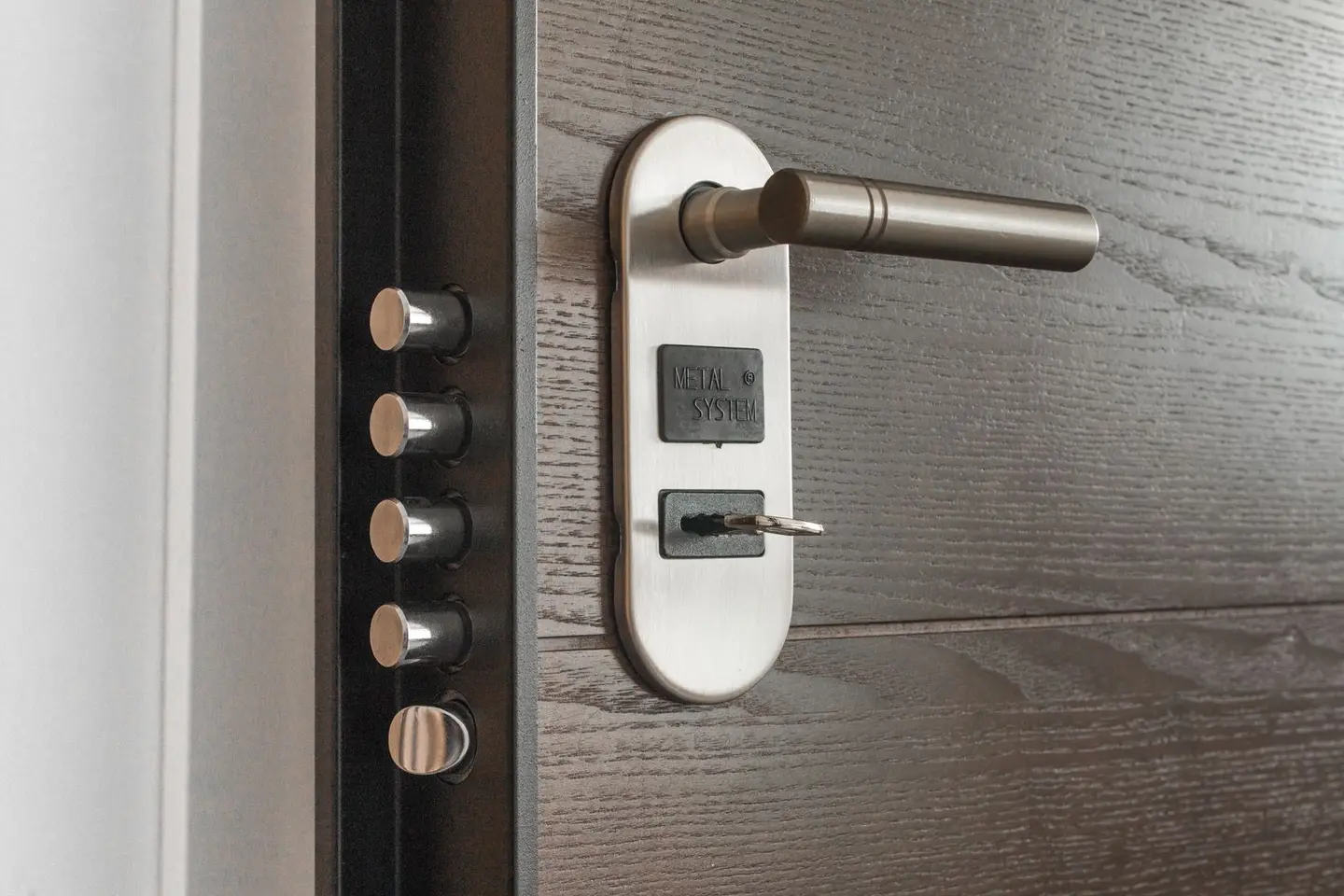
Most uPVC front and back doors use a multipoint locking system, when you lift the handle and turn the key, multiple hooks, latches, or bolts engage simultaneously at different points up and down the door edge. The driving force is the handle-operated gearbox inside the lock body.
The euro cylinder is the replaceable barrel that your key operates. It sits in a hole in the door face, retained by a single screw, and connects to the gearbox via a cam at its back end.
Common problems and which component is at fault:
| Symptom | Likely cause |
|---|---|
| Key turns but door won’t lock/unlock | Multipoint mechanism or gearbox fault |
| Key won’t turn or is stiff | Cylinder fault or cylinder/cam alignment issue |
| Handle lifts but bolts don’t move | Gearbox or mechanism fault |
| Key turns fine but cylinder spins freely | Cylinder retention screw missing or stripped |
| Door locked with key inside, key won’t work from outside | Cylinder worn; common after years of use |
Changing the Euro Cylinder (Most Common Job)
Changing the cylinder is the right fix for most key-operation problems, and is also the standard action after moving to a new property.
What You Need
- Flathead screwdriver (medium)
- The old key (you need to operate the cylinder during removal)
- A replacement euro cylinder in the correct size
Measure the Cylinder First
Euro cylinders are measured as a total length and a split around the centre fixing hole. For example, a 40/50 euro cylinder is 40 mm on the inside (handle side) and 50 mm on the outside (key side), totalling 90 mm.
To measure: open the door. Remove the existing cylinder (see below) or measure from the edge of the door to the cylinder fixing screw centre, then from the fixing screw centre to the face of the door on each side. Alternatively, measure the existing cylinder once removed.
Buying the wrong size is the most common mistake, even 5 mm off will prevent correct fitting. If in doubt, take the old cylinder to the hardware shop.
Security Grade: Anti-Snap Cylinders
Standard euro cylinders can be snapped, a technique used by burglars where they grip the protruding part with pliers and apply side force until the cylinder fractures at the scoring groove. The cam releases and the door opens in seconds.
Always specify an anti-snap (also called anti-snap, anti-bump, anti-pick, anti-drill) cylinder. Look for Kitemarked cylinders meeting the BS TS007 3-star standard or Secured by Design approval. ABS, ERA Fortress, Yale Superior, and Mul-T-Lock are well-regarded ranges in 2026.
| Cylinder type | Cost range | Security rating |
|---|---|---|
| Standard euro (no security features) | £5–£15 | Avoid for external doors |
| Anti-bump only | £10–£25 | Minimal improvement |
| Anti-snap (TS007 1-star) | £15–£35 | Acceptable minimum |
| Anti-snap, anti-pick, anti-drill (TS007 3-star) | £30–£60 | Recommended |
| High-security (Sold Secure Diamond) | £50–£100+ | Best practice |
Step-by-Step: Cylinder Removal and Replacement
- Open the door and leave it open throughout, you do not want to lock yourself out.
- Locate the cylinder retention screw on the door edge (it is on the edge of the door, on the lock body, typically a flathead screw).
- Undo this screw by 2–3 turns, do not remove it completely.
- Insert your key into the cylinder and turn it slightly (approximately 10–15 degrees) to retract the cam at the back. The cam must clear the gearbox for the cylinder to slide out.
- With the key holding the cam retracted, slide the cylinder straight out towards you. It should come out smoothly. If it sticks, check the retention screw is loose enough.
- Take the cylinder to the hardware shop if you have not pre-measured, staff can size a replacement from the old cylinder directly.
- Insert the new cylinder by reversing the process: turn the key to retract the new cam, slide the cylinder into the hole, align the cam slot with the gearbox, release the key, and push home.
- Tighten the retention screw, firmly, but do not overtighten or you will strip the thread.
- Test with the door open: key should turn smoothly, and handle operation should engage and disengage the bolts correctly.
Replacing a Multipoint Locking Mechanism
If the cylinder is fine but the bolts or hooks are not engaging when the handle is lifted and key turned, the gearbox or mechanism needs replacing.
Identification
Remove the door handle (two screws on the rose or backplate) and the internal handle cover. The spindle hole and gearbox will be visible. Note:
- The backset, distance from the door edge to the centre of the spindle hole (typically 35 mm or 45 mm)
- The case size, the height of the gearbox housing
- The handing, is the door left-handed or right-handed? (Stand facing the door from outside; if the hinges are on the left, it is left-handed)
- The cam follower position, where the euro cylinder cam engages the gearbox
Photograph the existing mechanism before removing it. Many mechanisms are brand-specific (Maco, Fuhr, GU, Winkhaus, Yale, Avocet). Match by photograph if the brand is not marked.
Replacing the Mechanism
- Note the positions of all hooks, latches, and bolts on the door edge.
- Remove all screws holding the mechanism to the door edge.
- Slide the mechanism out of the door pocket, this can require patience on older doors where the mechanism has swollen or corroded slightly.
- Fit the new mechanism in reverse: slide in, align all the bolt/hook positions with the keeps in the frame, screw in position.
- Refit the handle, euro cylinder, and test thoroughly.
If you cannot identify the mechanism or it is a bespoke size, a locksmith is the practical option. Most locksmiths carry a range of common mechanisms and can identify and fit a replacement in under an hour.
When to Call a Locksmith
Call a locksmith rather than attempting DIY if:
- The door is locked shut and the cylinder or mechanism has failed, emergency entry is specialist work
- The mechanism brand cannot be identified and online research has not resolved it
- The door itself has dropped or the frame has moved, causing misalignment, this is a door hanging or frame repair, not a lock job
- The door is a composite rather than uPVC, the locking mechanism may differ
A locksmith call-out in 2026 costs £80–£200 for a standard daytime job (non-emergency). Out-of-hours emergency call-outs run to £150–£350. Always confirm the total price before they start work.
Insurance Implications
Check your home insurance policy’s schedule of locks. Many insurers require external doors to be secured with BS 3621 mortice deadlocks or equivalent multipoint locks to validate a claim. Fitting a non-compliant lock, or leaving the factory-standard cheap cylinder in place, can invalidate your buildings or contents cover following a break-in. An anti-snap euro cylinder meeting TS007 3-star is typically acceptable to insurers.
If in doubt, call your insurer’s claims line and ask about lock requirements before purchasing a replacement.