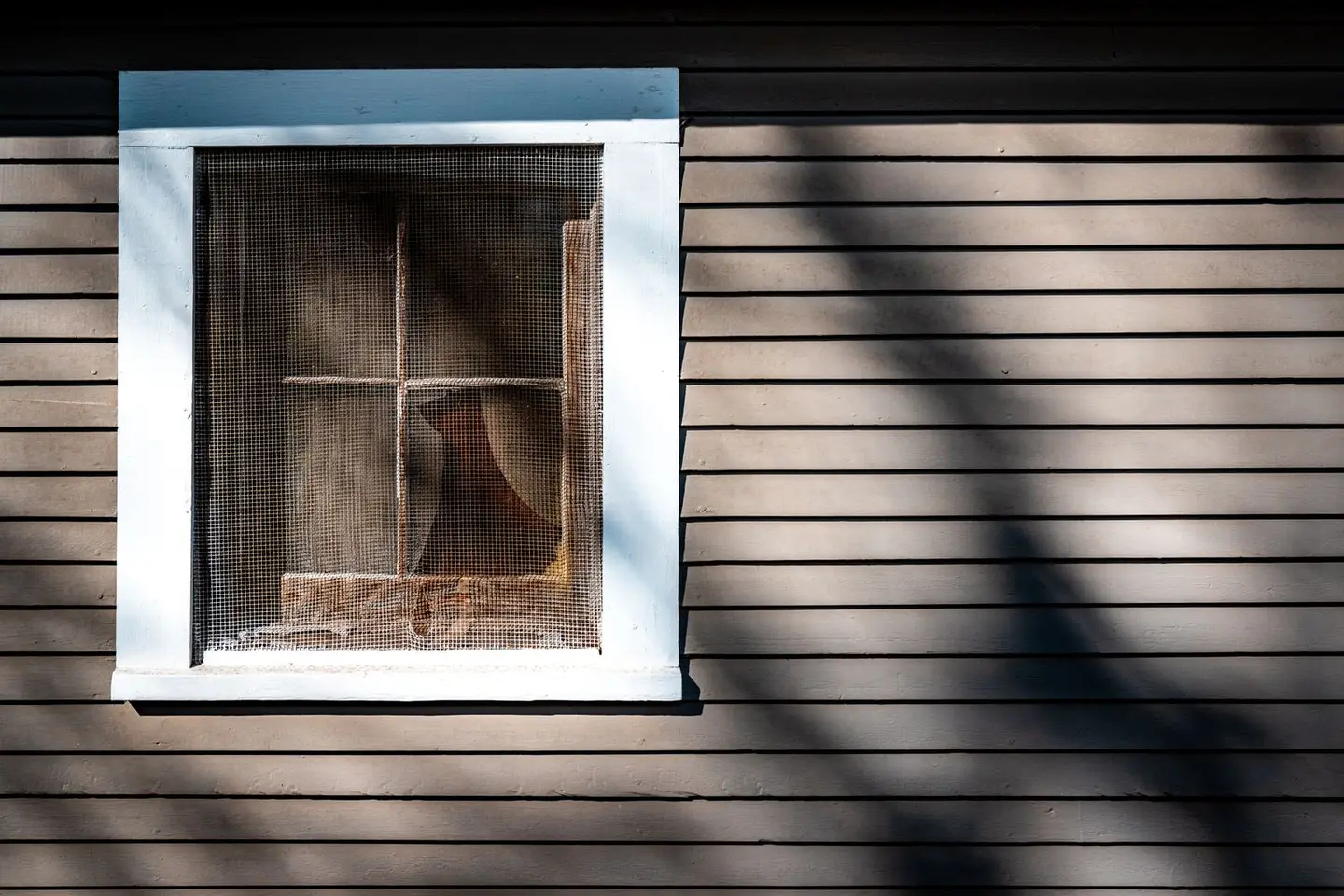
Window screens, also called fly screens or insect screens, let you ventilate a room without letting in mosquitoes, flies, or moths. They are far more common in Europe and North America than in the UK, but demand has risen as British summers have grown warmer and tiger mosquito sightings have spread northward.
In 2026, supply-and-fit costs range from £40 to £250 per window, depending on the screen type, window size, and whether the frame requires modification. DIY magnetic screens for standard casement windows start at £20–£60 per window.
Types of Window Screen
Fixed Frame Screens
A rigid aluminium or uPVC frame with fibreglass or stainless-steel mesh, fitted inside or outside the window recess. Fixed screens suit windows that are rarely opened fully and where a permanent installation is acceptable. They are the cheapest option per unit.
Magnetic Clip-On Screens
A lightweight frame with magnetic edges that attaches to the window frame without tools or fixings. Suitable for standard casement windows. Easy DIY installation; can be removed and stored in winter.
Pleated Screens (Concertina)
A folding concertina mesh that slides horizontally across the window opening. Ideal for wide openings or bi-fold windows. More expensive than fixed frames but unobtrusive when pushed to one side.
Retractable Roller Screens
A cassette fixed to one side of the window frame with mesh that rolls out on demand, similar to a roller blind. High-end option; suits large, frequently used windows.
Sliding Screens
A screen panel that slides in a track, typically paired with aluminium sliding windows. Less common in UK housing stock.
2026 UK Window Screen Costs
| Screen type | DIY supply only | Supply and fit (per window) |
|---|---|---|
| Magnetic clip-on (standard casement) | £20–£60 | £50–£1001 |
| Fixed frame (standard casement, made-to-measure) | £30–£80 | £60–£130 |
| Fixed frame (large or non-standard opening) | £60–£140 | £100–£200 |
| Pleated / concertina | £80–£160 | £130–£250 |
| Retractable roller | £100–£200 | £150–£300 |
| Sliding screen (aluminium slider window) | £70–£130 | £120–£220 |
The cited prices in this table were published in 2023 and brought to 2026. What that means.
Prices are per window and assume UK mainland delivery. Prices in London and the South East tend to run 10–20% higher.
What Drives the Cost?
Window size is the biggest variable. Screens are made-to-measure; larger openings mean more material and a heavier frame. A 600 × 900 mm standard casement costs roughly half the price of a 1,200 × 1,200 mm picture window.
Frame material affects longevity. Powder-coated aluminium frames cost more than uPVC but resist corrosion better and last 20+ years rather than 10–15 years.
Mesh grade influences price. Standard fibreglass mesh (1.0–1.2 mm aperture) suits most applications. Fine-mesh (0.6 mm aperture) keeps out smaller insects including midges and sandflies but reduces airflow slightly. Pet-resistant mesh (PVC-coated fibreglass, thicker gauge) is 20–30% more expensive.
Access and fitting complexity adds cost. Screens fitted on first-floor or higher windows from outside require scaffolding or a tall ladder and increase labour by £30–£80 per window. Non-standard reveals or heavily profiled frames may need bespoke adapters.
Mesh Types and Specifications
| Mesh type | Aperture | Material | Typical cost premium | Lifespan |
|---|---|---|---|---|
| Standard fibreglass | 1.0–1.2 mm | Fibreglass | Baseline | 10–15 years |
| Fine mesh (midge) | 0.6 mm | Fibreglass | +15–25% | 10–15 years |
| Stainless steel | 1.0 mm | 304 SS | +40–60% | 25+ years |
| Pet-resistant | 1.2 mm | PVC-coated glass | +20–30% | 10–12 years |
| Solar control mesh | - | Fibreglass/PVC | +30–50% | 8–12 years |
DIY vs. Professional Installation
Magnetic clip-on screens are a genuine DIY job. The frame peels apart, you cut the mesh to size with scissors, and magnets hold it in place. No tools required; installation time is 15–30 minutes per window.
Made-to-measure fixed frame screens typically arrive as a finished unit, you press them into the window recess or fix with small adhesive clips. Most homeowners can manage this without professional help.
Pleated and retractable roller screens require measuring to ±2 mm and precise mounting of tracks and cassettes. Mistakes are costly, and a poorly aligned track causes the mesh to bunch or jam. For these types, professional fitting is usually worth the extra £40–£80 per window.
Building Regulations
Window screens are not regulated under UK Building Regulations. However, if you fit external screens on a listed building or in a conservation area, check with your local planning authority, external alterations may require Listed Building Consent or Conservation Area Consent.
For openable roof lights, screens can affect the egress requirement: Building Regulations Approved Document B requires certain bedroom windows to be openable as an emergency escape route (minimum 0.33 m² clear opening, minimum 450 mm in any direction). A fixed screen that blocks this route should not be used on a designated escape window.2
Getting Quotes
Window screen suppliers can be found through trade directories, uPVC window installers, and specialist insect-screen fabricators. When asking for quotes, provide:
- Window type (casement, sash, sliding, bi-fold)
- Exact width × height of the opening in millimetres
- Whether you need inside or outside fitting
- Floor level
- Mesh preference (standard, fine, pet-resistant)
Most suppliers offer a measuring service at no charge if you proceed with the order. Allow two to four weeks lead time for made-to-measure units from UK fabricators; off-the-shelf magnetic screens are typically available next-day online.
The rules in this note are those that apply in England. Scotland, Wales and Northern Ireland have their own building standards and permitted development rights.
References (2)
Figures in this note were checked against the sources below on 14 September 2026. Superscript numbers in the text point to them. Every source the site cites, by topic.
- 1costgoodTai Tarian Ltd, published on Sell2Wales (Welsh Government public procurement portal), a government page.RN-GWQUHTA price, true at 2023, brought forward on the Construction Output Price Index. Tai Tarian Ltd, published on Sell2Wales (Welsh Government public procurement portal), NHF Form of Contract 2023 Price Framework (Lot 3 Carpentry), Tai Tarian Responsive Maintenance Framework Agreement ref 01003, sheet of priced M3NHF Version 8 Schedule of Rates. Held in the cost register as a price source; the passage quoted against it reads: 371057 | Carpentry and Joinery | Kitchen Units and Worktops | Kitchen Units - Clients Standard Specification | NO | 126.2 | KITCHEN UNIT:RENEW SINGLE WALL 600X300 900MM HIGH
- 2technicalvery strongMinistry of Housing, Communities and Local Government.RN-BUE914Approved Document B Volume 1, fire safety in dwellings, 2019 edition with the 2020, 2022 and 2025 amendments and the forthcoming 2026 and 2029 changes collated in. Covers means of warning and escape, internal fire spread through linings and structure, external fire spread and access for the fire service. This is the document behind escape window sizes, protected stairways, the 4.5 metre rule and the fire doors a loft conversion needs.
-
NHF Form of Contract 2023 Price Framework (Lot 3 Carpentry), Tai Tarian Responsive Maintenance Framework Agreement ref 01003, sheet of priced M3NHF Version 8 Schedule of Rates, Tai Tarian Ltd, published on Sell2Wales (Welsh Government public procurement portal), accessed 21 September 2026. Priced at 2023; brought to 2026 on the Construction Output Price Index, housing repair and maintenance (Great Britain), published by Office for National Statistics, a factor of 1.0358. sell2wales.gov.wales
-
Approved Document B, Fire safety, Volume 1: Dwellings, 2019 edition incorporating 2020, 2022 and 2025 amendments, Ministry of Housing, Communities and Local Government, accessed 14 September 2026. assets.publishing.service.gov.uk