Crisp lawn edges transform the look of a garden more than almost any other quick task. Well-defined borders make a scrubby lawn look intentional and reduce the time you spend weeding, because grass has a clear line it is not supposed to cross. The job requires just two basic tools and roughly half an hour for a typical suburban garden.
Tools and Materials
You will need:
- Half-moon edging iron (also called a lawn edger or border spade), a flat, D-shaped blade on a long handle for cutting a new edge or refreshing a line that has spread. Prices range from £15 for a budget model to £50 for a stainless-steel professional version.
- Long-handled edging shears, scissor-action blades angled horizontally so you can trim overhanging grass without bending. Decent pair: £20–£45.
- Garden twine and two canes, for setting a straight reference line on borders that run in a straight run.
- Flat board or plank, to stand on while using the half-moon, protecting the lawn and keeping the cut consistent.
- Wheelbarrow or trug, to collect removed turf.
Optional but useful: a rotary lawn edger (rolling disc on a long handle, £25–£60) for straight hard edges alongside paths, and plastic or metal lawn edging strip (£3–£8 per metre) to hold a defined line long-term.
When to Edge
In the UK, the lawn growing season runs roughly April through October. Edge:
- Once in early spring (April) to re-establish lines after winter growth and frost heave.
- Every four to six weeks through summer when growth is fast (May–August).
- Once in autumn (October) before growth stops, to go into winter tidy.
Avoid edging during drought: the soil cracks and the cut edge crumbles. Damp but not waterlogged soil gives the cleanest cut.
How to Edge a Lawn: Step-by-Step
1. Mark the Line
For a curved border alongside a bed, use a garden hose laid on the grass to define the desired curve before you cut. Step back and assess from several angles, curves look best when they are gentle and consistent. For straight edges alongside a path or fence, stretch twine tightly between two canes pushed into the ground.
2. Cut the Edge with the Half-Moon Iron
Stand on the plank next to the border to avoid compacting soil. Place the flat face of the half-moon blade against the twine or just inside the hose. Push straight down with your foot on the shoulder of the blade, a single vertical cut, 50–75 mm deep, is enough. Move the plank along and repeat, overlapping each cut by a centimetre or two.
The half-moon does not slice like a spade; it stamps down vertically. The goal is a clean, near-vertical face on the lawn side. If the existing edge has crept outward over years, you may need two passes, one to define the new line, one to remove the excess turf.
3. Remove the Surplus Turf
Use a border fork or your hands to lift the cut strips of turf. Surplus grass can be composted or used to fill bare patches elsewhere. Clear the debris from the bed so you can see the edge clearly.
4. Trim Overhanging Grass with Edging Shears
The half-moon sets the vertical face; the edging shears address the horizontal overhang, grass that has grown over the edge but not yet spread beyond it. Hold the shears with blades parallel to the ground and trim along the edge, collecting the clippings. A steady pace and light grip reduce fatigue.
5. Ongoing Maintenance
Once a clean edge is established, maintaining it is quick. A rotary edger or half-moon run along the line every four to six weeks during the season keeps creep under control. Edging shears or a battery-powered line trimmer with a rotatable head handle the grass overhang between full edging sessions.
Curved Edges vs. Straight Edges
| Edge type | Best tool | Technique tip |
|---|---|---|
| Curved border | Half-moon + hose as guide | Aim for generous, flowing curves, tight bends look awkward |
| Straight path edge | Half-moon + twine line | Check twine is taut before starting; re-check halfway |
| Circular feature (tree ring etc.) | Half-moon + cane-and-string compass | Fix cane at centre, stretch string to desired radius |
| Long driveway edge | Rotary lawn edger | Faster than half-moon for extended straight runs |
Should You Fit Permanent Edging Strip?
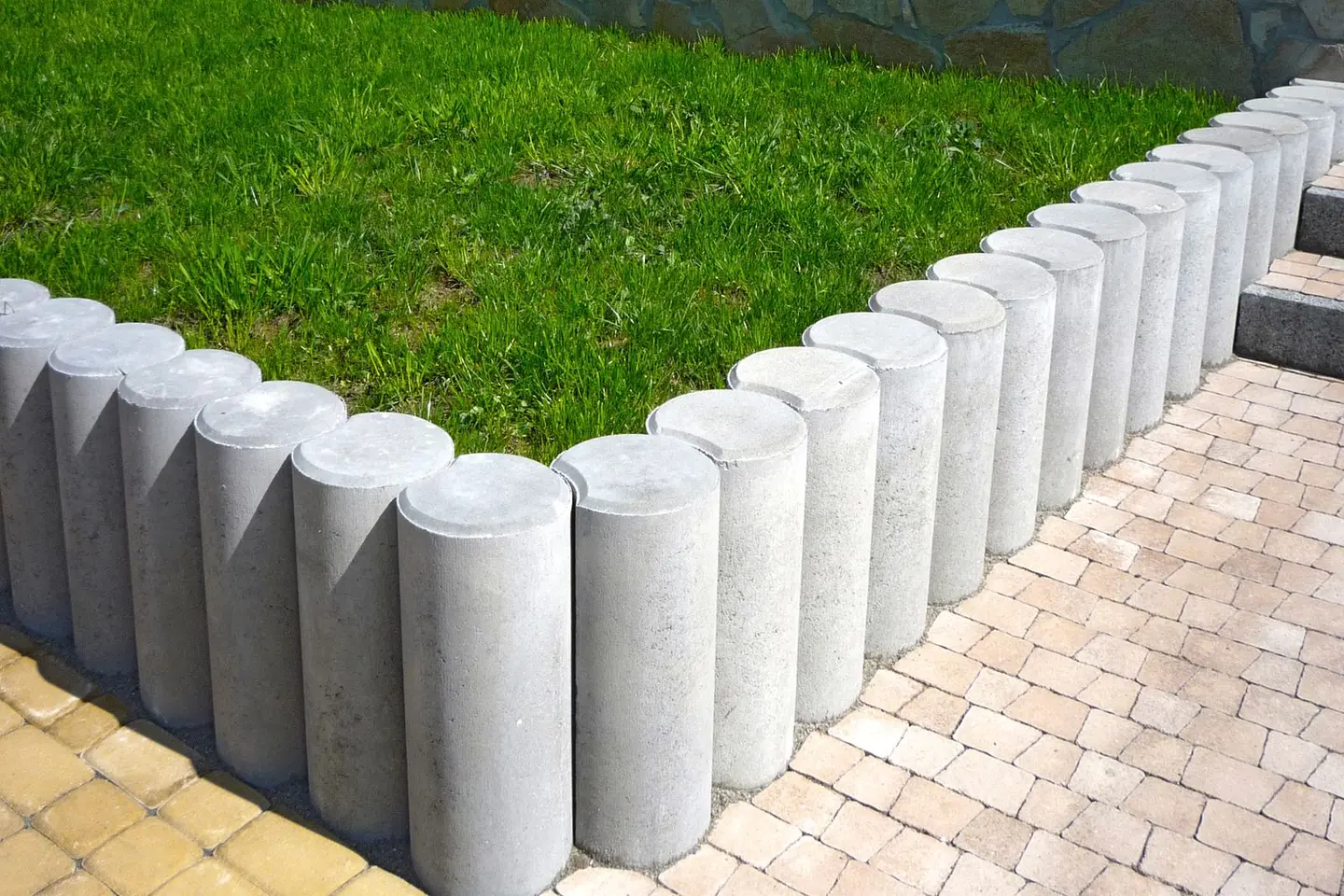
Plastic or metal lawn edging strip, set just below the turf surface, creates a physical barrier that stops grass rhizomes from invading beds and reduces edging frequency to once or twice a season. Metal strip (usually mild steel or corten) is £5–£10 per metre installed and lasts 15–20 years. Plastic strip costs £3–£5 per metre but can lift in frost and degrade under UV after five to eight years. Both are installed by cutting a narrow slot with a spade, pushing the strip into the slot flush with the turf, and backfilling.
Common Mistakes
Cutting at an angle, the half-moon should be pushed straight down, not angled inward. An angled cut undercuts the lawn and makes the edge collapse.
Removing too much, a new edge should only remove what is genuinely outside the desired line. Edging too aggressively year after year shrinks the lawn.
Skipping the shears, the half-moon sets the line; the shears finish the job. Omitting shears leaves a ragged, overgrown appearance even on a freshly cut edge.
Edging wet clay soil, heavy, wet clay smears rather than cuts cleanly. Wait until the surface has dried slightly after rain.
When to Hire a Gardener
For a complex or large garden, a one-off professional tidy with edging typically costs £150–£350 depending on size and condition, including clearance. Ongoing maintenance contracts covering mowing, edging, and basic weeding run £40–£90 per visit for an average suburban garden in 2026. If your borders are extensively overgrown and the lawn edge has not been defined for several years, a professional with a half-moon can re-establish the line in a fraction of the time a first-timer would take.
Quick Reference: Edging Costs
| Item | Cost (2026) |
|---|---|
| Half-moon edging iron | £15–£50 |
| Long-handled edging shears | £20–£45 |
| Rotary lawn edger | £25–£60 |
| Metal lawn edging strip (per metre) | £5–£10 installed |
| Plastic lawn edging strip (per metre) | £3–£5 installed |
| Gardener one-off tidy (average garden) | £150–£350 |
| Ongoing maintenance per visit | £40–£90 |
Edging is one of the highest-impact, lowest-cost things you can do to improve a garden’s appearance. Once the line is established, ten minutes with shears every few weeks is enough to keep it sharp all season.