Whether you’re starting from bare earth after a build, or replacing a tired, mossy lawn, the two routes are turf or seed. Turf gives you an instant, usable surface within a few weeks; seed is cheaper, offers a wider choice of grass species, and generally produces a tougher, deeper-rooted sward, but it takes three to six months to establish and requires protecting from birds and foot traffic.
The preparation work is identical for both, and it is by far the most important part of either approach.
Turf vs Seed: Quick Comparison
| Factor | Turf | Seed |
|---|---|---|
| Cost (supply & lay, per m²) | £3.50–£7 | £0.80–£2 |
| Time to usable lawn | 3–6 weeks | 3–6 months |
| Best time to lay/sow | March–October | April–September (spring/early autumn best) |
| Choice of grass species | Limited (pre-grown mixes) | Wide, choose for shade, wear, ornamental |
| Establishment risk | Low, fails only if dry or frost | Moderate, birds, weeds, washout |
| Long-term result | Good | Generally better root depth |
| Weed risk | Low (clean professional turf) | Higher, bare soil invites weeds |
Preparation: The Same for Both
No amount of quality turf or expensive seed compensates for poor ground preparation. Both routes need the same foundation.
Step 1: Clear the Ground
Remove all existing vegetation, kill off existing lawn with a glyphosate-based weedkiller, wait 2–3 weeks, then rotovate or dig over to 150 mm depth. For an area under 20 m² a fork and spade are adequate; above 50 m² hiring a rotovator (£80–£120/day) saves time.
Step 2: Improve the Soil
- On heavy clay soil: incorporate sharp horticultural sand (25 mm depth) and/or a soil improver to improve drainage.
- On sandy, free-draining soil: work in organic matter (well-rotted compost or topsoil) to improve water retention.
- Aim for a loamy, friable texture to at least 150 mm depth.
Step 3: Level and Firm
Rake to a level, fine tilth. Remove stones over 25 mm. Firm the ground by systematically shuffling across it heel-to-toe, do not use a heavy roller on clay as it compacts. Rake again to a fine finish. The surface should be approximately 25 mm below the surrounding path or edging to allow the turf or established lawn to sit flush.
Step 4: Pre-Seed or Pre-Turf Fertiliser
Apply a pre-seed/pre-turf fertiliser (high phosphorus, e.g. 6:9:6 NPK) at the manufacturer’s rate, typically 35–50 g/m². Rake in lightly.
How to Lay Turf
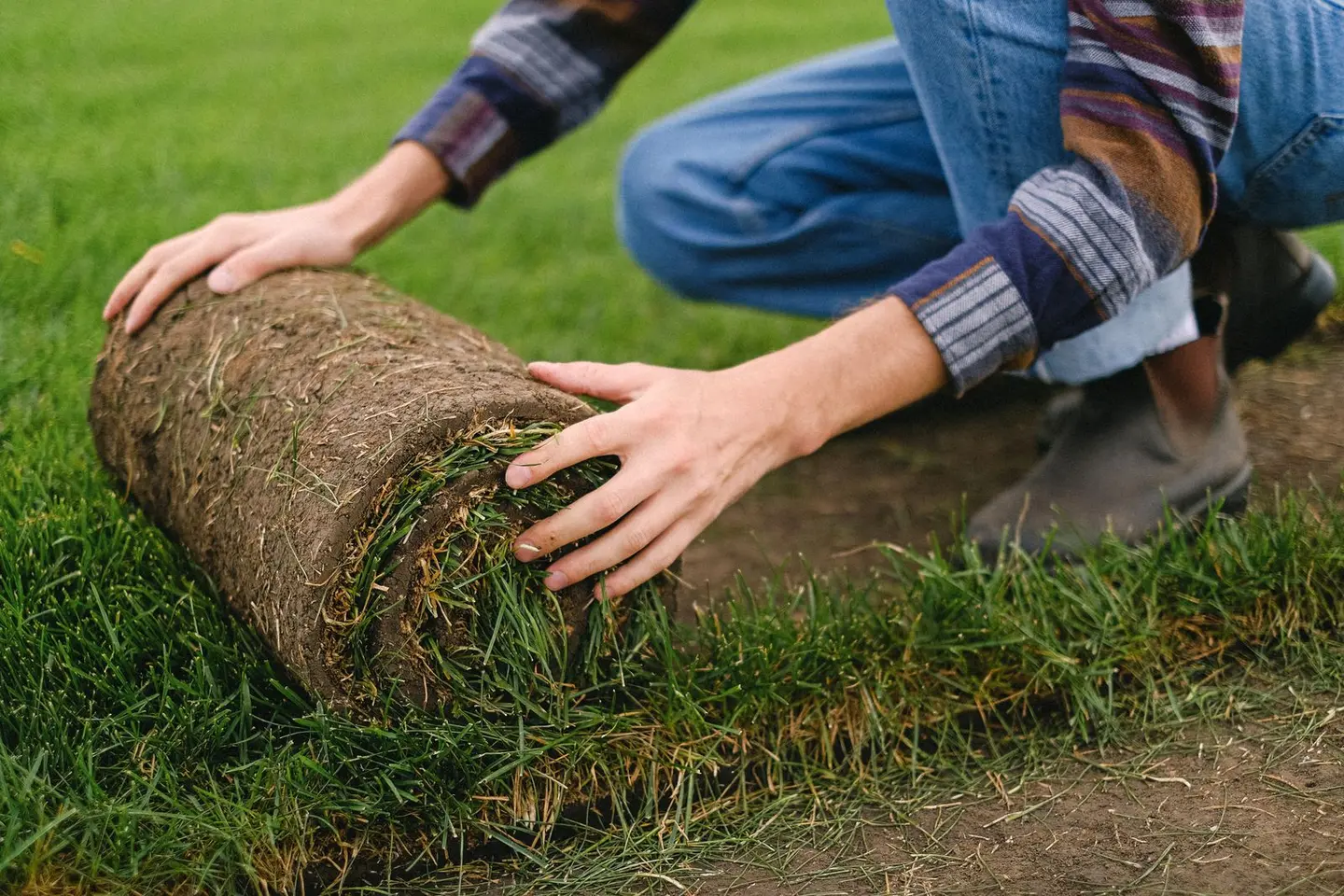
- Order turf to arrive when you are ready to lay it, turf must be laid within 24–48 hours of delivery. In warm weather, soak the rolls if you must store overnight.
- Start from a straight edge (a path, wall, or a string line) and work backwards so you are not standing on laid turf.
- Lay in a brick-bond pattern (stagger the joints row by row) with rolls butted tightly together, do not overlap or leave gaps.
- Cut to fit at edges and curves using an edging iron or sharp spade. A bread knife works well for intricate cuts around curved beds.
- Lute or firm each row by laying a plank over it and pressing down lightly, then butt the next roll against it.
- Water immediately and thoroughly, 15–20 mm of water on the first day, then daily (or every two days if rain falls) for the first two weeks.
- First mow: when the grass reaches approximately 75 mm height, mow to 50 mm. Check that turf has rooted by gently tugging a corner, if it resists, it has rooted and you can begin reducing watering frequency.
Turf grades: most domestic turves are a rye grass/fescue blend. Luxury or ornamental turf (fine fescue dominant) costs £5–£8/m² supply only and requires more maintenance.
How to Sow Lawn Seed
Choosing a Seed Mix
| Mix Type | Best For | Notes |
|---|---|---|
| Hardwearing/utility | Family gardens, pets, children | Rye-dominant; tolerates traffic |
| Ornamental/fine lawn | Formal, ornamental | Fine fescue and bent; needs regular attention |
| Shaded area mix | Under trees, north-facing | Includes rough-stalked meadow grass |
| Low-maintenance mix | Minimal mowing required | Slower-growing fescues |
Sowing
- Sow in calm conditions to avoid drift. Split the seed in half and sow in two directions (east–west, then north–south) for even coverage.
- Typical application rate: 35 g/m² (check the packet, luxury mixes may differ).
- Lightly rake seed in (5–10 mm depth), do not bury too deep.
- Water gently using a rose attachment. Seeds need consistent moisture for 2–4 weeks during germination.
- Bird protection: stretch garden fleece over the area or use proprietary bird scarer.
Aftercare
- First germination visible in 7–21 days (soil temperature must be above 7°C for meaningful germination).
- First mow when grass reaches 75 mm, cutting to 50 mm. Never remove more than one-third of the blade length in a single cut.
- Avoid heavy foot traffic for 3 months.
Costs: Hiring a Landscaper
| Task | Typical Cost |
|---|---|
| Ground preparation (per m², labour only) | £2–£5 |
| Turf supply & lay (per m², all-in) | £5–£12 |
| Seed & sow (per m², all-in) | £2–£4 |
| Topsoil supply (per m³, delivered) | £40–£80 |
| Rotovator hire (per day) | £80–£130 |
A landscaper or groundworker day rate runs at £200–£400/day in 2026. For a straightforward 50 m² lawn replacement, expect 1–2 days of labour plus materials.
Watering Advice
The most common cause of turf failure is insufficient watering in the first three weeks. A new lawn needs the equivalent of 15–20 mm of water per week during establishment, either from rainfall or irrigation. In a dry British summer (June–August), plan to water every 2–3 days. A sprinkler on a timer reduces the burden considerably.
Hosepipe ban restrictions imposed by water companies override garden guidance, check your supplier’s current restrictions before installing a permanent sprinkler system.