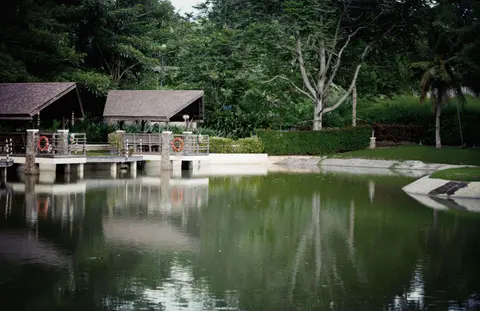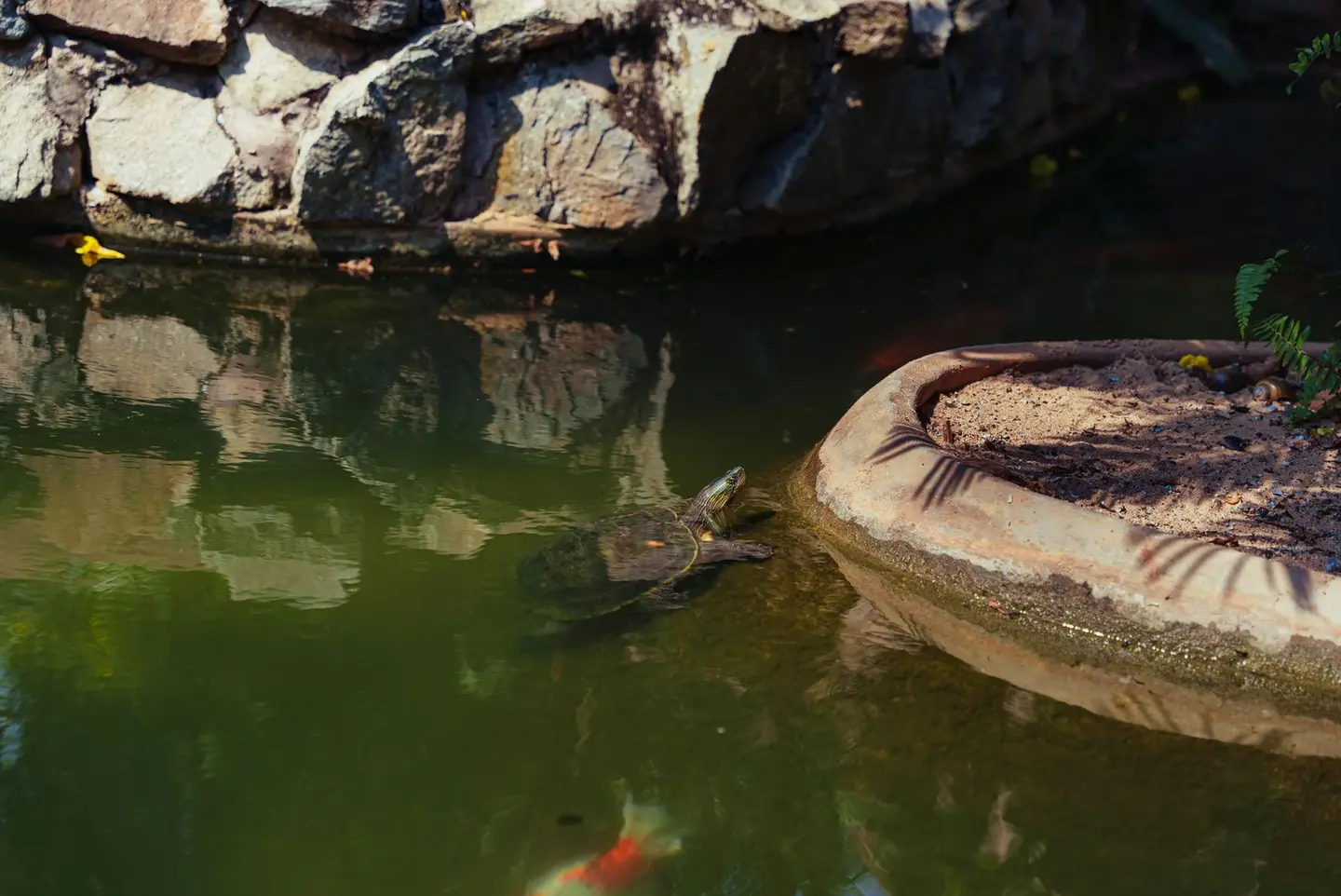
A natural swimming pond, also called an ecological pool or swimming lake, filters water through living plants rather than chemicals, producing clear, clean water without chlorine or bromine. In the UK they have grown in popularity as a chemical-free alternative to conventional swimming pools. In 2026, a professionally built swimming pond typically costs £25,000–£80,000, though the range extends well above this for premium designs or large estates, and specialist design-and-build firms working to a full natural-pool specification often quote considerably more.
The dramatic range reflects differences in size, excavation conditions, regeneration zone (planted filtration area) specification, and the complexity of the water circulation system. Understanding each cost element will help you budget realistically and evaluate contractor quotes.
How a Swimming Pond Works
A natural swimming pond has two distinct zones:
- Swimming zone, the open-water area where people swim, typically 1.2–2.0 m deep
- Regeneration zone, a shallow planted area (0.3–0.8 m deep) where aquatic plants and substrate filter the water biologically
Water circulates continuously between the two zones via a low-pressure pump. No chemical dosing is required, though UV sterilisers are sometimes added as a secondary barrier. The planted zone typically covers 50–100% of the swimming area by surface.
Swimming Pond Cost Breakdown
Each line is that element for one pond, installed. The spread within a line is mostly size: the low end suits a swimming zone of about 50 m² and the high end one of about 150 m².
| Cost element | Typical range |
|---|---|
| Excavation and soil removal | £3,000–£12,000 |
| Pond liner (EPDM rubber, 1.0–1.5 mm) | £2,500–£8,000 |
| Pump and pipework circulation system | £2,000–£6,000 |
| Substrate for regeneration zone (gravel/zeolite) | £1,500–£4,000 |
| Aquatic planting | £1,000–£4,000 |
| Edging, coping stones, decking | £3,000–£10,000 |
| Filtration skimmers and surface cleaning | £800–£2,500 |
| UV clarifier (optional but recommended) | £400–£1,200 |
| Engineering/design fee | £1,500–£5,000 |
| Landscaping around pond | £2,000–£8,000 |
| Total of the items above | £17,700–£60,700 |
The line items add up to £17,700–£60,700. Whole-job quotes for a professionally built pond typically come out higher, at around £25,000–£80,000, because they also carry the contractor’s labour for shaping the zones and fitting the liner, any submerged wall between the zones, and overheads and margin, which are rarely itemised.
What Drives the Cost?
Size is the single biggest variable. As a rough guide, a pond with a 50 m² swimming zone sits towards the bottom of the typical range and a 150 m² family-sized pond towards the top or beyond, although the cost per square metre falls as ponds get bigger. The regeneration zone adds to the overall footprint, typically increasing the total excavation area by 50–100%.
Ground conditions matter significantly. Clay-heavy or waterlogged ground costs more to excavate and stabilise. Rocky ground or sites requiring sheet piling to prevent collapse add £3,000–£10,000 to excavation costs.
Liner specification, EPDM rubber liners are the usual choice for natural ponds, commonly sold in thicknesses from about 0.75 mm to 1.5 mm. For a swimming pond with potential foot traffic, 1.0–1.5 mm is recommended. EPDM pond liner costs roughly £12–£20 per m² in materials on larger orders. One supplier cuts 1 mm Firestone PondGard to size at £1.29 per square foot for orders over 680 sq ft, so a 150 m² liner (about 1,615 sq ft) costs roughly £2,100 in materials alone, with significant labour for fitting and seaming.1
Pump energy, circulation pumps run continuously but should use low-wattage designs. A correctly specified pond may use 150–400 W. Run all year, that is about 1,300–3,500 kWh, or roughly £350–£920 at the capped electricity unit rate of 26.32p per kWh from 1 October 2026, less if the pump is turned down in winter.2 Solar-assisted pump options are available from specialist suppliers.
DIY-assisted builds, some homeowners excavate with a hired mini-digger, reducing labour costs by £3,000–£8,000. Liner fitting and planting are achievable for a competent DIYer with guidance from the pond specialist. A materials-only approach for a modest pond starts around £8,000–£15,000, with specialist design and advice on top.
Planning Permission
In England, a swimming pond in the garden of a house is usually permitted development under Class E of the General Permitted Development Order, which covers a swimming or other pool used for the household’s own enjoyment, so it needs no planning application unless:3
- Any part of it would sit forward of the principal elevation (usually the front wall) of the original house3
- The house is listed, so the pond would be within the curtilage of a listed building3
- The house is in a National Park, an Area of Outstanding Natural Beauty, the Broads or a World Heritage Site, and the pond and other outbuildings more than 20 m from the house would cover more than 10 m²3
- The house is in a conservation area or other article 2(3) land and the pond would sit between a side wall of the house and the boundary3
- The pond is not for the household’s own use, for example one run commercially for paying swimmers or guests
Class E does not apply to flats or maisonettes, and a council can remove it with an Article 4 direction or a planning condition, so check before you dig. If you plan to reshape the garden with the spoil rather than take it away, ask the council too, as substantial earthworks can need permission in their own right. If the pond will overflow or be drained into a stream, ditch or other watercourse, check the Environment Agency’s guidance, as discharging anything other than clean water to surface water can need an environmental permit.4
Running Costs
Natural swimming ponds usually have lower running costs than heated conventional pools:
| Cost | Annual range |
|---|---|
| Electricity (pump) | £350–£920 |
| Water top-up (evaporation) | £30–£100 |
| Annual plant maintenance | £200–£600 |
| Occasional substrate top-up | £0–£300 |
| Total annual running cost | £580–£1,920 |
By comparison, a heated chlorinated pool of similar size usually costs more to run, because heating and chemicals come on top of the pumping.
Water Quality and Safety
Private swimming ponds fall outside the Bathing Water Regulations 2013, which apply only to bathing waters formally identified under the regulations, so a private pond has no mandatory testing requirement.5 However, good practice is:
- Test for E. coli and intestinal enterococci, the two indicators used for designated bathing waters, at the start of the season and after heavy rainfall5
- Install a surface skimmer to remove debris
- Keep waterfowl off the swimming zone (a floating rope divider helps)
- Avoid swimming during blue-green algae blooms (check water colour and smell)
Specialist pond designers should provide a water quality management plan as part of the project.
How to Find a Swimming Pond Specialist
Natural swimming ponds require specialist knowledge; not all landscapers or pool installers have experience with ecological design. Look for:
- Installers licensed or trained in an established natural-pool system, such as Biotop or BioNova, where one operates in your area
- Portfolio evidence of completed naturalistic swimming ponds
- A design process that includes hydrology assessment of your site
- Clear documentation of the liner warranty (EPDM liners often carry long warranties)
Get at least two design proposals and make sure each specifies the regeneration zone area, pump specification, and long-term maintenance requirements.
Is a Swimming Pond Worth It?
For a home with a reasonable-sized garden (typically 0.1 acres or more), a natural swimming pond adds aesthetic and ecological value beyond just swimming. A well-designed pond can be a selling point in rural and semi-rural markets, though it will not suit every buyer. Unlike a conventional pool, it is a habitat: dragonflies, frogs, and aquatic invertebrates colonise within the first season.
The main drawback is that water temperature is entirely weather-dependent, in a typical UK summer, swimming ponds often reach around 18–22°C between late June and early September. Heating a natural swimming pond is counterproductive (it disrupts the biology), so if warm water year-round is the priority, a conventional heated pool is more appropriate.
References (5)
Figures in this note were checked against the sources below on 30 September 2026. Superscript numbers in the text point to them. Every source the site cites, by topic.
- 1costsupplier figureBradshaws Direct.RN-SMG01JA price, true at 2026-09. A UK water-gardening merchant's product page pricing 1 mm Firestone PondGard EPDM liner cut to size by the square foot, from £2.79 for small pieces down to £1.10 over 2,150 sq ft.
- 2costvery strongOfgem.RN-YYE8U2A price, true at 2026-09. The live source for any running-cost sum in a heating note. For 1 October to 31 December 2026 the direct debit cap is 26.32p per kWh for electricity with a 54.83p daily standing charge, and 7.97p per kWh for gas with a 29.68p daily standing charge, giving a typical annual dual fuel bill of £1,723, a 4% rise on the previous period. Ofgem states these are the average unit rate and standing charge for direct debit customers in England, Scotland and Wales; gas prices include 5% VAT while electricity carried no VAT in this period. The cap is reset every three months, so any note quoting a pence-per-kWh figure should be dated against this page.
- 3technicalvery strongThe National Archives (legislation.gov.uk), legislation.RN-J6L7TIThe primary legal text for garden rooms, sheds, summerhouses, pergolas, greenhouses and outdoor pools. Class E permits any building or enclosure, swimming or other pool within the curtilage required for a purpose incidental to the enjoyment of the dwellinghouse, plus a domestic heating oil container. Limitations: E.1(b) buildings, enclosures and containers other than the original dwellinghouse must not cover more than 50% of the curtilage; E.1(c) nothing forward of a wall forming the principal elevation of the original dwellinghouse; E.1(d) single storey only; E.1(e) maximum height 4 metres with a dual-pitched roof, 2.5 metres if any part is within 2 metres of a curtilage boundary, otherwise 3 metres; E.1(f) eaves no higher than 2.5 metres; E.1(g) not within the curtilage of a listed building; E.1(h) no verandah, balcony or raised platform; E.1(j) oil containers capped at 3,500 litres. E.4 defines incidental use as including keeping poultry, bees, pet animals, birds or other livestock for domestic needs or personal enjoyment, which is why a garden room used as a separate dwelling falls outside Class E.
- 4technicalvery strongEnvironment Agency, a government page.RN-YW0MX4The Environment Agency's guide to when a water discharge activity or groundwater activity permit is needed, last updated 20 April 2026, and the check to make before piping garden or driveway water anywhere other than a sewer. A permit is required to discharge liquid effluent or waste water to surface waters - rivers, streams, estuaries, lakes, canals and coastal waters - or to groundwater, which includes discharging treated sewage through an infiltration system. Waste water is defined broadly to include poisonous, noxious or polluting matter as well as trade or sewage effluent. The exemptions are what matter for domestic landscaping: discharging uncontaminated water such as clean rainwater from roofs to surface water needs no permit, nor does uncontaminated water from small hardstanding areas or public roads passed through oil separators; certain low-risk groundwater activities, discharges to enclosed lakes and ponds meeting set criteria, and domestic sewage meeting the general binding rules are also exempt. Volume bands used to select the application form are up to 15 cubic metres a day to ground and up to 20 cubic metres a day to surface water; these are form categories, not blanket exemptions.
- 5technicalvery strongThe National Archives (legislation.gov.uk), guidance.RN-HKF8YQRegulation 2 of the Bathing Water Regulations 2013 defines a bathing water as an area of surface water formally identified under regulation 3, so private ponds are outside the regime.
-
PondGard (Firestone) Liner 1mm Thick Custom Made In Any Size, Bradshaws Direct, accessed 30 September 2026. Priced at 2026-09 and left there. bradshawsdirect.co.uk
-
Energy price cap unit rates and standing charges, Ofgem, accessed 30 September 2026. Priced at 2026-09 and left there. ofgem.gov.uk
-
The Town and Country Planning (General Permitted Development) (England) Order 2015, Schedule 2, Part 1, Class E, legislation.gov.uk, accessed 30 September 2026. legislation.gov.uk
-
Discharges to surface water and groundwater: environmental permits, Environment Agency and Department for Environment, Food & Rural Affairs, accessed 30 September 2026. gov.uk
-
The Bathing Water Regulations 2013, regulation 2: Interpretation, legislation.gov.uk, accessed 30 September 2026. legislation.gov.uk