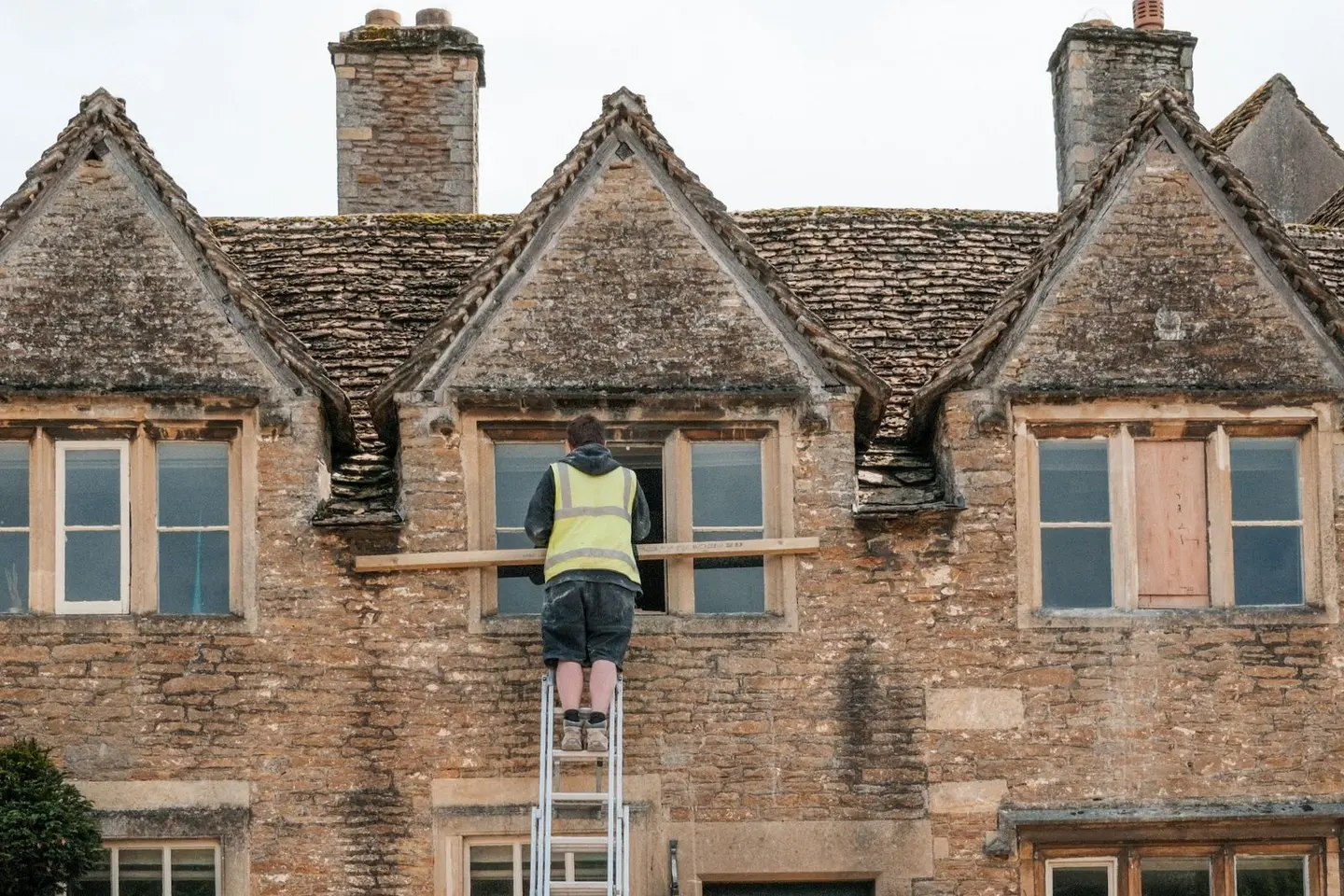
Listed Building Consent (LBC) is a legal requirement for any works, internal or external, that would affect the character of a listed building as a building of special architectural or historic interest.1 It is separate from, and additional to, planning permission.2 You may need both for the same project.
The critical point many homeowners miss is that listed building protection extends to the interior as well as the exterior.2 It also covers objects and structures within the curtilage (the land around the building) that have formed part of the land since before 1 July 1948, unless the list entry excludes them.3 Removing an original fireplace, replacing sash windows, or repointing brickwork without consent are all potential criminal offences.
What Is a Listed Building?
In England, there are over 370,000 entries for listed buildings on the National Heritage List for England (NHLE).2 One entry can cover several buildings, such as a terrace, so the number of individual buildings is higher. They are graded:
- Grade I: buildings of exceptional interest (about 2.5% of all listed buildings)2
- Grade II* (star): particularly important buildings of more than special interest (about 5.8%)2
- Grade II: nationally important and of special interest (about 91.7%)2
In Wales, Scotland, and Northern Ireland, similar systems operate under Cadw, Historic Environment Scotland, and the Historic Environment Division of the Department for Communities respectively. Scotland divides listed buildings into three categories, A, B and C, rather than grades.4 Northern Ireland uses grades A, B+, B, B1 and B2.5
Being listed does not prevent you from making changes or renovating your property: it means those changes require careful consideration and formal consent. Historic England puts it plainly: listed buildings can be used like any other building, and listing does not freeze a building in time.2
What Requires Listed Building Consent?
The legal test under the Planning (Listed Buildings and Conservation Areas) Act 1990 is whether the works would affect the building’s character as a listed building.1 This is deliberately broad. In practice, LBC is required for:
External works:
- Replacing windows (including like-for-like in most cases)
- Altering, extending, or demolishing any part of the structure
- Repointing stonework or brickwork with a different mortar mix
- Installing satellite dishes, aerials, or air-source heat pump units visible on the building
- Painting previously unpainted masonry
- Changing roofing materials or altering roof pitch
- Installing solar panels (usually requires LBC, and planning permission too, because permitted development rights for solar panels do not apply to a listed house)6
Internal works:
- Removing or altering original features (fireplaces, panelling, staircases, cornicing, sash windows internally)
- Knocking through walls, even non-structural ones, if they are original fabric
- Installing new bathrooms or kitchens where the works remove or alter historic fabric
- Replacing internal doors
- Removing historic floor tiles or boards
Works that do NOT normally require LBC:
- General redecoration (repainting walls in the same finish, replacing wallpaper)
- Like-for-like repair using the same materials and methods
- Routine maintenance (clearing gutters, replacing broken roof slates in matching material)
- Fitting new kitchen units without removing original fabric
Always confirm with your Local Planning Authority
What counts as “affecting character” is a matter of judgement. When in doubt, apply for LBC: there is no application fee in England, and consent gives you legal protection.7 Proceeding without consent and later needing to reinstate removed features is far more expensive.
The Application Process
LBC applications are made to the Local Planning Authority (LPA), in the same way as planning permission. The process:
-
Pre-application advice: most LPAs offer a pre-application advice service, usually for a fee set by each council, so check your council’s charging schedule. For any significant listed building project, this is advisable. The conservation officer will indicate what is likely to be acceptable before you spend money on drawings.
-
Submit the application: applications can be made through the Planning Portal (planningportal.co.uk). The Portal asks for a site plan, a location plan, a design and access statement and a heritage assessment.8 In practice the pack typically includes:
- A heritage impact statement
- Existing and proposed drawings (plans, elevations, sections)
- Design and access statement
- Photographs of the affected parts of the building
-
Determination period: the statutory period is 8 weeks from a valid application, though complex cases often take longer.9 The LPA must notify Historic England of every application for a Grade I or II* building, but for a Grade II building only where the works would demolish the building, a principal external wall, or all or a substantial part of the interior; other Grade II applications are decided locally.10
-
Conditions: consent is often granted with conditions, specifying materials, mortar mixes, methods of repair. These must be complied with precisely.
| Grade | Consulting body | Determination period |
|---|---|---|
| Grade I | Historic England notified | 8 weeks (often longer) |
| Grade II* | Historic England notified | 8 weeks (often longer) |
| Grade II | Local conservation officer | 8 weeks |
What’s Typically Approved vs Refused
Typically approved:
- Repairs using like-for-like or sympathetic materials
- Internal alterations that preserve original features
- Reversible changes (new kitchen without removing historic floor, for example)
- Extensions designed in a subservient style that don’t obscure historic fabric
- Secondary glazing (as an alternative to double glazing, which is usually refused)
Often refused or heavily conditioned:
- UPVC window or door replacements (almost always refused on Grade I and II*)
- Render over historic brick or stonework
- Solar panels on principal elevations
- Demolition of any part of the historic fabric
- Additions that compete visually with the historic building
Grey areas requiring specialist advice:
- Air source heat pumps on outbuildings
- Ground source heat pumps (usually acceptable as minimal visual impact)
- Roof insulation (acceptable if spray foam is not used and ventilation is maintained)
- Internal thermal insulation of walls (often acceptable if done carefully without removing plasterwork)
Enforcement and Penalties
Carrying out works to a listed building without consent, or in breach of conditions, is a criminal offence under Section 9 of the Planning (Listed Buildings and Conservation Areas) Act 1990.11 Crucially:
- There is no time limit on listed building enforcement: unauthorised works from decades ago can still be the subject of enforcement action, although the time that has passed can weigh in the council’s decision7
- The offence carries unlimited fines in the Crown Court, and up to two years’ imprisonment11
- Local planning authorities can issue a Listed Building Enforcement Notice requiring unauthorised works to be undone and the building reinstated to its previous condition, at the owner’s cost12
- The offence is committed by anyone who carries out or causes unauthorised works, so an owner who commissions the work can be prosecuted as well as the contractor who does it1
These are not theoretical risks. Historic England warns that an owner will have trouble selling a property where work was carried out without listed building consent.13 Problems often surface when changes become visible or when a property changes hands and a surveyor flags the issue.
Buying a Listed Building: Due Diligence
Before purchasing a listed property, commission a full building survey from a surveyor experienced in historic buildings (look for a surveyor with RICS Building Conservation Accreditation).14 Ask:
- Is there any evidence of previous unauthorised works?
- Are there any open LBC conditions that the current owner has not complied with?
- Have any windows, doors, or fireplaces been replaced without consent?
Your solicitor should also undertake an indemnity insurance check, policies exist to cover the risk of inherited unauthorised works, though premiums reflect the risk and conditions can be strict.
Finding a Specialist
For any significant work to a listed building, use specialists:
- Architects: look for those with historic building experience; check membership of the Institute of Historic Building Conservation (IHBC), or whether they are on the Register of Architects Accredited in Building Conservation (AABC) or RIBA’s Conservation Register15
- Contractors: tradespeople with traditional skills (lime mortar pointing, sash window restoration, lead roofing) are essential; ask for examples of previous listed building work
- Historic England’s advice: free guidance is available at historicengland.org.uk, including approved methods for common repairs to different building types
Specialist contractors for listed work often charge more than standard rates, but using inappropriate methods or materials on a listed building can result in enforcement notices that cost far more to resolve.
References (15)
Figures in this note were checked against the sources below on 30 September 2026. Superscript numbers in the text point to them. Every source the site cites, by topic.
- 1technicalvery strongThe National Archives (legislation.gov.uk), legislation.RN-XN22L9The provision that decides when listed building consent is actually needed, and the answer to the common overstatement that any alteration to a listed building requires consent. Section 7(1): 'no person shall execute or cause to be executed any works for the demolition of a listed building or for its alteration or extension in any manner which would affect its character as a building of special architectural or historic interest, unless the works are authorised under section 8.' The trigger is therefore effect on character as a building of special architectural or historic interest, not alteration as such, so work with no effect on that character falls outside the restriction. Section 7(2) makes subsection (1) subject to section 33(1) of the Planning Act 2008, which excludes the requirement for other consents where development consent is required. Authorisation itself comes from section 8.
- 2technicalvery strongHistoric England, guidance.RN-IADH63Historic England's explainer on listing, which says planning permission may be needed in addition to listed building consent for the same works.
- 3technicalvery strongThe National Archives, guidance.RN-GKJH28Section 1(5) of the Listed Buildings Act defines what a listing covers: fixed objects and curtilage structures forming part of the land since before 1 July 1948.
- 4technicalvery strongHistoric Environment Scotland, guidance.RN-HGRZCWHistoric Environment Scotland's explainer on listing, which sets out Scotland's A, B and C categories of listed building.
- 5technicalvery strongHistoric Environment Division, Department for Communities (Northern Ireland), guidance.RN-CRNETJNORTHERN IRELAND, with a fifth grading system distinct from every other nation. There are over 9,100 listed buildings in Northern Ireland, designated as being of special architectural or historic interest under SECTION 80 OF THE PLANNING ACT (NORTHERN IRELAND) 2011, not England's Planning (Listed Buildings and Conservation Areas) Act 1990. Statutory listing began in Northern Ireland in 1974 and the First Survey took over 20 years. Grades are A, B+, B, B1 and B2, against England's I, II* and II and Scotland's A, B and C, but the statutory controls apply EQUALLY to all listed buildings irrespective of grade, so the NI grade does not change what consent is needed. Listing covers the complete interior and exterior and can extend to fixtures and free standing objects within the curtilage. The Historic Environment Division is a statutory consultee to the local councils, which determine listed building consent applications. Records sit in the NI Buildings Database, the Historic Environment Map Viewer and the Historic Environment Register of Northern Ireland.
- 6technicalvery strongThe National Archives (legislation.gov.uk), guidance.RN-Y4PZX8GPDO Part 14 Class A, the permitted development right for domestic solar panels, which does not apply where the dwellinghouse is a listed building.
- 7technicalvery strongMinistry of Housing, Communities and Local Government, guidance.RN-JG79A4Planning Practice Guidance on enforcement, whose listed building section confirms that listed building consent applications carry no fee.
- 8technicalvery strongPlanning Portal, guidance.RN-L05ZUQThe Planning Portal's guide to listed building consent, which lists the information an application must include.
- 9technicalvery strongThe National Archives (legislation.gov.uk), guidance.RN-QFPPLIRegulation 3 of the 1990 Regulations, which sets the eight-week period within which a council must decide a valid listed building consent application unless a longer period is agreed.
- 10technicalvery strongMinistry of Housing, Communities and Local Government, guidance.RN-EPS8JFThe 2021 Direction on notifying Historic England of listed building consent applications: all Grade I and II* cases, and Grade II cases only for relevant works (demolition of the building, a principal external wall or most of the interior).
- 11technicalvery strongThe National Archives, guidance.RN-AKNVL3Section 9 of the Listed Buildings Act 1990 makes it a criminal offence to carry out works to a listed building in breach of section 7, punishable by a fine or imprisonment.
- 12technicalvery strongThe National Archives (legislation.gov.uk), guidance.RN-K29A3QSection 38 of the 1990 Act, the power to serve a listed building enforcement notice requiring steps to restore the building to its former state or alleviate the effect of the works.
- 13technicalvery strongHistoric England, guidance.RN-1ELVIYHistoric England's guidance on listed building consent, which warns that unauthorised works are a criminal offence and make a property hard to sell.
- 14technicalstrongRoyal Institution of Chartered Surveyors, guidance.RN-06JSABRICS's page on its Building Conservation Accreditation Scheme, which recognises surveyors specialising in the conservation of historic buildings.
- 15technicalvery strongHistoric England, guidance.RN-L6FDN4Historic England's list of conservation accreditation schemes for professionals, including the AABC register and RIBA's Conservation Register.
-
Planning (Listed Buildings and Conservation Areas) Act 1990, section 7, legislation.gov.uk (The National Archives), accessed 30 September 2026. legislation.gov.uk
-
What Are Listed Buildings?, Historic England, accessed 30 September 2026. historicengland.org.uk
-
Planning (Listed Buildings and Conservation Areas) Act 1990, section 1, legislation.gov.uk (The National Archives), accessed 30 September 2026. legislation.gov.uk
-
What is listing?, Historic Environment Scotland, accessed 30 September 2026. historicenvironment.scot
-
Listed buildings, Department for Communities (Northern Ireland), accessed 30 September 2026. communities-ni.gov.uk
-
Town and Country Planning (General Permitted Development) (England) Order 2015, Schedule 2 Part 14 Class A, legislation.gov.uk (The National Archives), accessed 30 September 2026. legislation.gov.uk
-
Enforcement and post-permission matters, Ministry of Housing, Communities and Local Government, accessed 30 September 2026. gov.uk
-
Listed building consent: consent types, Planning Portal, accessed 30 September 2026. planningportal.co.uk
-
Planning (Listed Buildings and Conservation Areas) Regulations 1990, regulation 3, legislation.gov.uk (The National Archives), accessed 30 September 2026. legislation.gov.uk
-
Arrangements for Handling Heritage Applications Direction 2021, Ministry of Housing, Communities and Local Government, accessed 30 September 2026. assets.publishing.service.gov.uk
-
Planning (Listed Buildings and Conservation Areas) Act 1990, section 9, legislation.gov.uk (The National Archives), accessed 30 September 2026. legislation.gov.uk
-
Planning (Listed Buildings and Conservation Areas) Act 1990, section 38, legislation.gov.uk (The National Archives), accessed 30 September 2026. legislation.gov.uk
-
Listed Building Consent, Historic England, accessed 30 September 2026. historicengland.org.uk
-
Building Conservation Accreditation, Royal Institution of Chartered Surveyors, accessed 30 September 2026. rics.org
-
Conservation Accreditation for Professionals, Historic England, accessed 30 September 2026. historicengland.org.uk