Boiling water taps have shifted from a luxury item to a mainstream kitchen upgrade over the past five years. They dispense near-boiling (98 °C) or genuinely boiling filtered water on demand, eliminating the kettle, or at least supplementing it. Whether they are worth the premium depends on how you cook, how much counter space matters, and whether you want filtered water as well.
What Is a Boiling Water Tap?
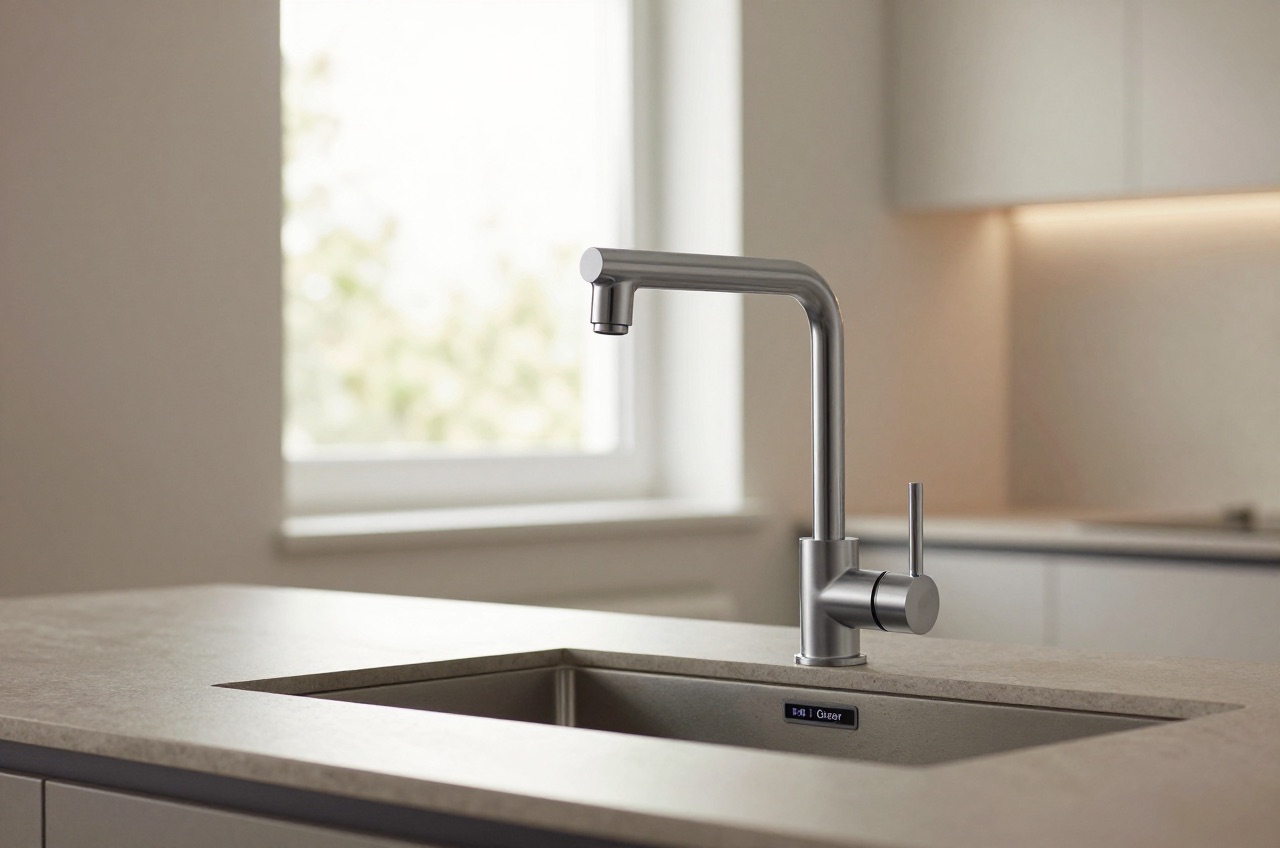
A boiling water tap is a kitchen mixer tap combined with an under-counter insulated tank that keeps water at or near 100 °C continuously. When you activate the boiling function (usually a separate sprung lever with a child-safety lock), you get instant hot water. Most modern systems combine this with a cold-water filter, giving you a 4-in-1 tap: hot, cold, boiling, and filtered cold.
The tank is a small pressurised vessel, typically 2.4 or 4 litres, with an element that cycles on to maintain temperature. It connects to your mains cold supply and requires a 13 A switched spur under the sink.
Types and Costs
| Type | What it does | Supply + install (typical) |
|---|---|---|
| Boiling-only add-on tap | Installs alongside existing mixer | £250–£600 |
| 3-in-1 tap | Boiling, hot, cold combined | £400–£9001 |
| 4-in-1 tap | Boiling, cold filtered, hot, cold | £500–£1,5002 |
| 5-in-1 tap | Above + sparkling water | £900–£2,500 |
The supply-only cost for a well-regarded 4-in-1 system runs £350–£1,000; installation by a plumber adds £150–£350 for a half-day’s work including the electrical spur. Budget systems from less-known manufacturers start around £200 supply-only but can have shorter tank lifespans and harder-to-source filter cartridges.
Running Costs
The tank stays hot around the clock, which means a standby energy load. Manufacturers quote tank heat loss in watts; real-world figures for a 2.4 litre tank run 10–30 W on average.
| Usage scenario | Approximate annual running cost |
|---|---|
| 2.4 L tank, 24/7, efficient model | £18–£35 |
| 4 L tank, 24/7, standard model | £30–£60 |
| Tank switched off at night (timer) | Saves 30–40% |
At 2026 UK electricity rates of approximately 24–28 p/kWh (Ofgem price cap, variable), a 20 W average load works out to about £42 per year. Using a smart plug to turn the tank off between midnight and 6 am saves around £12–£15 per year and does not meaningfully affect morning availability (tanks reach temperature within 10–15 minutes of switching on).
Compare this to a kettle: a 3 kW kettle boiling 1.5 litres takes roughly 3 minutes, using 0.15 kWh per boil, about 3.7 p. Six boils per day costs about £80 per year in electricity, similar to or slightly more than a boiling tap. The tap also eliminates limescale in the kettle and produces filtered water, which many users find the main practical benefit.
Filtered Water: How It Works
4-in-1 systems include a filter cartridge, usually an activated carbon block, that removes chlorine, some heavy metals (lead, copper), and off-flavours. Most UK mains water is safe to drink unfiltered; the filter primarily improves taste and reduces limescale impact on the tank.
Filter cartridges typically need replacing every 6 months or after a set volume (commonly 600 litres). Replacement cartridges cost £30–£80 per year depending on the manufacturer. Factor this into total cost of ownership.
Note: filtered water from these systems is not sterile or suitable for immunocompromised individuals requiring microbiologically pure water, that requires a UV or reverse osmosis system.
Installation Requirements
A plumber is required for the water connections; a registered competent person (or a plumber with the relevant electrical competency) is needed for the electrical spur if one does not already exist. Most boiling tap installations fall under Approved Document P of the Building Regulations.3
Key under-sink requirements:
- Minimum under-sink clearance of 350 mm height and 200 mm depth for the tank, check your cabinet before ordering.
- A 13 A switched fused spur (not just a socket) near the tank.
- A 15 mm mains cold-water supply connection.
- A drain connection for the filter flush line (some systems require a drain; others do not).
- The boiling water outlet must meet BS EN 1116 kitchen tap standards; ensure your chosen product carries CE/UKCA marking.
Safety
The boiling function is safety-locked on all reputable units, typically requiring a press-and-turn action that prevents accidental activation. However, the water exits at 98–100 °C and can cause serious scalds. This is a material consideration in households with young children or individuals with mobility or cognitive impairments.
British Water and the Water Regulations Advisory Scheme (WRAS) approval confirms the product is safe for connection to UK mains supply. Check for WRAS approval before purchasing.
Filtered Cold Taps (Without Boiling)
If you want filtered water only, not instant boiling, there are simpler and cheaper options:
| Option | Supply + install | Running cost (filters) |
|---|---|---|
| Under-counter filter with separate tap | £80–£250 | £20–£50/year |
| Reverse osmosis system with tap | £200–£600 | £30–£80/year |
| Filtered pitcher (e.g. Brita) | £20–£50 | £50–£120/year |
An under-counter carbon block filter with a separate slimline tap is the budget route to filtered water, it does not need an electrical connection and is DIY-installable if you are comfortable with push-fit plumbing.
Is a Boiling Water Tap Worth It?
| Factor | In favour | Against |
|---|---|---|
| Convenience | Instant boiling water for tea, pasta, blanching | Kettle achieves most of this |
| Kitchen aesthetics | Eliminates kettle from worktop | Premium up-front cost |
| Running cost | Similar to kettle | Continuous standby draw |
| Filtered water | Included in 4-in-1 | Filter replacements add ongoing cost |
| Lifespan | Tank 7–12 years typically | Harder to repair than a kettle |
For a kitchen where counter space is at a premium and the household uses boiling water frequently throughout the day, a 4-in-1 boiling water tap delivers genuine convenience and a clean aesthetic. For occasional use or tight budgets, a quality kettle plus a dedicated filter tap is the more cost-effective combination.
The rules in this note are those that apply in England. Scotland, Wales and Northern Ireland have their own building standards and permitted development rights.
References (3)
Figures in this note were checked against the sources below on 14 September 2026. Superscript numbers in the text point to them. Every source the site cites, by topic.
- 1costsupplier figureToolstation.RN-OZNFAEA price, true at 2026-09. Toolstation's product page for an Abode Hemista 3-in-1 boiling water kitchen tap. A published price for a named tap, supply only: the tank, filter and the plumbing work are all separate and none of them are in this figure.
- 2costsupplier figureToolstation.RN-FX0IEQA price, true at 2026-09. Toolstation's product page for a Reginox Aquadzi 4-in-1 boiling water tap, which adds filtered chilled water to the 3-in-1 specification. Supply only, so it prices the tap and not the installation.
- 3technicalvery strongMinistry of Housing, Communities and Local Government.RN-JYJ3I5The document that decides what electrical work a homeowner may legally do themselves, and the exact list of notifiable jobs. Regulation 12(6A), reproduced at paragraph 2.5, makes only three things notifiable: the installation of a new circuit, the replacement of a consumer unit, and any addition or alteration to existing circuits in a special location. Regulation 12(9) defines special location as, in a room containing a bath or shower, the zone extending vertically from finished floor level to 2.25 metres (or the shower head position if higher) and horizontally 600mm from the edge of the bath tub or shower tray. Paragraph 2.7 states that all other electrical installation work is not notifiable, namely additions and alterations to existing installations outside special locations, and replacements, repairs and maintenance anywhere. Paragraph 2.8 gives worked examples: a built-in cooker is not notifiable unless a new cooker circuit is needed, and connecting an electric gate or garage door to an existing isolator is not notifiable but running a new circuit from the consumer unit to that isolator is. Paragraph 2.2 confirms Part P reaches outdoor work including fixed garden lighting, pond pumps and outbuildings such as sheds, detached garages and domestic greenhouses. Notifiable work must be certified by self-certification by a registered competent person, third-party certification, or a building control body (paragraph 3.1), with the compliance certificate issued within 30 days (paragraph 3.4). Note that Approved Document P is a source of guidance rather than a ban: non-notifiable work still has to comply with BS 7671.
-
Abode Hemista 3-in-1 Boiling Water Kitchen Tap Chrome, Toolstation, accessed 18 September 2026. Priced at 2026-09, so no calibration is needed. toolstation.com
-
Reginox Aquadzi 4-in-1 Boiling Water Tap Chrome, Toolstation, accessed 18 September 2026. Priced at 2026-09, so no calibration is needed. toolstation.com
-
Approved Document P, Electrical safety: Dwellings, 2013 edition incorporating 2010 and 2013 amendments, Ministry of Housing, Communities and Local Government, accessed 14 September 2026. assets.publishing.service.gov.uk