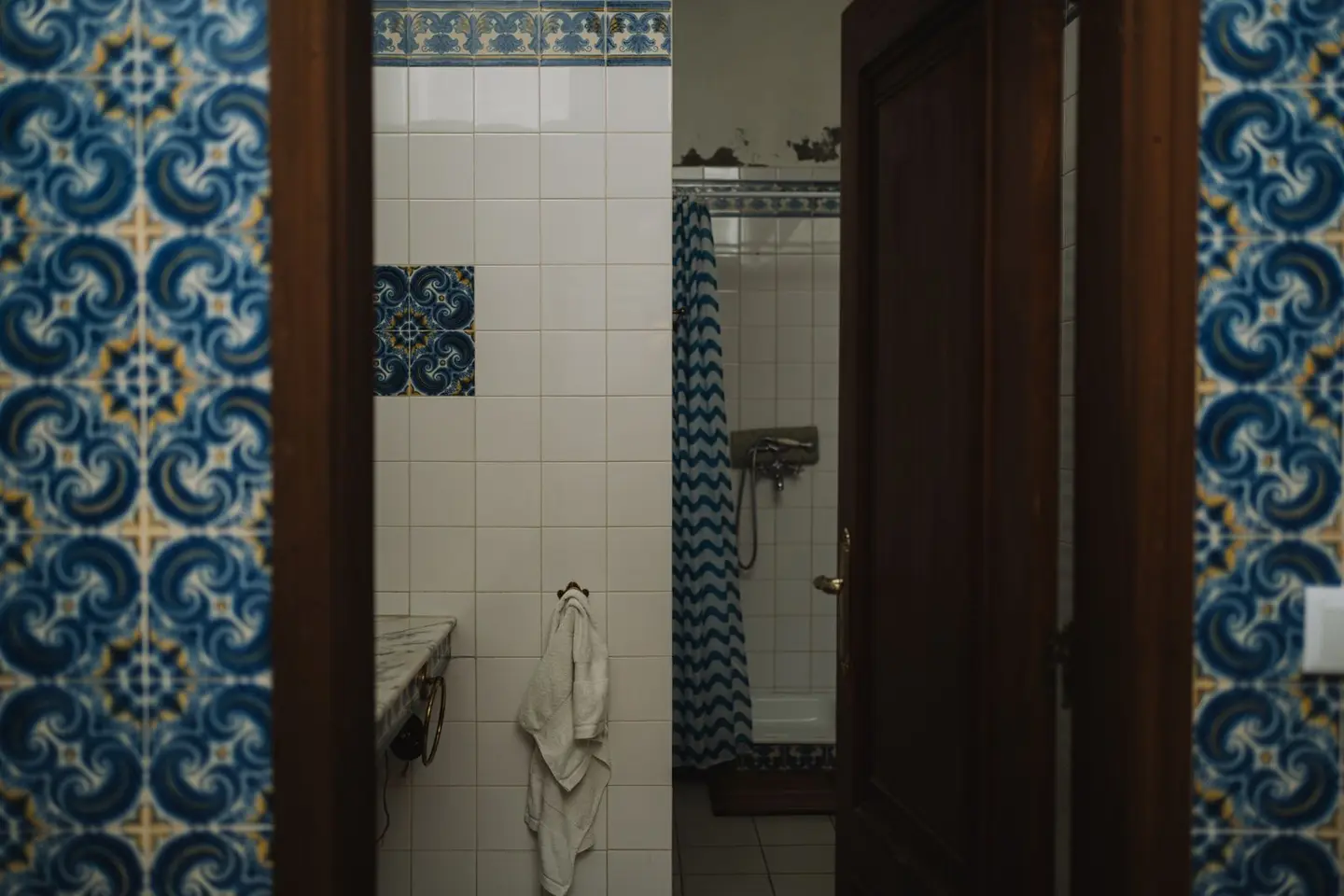
Tiling is one of the most impactful finishing jobs in a bathroom, and one where quality really shows. A skilled tiler produces level, evenly spaced tiles with clean grout lines; a rushed or inexperienced job shows every flaw under the light. In 2026, expect to pay meaningful money for the skill as well as the materials.
The total cost to tile a standard UK bathroom, typically 4–6 m² of floor and 12–18 m² of wall, falls in the range of £600–£1,500 for mid-range ceramic tiles, or £1,200–£3,000+ for large-format porcelain or natural stone finishes.
Labour Cost Breakdown
Tilers typically quote either per m² or per day. Per-m² rates are more common for larger projects; day rates apply when the job is small or complex.
| Area | Labour Cost per m² (national avg) | Labour Cost per m² (London / SE) |
|---|---|---|
| Wall tiles (standard ceramic) | £25–£40/m² | £35–£55/m² |
| Wall tiles (large format 60×60cm+) | £35–£55/m² | £45–£70/m²1 |
| Floor tiles (standard ceramic/porcelain) | £30–£50/m² | £40–£65/m² |
| Floor tiles (natural stone, mosaic) | £45–£80/m² | £60–£100/m² |
| Tiler day rate (national) | £180–£260/day2 | £230–£320/day |
Labour rates include adhesive application, setting out, cutting, and basic grouting. They do not typically include waterproof tanking, tiling to curved or complex surfaces, or removal of old tiles (add £5–£15/m² for strip-out).
Worked Example: Standard 3.5 m² Bathroom
A typical small UK bathroom with a bath/shower over, basin, and WC:
| Task | Area / Qty | Unit Cost | Total |
|---|---|---|---|
| Wall tiles (ceramic, 3 walls to 2.1 m) | 18 m² | £32/m² labour | £576 |
| Floor tiles (porcelain) | 3.5 m² | £40/m² labour | £1403 |
| Strip-out existing tiles | 21.5 m² | £8/m² | £172 |
| Waterproof tanking (wet area) | 6 m² | £15/m² | £90 |
| Total labour | £978 | ||
| Ceramic wall tiles (mid-range, 30×60) | 20 m² (inc. waste) | £18/m² | £360 |
| Porcelain floor tiles (inc. waste) | 4.5 m² | £25/m² | £112 |
| Adhesive, grout, spacers, edging | - | - | £120 |
| Total materials | £592 | ||
| Project total | ~£1,570 |
This is a realistic all-in cost for a competent job with decent materials. It does not include any plumbing, plastering, or suite cost.
Material Costs: Tile Prices per m²
Tile cost varies enormously by type and format. Budget accordingly:
| Tile Type | Supply Cost per m² |
|---|---|
| Basic ceramic (wall, 30×45 cm) | £8–£20/m²4 |
| Mid-range ceramic / porcelain | £18–£40/m² |
| Large format porcelain (60×60, 60×120) | £35–£80/m² |
| Encaustic / patterned ceramic | £40–£90/m² |
| Natural stone (travertine, marble) | £50–£150/m² |
| Mosaic (glass or natural stone) | £60–£200/m² |
Always buy 10–15% extra to account for cuts and future repairs. Tiles from the same batch are colour-matched, buying a different batch later often results in a visible variation.
What Affects the Total Cost?
Tile size, larger tiles are quicker to lay per m² but require a flatter substrate and more precise levelling. Large-format tiles (anything above 60×60 cm) are premium to lay because errors are more visible and cutting is more complex.
Surface preparation, a smooth, plumb, solid background is essential. Walls that are out of plumb or have old adhesive lumps require preparation before tiling. This adds time and cost, but skipping it causes tiles to crack or pop.
Pattern and layout, a straight brick-bond layout is fastest; a herringbone or diagonal pattern adds 20–30% to laying time and waste. Feature walls or niche recesses add complexity.
Existing tiles, removing old tiles risks damaging the plasterboard beneath (especially in 1980s–2000s bathrooms where tiles are glued directly to the board). Expect to replace sections of plasterboard where the tile pull damages the surface. Budget £100–£300 extra for this.
Tanking / waterproofing, British Standard BS 5385 and current NHBC standards require a waterproof membrane in wet zones (shower enclosures, baths with shower). Tanking adds £10–£20/m² to the cost and is essential, not optional. Skipping it leads to damp penetration behind tiles.
Building Regulations and Standards
Tiling in bathrooms is not directly regulated by Part A–R of the Building Regulations, but the work must conform to relevant British Standards:
- BS 5385-1:2018 covers internal wall tiling and BS 5385-3:2024 internal floor tiling, including adhesive selection, substrate requirements and grout joint widths. BS 5385-4:2015 covers tiling in specific conditions such as wet areas.
- Part P applies if you are carrying out any electrical work in the bathroom at the same time (heated floors, shaver sockets).5
- Part B (fire) applies if any floor tile penetrations are near structural elements in a flat.6
Heated (underfloor) electric systems under tiles in bathrooms must either be installed by a registered competent person who self-certifies the work, or be notified to the local authority before it starts.
How to Choose a Tiler
- Ask to see examples of large-format tile work if that is what you want, it is a specialist skill distinct from standard ceramic tiling.
- Check whether they supply adhesive and grout (most do) and whether that is included in the per-m² rate.
- Confirm they will provide a waterproof tanking system for wet areas rather than just tiling direct to plasterboard.
- Get a quoted price, not just a day rate, tiling projects often take longer than expected due to prep, and an open-ended day-rate job can overrun significantly.
Summary
Tiling a bathroom properly is a skilled job. Budget £600–£1,500 for a small to medium bathroom with mid-range tiles, or £1,500–£3,500 for larger bathrooms or premium materials. The quality of preparation, flat, plumb, tanked surfaces, determines the longevity of the finished job. A tiling job done right should last 20–30 years without issues.
References (6)
Figures in this note were checked against the sources below on 14 September 2026. Superscript numbers in the text point to them. Every source the site cites, by topic.
- 1costsupplier figurePaul the Tiler.RN-SXC0LYA price, true at 2026. A working tiler's published 2026 rate book. Labour by tile size band, £60/m2 on walls and £70/m2 on floors under 600 mm rising to £90/m2 at 1200 mm, tile removal at £35/m2, trims and silicone per linear metre. Unusually explicit about scope: it states that a floor rate is labour once the surface is ready, that a small floor is priced as an envelope rather than the rate times the area, and that a slab over 1200 mm gets no automatic price at all.
- 2costvery strongOffice for National Statistics.RN-MMT1DOA price, true at 2026-07. The ASHE Table 14 dataset gives annual estimates of paid hours worked and earnings for UK employees by sex and by full-time or part-time status, broken down to four-digit Standard Occupational Classification, which is the level that isolates individual construction trades such as bricklayers, carpenters, plasterers and electricians. Released 23 October 2025 as the 2025 provisional edition (zip, about 10.7 MB), with revised and provisional editions back to 2017. A correction dated 19 December 2025 suppressed annual pay estimates for SOC 3312 police officers in some areas; construction occupations are unaffected.
- 3costsupplier figureWalls and Floors.RN-OQQQENA price, true at 2026-09. the retail price Walls and Floors publishes for Porcelain Tiles, which is the supply figure the cost book records for this item
- 4costsupplier figureWickes.RN-YEAHYNA price, true at 2026-09. the retail price Wickes publishes for Johnson County Old Stone Grey Matt Ceramic Wall Tile 300 x 200mm, which is the supply figure the cost book records for this item
- 5technicalvery strongMinistry of Housing, Communities and Local Government.RN-JYJ3I5The document that decides what electrical work a homeowner may legally do themselves, and the exact list of notifiable jobs. Regulation 12(6A), reproduced at paragraph 2.5, makes only three things notifiable: the installation of a new circuit, the replacement of a consumer unit, and any addition or alteration to existing circuits in a special location. Regulation 12(9) defines special location as, in a room containing a bath or shower, the zone extending vertically from finished floor level to 2.25 metres (or the shower head position if higher) and horizontally 600mm from the edge of the bath tub or shower tray. Paragraph 2.7 states that all other electrical installation work is not notifiable, namely additions and alterations to existing installations outside special locations, and replacements, repairs and maintenance anywhere. Paragraph 2.8 gives worked examples: a built-in cooker is not notifiable unless a new cooker circuit is needed, and connecting an electric gate or garage door to an existing isolator is not notifiable but running a new circuit from the consumer unit to that isolator is. Paragraph 2.2 confirms Part P reaches outdoor work including fixed garden lighting, pond pumps and outbuildings such as sheds, detached garages and domestic greenhouses. Notifiable work must be certified by self-certification by a registered competent person, third-party certification, or a building control body (paragraph 3.1), with the compliance certificate issued within 30 days (paragraph 3.4). Note that Approved Document P is a source of guidance rather than a ban: non-notifiable work still has to comply with BS 7671.
- 6technicalvery strongMinistry of Housing, Communities and Local Government.RN-BUE914Approved Document B Volume 1, fire safety in dwellings, 2019 edition with the 2020, 2022 and 2025 amendments and the forthcoming 2026 and 2029 changes collated in. Covers means of warning and escape, internal fire spread through linings and structure, external fire spread and access for the fire service. This is the document behind escape window sizes, protected stairways, the 4.5 metre rule and the fire doors a loft conversion needs.
-
Tiling Cost Calculator UK (2026), Tiling Prices & Online Estimate, Paul the Tiler, accessed 21 September 2026. Priced at 2026, so no calibration is needed. paulthetiler.co.uk
-
ASHE Table 14.6a, hourly pay excluding overtime by occupation, 2025 provisional, Office for National Statistics, accessed 18 September 2026. Priced at 2026-07, so no calibration is needed. ons.gov.uk
-
Porcelain Tiles, Walls and Floors, accessed 15 September 2026. Priced at 2026-09, so no calibration is needed. wallsandfloors.co.uk
-
Johnson County Old Stone Grey Matt Ceramic Wall Tile 300 x 200mm, Wickes, accessed 21 September 2026. Priced at 2026-09, so no calibration is needed. wickes.co.uk
-
Approved Document P, Electrical safety: Dwellings, 2013 edition incorporating 2010 and 2013 amendments, Ministry of Housing, Communities and Local Government, accessed 14 September 2026. assets.publishing.service.gov.uk
-
Approved Document B, Fire safety, Volume 1: Dwellings, 2019 edition incorporating 2020, 2022 and 2025 amendments, Ministry of Housing, Communities and Local Government, accessed 14 September 2026. assets.publishing.service.gov.uk