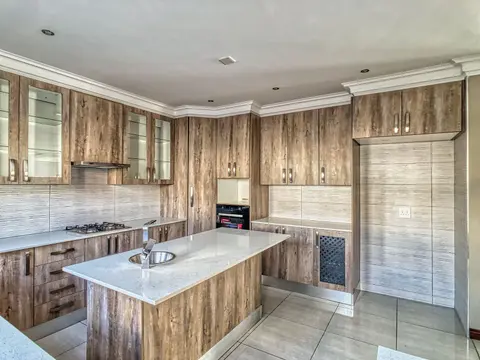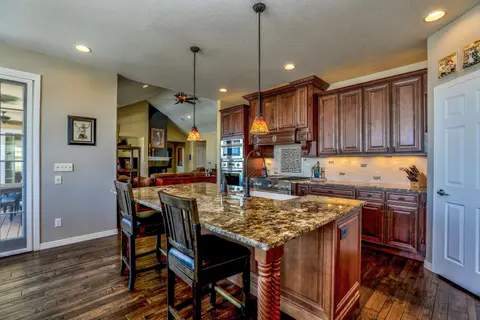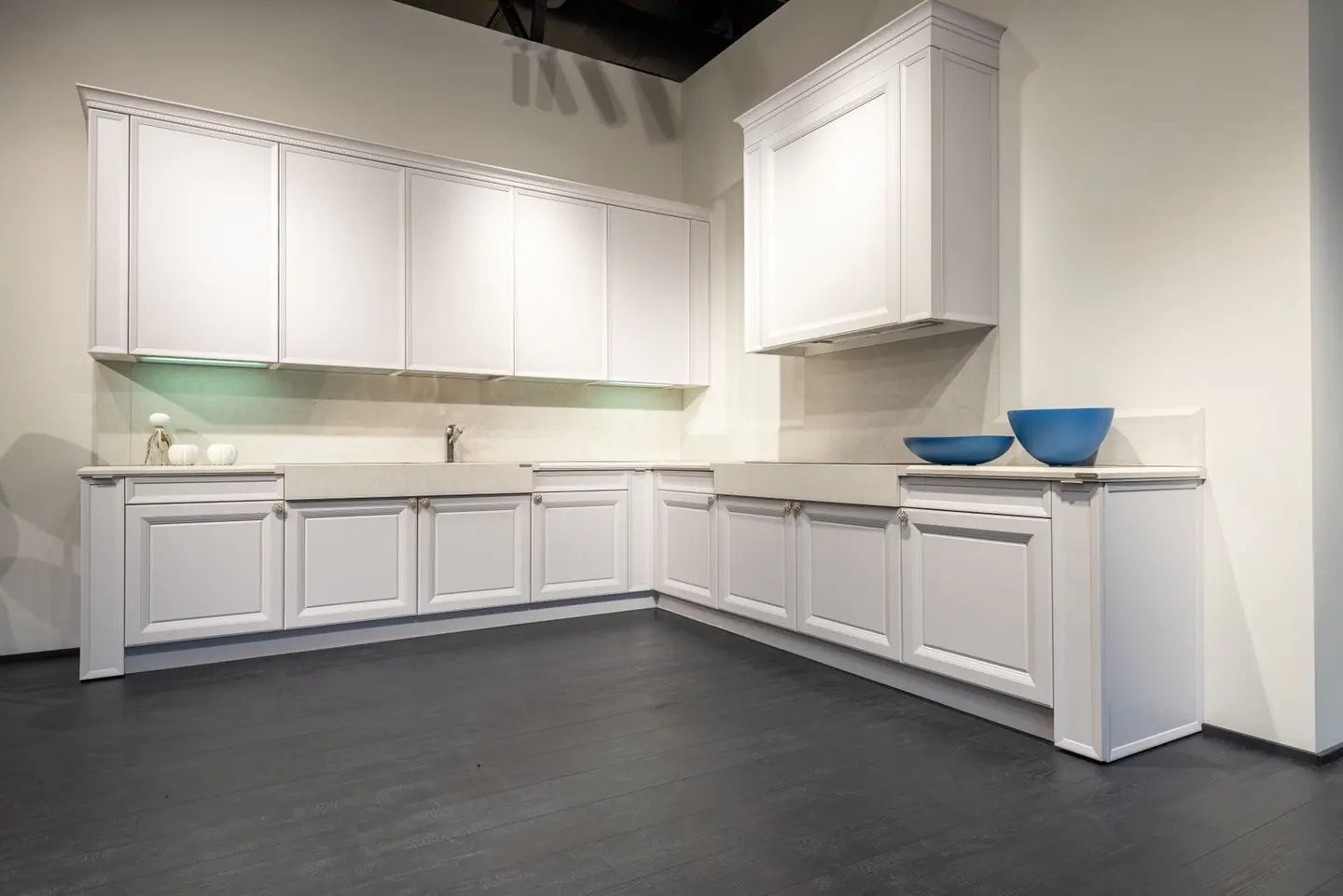
Kitchen units are the single biggest line item in any kitchen renovation budget. Whether you are replacing a tired fitted kitchen or starting from a bare shell, the type of cabinet you choose, flat-pack, rigid assembled or bespoke, determines not only the cost but the range of sizes, finishes and internal fittings available to you. Supply-only prices range from around £1,500 for a basic flat-pack set to well over £40,000 for a handmade bespoke installation.
This guide covers the three main cabinet types, what they are made from, the standard sizes you will encounter, internal fitting options, and realistic 2026 UK costs for supply and installation.
The Three Main Types of Kitchen Unit
Flat-Pack (RTA) Units
Ready-to-assemble (RTA) or flat-pack kitchen units arrive in boxes and require self-assembly before fitting. The carcass panels are typically 15–18 mm melamine-faced chipboard (MFC), flat-packed with cam-lock or dowel joints. This is the format sold by the major DIY chains and larger flat-pack retailers.
Flat-pack units are the most affordable option and the most widely available. The trade-off is assembly time, a more limited range of non-standard sizes, and carcass quality that varies considerably between suppliers. Budget flat-pack carcasses can be 15 mm chipboard; better-quality flat-pack units use 18 mm boards with a proper moisture-resistant core.
Supply cost: £1,500–£6,000 for a full kitchen (units only, no appliances or worktops)
Rigid (Pre-Assembled) Units
Rigid units arrive fully assembled, with the carcass glued and stapled or screwed at the factory. The standard carcass material is 18 mm moisture-resistant chipboard, though better-quality rigid ranges use MDF or birch plywood, which is stiffer and holds screws more securely over time.
Most trade kitchen suppliers, the type where a plumber or kitchen fitter has a trade account, supply rigid units as standard. These kitchens arrive flat-stacked on a pallet and are quicker for a fitter to install than flat-pack, reducing labour cost per unit. The internal specification is also typically higher, with soft-close hinges and drawer runners included as standard even on mid-range ranges.
Supply cost: £3,000–£10,000 for a full kitchen (units only)
Bespoke and Handmade Kitchens
Bespoke kitchen cabinets are made to measure in a factory or workshop, usually to a specific design drawn up by a kitchen designer. Carcasses can be plywood, solid MDF, or solid timber; doors are typically painted solid wood, real timber veneer, or high-pressure lacquer. The defining feature is that every dimension, height, width, depth, is tailored to the space rather than selected from a fixed size grid.
In-frame cabinetry (where the door sits within a face frame attached to the carcass front) is associated almost exclusively with the bespoke sector, and tends to be the most expensive sub-type. Lead times are typically 8–16 weeks from order to delivery.
Supply cost: £10,000–£40,000+ for a full kitchen (units only)
Kitchen Unit Cost Comparison
| Kitchen Type | Supply Cost (units only) | Typical Fit Cost | Total Range | Best For |
|---|---|---|---|---|
| Flat-pack / RTA | £1,500–£6,000 | £1,200–£2,500 | £2,700–£8,500 | Tight budgets, self-builders |
| Rigid assembled | £3,000–£10,000 | £1,000–£2,000 | £4,000–£12,000 | Most homeowners, trade installs |
| Bespoke / handmade | £10,000–£40,000+ | £2,000–£6,000+ | £12,000–£46,000+ | Premium renovations, unusual spaces |
Fit costs assume a standard layout without structural alterations. Fitting rates run at £150–£300 per day per fitter, with a typical kitchen taking 3–5 days to install.
Carcass Materials Explained
Chipboard (MFC) is the industry standard for kitchen carcasses. Melamine-faced chipboard at 18 mm is strong enough for normal domestic use, reasonably moisture-resistant in a well-ventilated kitchen, and cheap to produce. The weakness is at screw fixings: chipboard does not grip screws as well as MDF or plywood, which matters for hinges, drawer runners and cabinet-to-cabinet fixings.
MDF is denser than chipboard and holds screws better, but is heavy and more vulnerable to prolonged moisture exposure. It is common in mid-to-upper rigid ranges and in painted bespoke carcasses.
Plywood (typically birch or hardwood ply) is the strongest carcass material weight for weight, holds screws very well and resists moisture better than either chipboard or MDF. It is used in high-end bespoke kitchens and is increasingly available in the better rigid ranges. Expect to pay a 20–40% premium over a comparable chipboard carcass for plywood construction.
Standard Unit Sizes
Kitchen units follow a broadly standardised size grid in the UK, though bespoke cabinets can deviate from this entirely.
Base units (floor-standing):
- Width: 300, 400, 500, 600, 800, 1,000 mm (600 mm is the most common)
- Height: 720 mm carcass height, giving a finished worktop height of approximately 900 mm with a 38–40 mm worktop
- Depth: 570 mm carcass (600 mm overall including door)
Wall units (wall-hung):
- Width: 300, 400, 500, 600 mm
- Height: 300, 360, 600, 720 mm (600 mm is standard; 720 mm for high ceilings or above tall fridges)
- Depth: 300 mm carcass
Tall (larder) units:
- Width: 300, 600 mm
- Height: 1,970–2,150 mm
- Depth: 570 mm carcass
Non-standard widths in a flat-pack kitchen are typically filled with filler panels. In a rigid or bespoke kitchen, the supplier will often make units to the exact width required, eliminating the need for fillers.
Door Styles
The door style has a significant effect on supply cost and the overall look of the kitchen.
Slab/handleless: A flat door with no visible frame or handle recess, often with a push-to-open mechanism or a J-pull channel along the top or bottom edge. The most contemporary style and typically the most affordable door to manufacture.
Shaker: A five-piece door with a recessed centre panel and a profiled inner frame, originating from American Shaker cabinetry. Available painted (MDF or solid wood) or as a foil-wrapped MDF version. One of the most popular door styles in the UK and available across all price tiers.
In-frame: The door sits within a face frame fixed to the front of the carcass, creating a traditional furniture-style appearance. Almost always associated with bespoke or high-end semi-bespoke kitchens and adds significantly to cost.
Painted solid wood: A painted timber door (ash, oak, tulipwood) with a visible grain or a painted MDF door. Common in bespoke ranges. Significantly more expensive than foil or vinyl alternatives.
Internal Fittings and Hardware
The internal specification of a kitchen unit determines how pleasant it is to use day-to-day.
Hinges: Soft-close concealed hinges (the Blum Clip Top or equivalent is the industry reference point) are standard on mid-range and above. Budget flat-pack units sometimes use inferior hinge systems that feel loose within a few years.
Drawer runners: Full-extension, soft-close drawer runners (again, Blum Tandem or Grass Nova Pro are the benchmark) allow the drawer to open fully and close quietly. Drawer boxes in better kitchens are metal-sided with a visible inner rail; budget drawers may be chipboard-sided with a simple bottom-mount runner.
Drawer packs vs door units: Base units can be specified as a single door with an internal shelf, a two-door unit, or a three- or four-drawer pack. Drawer packs cost more per unit (typically £60–£150 more for the same width) but are far more practical for everyday use, most kitchen designers recommend filling as much base run as possible with drawers.
Pull-out larder units: A tall larder unit fitted with pull-out wire or timber shelves on full-extension runners, giving access to the full depth of the unit on both sides. A 600 mm pull-out larder typically costs £200–£600 more than a plain tall unit with shelves.
Corner solutions: Corner base units are the most awkward space in a kitchen. Options include a plain blind corner (cheapest but wastes space), a magic corner with folding shelves that extend outward when opened, and a Le Mans system with rotating curved shelves. A magic corner or Le Mans fitting adds £150–£400 to the cost of a corner base unit.
Choosing the Right Type for Your Budget
For a budget renovation (total spend £5,000–£8,000 all in), flat-pack rigid-carcass units from a reputable supplier offer the best balance of cost and quality. Prioritise 18 mm carcasses and proper soft-close hinges, even if it means simplifying the door style.
For a mid-range renovation (£10,000–£20,000 all in), rigid assembled units give a better internal specification and faster fitting. Use the budget saved on carcasses to upgrade the worktop and hardware, these have a disproportionate effect on the finished feel.
For a high-end renovation (£25,000–£60,000+), bespoke or semi-bespoke units are worth the premium. The ability to specify exact dimensions eliminates filler panels and wasted corners, and the door and internal options available at this tier are not accessible in the flat-pack market.
One upgrade worth making at any budget
Specify soft-close hinges and full-extension drawer runners as a minimum, even if it means upgrading from the base flat-pack specification. These two components are what you interact with every day, and the difference between a cheap and a quality version is immediately noticeable.
Fitting Costs
Kitchen fitting is typically priced per day rather than per unit. Day rates for an experienced kitchen fitter in 2026 run at £150–£300 depending on location (higher in London and the South East). A typical fitted kitchen, removing the old units, fitting new carcasses, hanging doors, fitting worktops, connecting the sink and integrating appliances, takes 3–5 days for one fitter working alone, or 2–3 days for a two-person team.
Complications that extend the programme include:
- Moving the sink or appliance positions (requires a plumber, add £300–£800)
- New electrical circuits for induction hob or oven (electrician, add £200–£600)
- Tiling the splashback after fitting (add 1–2 days)
- Coving or cornice to ceiling (add half a day)
Always obtain at least two fitting quotes and check that the fitter carries public liability insurance.