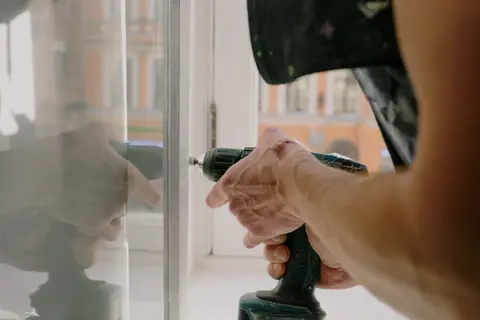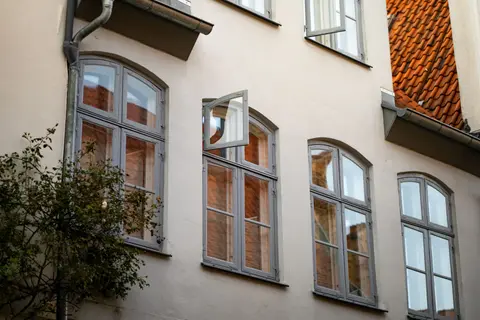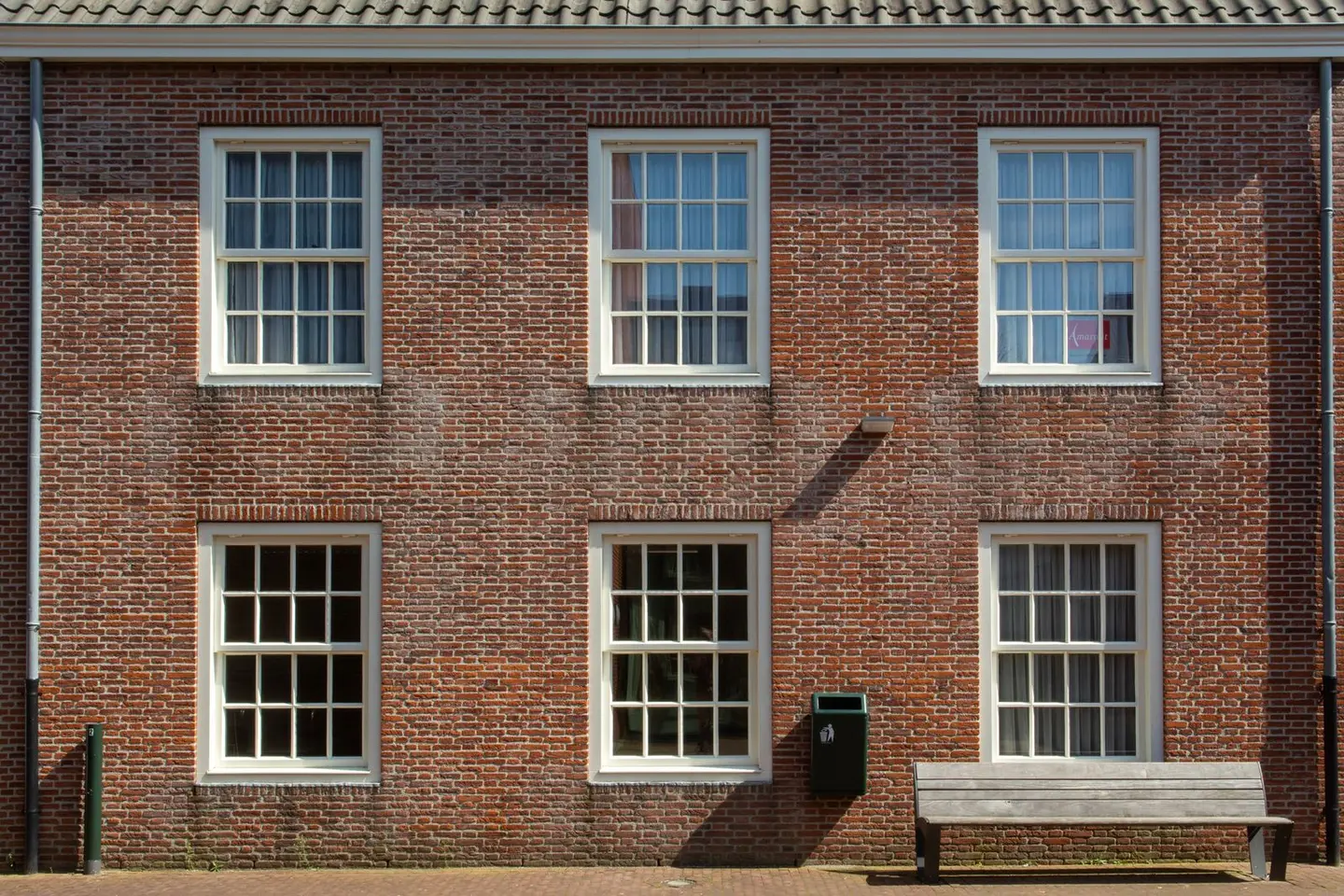
Sash windows define the character of millions of Victorian, Edwardian, and Georgian properties across the UK. They are also among the most misunderstood items in a renovation project, frequently condemned as “too draughty to keep” when in reality a good repair will outperform many replacements, cost a fraction of the price, and preserve the property’s appearance and value.
The Repair-or-Replace Decision
Before spending anything, get a joiner or specialist sash window company to survey the frames. The key factors are:
- Condition of the sill and cill: if the sill is rotten below the surface, replacement of the sill alone may be more cost-effective than replacing the whole window.
- Condition of the stiles and rails: surface rot on the bottom rail is the most common failure point. If it is localised, a splice repair or dutchman repair (cutting out the rot and gluing in new timber) can last decades.
- Glass condition: original single-pane glass can be retained in most repairs. Replacing it with double glazing requires careful consideration (see below).
- Cord and pulley condition: broken sash cords are among the most common sash window faults and one of the cheapest to fix, typically £80–£200 per window including both sides.
Repair makes sense when the frame is fundamentally sound and the issues are mechanical (cords, balances, stiff runners) or surface-level (draught, paint failure, minor rot).
Replace when rot has penetrated the core of the main frame members, when the window has already been badly altered (uPVC insert, broken structural joints), or when a heritage specification replacement will be required regardless by the local authority.
Repair Cost Breakdown
| Repair Type | Typical Cost Per Window |
|---|---|
| Sash cord replacement (both sashes) | £80 – £200 |
| Draught-proofing (brush seals, staff bead seals) | £150 – £350 |
| Bottom rail splice repair (minor rot) | £150 – £400 |
| Full sill replacement (timber) | £300 – £7001 |
| Re-glazing (single pane, like-for-like) | £80 – £200 per pane |
| Full draught-proof and re-cord package | £250 – £600 |
| Secondary glazing installation (per window) | £300 – £7002 |
Secondary glazing is worth particular attention. It involves fitting a slim inner glazing unit inside the window reveal, which does not alter the external appearance. It can deliver U-values close to 1.2–1.6 W/m²K (versus about 4.8–5.0 W/m²K for single-glazed sash) and dramatically reduces draughts and noise. It is also fully reversible and usually permitted in conservation areas without approval.
Replacement Cost Breakdown
| Window Type | Supply-Only | Supply & Fit |
|---|---|---|
| Timber sash, single-glazed, like-for-like | £400 – £900 | £700 – £1,400 |
| Timber sash, slim double-glazed unit | £600 – £1,400 | £900 – £2,000 |
| Timber sash, heritage double-glazed (6 mm gap, acoustic) | £900 – £2,000 | £1,400 – £2,800 |
| uPVC mock-sash (tilt-and-turn mechanism) | £350 – £700 | £550 – £1,100 |
| Aluminium sash, heritage profile | £800 – £1,800 | £1,200 – £2,500 |
Prices per window; assume standard 630–900 mm wide × 1,050–1,400 mm tall. Bay windows, larger units, and difficult access will cost more.
Double Glazing in Sash Windows
The default assumption, that double glazing is always better, is worth questioning for sash windows. Standard double-glazed units require a deeper rebate than original single-pane glass, which usually means thicker frames and visibly changed proportions. The following options exist:
Slim-profile double glazing (6–10 mm total unit depth) uses a slimmer spacer bar and two thinner panes. The U-value is around 2.0–2.8 W/m²K versus 4.8–5.0 for original single glazing. This can fit in many original frames with modification.
Heritage slim units with a small gas-filled gap achieve U-values of 1.6–2.0 W/m²K and are designed to replicate the visual depth and reflection quality of original glass, including options with “antique” glass that mimics original hand-drawn glass.
Vacuum glazing is a newer technology with units as thin as 6–8 mm achieving U-values of 0.7–1.0 W/m²K. It is currently expensive (£500–£900 per unit supply-only) but is the only double-glazing solution that can genuinely fit most original sash frames without alteration.
Building Regulations
Under Approved Document L (England and Wales), replacing a window in an existing dwelling triggers a requirement to meet the current thermal standard, a whole-window U-value of ≤1.4 W/m²K for a replacement window or ≤1.6 W/m²K where there are technical difficulties achieving the lower value. However:
- Repair of existing windows does not trigger Part L compliance, which is one strong argument for repair over replacement in heritage properties.3
- Competent Person Schemes: window installers registered with FENSA or Certass self-certify compliance and notify Building Control on your behalf. If your installer is not registered, you must apply for a Building Regulations application separately.
Conservation Areas and Listed Buildings
This is where sash window choices become most constrained, and most important.
Conservation areas: replacing windows may require Conservation Area Consent or planning permission, depending on the local authority’s Article 4 direction. Many councils have an Article 4 direction that removes permitted development rights for window replacement in conservation areas. Check with the LPA before ordering any replacement windows.4
Listed buildings: all window work (including repair works that change the appearance) requires Listed Building Consent. Unauthorised works are a criminal offence. The LPA will expect like-for-like replacement in original materials (timber, single-glazed or approved heritage double glazing, original ironmongery profile).
Most heritage building officers will actively support high-quality repair over replacement, and some councils offer grants or low-cost draught-proofing schemes for properties in conservation areas.
Common Faults and DIY Fixes
| Fault | Cause | Fix |
|---|---|---|
| Sash drops or will not stay up | Broken or stretched cord | Restring with wax-coated natural or nylon cord |
| Rattling in wind | Worn staff bead or parting bead | Replace beads; add brush draught seals |
| Draughts around sashes | Worn seals, warped sash | Draught-proof with compressible seals or brush inserts |
| Sash sticks / paint-sealed shut | Paint build-up | Score the paint line, ease with a block plane |
| Rot at bottom rail | Water ingress at base of sash | Splice repair + flexible exterior paint; ensure sill drains |
| Broken sash weight | Original lead or cast iron weight failed | Replace with modern cast iron or engineered weight |
How to Vet a Sash Window Specialist
Look for membership of the Guild of Master Craftsmen or the Joiners & Ceilers (CIJC trades body). Ask to see examples of previous sash repair and restoration work specifically, not just new-build joinery. For listed building work, ask whether they have previously worked with your LPA’s conservation officer. References matter here: a joiner who works regularly with a heritage officer will navigate approval processes far more smoothly than one who does not.
References (4)
Figures in this note were checked against the sources below on 14 September 2026. Superscript numbers in the text point to them. Every source the site cites, by topic.
- 1costsupplier figureLondon Sash Window Repairs Ltd.RN-8GDT23A price, true at 2025-03. A London sash window specialist's published price list for repair, draughtproofing and double glazing of existing sashes. Prices for the specific operations a sash window needs, rather than a single replacement figure, which is what makes repair and replacement comparable. One specialist in one city, and not independent.
- 2costsupplier figureSecondary Glazing Specialist.RN-42XJW4A price, true at 2026. Secondary Glazing Specialist publishing its own price guidance for this work. A trade supplier writing about what it charges is evidence of the market rate and not a quotation, and the cost book treats it as one figure among several rather than on its own
- 3technicalvery strongMinistry of Housing, Communities and Local Government.RN-L0FCJXThe in-force U-value tables a DIY insulation or door note must quote, with the exact numbers. Table 4.2, limiting U-values for new fabric elements in existing dwellings, sets roof 0.15, wall 0.18, floor 0.18, swimming pool basin 0.25, window 1.4 or Window Energy Rating Band B minimum, rooflight 2.2, doors with more than 60 per cent of the internal face glazed 1.4 or Doorset Energy Rating Band C minimum, and other doors 1.4 or Doorset Energy Rating Band B minimum. Table 4.3, for existing elements, gives a roof threshold of 0.35 and an improved value of 0.16, which is the figure a loft insulation note needs: paragraph 4.12 says a retained element whose U-value is higher than the column (a) threshold, for example through a loft or garage conversion, should be upgraded to the column (b) value. Paragraph 4.13 allows a lesser upgrade only where the improved value is not technically or functionally feasible or would not achieve a simple payback of 15 years or less. Paragraph 4.8 requires a replacement element to be no worse than the one it replaces as well as meeting Table 4.2. Paragraph 4.10 gives the heritage exception: where character must be maintained, a centre pane U-value of no more than 1.2 or low-emissivity secondary glazing. Note 9 records that the timber window concession of 1.6 or Band C ended on 14 June 2023. The 2021 edition came into force on 15 June 2022; a 2026 edition exists at https://assets.publishing.service.gov.uk/media/69c122a6cfa346b9d4704a55/ADL1_2026.pdf.
- 4technicalvery strongThe National Archives (legislation.gov.uk), legislation.RN-3LA2VCArticle 4(1) allows the Secretary of State or the local planning authority, where satisfied that it is expedient that development should not be carried out without permission, to direct that the permission granted by article 3 does not apply to all or any development of a Part, Class or paragraph of Schedule 2 in a specified area, or to any particular development. The procedures for making, modifying or cancelling a direction are set out in Schedule 3, and a direction does not affect development for which prior approval was granted before it took effect.
-
Sash window prices, London Sash Window Repairs Ltd, accessed 15 September 2026. Priced at 2025-03, so no calibration is needed. londonsashwindows.com
-
Secondary Glazing Cost: 2026 Price Guide, Secondary Glazing Specialist, accessed 15 September 2026. Priced at 2026, so no calibration is needed. secondaryglazingspecialist.co.uk
-
Approved Document L, Conservation of fuel and power, Volume 1: Dwellings, 2021 edition incorporating 2023 amendments, Ministry of Housing, Communities and Local Government, accessed 14 September 2026. assets.publishing.service.gov.uk
-
The Town and Country Planning (General Permitted Development) (England) Order 2015, article 4: Directions restricting permitted development, The National Archives, accessed 14 September 2026. legislation.gov.uk