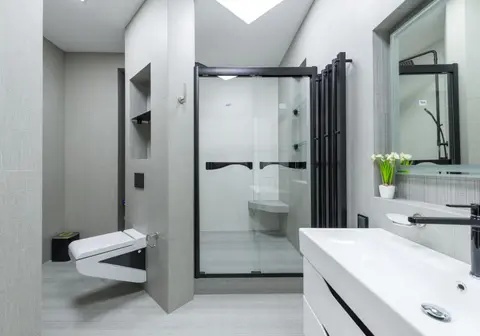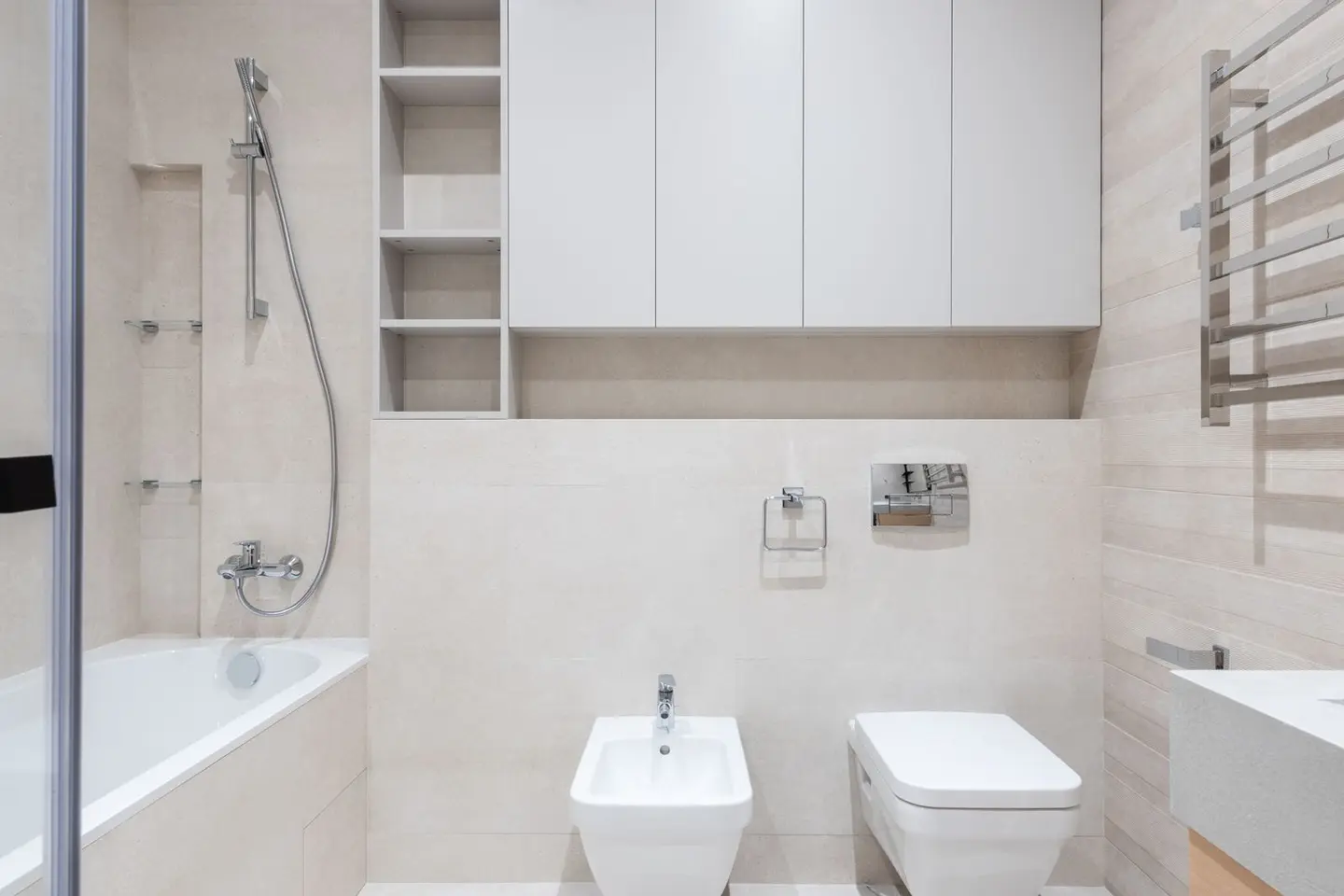
A smart toilet in the UK costs between £300 and £4,000+ depending on whether you are buying a retrofit bidet seat or a fully integrated unit with auto-flush, ambient lighting, and a self-cleaning nozzle. Installation by a plumber typically adds £200–£450 for a straightforward swap, or up to £800–£1,200 if new pipework, a dedicated electrical circuit, or structural changes to the pan position are involved.
The market has grown substantially since 2023. What was once a niche product found mainly in premium hotel bathrooms is now available across a wide price range, and installation is generally no more disruptive than fitting a standard close-coupled suite, provided there is a nearby earthed socket or you are willing to have one installed.
Smart Toilet Tiers and UK Prices
| Tier | Product type | Typical supply cost | What you get |
|---|---|---|---|
| Entry-level | Retrofit bidet seat | £300–£600 | Heated seat, cold/warm bidet spray, basic controls |
| Mid-range | Integrated smart toilet | £700–£1,400 | Heated seat, adjustable bidet spray, warm-air dryer, night light, remote or app control |
| Upper mid-range | Integrated smart toilet | £1,400–£2,200 | Self-cleaning nozzle, auto open/close lid, deodoriser, multiple user presets |
| High-end | Integrated smart toilet / wall-hung | £2,200–£4,000+ | Auto-flush, tankless flushing, integrated remote, ambient lighting, full app control, premium finishes |
Retrofit bidet seats fit over most standard UK toilet pans and connect to the existing cold-water supply at the cistern inlet and to a nearby earthed socket. They are the most affordable entry point and can be fitted without a plumber if you are comfortable isolating the water supply. However, they sit higher than a standard seat, which can look aesthetically awkward on a slim pan, and the cold-water-only models produce an initially chilly spray.
Integrated smart toilets replace the pan and cistern entirely. The toilet, cistern (or tankless unit), and smart functions are built into a single cohesive unit. These look significantly better and offer the full feature set, but they require plumbing work to connect and a dedicated switched fused spur near the toilet (typically 13A, fused at 3A or 5A depending on the unit).
Installation Costs
| Scenario | Estimated cost |
|---|---|
| Retrofit bidet seat (DIY) | £0 additional, self-install |
| Retrofit bidet seat (plumber) | £200–£300 (1–2 hours) |
| Integrated smart toilet swap (like-for-like) | £300–£500 (plumber, half-day) |
| Integrated smart toilet + new electrical spur | £450–£750 (plumber + electrician) |
| Wall-hung smart toilet + frame and new waste | £700–£1,200 (structural work, longer run) |
Plumber day rates in 2026: £250–£400 per day in most of England; £350–£500 in London and the South East. Most straightforward smart toilet installs are charged at a half-day or fixed rate rather than a full day.1
Electrician day rates: £250–£380 per day. A dedicated spur is typically 1–2 hours of work, so expect a fixed call-out charge of £100–£200 from most electricians for this scope.
If you are installing a smart toilet as part of a wider bathroom renovation, the electrical and plumbing work can often be absorbed into the overall project cost more efficiently.
Key Features Explained
Heated seat: The most universally valued feature. Seat temperature is adjustable, typically 33–40°C. Makes a meaningful difference in cold weather and is one reason bidet seat uptake is high in Scandinavia and Japan.
Bidet spray: A retractable nozzle, typically stainless steel or plastic with a self-rinsing function, provides a directed warm-water wash. Pressure and temperature are adjustable. Entry-level seats may only offer cold water; mid-range and above offer warm water via an internal heater.
Warm-air dryer: Replaces the need for toilet paper, though most users keep paper as a back-up. Drying time is typically 30–60 seconds. Lower-powered dryers (under 400W) are less effective; units with 800W+ dryers perform significantly better.
Auto open/close lid: Lid opens as you approach (via motion or proximity sensor) and closes after use. Reduces touch points on the unit.
Auto-flush: Flushes automatically on standing. Some units have dual-flush logic; others flush at a fixed volume. Check the flush volume against Part G requirements (see below).
Self-cleaning nozzle: The nozzle rinses itself before and after each use. Higher-end models use UV-C sterilisation between uses. This is an important hygiene feature and worth prioritising over aesthetic features if budget is limited.
Deodoriser: An activated carbon filter draws air from the bowl during use and passes it through a deodoriser before expelling. Genuinely effective at odour control.
App and remote control: Mid-range and above typically ship with a wall-mounted remote. App control via Bluetooth or Wi-Fi is common at the upper-mid and high-end tiers, allowing user presets, scheduling the seat to warm up before you wake, and firmware updates.
Water Usage
A standard UK toilet flush uses 6 litres (full) or 4 litres (half) under Part G 2010 regulations. Smart toilets with auto-flush must comply with the same 6/4 litre dual-flush requirement, or 4.5 litres for a single-flush unit, under the Water Supply (Water Fittings) Regulations 1999.
The bidet spray function uses approximately 0.5–1 litre per wash cycle, which is substantially less than the water used to manufacture a single roll of toilet paper. Over a year, regular bidet use can save a household meaningful quantities of water and tissue, though payback against the unit cost depends heavily on household size and usage.
Building Regulations: Part G
Part G of the Building Regulations (Sanitation, Hot Water Safety and Water Efficiency) applies to new bathrooms and significant alterations. Key points for smart toilet installation:
- Flush volume: Toilets must not exceed 6 litres per flush (dual-flush: max 6/4 litres). Most smart toilets sold in the UK comply; always verify with the specification sheet before purchase, particularly for imported units.
- Water pressure: Smart toilets require a minimum dynamic water pressure, typically 0.1–0.3 bar for the bidet function. Low-pressure systems (gravity-fed tanks in older properties) may need a pressure-boosting pump.
- Hot water connection: Units with an internal water heater (instantaneous or tank) connect to the cold supply only and heat water on demand. This is the most common UK configuration and raises no Part G hot water concerns.
- Electrical work: All electrical work in a bathroom must comply with Part P and BS 7671. It is notifiable, though, only where it involves a new circuit, a consumer unit replacement, or an addition or alteration to an existing circuit inside a special location, meaning the zone around the bath or shower.2 Notifiable work must either be carried out by a competent person registered with a scheme authorised by government (NICEIC or NAPIT, for example), who self-certifies it, or be notified to Building Control before it starts. Sockets and switches within zones 0, 1, and 2 of the bathroom are restricted; a shaver socket or fused spur outside these zones is the typical approach.
- Notifiable work: Full bathroom installations are notifiable to Building Control. A smart toilet swap in an existing bathroom location is generally not notifiable as a standalone job, but if you are reconfiguring the bathroom layout, you will need to notify.
Choosing the Right Unit for Your Bathroom
A few practical considerations before buying:
Pan compatibility for bidet seats: Measure your existing pan footprint before ordering a retrofit seat. D-shaped and round pans take different seats; some older UK close-coupled designs have non-standard fixing centres.
Cistern or tankless: Tankless (rimless) smart toilets are wall-hung or have a slimline profile and need mains-pressure water (typically 1 bar+). Cistern-fed units work at lower pressures and are more compatible with older UK plumbing.
Rimless bowl: Most mid-range and above smart toilets now feature a rimless bowl, which is significantly easier to clean than the traditional under-rim design and is standard in new European bathroom suites.
Warranty: Entry-level bidet seats typically carry a 1-year warranty; mid-range and high-end integrated units should offer 3–5 years. Check whether the manufacturer has UK-based after-sales support before purchasing.
References (2)
Figures in this note were checked against the sources below on 14 September 2026. Superscript numbers in the text point to them. Every source the site cites, by topic.
- 1costvery strongOffice for National Statistics.RN-MMT1DOA price, true at 2026-01. The ASHE Table 14 dataset gives annual estimates of paid hours worked and earnings for UK employees by sex and by full-time or part-time status, broken down to four-digit Standard Occupational Classification, which is the level that isolates individual construction trades such as bricklayers, carpenters, plasterers and electricians. Released 23 October 2025 as the 2025 provisional edition (zip, about 10.7 MB), with revised and provisional editions back to 2017. A correction dated 19 December 2025 suppressed annual pay estimates for SOC 3312 police officers in some areas; construction occupations are unaffected.
- 2technicalvery strongMinistry of Housing, Communities and Local Government.RN-JYJ3I5The document that decides what electrical work a homeowner may legally do themselves, and the exact list of notifiable jobs. Regulation 12(6A), reproduced at paragraph 2.5, makes only three things notifiable: the installation of a new circuit, the replacement of a consumer unit, and any addition or alteration to existing circuits in a special location. Regulation 12(9) defines special location as, in a room containing a bath or shower, the zone extending vertically from finished floor level to 2.25 metres (or the shower head position if higher) and horizontally 600mm from the edge of the bath tub or shower tray. Paragraph 2.7 states that all other electrical installation work is not notifiable, namely additions and alterations to existing installations outside special locations, and replacements, repairs and maintenance anywhere. Paragraph 2.8 gives worked examples: a built-in cooker is not notifiable unless a new cooker circuit is needed, and connecting an electric gate or garage door to an existing isolator is not notifiable but running a new circuit from the consumer unit to that isolator is. Paragraph 2.2 confirms Part P reaches outdoor work including fixed garden lighting, pond pumps and outbuildings such as sheds, detached garages and domestic greenhouses. Notifiable work must be certified by self-certification by a registered competent person, third-party certification, or a building control body (paragraph 3.1), with the compliance certificate issued within 30 days (paragraph 3.4). Note that Approved Document P is a source of guidance rather than a ban: non-notifiable work still has to comply with BS 7671.
-
ASHE Table 14.6a, hourly pay excluding overtime by occupation, 2025 provisional, Office for National Statistics, accessed 21 September 2026. Priced at 2026-01, so no calibration is needed. ons.gov.uk
-
Approved Document P: Electrical safety, Dwellings, 2013 edition, HM Government (GOV.UK), accessed 10 September 2026. assets.publishing.service.gov.uk