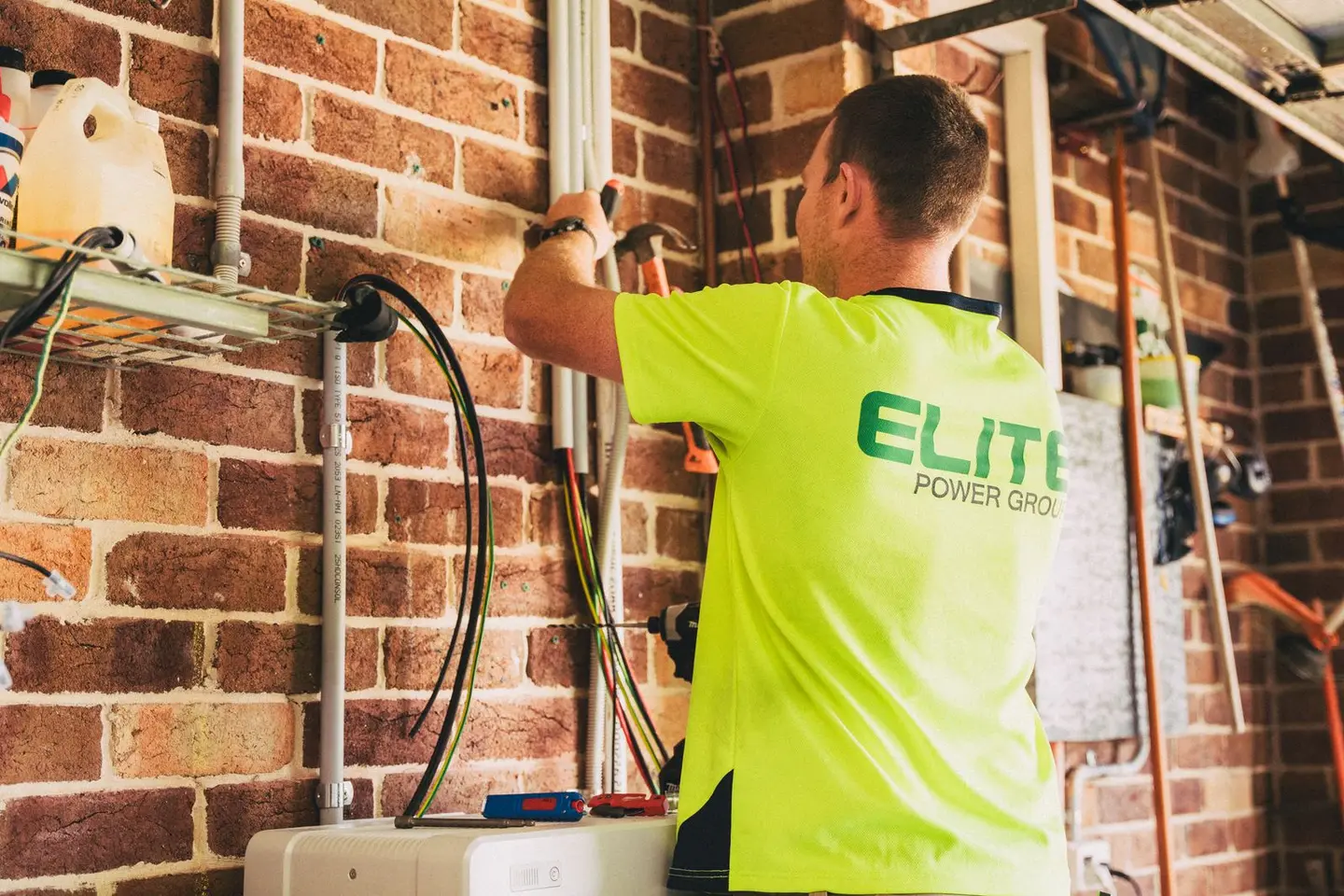
A garage without electrics is a frustrating space, fine for storing boxes, but limited for anything else. Adding a proper electrical installation turns a garage into a workshop, gym, home office, or EV charging point. Most UK homeowners budget between £800 and £2,500 for a competent installation, though the total depends heavily on how far the garage sits from the house consumer unit and how many circuits you need.
All domestic electrical work in England and Wales should follow BS 7671 and, where notifiable, be certified under Part P of the Building Regulations. BS 7671, the IET Wiring Regulations, is currently the 18th Edition as amended in 2026 (BS 7671:2018+A4:2026).1 Scotland has no Part P: electrical work there must meet Standard 4.5 of the Scottish building standards, under the building warrant system.2 This is not a grey area, an unregistered installation will cause problems when you sell the property and, more importantly, poses a genuine safety risk.
Typical Cost Breakdown
| Item | Typical cost (inc. VAT) |
|---|---|
| Armoured cable run from house to garage (per metre) | £20–£45/m |
| Sub-consumer unit (4–8 way, RCD/RCBO protected) | £250–£550 |
| Single-phase 32A circuit (e.g. for EV charger or workshop) | £150–£350 |
| Socket circuit with 3–4 double sockets | £150–£300 |
| Lighting circuit (fluorescent/LED batten, 4–6 fittings) | £200–£400 |
| PIR external light | £80–£150 |
| Earth bonding and supplementary bonding | £80–£200 |
| EICR (Electrical Installation Condition Report) | £150–£300 |
For a typical detached garage 8–15 m from the house, a realistic job, armoured cable run, 6-way consumer unit, one ring/radial socket circuit, and a lighting circuit, comes to roughly £750–£1,950 at the rates in the table when installed by a qualified electrician.
If the garage is integral to the house (sharing a wall), the run is shorter and costs drop to the lower end; a detached garage at the far end of a 30 m garden will sit at the top end or beyond.
What Cable to Use: Armoured vs SWA
For an underground run from house to detached garage, the standard cable is SWA (steel wire armoured), usually three-core and commonly 6 mm² or 10 mm² for a garage supply, with the size set by the electrician from the load, the length of run and voltage drop. BS 7671 requires a cable buried in the ground to have an earthed armour or metallic sheath, or to run in a suitable duct, and its route to be marked with cable covers or marker tape.3 It sets no fixed burial depth: the cable must be deep enough to avoid damage from any reasonably foreseeable disturbance of the ground, and the IET says a depth of less than 0.5 m is usually inadvisable.4 Go deeper where the route crosses a drive or ground likely to be dug. The steel armour protects the cable from accidental damage during future digging.
Overhead cable runs are also permitted, but the cable must be properly supported, usually on a catenary wire, and kept well clear of head height, with more clearance over any drive; the span and sag must be calculated to avoid mechanical failure. Most electricians prefer underground runs for neatness and safety.
An alternative to SWA is an unarmoured cable in a buried duct that gives equivalent protection against mechanical damage. Ducts rated N450 or N750 under BS EN 61386-24 are intended to be buried directly in the ground without additional precautions.3 SWA is still the more common choice for a garage supply.
Sub-Consumer Unit Requirements
Every properly wired garage should have its own small consumer unit (also called a distribution board or sub-board). This serves three purposes:
- Provides local overcurrent protection for each circuit
- Allows isolation of the garage without affecting the house supply
- Provides RCD or RCBO protection as required by BS 7671
Since 1 January 2016, BS 7671 has required a consumer unit in domestic premises to have a non-combustible enclosure, in practice usually steel, or to sit inside a non-combustible cabinet; the rule came from Amendment 3 to the Wiring Regulations, not from the Building Regulations.5 The IET says the rule was meant to cover a garage or outbuilding that is integral to, attached to or close to the house, so a metal sub-board is the safe default; for a detached garage further away it is a judgement based on the fire risk to the house.5
A 4–8 way split-load or RCBO consumer unit from a reputable manufacturer (Hager, Schneider, Wylex, MK) costs £60–£150 for the unit itself; installation including wiring in is the bulk of the labour cost.
Lighting Options
For a garage used as a workshop, good lighting is critical. Options in 2026:
- LED batten lights, cool white (4,000 K) to daylight (6,500 K); most cost-effective. A 4 ft twin LED batten (£20–£50) typically gives 3,300–5,000 lm depending on model. LAP’s Oxbo twin 4 ft batten, for example, is rated at 4,400 lm of 4,000 K light.6 Two to four fittings suit most double garages.
- LED panel lights, Neater in appearance; better for home offices or gyms.
- High-bay LED, For garages over 3 m ceiling height; not usually needed for domestic.
Switching: a single PIR sensor at the door is convenient for everyday use; a conventional switch is needed if the garage is used as a workshop where constant-on lighting matters. A simple dual switching arrangement (manual or PIR) is easy to wire into the same circuit.
External lighting, a PIR floodlight or wall lantern above the garage door, is typically added to the same lighting circuit or a separate spur.
Sockets and Workshop Circuits
For a workshop, plan socket numbers generously, you will always want more than you expect. Building Regulations do not mandate a minimum socket count in a garage, but a practical layout is:
- One 4-gang socket on each wall (or 2-gang doubles at multiple locations)
- A dedicated 32A radial circuit for a welder, compressor, or large workshop machine
- Sockets at bench height (900–1,000 mm) rather than floor level
For EV charging, a dedicated 32A circuit and Type 2 wall box (£800–£1,200 installed) is the correct approach, never charge an EV from a standard 13A socket long-term. The government’s home chargepoint grants now cover only flat owners, renters, landlords and homes with on-street parking, so a homeowner charging in their own garage should not expect one.7
Part P and Certification
Under Part P of the Building Regulations, electrical installation work in a garage is notifiable if it involves:
- A new circuit from the house consumer unit8
- The replacement of a consumer unit (a new garage sub-board is fed by a new circuit, so it is notifiable either way)8
- An addition or alteration to an existing circuit in a special location, which Approved Document P defines as the space around a bath or shower (from floor level up to 2.25 m, and 0.6 m out from the edge of the bath or shower tray, or 1.2 m from the centre of the shower head where there is no tray) or a room containing a swimming pool or sauna heater8
Those three are the only notifiable jobs. A garage is not a special location, however damp it is, so adding a socket or a light to a circuit that already serves the garage is not notifiable. In practice most garage projects are notifiable anyway, because they start with a new circuit from the house or a new sub-board. A registered competent person can self-certify their own work: for electrical installations in homes the government-authorised schemes are BESCA, Blue Flame Certification, Certsure (NICEIC), NAPIT and OFTEC.9 Within 30 days of finishing, the installer must give you a certificate of compliance and notify the local authority, which the scheme usually does on their behalf.10 They should also give you an Electrical Installation Certificate (EIC) under BS 7671. Keep both: they are the documents a buyer’s solicitor will ask for when you sell.
If notifiable work is done by someone who is not registered, including DIY, it must be notified to Building Control before work starts or certified by a registered third party.8 Work done without either can only be put right afterwards by applying to the local authority for a regularisation certificate, a more expensive and uncertain process that usually starts with an EICR from a registered electrician.11 Do the job right first time.
Useful Checks Before Hiring
- Ask for the electrician’s competent person scheme registration number and verify it on the relevant scheme website (NICEIC Check, NAPIT Find a contractor). There is no such thing as a “Part P-registered” electrician: the category is a registered competent person8
- Confirm they will issue a full Electrical Installation Certificate on completion
- Check whether the quote includes a building control charge. It only arises if the electrician is not registered to self-certify, which is itself a red flag, and each council sets its own: Solihull, for example, charges £395 for a building notice for major electrical installation work.12
- For SWA cable runs, confirm the trench depth and route avoids other buried services (check your utility plans)
Getting the electrics right at the outset saves significant expense later, particularly if you plan to convert the garage or sell the property.
References (12)
Figures in this note were checked against the sources below on 30 September 2026. Superscript numbers in the text point to them. Every source the site cites, by topic.
- 1technicalstrongThe Institution of Engineering and Technology, guidance.RN-8RUPKYThe IET's BS 7671 page shows the current Wiring Regulations are the 18th Edition incorporating Amendment 4:2026.
- 2technicalvery strongScottish Government, guidance.RN-NQ2LI6The Scottish domestic Technical Handbook's mandatory standard 4.5 on electrical safety, in Section 4 (Safety).
- 3technicalstrongInstitution of Engineering and Technology (Wiring Matters, July 2024), guidance.RN-LW0URAIET Wiring Matters explanation of BS 7671 Regulation 522.8.10: buried cables must be deep enough to avoid foreseeable disturbance (a designer's judgement, not a fixed figure) and their route marked with cable covers or marker tape.
- 4technicalstrongThe Institution of Engineering and Technology (Wiring Matters), guidance.RN-D87I1MIET answers to common BS 7671 questions. On buried cables it gives the regulation's test (sufficient depth to avoid foreseeable disturbance) and advises that less than 0.5 m is usually inadvisable.
- 5technicalstrongThe Institution of Engineering and Technology, guidance.RN-RROQ4CIET guidance quoting regulation 421.1.201 from Amendment 3 to BS 7671:2008: domestic consumer units must have a non-combustible enclosure (steel is the example), from 1 January 2016.
- 6technicalsupplier figureScrewfix, guidance.RN-PTRUTZRetailer product page for a typical twin 4 ft LED batten sold for garages and workshops, giving its rated output of 4,400 lumens at 4,000 K. Cited only for the product's light output.
- 7technicalvery strongOffice for Zero Emission Vehicles (GOV.UK), guidance.RN-GFS59KOZEV's summary of the home and workplace chargepoint grants running from April 2026 to March 2027. The home grants listed are for flats and renters, residential landlords and households with on-street parking only.
- 8technicalvery strongMinistry of Housing, Communities and Local Government.RN-JYJ3I5The document that decides what electrical work a homeowner may legally do themselves, and the exact list of notifiable jobs. Regulation 12(6A), reproduced at paragraph 2.5, makes only three things notifiable: the installation of a new circuit, the replacement of a consumer unit, and any addition or alteration to existing circuits in a special location. Regulation 12(9) defines special location as, in a room containing a bath or shower, the zone extending vertically from finished floor level to 2.25 metres (or the shower head position if higher) and horizontally 600mm from the edge of the bath tub or shower tray. Paragraph 2.7 states that all other electrical installation work is not notifiable, namely additions and alterations to existing installations outside special locations, and replacements, repairs and maintenance anywhere. Paragraph 2.8 gives worked examples: a built-in cooker is not notifiable unless a new cooker circuit is needed, and connecting an electric gate or garage door to an existing isolator is not notifiable but running a new circuit from the consumer unit to that isolator is. Paragraph 2.2 confirms Part P reaches outdoor work including fixed garden lighting, pond pumps and outbuildings such as sheds, detached garages and domestic greenhouses. Notifiable work must be certified by self-certification by a registered competent person, third-party certification, or a building control body (paragraph 3.1), with the compliance certificate issued within 30 days (paragraph 3.4). Note that Approved Document P is a source of guidance rather than a ban: non-notifiable work still has to comply with BS 7671.
- 9technicalvery strongMinistry of Housing, Communities and Local Government.RN-SAMO3MThe official list of competent person schemes whose members can self-certify certain building work instead of getting building regulations approval, published 4 April 2013 and last updated 12 March 2018. Named schemes with contact numbers include ATTMA, APHC, Assure Certification, Blue Flame Certification, the British Board of Agrement, BESCA, Capita Gas Registration and Ancillary Services trading as Gas Safe Register, CIGA, Certass, Certsure LLP trading as NICEIC, the Elmhurst Airtightness Scheme, Fensa Limited, HETAS Limited, NAPIT Registration Limited, the National Federation of Roofing Contractors trading as CompetentRoofer, and OFTEC. Two footnotes matter: the Gas Safe Register is not technically a competent person scheme although in practice its installers carry the same building regulations responsibilities, and Benchmark Certification Limited ceased to operate as a competent person scheme on 10 February 2017, becoming part of NAPIT Registration Limited that day. Installers joining an electrical scheme are added to the single electrical competent person register.
- 10technicalvery strongThe National Archives (legislation.gov.uk), legislation.RN-TISY8ORegulation 20 of the Building Regulations 2010 is the legal basis for every competent person certificate and, importantly, the deadline attached to it. Paragraph (1) applies the regulation where the building work consists only of work of a type described in column 1 of the Table in Schedule 3 carried out by a person described in column 2. Paragraph (2): the building control authority is authorised to accept, as evidence that the requirements of regulations 4 and 7 have been satisfied, a certificate to that effect from the person carrying out the work. Paragraph (3): within 30 days of completing the work that person must give the occupier a copy of the certificate and either notify the building control authority or send it the certificate. Paragraph (3A) requires the authority to keep a retrievable copy. Paragraph (5) is the sting: such a certificate is evidence, but not conclusive evidence, that the requirements have been complied with. If an installer has not produced the certificate within 30 days, chase it before final payment.
- 11technicalvery strongThe National Archives, legislation.RN-4MV2ZGRegulation 18 of the Building Regulations 2010, unauthorised building work. Where work was carried out on or after 11 November 1985 without approval, the owner may apply in writing for a regularisation certificate. This is the route out of discovering at sale that an extension or loft conversion was never signed off, and the date in it is why anything older is outside the process.
- 12coststrong locallySolihull Metropolitan Borough Council.RN-XSQV70A price, true at 2026-09. Solihull Metropolitan Borough Council's published price for the item the cost register files as "building Regulations application fee, plan charge, England", which is the figure a cost footnote on this page points at.
-
BS 7671 - 18th Edition, The Institution of Engineering and Technology, accessed 30 September 2026. electrical.theiet.org
-
Building standards technical handbook 2022: domestic, 4.5 Electrical safety, Scottish Government, accessed 30 September 2026. gov.scot
-
Buried conduits and ducts, The Institution of Engineering and Technology (Wiring Matters), accessed 30 September 2026. electrical.theiet.org
-
BS 7671:2018 Frequently Asked Questions, The Institution of Engineering and Technology (Wiring Matters), accessed 30 September 2026. electrical.theiet.org
-
New non-combustible enclosure requirement for consumer units, The Institution of Engineering and Technology, accessed 30 September 2026. electrical.theiet.org
-
LAP Oxbo Twin 4ft LED Batten 37W 4400lm 220-240V, Screwfix, accessed 30 September 2026. screwfix.com
-
Changes to electric vehicle chargepoint grant schemes from 1 April 2026, Office for Zero Emission Vehicles (GOV.UK), accessed 30 September 2026. gov.uk
-
Approved Document P, Electrical safety: Dwellings, 2013 edition incorporating 2010 and 2013 amendments, Ministry of Housing, Communities and Local Government, accessed 14 September 2026. assets.publishing.service.gov.uk
-
Competent person scheme: current schemes and how schemes are authorised, Ministry of Housing, Communities and Local Government (GOV.UK), accessed 30 September 2026. gov.uk
-
The Building Regulations 2010, regulation 20: Provisions applicable to self-certification schemes, legislation.gov.uk, accessed 30 September 2026. legislation.gov.uk
-
The Building Regulations 2010, regulation 18: Unauthorised building work, legislation.gov.uk, accessed 30 September 2026. legislation.gov.uk
-
Guidance notes on Building Regulation Charges, effective from 1 April 2026, Solihull Metropolitan Borough Council, accessed 30 September 2026. Priced at 2026-09 and left there. solihull.gov.uk