A builders’ merchant is a specialist supplier of construction and building materials, bricks, blocks, timber, roofing, insulation, plasterboard, plumbing goods, drainage and general fixings, that sells primarily to the trade. Unlike a DIY shed, they carry commercial-grade quantities, stock materials that professional builders actually specify, and structure their prices around volume purchasing. That said, members of the public are welcome at virtually every builders’ merchant in the UK, and many homeowners use them for materials, grades and quantities the high street does not carry.
If you are planning a renovation, extension or new build, or managing a project where your contractor is buying materials on your account, it pays to understand how these businesses work.
What a Builders’ Merchant Actually Is
Builders’ merchants sit between manufacturers and end users. They buy in bulk from brick makers, timber processors, insulation factories and plumbing component manufacturers, then hold stock locally so that builders can collect what they need each morning. The model relies on turnover: the merchant earns a margin on every pallet of blocks, sheet of plywood or reel of cable that goes out the door.
The UK market is dominated by a handful of national chains, but there are also dozens of regional independents. National groups include Travis Perkins, Jewson, Buildbase, Selco, MKM Building Supplies and Huws Gray. STARK Group completed its purchase of Saint-Gobain Building Distribution, Jewson’s parent, on 1 March 2023.12 Grafton sold its traditional merchanting business in Great Britain, including Buildbase, to Huws Gray at the end of 2021.3 Each operates a slightly different model, more on that in the comparison guide, but all share the same fundamental structure: a trade counter staffed by knowledgeable sales people, a yard where heavy goods are held, and a delivery fleet.
Trade Counter vs Yard
Walk into any branch and you will see two distinct areas:
- Trade counter, an enclosed sales desk where you order plumbing fittings, fixings, timber lengths, plasterboard and other goods that are stored in a warehouse behind. Staff pull your order while you wait or have it ready for a specified time.
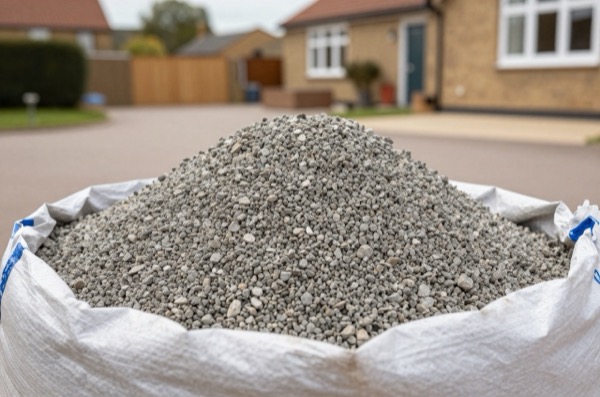
- Builders’ yard, an open or covered yard where blocks, bricks, aggregates, sand, ready-mix concrete (at branches with batching plants) and landscaping materials are stored on pallets. A forklift operator loads your vehicle or a delivery lorry.
Some larger branches also have a showroom for kitchens, bathrooms or roofline products, and a tool hire counter.
Merchant vs DIY Store
The difference is not just price, it is range, quality and minimum quantities.
| Feature | Builders’ Merchant | DIY Store (B&Q, Wickes) |
|---|---|---|
| Primary customer | Professional tradespeople | DIY homeowner |
| Stock depth | Deep, many skus per category | Shallow, consumer range |
| Minimum purchase | Usually none for cash; pallets common | Usually none |
| Price | Cash price set by the branch; trade accounts get negotiated discounts | Published retail prices and promotions |
| Staff knowledge | Usually trades-experienced | Variable |
| Opening hours | Early start (often 07:00–17:30) | Later retail hours |
| Delivery | Next-day or scheduled; full lorry | Home delivery, usually charged by order size |
| Timber grading | C16/C24 structural in full size ranges | Some graded lines, narrower range |
| Product range | Thousands of skus including specialist lines | Hundreds, consumer-oriented |
DIY stores serve a genuine purpose for weekend jobs, small quantities and convenience. But for structural materials, treated C24 timber, 7.3 N/mm² dense concrete blocks, type 1 MOT stone, 140 mm PIR insulation boards, a merchant is the right source.
Trade Account vs Cash Buying
Most merchants offer two ways to buy:
Cash account (or cash customer): You pay at the point of purchase by card or cash, at whatever price the branch decides to quote you. There is no credit. Any homeowner can do this, just turn up. Prices on a cash account are typically higher than those on a trade credit account, and not always below what DIY retailers charge. In September 2026, for example, Travis Perkins listed a 100 mm dense 7.3 N concrete block at £2.93 retail and £2.54 on a trade account, while Wickes listed a Tarmac 100 mm 7.3 N dense block at £2.40.45
Credit (30-day) trade account: A business credit account with monthly billing; Travis Perkins, for example, offers a minimum of 30 days’ interest-free credit up to the account’s credit limit.6 Prices are negotiated and often lower than cash rates, especially for high-volume lines. Expect the merchant to take references or run a credit check before opening one. See the dedicated guide on opening a trade account for the full process.
How to Buy as a Homeowner
You do not need a trade account or a VAT registration number to shop at a builders’ merchant. The process is straightforward:
- Walk in or phone ahead. For large quantities, a full pallet of blocks, a lorry of timber, it is worth calling ahead to check stock.
- Ask for a price. Prices are not always on display. Tell the counter staff exactly what you need (product, quantity, any specification requirements such as a strength class or fire rating).
- Compare a couple of branches. Prices vary by branch and by the day. A five-minute phone call to a second merchant can save a meaningful amount on a large order.
- Pay at the counter. Most merchants accept debit and credit cards. Larger deliveries are sometimes cash or bank transfer only, ask.
- Arrange delivery or collect. Most merchants offer delivery on a schedule. Delivery costs vary by merchant, order size and distance, and a timed delivery or a HIAB crane offload usually costs more than a standard kerbside drop, so ask for the charge when you order. Travis Perkins, for example, advertises free next-day delivery on orders over £150.7
What Merchants Stock That DIY Stores Often Do Not
For any serious project, the range difference matters as much as price. Builders’ merchants routinely stock:
- Structural timber in C16 and C24 graded regularised and CLS sections
- Dense and lightweight concrete blocks in specific compressive strengths (3.5 N, 7.3 N, 10.4 N)
- Facing bricks from multiple manufacturers in a wide colour and texture range
- Roofing battens in BS 5534-compliant sizes8
- Breathable roofing membranes and sarking boards
- PIR and mineral wool insulation in full thickness ranges (50 mm to 200 mm)
- Steel lintels (Catnic, IG, Birtley) in sizes not stocked by DIY sheds
- DPC, DPM and cavity trays to BS 6515 and BS 8215910
- Drainage goods, clay and plastic pipe in 100 mm to 450 mm diameters
- Aggregates, sharp sand, building sand, MOT Type 1, 20 mm gravel, ballast
VAT and Receipts
Builders’ merchants charge VAT at the standard rate (20%) on most goods.11 Energy-saving materials such as insulation are zero-rated until 31 March 2027 (5% from 1 April 2027) when a business supplies and installs them in a home, but a sale of the materials alone is standard-rated, so buying insulation over the counter carries the full 20%.12 Ask your merchant if you are unsure.
Always obtain a proper VAT receipt. If you are running a renovation on a property that will be sold or let, detailed receipts from the merchant allow your accountant to evidence material costs.
Negotiating at the Counter
Merchants expect professionals to negotiate, and most counter staff have some discretion on price, particularly for larger orders or repeat business. Even as a homeowner buying for a one-off project, it is worth asking: “Is that the best you can do on a full pallet?” or “What if I take ten sheets rather than five?” You will not always get a discount, but you will sometimes.
Some branches will also consider matching a written quote from a nearby competitor, so it is worth asking.
References (12)
Figures in this note were checked against the sources below on 2 October 2026. Superscript numbers in the text point to them. Every source the site cites, by topic.
- 1technicalsupplier figureJewson, guidance.RN-PE9P1GJewson's own About Us page: its branch network from the Scottish Isles to Penzance, click and collect from over 400 branches, and its specialist brick, timber, tool hire and showroom services.
- 2technicalsupplier figureSTARK UK, guidance.RN-F60UJZSTARK UK's own announcement, dated 1 March 2023, that STARK Group completed its acquisition of Saint-Gobain Building Distribution UK Ltd, announced on 12 December 2022.
- 3technicalsecondaryTimber Trades Journal, guidance.RN-XZZXKZTimber Trades Journal, the timber trade's journal of record, reporting that Grafton completed the sale of its GB traditional merchanting business, including Buildbase, to Huws Gray on 31 December 2021.
- 4costsupplier figureWickes.RN-5HEY4SA price, true at 2026-09. Wickes product page for the Tarmac Standard 7.3 N dense block, 100 mm, showing its current price of £2.40 reduced from £2.70.
- 5costsupplier figureTravis Perkins.RN-IVW0C1A price, true at 2026-09. Travis Perkins product page for a 100 mm solid dense 7.3 N concrete block, giving its retail price including VAT and the lower trade account price.
- 6technicalsupplier figureTravis Perkins, guidance.RN-Z61FIJA national merchant's own account page: a trade credit account gives a minimum of 30 days' interest-free credit and trade-only discounted prices.
- 7costsupplier figureTravis Perkins.RN-K4UUO7A price, true at 2026-09. Travis Perkins' own site banner stating its delivery offer: free next-day delivery on orders over £150, with free click and collect.
- 8technicalstrongBSI (British Standards Institution), a standard.RN-FCTWJDSTATUS: CURRENT. BS 5534:2014+A2:2018 published 28 February 2018. Full title is 'Slating and tiling for pitched roofs and vertical cladding. Code of practice' - NOT the older 2003 title 'Code of practice for slating and tiling', which is a common stale citation. Gives recommendations primarily for the design, performance and installation of new build pitched roofs including vertical cladding, and for normal re-roofing work including repairs, using slates, tiles, shingles and shakes and their associated components. The A2:2018 amendment reworked wind loads and uplift resistances of the roof covering and underlay around the Eurocodes and withdrew reliance on the tensile strength of mortar bedding to resist wind uplift, which is why mortar-bedded ridges and verges alone no longer satisfy the code. Batten grading rules sit inside this standard (clause 4.11 and its annex), not in BS 4978, BS 5756 or BS EN 14081.
- 9technicalstrongBSI (BSI Knowledge catalogue), a standard.RN-EU4DHIDated 28 February 1991, this contains recommendations for the selection, design and installation of damp proof courses in both solid and cavity masonry construction, and is the code behind DPC practice referenced alongside Approved Document C. Its scope notes mark the boundaries clearly: BS 8215 does not cover waterproofing of underground structures such as basements where water is under hydrostatic pressure (see BS 8102), does not deal with the installation of chemical DPCs (see BS 6576), does not cover control of condensation (see BS 5250) and does not cover surface treatment of masonry with water repellents (see BS 6477). Those cross references are useful for a note that needs to say which standard governs which damp problem.
- 10technicalstrongBSI (British Standards Institution), a standard.RN-LOZAWUSTATUS: CURRENT, and unusually for a 1984 standard the BSI catalogue page shows no withdrawal date. BS 6515:1984 was published 28 September 1984 and specifies polyethylene sheet used as a damp proof course in masonry, covering material composition, specimen preparation, permeability measurement and the test procedures for the impermeable sheet. It is the product standard behind the black polythene DPC roll sold by every builders merchant, and it sits alongside BS 8215:1991, the code of practice for design and installation of damp proof courses in masonry construction, and BS 6576 for chemical DPCs in existing walls. Note the distinction a note should keep: BS 6515 is a damp proof COURSE in a wall, not a damp proof MEMBRANE under a floor slab, which is a different product covered by BS 8102 and the gas and moisture membrane standards. Catalogue page confirms number, title, date, status and scope; requirements are paywalled.
- 11technicalvery strongHM Revenue & Customs (GOV.UK), guidance.RN-4W7T33Sets the three UK VAT rates: standard 20% on most goods and services, reduced 5% on some goods and services such as children's car seats and home energy, and zero 0% on zero-rated goods such as most food and children's clothes. The standard rate rose to 20% on 4 January 2011 from 17.5%. Some supplies are exempt rather than rated, including postage stamps and financial and property transactions. This is the reference for converting a merchant's ex-VAT trade quote into the figure a homeowner actually pays.
- 12technicalvery strongHM Revenue & Customs, guidance.RN-1HRJJ7Section 2.1 sets a zero rate of VAT on the installation of energy-saving materials in residential accommodation from 1 May 2023 to 31 March 2027, after which the rate reverts to the 5% reduced rate; section 2.22 extended it to buildings used solely for relevant charitable purposes from 1 February 2024. Section 2.7 lists the qualifying materials: central heating and hot water controls, draught stripping, insulation to walls, floors, ceilings, roofs, lofts and pipes, solar panels, wind turbines, water turbines, ground source heat pumps, air source heat pumps, micro combined heat and power units and wood-fuelled boilers, with water source heat pumps, batteries for energy storage and smart diverters added on 1 February 2024. Section 2.3 is the critical rule for a renovation note: relief applies to an installation service, or materials supplied and installed together, but materials bought without installation stay standard-rated at 20%.
-
About us, Jewson, accessed 30 September 2026. jewson.co.uk
-
STARK Group Completes Major Acquisition In The UK In Great Time, STARK UK, accessed 30 September 2026. starkbuild.co.uk
-
Huws Gray completes £520m purchase of Grafton traditional merchanting business, Timber Trades Journal, accessed 30 September 2026. ttjonline.com
-
Tarmac Standard 7.3N Dense Block - 100mm, Wickes, accessed 30 September 2026. Priced at 2026-09 and left there. wickes.co.uk
-
Solid Dense 7.3N Concrete Block Grey 100mm, Travis Perkins, accessed 30 September 2026. Priced at 2026-09 and left there. travisperkins.co.uk
-
Benefits of a Travis Perkins Trade Account, Travis Perkins, accessed 2 October 2026. travisperkins.co.uk
-
Travis Perkins home page, Travis Perkins, accessed 30 September 2026. Priced at 2026-09 and left there. travisperkins.co.uk
-
BS 5534:2014+A2:2018, Slating and tiling for pitched roofs and vertical cladding. Code of practice, BSI, accessed 14 September 2026. knowledge.bsigroup.com
-
BS 8215:1991 Code of practice for design and installation of damp-proof courses in masonry construction, BSI, accessed 30 September 2026. knowledge.bsigroup.com
-
BS 6515:1984 Specification for polyethylene damp-proof courses for masonry, BSI, accessed 30 September 2026. knowledge.bsigroup.com
-
VAT rates, GOV.UK, accessed 30 September 2026. gov.uk
-
VAT on energy-saving materials and heating equipment (VAT Notice 708/6), HM Revenue & Customs (GOV.UK), accessed 30 September 2026. gov.uk