Installing a garden gate in 2026 typically costs between £300 and £2,500 all-in, covering supply and fitting. The widest variable is the gate itself, a straightforward timber side gate bought off the shelf and hung by a carpenter sits comfortably under £500, while a made-to-measure wrought iron driveway gate with electric automation can clear £2,000 before you add groundworks.
Labour is generally a small portion of the total for manual gates. A competent joiner or fencer can hang most pedestrian gates in two to four hours. Automation and heavier metalwork push the job into a full day or more, often involving groundworks, concrete, and an electrician.
Garden Gate Installation Cost Breakdown by Type
The table below shows typical all-in costs for supply and fitting in the UK in 2026. Costs assume standard access with no significant groundworks.
| Gate Type | Gate Only (Supply) | Fitting Labour | Total Installed |
|---|---|---|---|
| Timber (softwood, off-the-shelf) | £80–£200 | £150–£250 | £300–£500 |
| Timber (hardwood or made-to-measure) | £200–£600 | £200–£350 | £450–£950 |
| Steel / mild steel | £250–£700 | £200–£350 | £500–£1,100 |
| Wrought iron (traditional) | £400–£1,200 | £250–£450 | £700–£1,700 |
| Composite (wood-effect plastic) | £300–£800 | £150–£300 | £500–£1,100 |
| Automated / electric (single) | £600–£1,500 | £400–£800 | £1,100–£2,500 |
| Automated / electric (double driveway) | £1,000–£2,500 | £600–£1,200 | £1,700–£3,800 |
Prices above are national averages. London and south-east rates typically run 20–30% higher.
What Drives the Price?
Gate Material
Timber is the cheapest option when bought as a standard pressure-treated softwood gate from a fencing or builders’ merchant. Hardwood (oak, iroko) costs more upfront but lasts considerably longer without treatment. Timber gates are prone to swelling in wet weather if not properly treated and hung with clearance gaps.
Steel and mild steel gates offer good strength at a mid-range price. They are factory powder-coated, which reduces ongoing maintenance. Bespoke steel work by a local blacksmith will cost more than a catalogue product.
Wrought iron is at the premium end of manual gates. The material is denser and more complex to fabricate than mild steel, and most wrought iron gates are custom made. Expect to wait four to eight weeks for delivery.
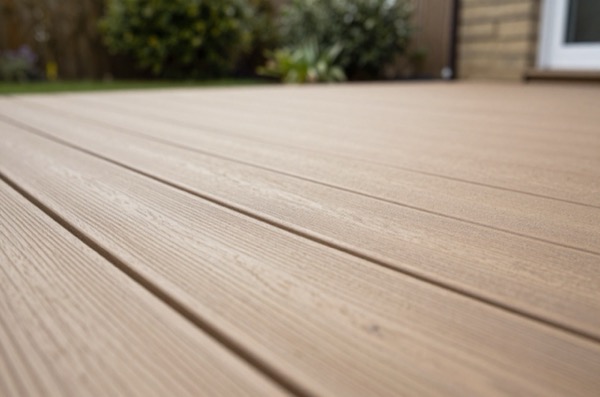
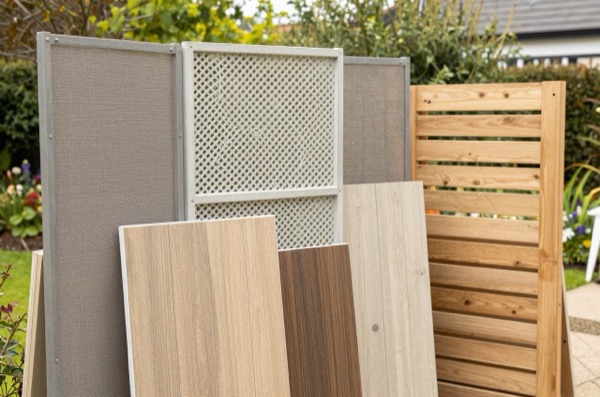
Composite gates use a PVC or aluminium core clad in a wood-effect finish. They do not rot, warp, or need painting, making them popular for side access gates. Cost is similar to steel.
Automated gates carry additional costs: the motor kit (£300–£800 for a quality unit), power supply, intercom or keypad, and the safety devices required by BS EN 12453, which replaced the withdrawn BS EN 12978 for the safety devices on power operated gates.1 Installation usually means running a new circuit out to the gate, and a new circuit is notifiable work under Part P in England, so it has to be certified by a registered competent person (an electrician registered with a scheme such as NICEIC or NAPIT) or signed off by building control, adding £100–£250 to the bill.2 The safety devices are not an optional extra either: trade guidance treats a safety edge or an obstacle-detecting drive as the primary protection, with light beams only as a backup, never as the sole measure.3
Posts and Groundworks
Many quotes focus on the gate and hanging hardware and exclude post installation. If existing posts are sound, the job is simpler. New posts for a timber gate typically add £100–£300; concrete pillars for a heavy metal or automated gate add £300–£800 and need time to cure before the gate is hung.
Gate Width and Opening Style
Standard pedestrian gates are 900mm wide. Driveway gates are typically 2.4m to 5m wide (single or double leaf). Wider gates require heavier hinges, stronger posts, and more labour. Single-leaf driveway gates are simpler to automate than double-leaf.
Typical Day Rates for Fitters
| Trade | Day Rate (2026 UK) |
|---|---|
| Carpenter / joiner | £200–£350/day4 |
| Fencer | £180–£300/day |
| Metalwork / blacksmith | £250–£450/day |
| Gate automation specialist | £300–£500/day |
| Electrician (registered competent person) | £250–£400/day |
Most pedestrian gate installations are priced as a fixed job rather than a day rate. Get at least three quotes and check whether they include posts, concrete, and hardware.
Worked Example: Wrought Iron Side Gate
Scenario: A semi-detached house needs a traditional wrought iron side gate measuring 900mm wide × 1.2m high, hung between brick piers that already exist.
| Item | Cost |
|---|---|
| Wrought iron gate (standard catalogue, powder-coated black) | £520 |
| Heavy-duty hinges and latch | £65 |
| Labour (half day, metalwork fitter) | £190 |
| Total | £775 |
If the brick piers needed building from scratch, add approximately £400–£600 for a bricklayer.
Automated Gate Considerations
An automated gate counts as machinery, and in Great Britain the duty falls on whoever supplies it and puts it into service under the Supply of Machinery (Safety) Regulations 2008, the regulations that brought the Machinery Directive into UK law.3 In practice this means:
- A risk assessment, a declaration of conformity and CE or UKCA marking
- Safety edges or photo-electric beams to prevent trapping (BS EN 12453)
- A clearly marked emergency stop or manual release
- Regular maintenance by a competent person
Health and safety law does not reach the owner of a gate on private domestic premises, so those duties sit with the installer and with anyone who later maintains or repairs it, but the HSE still recommends that domestic gates are checked regularly.5 Many homeowners underestimate the ongoing cost of automation. Annual maintenance contracts from gate specialists run £80–£200 per year, and trade guidance treats at least one maintenance visit a year as the bare minimum for any powered gate.3 Motor units from reputable brands (BFT, FAAC, Nice) have better long-term part availability than no-name imports.
Planning Permission
Most garden gates do not require planning permission in England, provided the gate does not exceed 1m in height where it is adjacent to a highway used by vehicular traffic, or 2m anywhere else.6 The 1m limit is tied to a highway used by vehicles and to the pavement of such a highway, so a gate opening onto a public footpath away from any road is judged against the 2m limit instead.7 Listed buildings and conservation areas may have additional restrictions, check with your local planning authority before ordering. In Wales, Scotland, and Northern Ireland, the rules differ slightly.
Ways to Keep Costs Down
- Buy supply-only and hire a local fencer. Online gate suppliers often sell at lower prices than merchant trade counters. Buying supply-only and providing the gate to a fencer can save £100–£200 versus a full supply-and-fit package.
- Choose stock sizes. Made-to-measure gates carry a 30–60% premium over catalogue sizes. If your opening can be adjusted slightly, stick to a standard width.
- Reuse existing posts. Getting a professional to assess whether existing posts are sound before assuming they need replacement can save significant cost.
- Manual over automated. If security is the main concern, a quality manual gate with a good padlock or Yale-style latch offers strong deterrence at a fraction of the cost of full automation.
When to Call a Specialist
For a straightforward timber or composite pedestrian gate hung on existing posts, any competent carpenter or fencer is suitable. For wrought iron work, seek someone with metalwork or blacksmithing experience. For any automated system, use a specialist gate installer, preferably a member of the Door and Hardware Federation (DHF) or the Guild of Architectural Ironmongers, who can certify the installation and carry appropriate public liability insurance.
References (7)
Figures in this note were checked against the sources below on 10 September 2026. Superscript numbers in the text point to them. Every source the site cites, by topic.
- 1technicalstrongBSI Knowledge, a standard.RN-KZ0DNHPublished 30 April 2023 in this A1:2021 version and current. It sets the safety requirements and test methods for power operated industrial, commercial and garage doors, gates and barriers intended for installation in areas within reach of people, including vertically moving commercial doors such as rolling shutters and rolling grilles. It addresses all significant hazards, hazardous situations and events relevant to power operation both in intended use and under reasonably foreseeable misuse, which is the standard behind force limitation, safety edges and photocell requirements on an automated garage door or driveway gate. Cite this alongside BS EN 13241 whenever a note discusses an electric garage door or an automated gate, since the two do different jobs: 13241 declares performance, 12453 makes it safe to stand near.
- 2technicalvery strongMinistry of Housing, Communities and Local Government.RN-JYJ3I5The document that decides what electrical work a homeowner may legally do themselves, and the exact list of notifiable jobs. Regulation 12(6A), reproduced at paragraph 2.5, makes only three things notifiable: the installation of a new circuit, the replacement of a consumer unit, and any addition or alteration to existing circuits in a special location. Regulation 12(9) defines special location as, in a room containing a bath or shower, the zone extending vertically from finished floor level to 2.25 metres (or the shower head position if higher) and horizontally 600mm from the edge of the bath tub or shower tray. Paragraph 2.7 states that all other electrical installation work is not notifiable, namely additions and alterations to existing installations outside special locations, and replacements, repairs and maintenance anywhere. Paragraph 2.8 gives worked examples: a built-in cooker is not notifiable unless a new cooker circuit is needed, and connecting an electric gate or garage door to an existing isolator is not notifiable but running a new circuit from the consumer unit to that isolator is. Paragraph 2.2 confirms Part P reaches outdoor work including fixed garden lighting, pond pumps and outbuildings such as sheds, detached garages and domestic greenhouses. Notifiable work must be certified by self-certification by a registered competent person, third-party certification, or a building control body (paragraph 3.1), with the compliance certificate issued within 30 days (paragraph 3.4). Note that Approved Document P is a source of guidance rather than a ban: non-notifiable work still has to comply with BS 7671.
- 3technicalgoodDoor and Hardware Federation (dhf), guidance.RN-DC07Z3The federation consumer leaflet that sets out what an installer is legally obliged to provide, and the source for why automated gates are treated as machinery rather than joinery. It opens by noting that in recent years several deaths have been caused by dangerous gates along with countless serious injuries and near misses, and that many poorly trained, ill equipped and unqualified installers operate illegally. New gates must comply with the Supply of Machinery (Safety) Regulations, which bring the Machinery Directive into UK law, and must meet or exceed BS EN 12453:2001. Required protection includes rubber safety edges on leading edges, flexible guards or rubber safety edges protecting the hinge area, rubber safety edges or fencing where a gate creates a shearing hazard against a fixed support, wall or fence (very common with sliding gates), and light beams across the entrance as a backup, arranged as multi beam curtaining that prevents all possible access. The effectiveness of force limitation must be verified with a force tester to confirm forces are at safe levels. The owner should receive a Declaration of Conformity, a CE plate, operating and maintenance instructions and a log book, and the leaflet states it is inconceivable that an automated gate would need less than an annual maintenance visit, with many systems needing more.
- 4costvery strongOffice for National Statistics.RN-MMT1DOA price, true at 2026-01. The ASHE Table 14 dataset gives annual estimates of paid hours worked and earnings for UK employees by sex and by full-time or part-time status, broken down to four-digit Standard Occupational Classification, which is the level that isolates individual construction trades such as bricklayers, carpenters, plasterers and electricians. Released 23 October 2025 as the 2025 provisional edition (zip, about 10.7 MB), with revised and provisional editions back to 2017. A correction dated 19 December 2025 suppressed annual pay estimates for SOC 3312 police officers in some areas; construction occupations are unaffected.
- 5technicalvery strongHealth and Safety Executive, guidance.RN-GVE0T6HSE's split of duties for powered gates. Installers working as part of a work activity must install the product safely under section 3 of the Health and Safety at Work etc Act 1974, must follow manufacturer instructions, and become the responsible person as manufacturer if they assemble a gate from components. Maintainers and inspectors carry the same section 3 duty and must leave the gate safe. Commercial owners and occupiers additionally fall under the Workplace (Health, Safety and Welfare) Regulations 1992. The Supply of Machinery (Safety) Regulations 2008 applies to manufacturers and assemblers whatever the setting. Crucially: health and safety law does not apply to owners of powered gates on domestic privately owned premises, though HSE strongly recommends regular checks. Corrects the common claim that a homeowner must comply with the Machinery Directive.
- 6technicalvery strongThe National Archives, legislation.RN-B3EWHKThe national permitted development right for boundary enclosures, and the answer to the very common error of treating fence height as a council rule. Class A permits the erection, construction, maintenance, improvement or alteration of a gate, fence, wall or other means of enclosure. A.1 exclusions: (a) adjacent to a HIGHWAY USED BY VEHICULAR TRAFFIC the height must not exceed 1 metre above ground level, except at a school where 2 metres is allowed provided any part above 1 metre does not obstruct highway users' sightlines; (b) anywhere else 2 metres above ground level; (c) where an existing enclosure is maintained, improved or altered its height must not exceed its former height or the (a)/(b) limit, whichever is the greater, so an existing over-height fence may be kept at that height but not raised; (d) development is NOT permitted within the curtilage of, or to a boundary of, a listed building. The 'used by vehicular traffic' qualifier is routinely dropped from consumer guidance, which wrongly applies the 1 metre limit to a boundary onto a footpath.
- 7technicalvery strongPlanning Portal, guidance.RN-N80QRQThe Planning Portal's homeowner summary of GPDO Schedule 2 Part 2 Class A. No permission needed where the structure does not exceed one metre in height from ground level next to a highway, or two metres in height elsewhere, and where an existing structure's height is not increased beyond those limits. Permission IS needed where the site is a listed building or within its curtilage, or where the boundary involves a neighbouring listed building or its curtilage. Notes that in a conservation area you might need permission to TAKE DOWN a fence, wall or gate, which is the reverse of what most readers expect. Also notes the right can be removed by an article four direction or a planning condition. Ends with the standard caveat that this is introductory guidance and the local planning authority should be checked.
-
BS EN 12453:2017+A1:2021 Industrial, commercial and garage doors and gates. Safety in use of power operated doors. Requirements and test methods, BSI, accessed 7 September 2026. knowledge.bsigroup.com
-
Approved Document P: Electrical safety - Dwellings (2013 edition), HM Government, accessed 9 September 2026. assets.publishing.service.gov.uk
-
Consumer information: advice for domestic owners of automated gates, Door and Hardware Federation, accessed 10 September 2026. dhfonline.org.uk
-
ASHE Table 14.6a, hourly pay excluding overtime by occupation, 2025 provisional, Office for National Statistics, accessed 17 September 2026. Priced at 2026-01, so no calibration is needed. ons.gov.uk
-
Powered gates: legal responsibilities, Health and Safety Executive, accessed 10 September 2026. hse.gov.uk
-
The Town and Country Planning (General Permitted Development) (England) Order 2015, Schedule 2, Part 2, Class A: gates, fences, walls etc, legislation.gov.uk, accessed 10 September 2026. legislation.gov.uk
-
Fences, gates and garden walls: planning permission, Planning Portal, accessed 10 September 2026. planningportal.co.uk