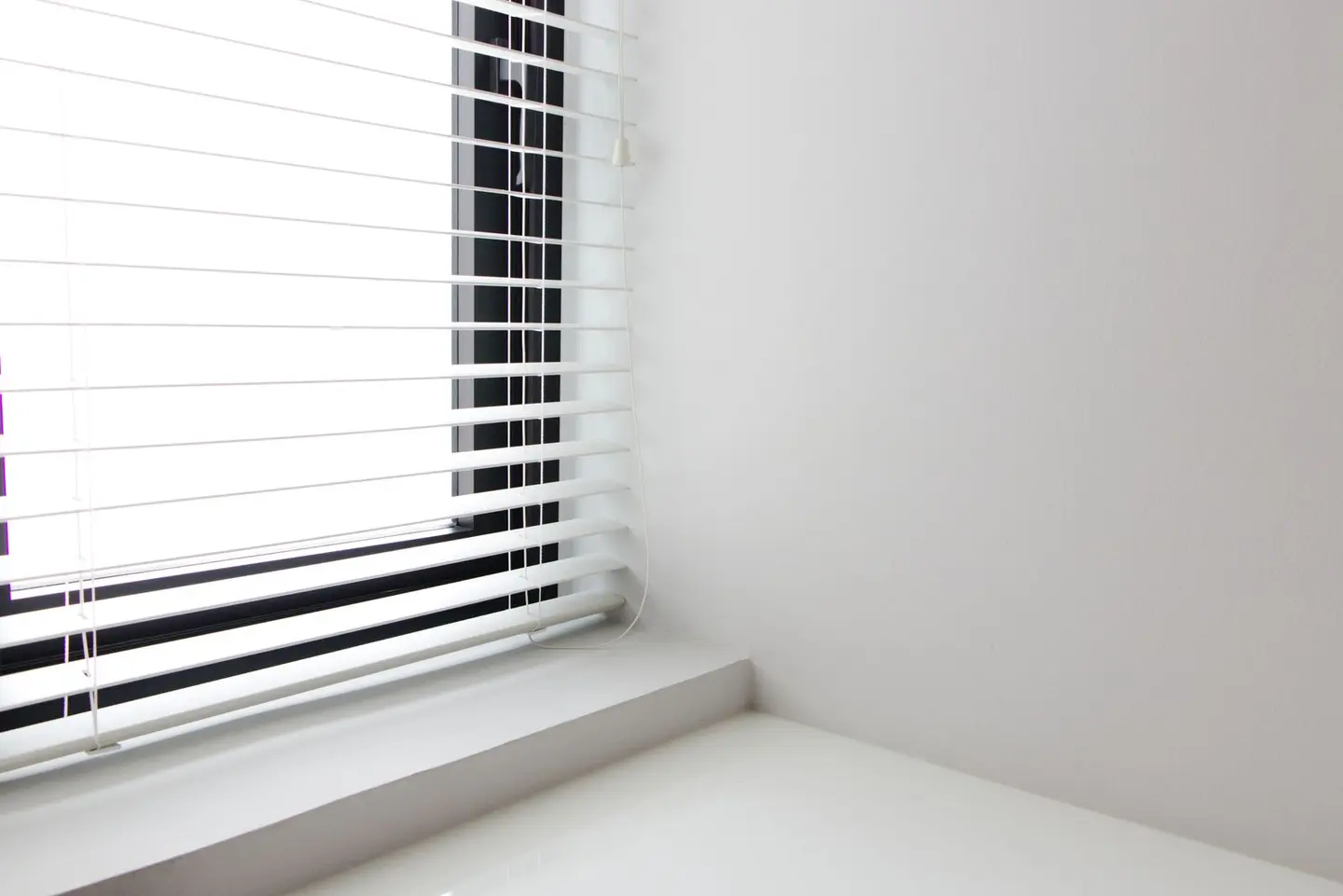
Integral blinds, built into the sealed cavity of a double or triple-glazed unit, cost between £150 and £500 per window in the UK in 2026. The blind itself sits between the panes, operated by a magnetic slider or wand on the outside of the glass. Because there is no fabric exposed to the room, integral blinds collect no dust and cannot be damaged by children or pets.
The main cost driver is whether you are replacing an existing sealed unit (the glass panel only, leaving the frame in place) or ordering whole new windows. Replacing the glazed unit is considerably cheaper than a full window replacement and is the route most people take when upgrading to integral blinds.
Integral Blind Cost by Type and Window Size
The table below covers supply-only prices for replacement glazed units with integral blinds fitted. These are 2026 UK trade and retail prices from specialist glazing suppliers.
| Blind Type | Small (up to 600×900mm) | Standard (900×1200mm) | Large (1200×1500mm) |
|---|---|---|---|
| Pleated (manual magnetic) | £150–£220 | £190–£290 | £250–£380 |
| Venetian / aluminium slat (manual) | £175–£260 | £220–£330 | £290–£430 |
| Venetian (electric / motorised) | £320–£450 | £380–£520 | £460–£680 |
| Pleated (electric / motorised) | £290–£420 | £350–£490 | £430–£640 |
These prices are for the glazed unit (glass + blind). They exclude the window frame and the cost of having the unit swapped out by a glazier.
Supply-Only vs Fitted
Supply-only means ordering the glazed unit and either fitting it yourself or having a local glazier do the work separately. This suits tradespeople and experienced DIYers. The glazed unit arrives as a single sealed piece; fitting involves removing the beading from the existing frame, sliding the old unit out, and pressing the new unit in.
Supply and fit from an integral blinds specialist typically adds £60–£150 per unit for fitting, depending on access and the number of units being replaced in one visit. It is usually worth having multiple units done in a single visit to reduce the per-unit call-out overhead.
UPVC vs Timber Frames
Integral blinds are compatible with both UPVC and timber frames, but the compatibility depends on the rebate depth (the recess in the frame that holds the glass). Integral blind units are thicker than standard double glazing, typically 28mm to 36mm versus 24–28mm for a standard unit.
Before ordering, measure your existing frame rebate depth and confirm with the supplier. Most modern UPVC frames can accommodate 28mm integral units. Older frames or slim-profile UPVC may need adapter beading.
Timber frames are generally more forgiving because beading can be replaced with a deeper profile at low cost. A joiner can rebead a timber frame for £20–£50 per window, making the transition to integral blinds simpler.
| Frame Type | Compatibility | Notes |
|---|---|---|
| Modern UPVC (post-2010) | Usually compatible | Check rebate depth, 28mm units typically fit |
| Older UPVC (pre-2000) | Sometimes needs beading upgrade | Consult supplier with frame measurements |
| Timber (casement or sash) | Highly compatible | Easy to rebead for thicker units |
| Aluminium | Varies widely | Confirm with manufacturer; some profiles too slim |
Manual vs Motorised Operation
Standard integral blinds use a magnetic wand or slider on the face of the glass to operate a magnetic mechanism inside the sealed unit. Because there is no physical connection through the glass, the seal remains intact. Manual operation is reliable and requires no power.
Motorised integral blinds use a thin electric motor inside the sealed unit, powered by a concealed wire routed through the frame. They are operated by a wall switch, remote, or smart home integration. Motorised units are useful for:
- Roof lights and rooflights where physical access is difficult
- Large windows or those high on a wall
- Whole-room automation (connecting to a smart home system such as KNX or Lutron)
Motorised units require a power supply to be run to each frame, adding electrical costs of £50–£150 per window for a qualified electrician to run cable and connect a switch.
Worked Example: Bedroom with Two Windows
Scenario: A typical double bedroom has two casement windows, each approximately 900mm × 1,100mm, in a 2004 UPVC frame. The homeowner wants to replace the existing clear double glazing with pleated integral blind units.
| Item | Cost |
|---|---|
| 2 × pleated integral blind glazed units (900×1100mm) | £420 |
| Glazier to swap units (2 units, single visit) | £180 |
| Total | £600 |
The glazier visit would typically take two to three hours for two standard casement windows with no complications.
Key Questions Before Ordering
- Frame rebate depth. Measure with a steel rule, most suppliers need to know whether the existing rebate can accept a 28mm or 36mm unit.
- Sealed unit size. Measure the glass panel size (not the overall window opening). The glass size is what the supplier needs.
- Opening type. Casement, tilt-and-turn, fixed pane, and sash windows each have different installation considerations.
- Lead time. Custom-made integral blind units are typically manufactured to order and take two to four weeks. Check before committing.
Energy Performance
Because integral blind units are thicker than standard double glazing, they can offer a marginal improvement in thermal performance, though the blind itself is not a significant insulator when open. The primary benefit is light and glare control rather than thermal efficiency. If thermal performance is the priority, consider triple glazing with or without integral blinds.
Approved Document L is explicit that replacing the glazing in an existing frame is not providing a controlled fitting, so a swapped sealed unit does not have to meet the 1.4 W/(m²K) standard set for a whole new window.1 Order complete new windows instead and that standard does apply.
In a listed building, alteration that would affect its character as a building of special architectural or historic interest needs listed building consent, and changing the glazing can cross that line.2 In a conservation area, check with your local planning authority before ordering, because an Article 4 direction can remove permitted development rights for window work.
Are Integral Blinds Worth the Cost?
Compared to external blinds or internal roller blinds, integral blinds cost considerably more upfront (a quality internal blind might be £30–£100; an integral unit is £150–£500). The case for integral blinds rests on:
- No maintenance: no cleaning, no slat replacement, no cord wear
- Child safety: no cords means no strangulation risk, which is what the child safety requirements in BS EN 13120:2009+A1:2014 are aimed at3
- Durability: the blind cannot be damaged by impact or cleaning
- Aesthetics: a clean, frameless look that suits contemporary interiors
For conservatories, kitchens, and rooms with high humidity, the no-dust and no-cord benefits are particularly compelling. For standard bedrooms or living rooms where a simple roller blind would suffice, the cost premium may be harder to justify on purely functional grounds.
References (3)
Figures in this note were checked against the sources below on 10 September 2026. Superscript numbers in the text point to them. Every source the site cites, by topic.
- 1technicalvery strongMinistry of Housing, Communities and Local Government.RN-L0FCJXThe in-force U-value tables a DIY insulation or door note must quote, with the exact numbers. Table 4.2, limiting U-values for new fabric elements in existing dwellings, sets roof 0.15, wall 0.18, floor 0.18, swimming pool basin 0.25, window 1.4 or Window Energy Rating Band B minimum, rooflight 2.2, doors with more than 60 per cent of the internal face glazed 1.4 or Doorset Energy Rating Band C minimum, and other doors 1.4 or Doorset Energy Rating Band B minimum. Table 4.3, for existing elements, gives a roof threshold of 0.35 and an improved value of 0.16, which is the figure a loft insulation note needs: paragraph 4.12 says a retained element whose U-value is higher than the column (a) threshold, for example through a loft or garage conversion, should be upgraded to the column (b) value. Paragraph 4.13 allows a lesser upgrade only where the improved value is not technically or functionally feasible or would not achieve a simple payback of 15 years or less. Paragraph 4.8 requires a replacement element to be no worse than the one it replaces as well as meeting Table 4.2. Paragraph 4.10 gives the heritage exception: where character must be maintained, a centre pane U-value of no more than 1.2 or low-emissivity secondary glazing. Note 9 records that the timber window concession of 1.6 or Band C ended on 14 June 2023. The 2021 edition came into force on 15 June 2022; a 2026 edition exists at https://assets.publishing.service.gov.uk/media/69c122a6cfa346b9d4704a55/ADL1_2026.pdf.
- 2technicalvery strongThe National Archives (legislation.gov.uk), legislation.RN-XN22L9The provision that decides when listed building consent is actually needed, and the answer to the common overstatement that any alteration to a listed building requires consent. Section 7(1): 'no person shall execute or cause to be executed any works for the demolition of a listed building or for its alteration or extension in any manner which would affect its character as a building of special architectural or historic interest, unless the works are authorised under section 8.' The trigger is therefore effect on character as a building of special architectural or historic interest, not alteration as such, so work with no effect on that character falls outside the restriction. Section 7(2) makes subsection (1) subject to section 33(1) of the Planning Act 2008, which excludes the requirement for other consents where development consent is required. Authorisation itself comes from section 8.
- 3technicalstrongBSI, a standard.RN-HMZAPSBS EN 13120:2009+A1:2014, published 28 February 2009 with Amendment 1 in 2014, committee B/538/3, current; it supersedes BS EN 13120:2004. Clause 1 specifies the requirements internal blinds must fulfil when fitted to a building, and also deals with the significant machinery hazards relating to construction, transport, installation, operation and maintenance of internal blinds, listed in Annex B. It applies whatever the design or materials, and names the covered types: venetian blinds (free hanging, guided, non-retractable), roller blinds (free hanging, side guided, tensioned fabric), vertical blinds (free hanging, top and bottom track, sloping headrail), pleated and honeycomb blinds (free hanging, guided, laterally moving, tensioned), Roman shades and Austrian or festoon blinds. This is the product standard behind the operating-cord safety requirements on new internal blinds, so cite it when comparing corded against cordless or motorised blinds.
-
Approved Document L, Conservation of fuel and power, Volume 1: Dwellings, 2021 edition incorporating 2023 amendments, Ministry of Housing, Communities and Local Government, accessed 10 September 2026. assets.publishing.service.gov.uk
-
Planning (Listed Buildings and Conservation Areas) Act 1990, section 7, legislation.gov.uk, accessed 10 September 2026. legislation.gov.uk
-
BS EN 13120:2009+A1:2014 Internal blinds. Performance requirements including safety, BSI, accessed 10 September 2026. knowledge.bsigroup.com