Air source heat pumps (ASHPs) are the most widely installed low-carbon heating system in UK homes, and with a £7,500 government grant available, they have become financially viable for many households. But they are not the right choice for every property, and understanding when they work well (and when they do not) is essential before committing to what is a significant installation.1
How Much Does an Air Source Heat Pump Cost?
An ASHP extracts heat from the outside air and concentrates it to heat your home and hot water. Even when outdoor temperatures drop to -5°C or below, a modern heat pump can still operate effectively.
Typical installed costs in 2026:
| Property type | Installed cost (inc. VAT) | After BUS grant (£7,500) |
|---|---|---|
| 2-bed flat / small terraced house | £8,000–£11,000 | £500–£3,500 |
| 3-bed semi-detached | £9,000–£13,000 | £1,500–£5,500 |
| 4-bed detached | £11,000–£17,000 | £3,500–£9,500 |
| Large detached / old farmhouse | £14,000–£22,000 | £6,500–£14,500 |
These figures include the heat pump unit itself, installation labour, hot water cylinder, controls, and associated plumbing work. They do not include radiator upgrades, underfloor heating installation, or electrical work beyond connecting the unit, these are common additional costs in older properties.
Zero VAT applies to heat pump installations until at least April 2027 under current HMRC rules.
The Boiler Upgrade Scheme (BUS)
The Boiler Upgrade Scheme provides a £7,500 grant towards the cost of an air source heat pump (and £7,500 for ground source heat pumps). The grant is applied by the installer and deducted from your invoice, you never see the money directly.
To be eligible:
- The property must be in England or Wales
- You must have a valid Energy Performance Certificate (EPC) with no outstanding recommendations for loft or cavity wall insulation
- The installer must be MCS-certified
- The existing heating system must be replaced (not supplemented)
- The property must not have received a previous BUS grant
The scheme was extended through 2028 in the 2025 Autumn Budget. Applications are processed through the installer, and there is no income limit or means test, the grant is available to all eligible homeowners.
Running Costs: The Real Picture
An ASHP is not simply “cheaper to run than a boiler.” Running costs depend heavily on:
- Your current fuel, ASHPs almost always beat oil, LPG, and storage heaters on running cost. They are less certain to beat mains gas at current tariffs.
- Your property’s insulation, a heat pump works best in a well-insulated home. Poor insulation means the system runs harder and the efficiency (COP) drops.
- Electricity tariff, the running cost calculation hinges on electricity price vs. your current fuel price. Economy 7 or heat pump-specific tariffs (such as Octopus Cosy or similar time-of-use tariffs) can significantly improve the economics.
Indicative annual heating bill comparison (3-bed semi, 2026 energy prices):
| Heating system | Typical annual cost | Notes |
|---|---|---|
| Mains gas condensing boiler | £900–£1,400 | Well-maintained, modern boiler |
| Air source heat pump (standard tariff) | £1,000–£1,600 | Average COP ~2.8 |
| Air source heat pump (TOU/off-peak tariff) | £700–£1,200 | COP assumed ~3.2 with smart controls |
| Oil boiler | £1,200–£2,000 | Oil price volatile; currently ~55–65p/litre |
| LPG boiler | £1,400–£2,200 | LPG typically 30–40% pricier than natural gas |
| Electric storage heaters | £1,600–£2,600 | Economy 7 rate assumed |
A key metric is the Coefficient of Performance (COP), for every 1 unit of electricity consumed, a heat pump delivers 2.5–4 units of heat. A modern ASHP in a well-insulated property typically achieves a Seasonal COP (SCOP) of 2.8–3.5.
Is Your Home Suitable?
Before installing an ASHP, a competent installer should carry out a heat loss calculation to size the system correctly. Key factors:
Insulation, the single most important factor. If your loft is uninsulated or your walls are solid (pre-1920 construction), insulating before installing the heat pump will substantially reduce the system size needed and your running costs. An underinsulated home may require a heat pump that is oversized and therefore less efficient.
Radiators, ASHPs work at lower flow temperatures (typically 45–55°C) than gas boilers (65–75°C). In some older properties with undersized radiators, the existing radiators will not adequately heat rooms at these lower temperatures. Larger replacement radiators may be required. Underfloor heating is ideal but rarely necessary to retrofit.
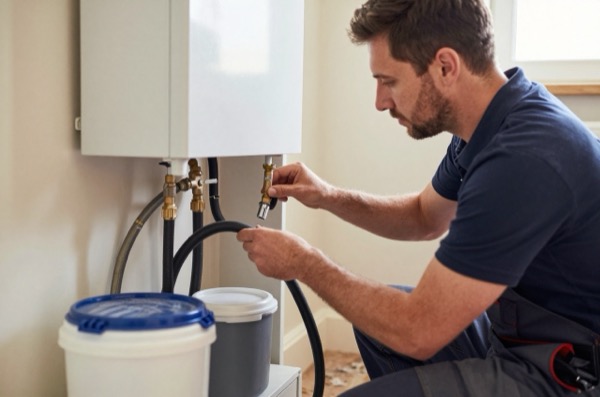
Hot water cylinder, ASHPs heat water indirectly and require a hot water cylinder (typically 180–250 litres). Homes with combination boilers will need a cylinder installed, which adds £600–£1,200 to the project cost and requires space.
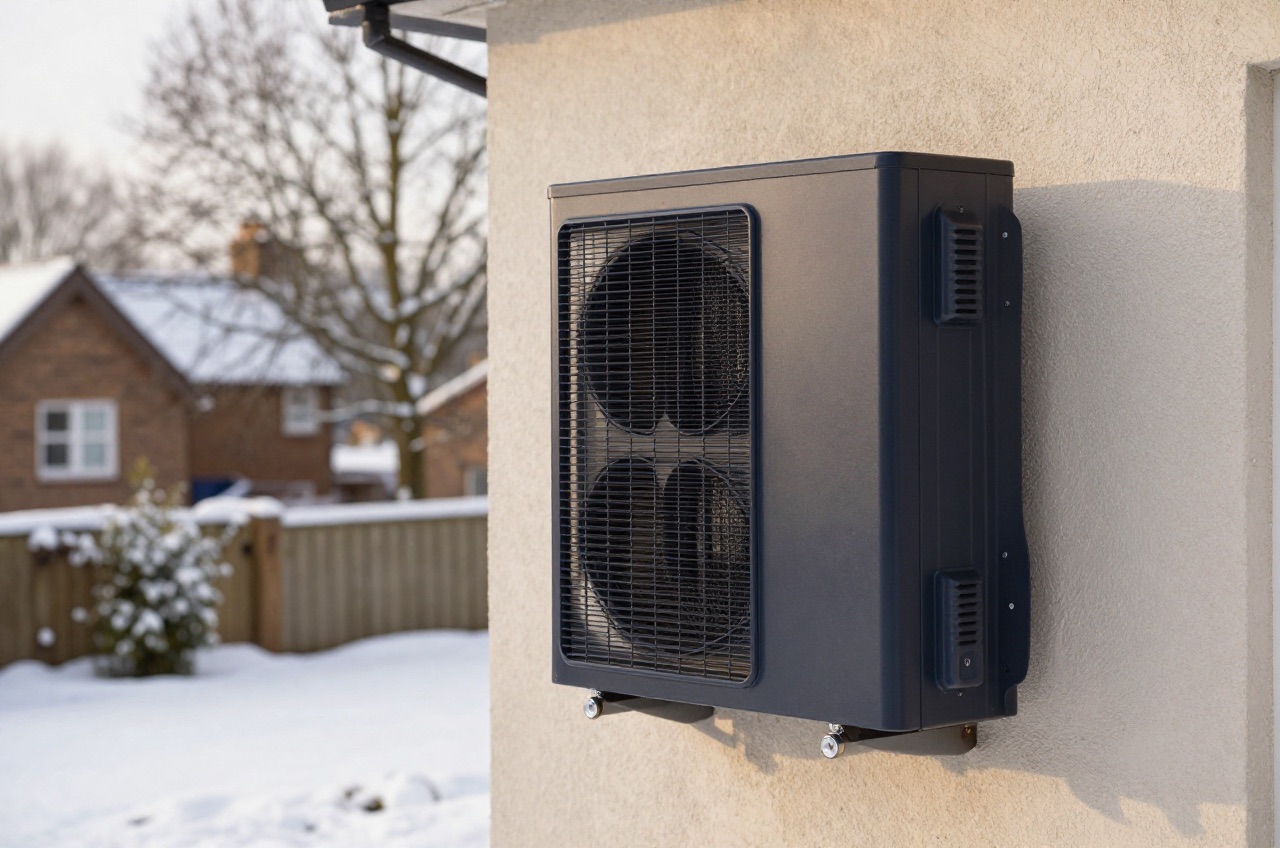
Outdoor space, the external unit (similar in size to an air conditioning condenser, roughly 1m x 1m x 1.5m) must be positioned with adequate airflow. Planning permission is not typically required for ASHPs in England as a Permitted Development right, but properties in conservation areas, listed buildings, or flats have restrictions.2
Pros and Cons
Advantages:
- Lower carbon emissions than any fossil-fuel heating system
- Significant grant available under the Boiler Upgrade Scheme
- Lower running costs than oil, LPG, and storage heaters
- Low maintenance, annual service £100–£200, no annual Gas Safe requirement
- 15–20 year equipment lifespan with proper maintenance
Disadvantages:
- Higher upfront cost even after the grant, compared with a new gas boiler (£2,000–£4,000)
- Running cost advantage over mains gas is marginal at current electricity-to-gas price ratios
- May require radiator upgrades and a new hot water cylinder
- Less effective in poorly insulated properties
- Requires MCS-certified installer (limits availability in some areas)
Finding an Installer
Use an MCS-certified installer, this is a requirement for the BUS grant. The MCS website has a postcode search for certified heat pump installers. Get at least two quotes; costs vary substantially between installers even for the same equipment. Ask each installer to provide a full heat loss calculation and system design document, not just a price.
The Heat Pump Association (HPA) and Microgeneration Certification Scheme (MCS) both publish guidance on what a competent survey and installation should include. An installer who quotes without visiting the property or carrying out a heat loss calculation should be treated with caution.
For most homes replacing oil or LPG heating in a reasonably insulated property, an air source heat pump with the BUS grant makes strong financial and environmental sense in 2026. For homes on mains gas with older, solid-wall construction, the case is more finely balanced and the insulation work should come first.
References (2)
Figures in this note were checked against the sources below on 14 September 2026. Superscript numbers in the text point to them. Every source the site cites, by topic.
- 1costvery strongGOV.UK.RN-9EFNVZA price, true at 2026-09. The grant values: £7,500 towards an air source heat pump, £7,500 towards a ground source heat pump including water source heat pumps and those on shared ground loops, and £5,000 towards a biomass boiler. A further £1,500 is available until March 2027 where the property is heated by oil or LPG and has no mains gas connection. Only one grant is available per property. Capacity limits are 45kWth for an individual system, 70kWth for multiple heat pumps and 300kWth for shared ground loops. Hybrid systems pairing a gas boiler with a heat pump are not eligible, and an existing low carbon heating system cannot be replaced under the scheme.
- 2technicalvery strongThe National Archives, legislation.RN-OWGIY3Schedule 2 Part 1 of the GPDO 2015, development within the curtilage of a dwellinghouse. This is permitted development itself: Class A enlargement and alteration, with the limits and conditions, through the classes covering roof alterations, porches, outbuildings and hard surfaces. Every statement about what can be built without planning permission traces to this Part, and the exclusions at the start of each class are where most projects actually fall out.
-
Apply for the Boiler Upgrade Scheme: What you can get, GOV.UK (Department for Energy Security and Net Zero), accessed 15 September 2026. Priced at 2026-09, so no calibration is needed. gov.uk
-
The Town and Country Planning (General Permitted Development) (England) Order 2015, Schedule 2, Part 1, The National Archives, accessed 14 September 2026. legislation.gov.uk