The alcoves either side of a chimney breast are one of the most useful, and most underused, spaces in a Victorian or Edwardian terrace. A well-fitted alcove cupboard adds meaningful storage, improves the room’s appearance, and can increase perceived property value without planning permission or Building Regulations involvement. This guide covers the main approaches, realistic 2026 costs, and what to look for in a carpenter.
Standard Alcove Dimensions
Typical Victorian terrace alcoves are 600–900 mm wide and 300–550 mm deep, although this varies considerably depending on the original build and any previous alterations. A standard chimney breast produces two symmetrical alcoves, each usually around 700 mm wide. This suits:
- Full-height cupboards (floor to ceiling, typically 2,300–2,500 mm)
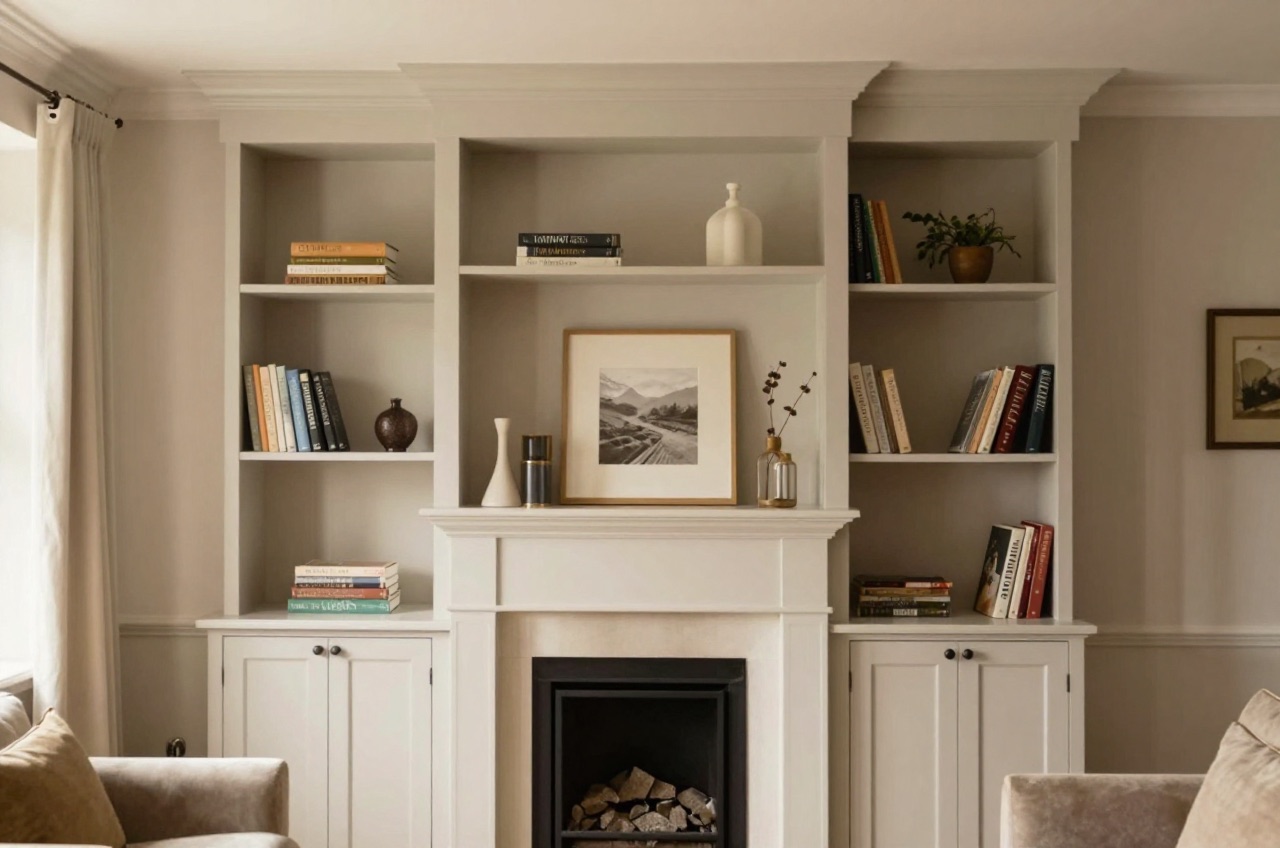
- Half-height cupboards (to dado height, ~900–1,000 mm) with open shelving above
- Purely open shelving across the full height
The narrower the alcove and the shallower the depth, the more important it is to plan for what will be stored, a 300 mm deep cupboard cannot accommodate ring binders lying flat.
Main Options and Costs
| Option | Typical Cost (per alcove, supply & fit) | Pros | Cons |
|---|---|---|---|
| Flatpack/modular units adapted to fit | £350–£700 | Cheapest; good range of finishes | Rarely fits perfectly; visible gaps possible |
| MDF painted, basic carpenter-built | £600–£1,100 | Neat fit; paintable; good value | MDF not ideal in damp areas |
| MDF painted, quality bespoke joinery | £1,000–£1,800 | Fully bespoke; soft-close; good detail | Higher cost; needs good decorator |
| Solid wood or plywood, mid-range | £1,200–£2,200 | Durable; attractive grain if stained | More expensive; longer lead time |
| Bespoke hardwood, premium | £2,000–£3,500+ | Exceptional quality; heirloom piece | Top-end cost; requires specialist joiner |
Prices for a single alcove unit, supply and installation. Painting is usually an additional £150–£350 per unit depending on number of coats and level of finish (MDF requires primer plus at least two top coats).
Design Ideas
Half-Height Cupboard with Shelving Above
The most common configuration. The lower section (to roughly 900 mm, the height of a windowsill or dado rail) provides closed storage with doors, often with adjustable internal shelving. Above this, open shelving displays books, plants, or decorative objects. This works particularly well in living rooms where the lower zone conceals clutter and the upper zone provides visual interest.
Full-Height with Glazed Top Panels
A more formal, period-appropriate look. The upper doors have glazed panels, often with divided lights using slim timber glazing bars, which display contents while providing a light, elegant appearance. Popular in Georgian and Victorian properties.
TV Alcove and Media Storage
One alcove accommodates the TV (wall-mounted or on a low unit), with the other matching in height and depth. Cable management routed through a back panel keeps the installation clean. This works best where the chimney breast itself has been lowered or where the TV height suits the alcove proportions.
Desk in an Alcove
Converting one or both alcoves into a home office nook, pull-out or fixed desk surface at ~730 mm height, with drawer units below and shelving above, is increasingly popular. A carpenter can integrate cable grommets and even an internal power strip concealed in a shelf.
What Affects the Price
Ceiling height and shape. If your ceilings are 2.7 m or higher (common in Victorian first-floor rooms), a full-height unit requires more material and more complex fitting. Curved or coved cornices at the top of the alcove add complexity.
Doors and hardware. Standard inset or overlay doors with basic hinges are cheap. Soft-close hinges add £30–£60 per door. Handleless push-to-open mechanisms add more. Shaker-profile router doors on MDF are far more costly to produce than flat slab doors but significantly better looking.
Pipework and services. If there is a gas pipe, electric socket, or speaker cable within the alcove, a carpenter will need to box it in or re-route it, budgeting an additional £80–£300 for minor services work.
Fit finish. Scribing to walls (fitting the unit to an uneven plaster wall so there are no visible gaps) takes time and skill. A high-quality carpenter will scribe and fill; a quick installation will leave visible caulked gaps.
MDF vs Solid Wood vs Plywood
MDF is the standard material for painted alcove cupboards. It takes paint very well when primed properly, machines cleanly, and is competitively priced. It is not suitable for areas with high moisture, bathrooms or utility rooms, where moisture-resistant (MR) MDF or plywood should be specified instead.
Solid wood (oak, ash, pine) gives better durability and a different aesthetic. It can be stained or oiled rather than painted. It moves more with temperature and humidity changes, which means joinery must allow for movement in the design.
Birch plywood is increasingly popular as a structural material for built-in furniture, it machines cleanly, holds screws well, and has a distinctive banded-edge appearance that suits contemporary interiors. Structurally superior to MDF for shelving spans over 600 mm.
Does It Need Building Regulations?
No. Alcove cupboards are furniture, they are not structural and do not require Building Regulations approval. They also do not require planning permission for the vast majority of homes.
If you are in a listed building, be aware that fixed joinery can technically be considered an alteration to the character of a listed building interior, though in practice this is rarely enforced for well-designed internal fitted furniture. If in doubt, contact your local conservation officer informally before proceeding.
Finding a Carpenter
Alcove cupboards are typically made and fitted by a skilled joiner or carpenter, not a flat-pack assembler. Key things to look for:
- A portfolio showing alcove work specifically, with photos of the finished installation including door fit and cornice detail
- A written specification including material type, thickness, door profile, hardware brands, and number of internal shelves
- Whether they paint or whether you need to source a decorator separately
- Lead time, quality bespoke joiners often have 6–12 week lead times
Two or three comparable quotes with matching specifications are the best way to assess value. Beware any quote that comes in significantly below others without clear explanation, it usually means thinner board stock, cheaper hardware, or a rushed fit.