Bathroom underfloor heating (UFH) is one of the most popular upgrade requests in UK renovation projects, and for good reason: cold tile floors in winter are miserable. The question most homeowners have is whether the cost justifies the comfort, and the answer depends largely on which system you choose and how your bathroom is heated already.
A small electric mat system in a 4–6 m² bathroom can be installed for as little as £300–£700 all-in, and running costs are modest if you use a timer. Wet (hydronic) systems cost considerably more upfront but integrate better with heat pumps if you’re planning a whole-home overhaul.
Electric vs Wet (Hydronic): Which System?
The majority of bathroom UFH installations in the UK use electric heating mats or cables. These are thin (3–4 mm), sit directly under tiles, and are wired to a dedicated thermostat. They are entirely self-contained, no plumber required, no manifold, no new pipework.
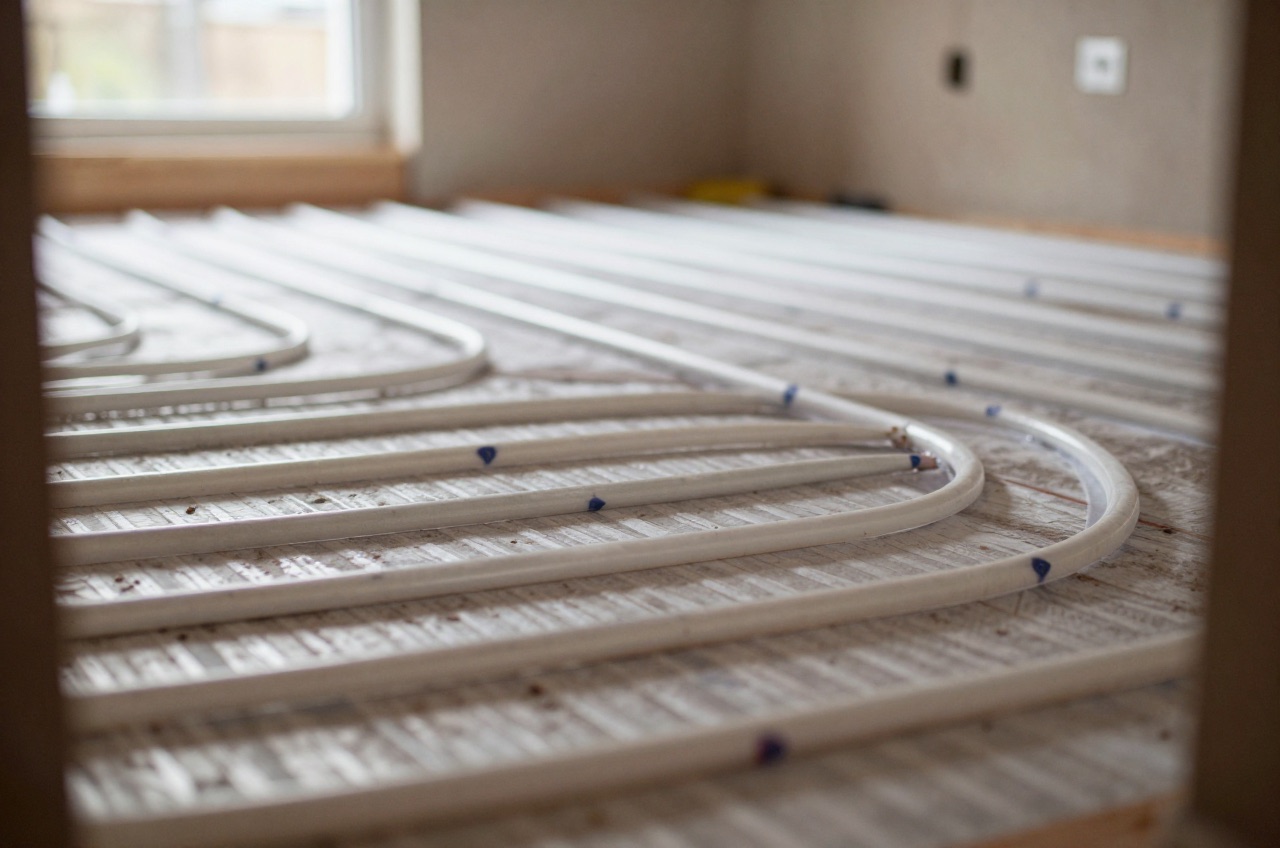
Wet systems circulate warm water through pipes embedded in the floor screed. They’re more efficient per unit of heat when connected to a heat pump or condensing boiler, but they’re significantly more disruptive to install and rarely make economic sense in a bathroom alone.
| Feature | Electric Mat | Wet (Hydronic) |
|---|---|---|
| Typical install cost (bathroom) | £300–£700 | £800–£2,000+ |
| Floor build-up | 3–4 mm | 50–100 mm screed |
| Trades required | Electrician | Plumber + electrician |
| Best heat source | Direct electricity (off-peak tariff) | Boiler, heat pump |
| Running cost (small bathroom) | £50–£120/yr | £20–£60/yr |
| Warmup time | 20–40 min | 1–3 hours |
| Good for retrofit? | Yes | Rarely |
For almost every bathroom renovation in the UK, electric is the sensible choice unless you’re already installing a ground-source or air-source heat pump across the whole house.
Electric Underfloor Heating: Costs Broken Down
Supply costs
- Heating mat (150 W/m²): £15–£35/m² depending on brand and wattage1
- Thermostat with programmer: £50–£200 (basic dial to smart WiFi)
- Membrane/decoupling board (optional but recommended): £10–£20/m²
Installation labour
Electricians typically charge £200–£400 to wire and commission a bathroom UFH system, including fitting the thermostat and testing with a floor sensor. Tilers may charge a small premium (£30–£80) to lay tiles over a mat rather than a plain screed, or nothing at all if you’ve priced it in from the start.
Total installed cost by bathroom size
| Bathroom Size | Mat Supply | Thermostat | Labour | Total |
|---|---|---|---|---|
| Small (3–4 m²) | £60–£120 | £80–£150 | £200–£350 | £340–£620 |
| Medium (5–7 m²) | £90–£200 | £80–£150 | £250–£400 | £420–£750 |
| Large (8–12 m²) | £150–£350 | £80–£200 | £300–£450 | £530–£1,000 |
Note: these are floor area costs, you don’t heat under fixed furniture like vanity units or WC pedestals, so heated area is typically 60–80% of floor area.
Running Costs
A 150 W/m² mat over 5 m² of heated area runs at 750 W. If you run it for 1.5 hours each morning via a timer:
- Daily consumption: 750 W × 1.5 hrs = 1.125 kWh
- At 26.11p/kWh (Ofgem price cap to 30 September 2026): 29p/day
- Annual cost (365 days): ~£107/year
In practice, a good thermostat with frost protection and a 30-minute pre-heat timer will keep actual usage below this. Smart thermostats that learn your routine (such as those compatible with the Hive or tado° ecosystems) can cut running costs by 10–25%.
If you’re on an Economy 7 or Cosy Octopus-style tariff with cheap overnight rates, running a bathroom UFH on off-peak power can halve the effective unit cost.
Building Regs and Installation Requirements
Electric underfloor heating in a bathroom falls under Part P of the Building Regulations (Electrical Safety). This means:
- Any new circuit supplying the UFH is notifiable: it must either be carried out by a registered competent person who self-certifies it, or be notified to Building Control on a Building Notice before the work starts.
- The circuit must be RCD-protected (usually a 30 mA RCD or RCBO).
- The floor sensor must be positioned correctly (typically between heating elements, not above them).
- The mat must not be installed under baths or shower trays.
A registered electrician (NICEIC, NAPIT or another scheme authorised by government) will handle all notification automatically. If a main contractor or tiler installs the mat, the electrical connection must still be made by a registered competent person.
Is It Worth It?
In purely financial terms, bathroom underfloor heating does not pay for itself through energy savings, it’s a comfort upgrade, not an energy-saving measure. The question is whether the comfort is worth the outlay.
Arguments for:
- Cold tile floors in autumn and winter are a significant quality-of-life issue for most people
- A heated floor also dries the room faster, reducing condensation and damp risk on grout and silicone
- Electric systems add little weight and no floor height in most cases (3–4 mm under tiles)
- Well-installed systems have a 25–30 year lifespan
Arguments against:
- If your bathroom is very small (under 3 m²) the cost-per-benefit ratio is poor
- If the bathroom is above a well-insulated space, heat loss downward is minimal, but much of your heat still goes down unless you use a decoupling membrane with insulation
- Adding a system during a full retile is cheap; adding it later means removing existing tiles
The verdict: if you’re already retiling a bathroom, adding electric UFH is almost always worth it. The mat costs £60–£200 in materials, and the electrical work adds £200–£400. That’s a permanent comfort upgrade for £300–£600 during work that already costs thousands. Retrofitting to an existing tiled floor is harder to justify unless you’re redoing the floor anyway.
Choosing a Thermostat
The thermostat matters as much as the mat. A basic dial thermostat (£30–£60) is functional but wasteful, it runs on air temperature, not a floor sensor. Better options:
- Dual-sensor thermostat (£60–£120): uses both air and floor sensors; more responsive and efficient
- Programmable digital (£80–£150): set daily schedules; best for regular routines
- Smart WiFi thermostat (£120–£200): app control, geo-fencing, energy monitoring; worth it if you travel frequently
Always ensure the thermostat is rated for the wattage of your mat, most single-bathroom mats are well within the standard 3,600 W limit.
What to Watch For
- Insulation board: Without a layer of 6–10 mm insulation board beneath the mat, a significant proportion of heat goes into the subfloor rather than up through the tile. Aluminium-faced boards cost £10–£20/m² and are always worth adding.
- Tile adhesive compatibility: Standard flexible tile adhesive is generally fine, but check the mat manufacturer’s guidelines, some specify a minimum bed thickness.
- Cold spots: After installation and before grouting, run the system for 30 minutes and feel across the floor for uneven heating. Twisted or crossed elements are a known installer error.
- Guarantee registration: Most mat manufacturers (Warmup, Nuheat, Flexel) require online registration within 30 days for the 25-year guarantee to apply.
The rules in this note are those that apply in England. Scotland, Wales and Northern Ireland have their own building standards and permitted development rights.
References (1)
Figures in this note were checked against the sources below on 14 September 2026. Superscript numbers in the text point to them. Every source the site cites, by topic.
- 1costsupplier figureScrewfix.RN-B1U3CTA price, true at 2026-09. the retail price Screwfix publishes for Underfloor Heating Mats, which is the supply figure the cost book records for this item
-
Underfloor Heating Mats, Screwfix, accessed 15 September 2026. Priced at 2026-09, so no calibration is needed. screwfix.com