Choosing between blinds, curtains, and shutters comes down to four things: your budget per window, how much light control you need, the room’s function, and the look you’re after. Each solution has a distinct cost range, a different thermal performance profile, and a different fit for different rooms, there is no single right answer for every window in a house.
UK homes typically use a combination: shutters or blinds in kitchens and bathrooms where moisture is a factor, curtains in bedrooms and living rooms where softness and warmth matter, and sometimes both together (a blind for daytime privacy plus curtains for evening warmth and blackout).
Types of Window Blind
Roller blinds are the simplest and cheapest option. A single piece of fabric rolls onto a tube mounted above the window. They suit most rooms, are easy to clean, and work with moisture-prone spaces if you choose a PVC-coated or water-resistant fabric. Blackout roller blinds are effective in bedrooms. Cost: roughly £10–£60 per window for off-the-shelf sizes; made-to-measure typically £40–£250.
Venetian blinds (horizontal slats in aluminium, wood, or faux wood) offer very precise light control, slats tilt to adjust the angle of incoming light without fully closing. Wooden venetians look well in living rooms; aluminium is more practical in kitchens and bathrooms. Cost: £40–£350 per window, with real wood at the top of the range.
Roman blinds are a fabric blind that folds into horizontal pleats when raised. They sit neatly in the recess or just above the window frame and give a clean, tailored look. Thermal lining can be specified. They are harder to clean than roller or venetian blinds. Cost: £80–£400 per window made-to-measure; ready-made roman blinds start at around £30–£100.
Vertical blinds (fabric or PVC slats that rotate and stack to one side) are functional but rarely used in residential settings now. They suit wide windows and patio doors. Cost: £50–£180 per window.
Day/night (zebra) blinds alternate sheer and opaque horizontal stripes. When the stripes align you get a sheer effect; offset them for full privacy. Increasingly popular as a replacement for net curtains. Cost: £60–£200 per window.
Types of Curtain
Unlined curtains allow light to filter through and suit casual spaces, a utility room, a landing, or a room where blocking light is not important. They offer minimal thermal benefit. Cost: £30–£120 per pair.
Lined curtains add a separate fabric backing that protects the face fabric from UV, improves hang, and provides a modest thermal benefit. Standard lining is the baseline for most bedroom and living room curtains. Cost: £80–£300 per pair (ready-made); made-to-measure typically £150–£600+ per pair depending on fabric.
Interlined curtains add a layer of bump or domette between face fabric and lining. This significantly improves thermal and acoustic performance. They are heavier, hang better, and last longer. Cost: £180–£1,200+ per pair made-to-measure.
Blackout curtains use a rubberised or foam-coated lining that blocks virtually all light. Essential for bedrooms, nurseries, and home cinema rooms. Cost: £60–£200 per pair ready-made; £150–£500+ made-to-measure.
Eyelet, pencil pleat, and pinch pleat are heading styles that affect how the curtain gathers on the track or pole, not the fabric type. Eyelet headings (rings punched into the top of the curtain) are the easiest to hang and most contemporary; pencil pleat is traditional and highly adjustable; pinch pleat gives a formal, structured look.
Types of Shutter
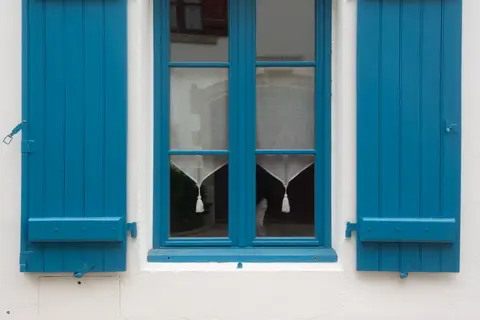
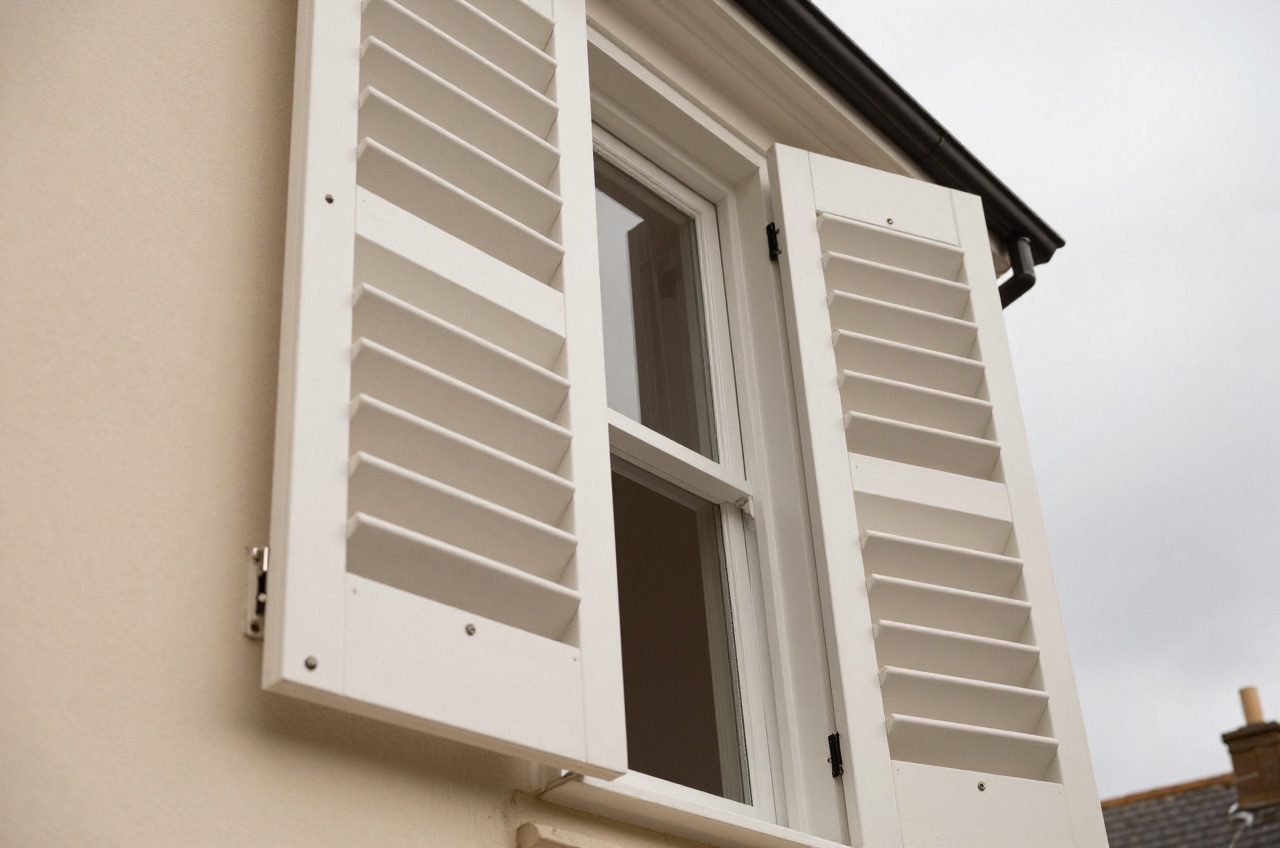
Plantation shutters are the most popular residential shutter type in the UK. They have wide louvres (typically 63mm or 76mm) mounted in a hinged frame that fits the window recess. They can be tilted for light control or folded back fully to open the window. Available in MDF (moisture-resistant version for bathrooms), real wood, and PVC. Cost: roughly £280–£410 for a standard 900 × 1,200 mm window supplied and fitted; bay windows are priced on the combined area of every face, so often cost £750–£1,100 or more.
Solid shutters (panel shutters) have no louvres, they are flat panels that fold back from the window. They give complete blackout and are well-suited to period properties. Cost: £280–£500 per window fitted.
Tier-on-tier shutters divide the window into two independent sections, the bottom panels can be closed for privacy while the top is open for light. Well-suited to ground-floor rooms facing the street. Cost: £280–£500 per window fitted.
Café-style shutters cover only the bottom half of the window. They give privacy without blocking overhead light, common in Victorian terraces with sash windows. Cost: £100–£300 per window fitted.
Cost Comparison by Window
| Window Dressing | Budget (per window) | Mid-Range | Premium |
|---|---|---|---|
| Roller blind | £30–£80 | £80–£150 | £150–£300 |
| Venetian blind (aluminium) | £40–£80 | £80–£150 | £150–£250 |
| Venetian blind (real wood) | £70–£120 | £120–£200 | £200–£350 |
| Roman blind (made-to-measure) | £80–£150 | £150–£250 | £250–£400+ |
| Unlined curtains (pair) | £30–£80 | £80–£180 | £180–£400 |
| Lined curtains (pair) | £80–£180 | £180–£350 | £350–£700+ |
| Interlined curtains (pair) | £180–£350 | £350–£600 | £600–£1,200+ |
| Plantation shutters (fitted) | £250–£3001 | £300–£420 | £420–£800+ |
| Solid panel shutters (fitted) | £280–£350 | £350–£500 | £500–£900+ |
Prices are supplied-and-fitted for made-to-measure where relevant. Ready-made standard sizes are usually much cheaper.
Shutters are usually priced per square metre. One fitter’s 2026 rate card starts at £260 per m² including VAT, survey, supply and fitting, and runs to £380 per m² for hardwood, so a standard 900 × 1,200 mm window (about 1.1 m²) comes to roughly £280–£410.1
Thermal Performance
Curtains, particularly interlined curtains that reach the floor and overlap the window frame, are the easiest way to add a thermal barrier. The still-air layer trapped between the glass and the fabric is a significant insulator. Historic England’s research on traditional windows found that curtains, interior shutters and blinds can all significantly reduce heat loss.2
Blinds sit closer to the glass and trap less air, making them less thermally effective. A cellular (honeycomb) blind, however, creates multiple air pockets within the blind itself and performs noticeably better, which makes it worth considering if you prefer a minimal look.2 Thermal lining on roman blinds also improves performance beyond a standard roller blind.
Closed interior shutters can perform well: Historic England notes that they are effective in reducing heat loss at night.2 Louvred plantation shutters seal less completely than solid panels or a floor-length curtain, because air can pass between the louvres. They do, however, add a layer of insulation on cold nights when louvres are closed.
Under Building Regulations Approved Document L, 2021 edition, a new or replacement window in an existing home should achieve a U-value of 1.4 W/m²K or better (or Window Energy Rating Band B).3 For older windows that fall well short of that, better window dressing is a low-cost interim measure while a full replacement is considered.
Light Control
| Dressing | Full Blackout | Privacy with Light | Adjustable Light Angle |
|---|---|---|---|
| Blackout roller blind | Yes | Yes (partial) | No |
| Standard roller blind | No | Yes | No |
| Venetian blind | Near-blackout when closed | Excellent | Yes |
| Roman blind | No (unless blackout lined) | Yes | No |
| Blackout curtains | Yes (when closed fully) | No | No |
| Interlined curtains | Near-blackout | No | No |
| Plantation shutters | Near-blackout | Excellent | Yes (louvres) |
| Café shutters | Lower half only | Excellent | Yes |
Which Room Suits Which?
Bedroom: Blackout is usually the priority. Blackout roller blinds are the budget option; blackout curtains give a softer, warmer feel; plantation shutters with solid panels or tight-closing louvres are the premium solution. Combining a blind for blackout with curtains for warmth and aesthetics is the most practical approach in a principal bedroom.
Kitchen: Avoid heavy fabric, it absorbs cooking smells and grease. PVC roller blinds or aluminium venetians are easy to wipe down. Plantation shutters in MDF are a popular premium option. Avoid roman blinds unless the window is well away from the hob.
Bathroom: Choose moisture-resistant materials: PVC shutters, waterproof roller blind fabric, or aluminium venetians. Avoid real wood, unlined fabric, or MDF shutters not specifically rated for wet environments.
Living room: Curtains reign here for thermal performance and visual warmth. Plantation shutters are increasingly popular for a contemporary living room because they add architectural interest and age well. Day/night blinds work well as a net curtain replacement in street-facing rooms.
Home office: Venetian blinds offer the best control for reducing screen glare without fully blocking daylight. Avoid full blackout unless you have artificial lighting adequate for work.
Durability and Maintenance
Plantation shutters, properly installed, are a long-lived fitting. They do not need replacing when you redecorate. Curtains and blinds are inherently softer investments: fabric fades, mechanisms wear, and styles date.
Roller and venetian blinds can be wiped clean. Roman blinds and curtains need dry cleaning or careful hand washing for lined/interlined versions. Shutters need only an occasional wipe with a damp cloth.
When calculating lifetime cost, shutters’ higher upfront price is often justified over a 10-year horizon compared with replacing curtains or blinds twice in the same period.
The rules in this note are those that apply in England. Scotland, Wales and Northern Ireland have their own building standards and permitted development rights.
References (3)
Figures in this note were checked against the sources below on 30 September 2026. Superscript numbers in the text point to them. Every source the site cites, by topic.
- 1costsupplier figureShutters Design.RN-8NZSKFA price, true at 2026-09. Shutters Design publishing its own price guidance for this work. A trade supplier writing about what it charges is evidence of the market rate and not a quotation, and the cost book treats it as one figure among several rather than on its own
- 2technicalvery strongHistoric England, guidance.RN-3418JTHistoric England's retrofit advice on windows and doors, summarising its research into the thermal performance of traditional windows, which found curtains, interior shutters and blinds significantly reduce heat loss.
- 3technicalvery strongMinistry of Housing, Communities and Local Government.RN-L0FCJXThe in-force U-value tables a DIY insulation or door note must quote, with the exact numbers. Table 4.2, limiting U-values for new fabric elements in existing dwellings, sets roof 0.15, wall 0.18, floor 0.18, swimming pool basin 0.25, window 1.4 or Window Energy Rating Band B minimum, rooflight 2.2, doors with more than 60 per cent of the internal face glazed 1.4 or Doorset Energy Rating Band C minimum, and other doors 1.4 or Doorset Energy Rating Band B minimum. Table 4.3, for existing elements, gives a roof threshold of 0.35 and an improved value of 0.16, which is the figure a loft insulation note needs: paragraph 4.12 says a retained element whose U-value is higher than the column (a) threshold, for example through a loft or garage conversion, should be upgraded to the column (b) value. Paragraph 4.13 allows a lesser upgrade only where the improved value is not technically or functionally feasible or would not achieve a simple payback of 15 years or less. Paragraph 4.8 requires a replacement element to be no worse than the one it replaces as well as meeting Table 4.2. Paragraph 4.10 gives the heritage exception: where character must be maintained, a centre pane U-value of no more than 1.2 or low-emissivity secondary glazing. Note 9 records that the timber window concession of 1.6 or Band C ended on 14 June 2023. The 2021 edition came into force on 15 June 2022; a 2026 edition exists at https://assets.publishing.service.gov.uk/media/69c122a6cfa346b9d4704a55/ADL1_2026.pdf.
-
Plantation Shutter Price List and Quote Guide (2026), Shutters Design, accessed 15 September 2026. Priced at 2026-09, so no calibration is needed. shuttersdesign.co.uk
-
Modifying Historic Windows as Part of Retrofitting Energy-Saving Measures, Historic England, accessed 30 September 2026. historicengland.org.uk
-
Approved Document L, Conservation of fuel and power, Volume 1: Dwellings, 2021 edition incorporating 2023 amendments, HM Government, accessed 7 September 2026. assets.publishing.service.gov.uk