Rising damp, groundwater being drawn up through porous masonry by capillary action, is one of the most discussed damp problems in UK renovation, and also one of the most misdiagnosed. When it is genuine, two main treatments are available: DPC injection (a chemical damp-proof course) and physical damp-proof membranes (tanking or cavity drain systems). Choosing the right one depends on how severe the problem is, what the wall construction is, and what the finished space needs to do.
The first step is always an accurate diagnosis. Many cases labelled “rising damp” are actually condensation, penetrating damp from above, or hygroscopic salts drawing moisture from the air, none of which respond to damp-proofing treatments. A qualified surveyor using a calibrated carbide meter (not just a surface electrical meter) can confirm true rising damp before you spend money on remediation.
How Rising Damp Happens
In solid brick and stone walls (most pre-1920 UK housing), there is either no original damp-proof course or one that has broken down. Groundwater wicks up through mortar joints by capillary action, typically to a height of 600–900 mm above ground level (the tide mark). You see:
- A tide mark with salt crystallisation and blown or stained plaster
- Damp patches that are worse in winter and closer to ground level
- Peeling wallpaper and paint at low level
- A musty smell at floor level
Salts deposited by rising damp (nitrates, chlorides, sulphates) are hygroscopic, they absorb moisture from the air, which means even after the source is treated, re-rendered walls can still feel damp for 6–18 months until the salts are sealed or replaced.
DPC Injection: How It Works
Chemical injection installs a new damp-proof course by drilling a series of 12–22 mm holes at 120 mm centres along the mortar course (or low in the masonry), typically 150 mm above external ground level. A silicone-based cream or solution is injected into each hole. The product cures to form a water-repellent zone across the wall thickness, breaking capillary pathways.
Cream systems (now the industry standard, superseding older fluid injection) are pressure-injected or hand-applied. They cure over 2–4 weeks without the dripping waste of older fluid methods. Major product families include Wykamol, Safeguard, and Delta systems, all broadly similar in performance when correctly applied.
Following injection, existing damp plaster must be hacked off and replaced with renovating plaster (salt-resistant, with a float coat of sand/cement render before the finishing coat). Skipping replastering is the most common reason DPC injection appears to “fail”, the salts in old plaster continue to draw moisture regardless of the new DPC.
| Factor | Detail |
|---|---|
| Suitable wall types | Solid brick, stone, some cavity walls (if cavity is bridged) |
| Holes required | Yes, 12 mm at 120 mm centres |
| Cure time before replastering | 4–6 weeks minimum |
| Guarantee | Typically 20–30 years (check CIGA-backed schemes) |
| Typical cost (whole terrace front/rear wall, ~12 m) | £400–£1,200 (injection only) |
| Replastering (same area, both sides) | £1,500–£3,500 additional |
Physical Membranes: Cavity Drain and Tanking
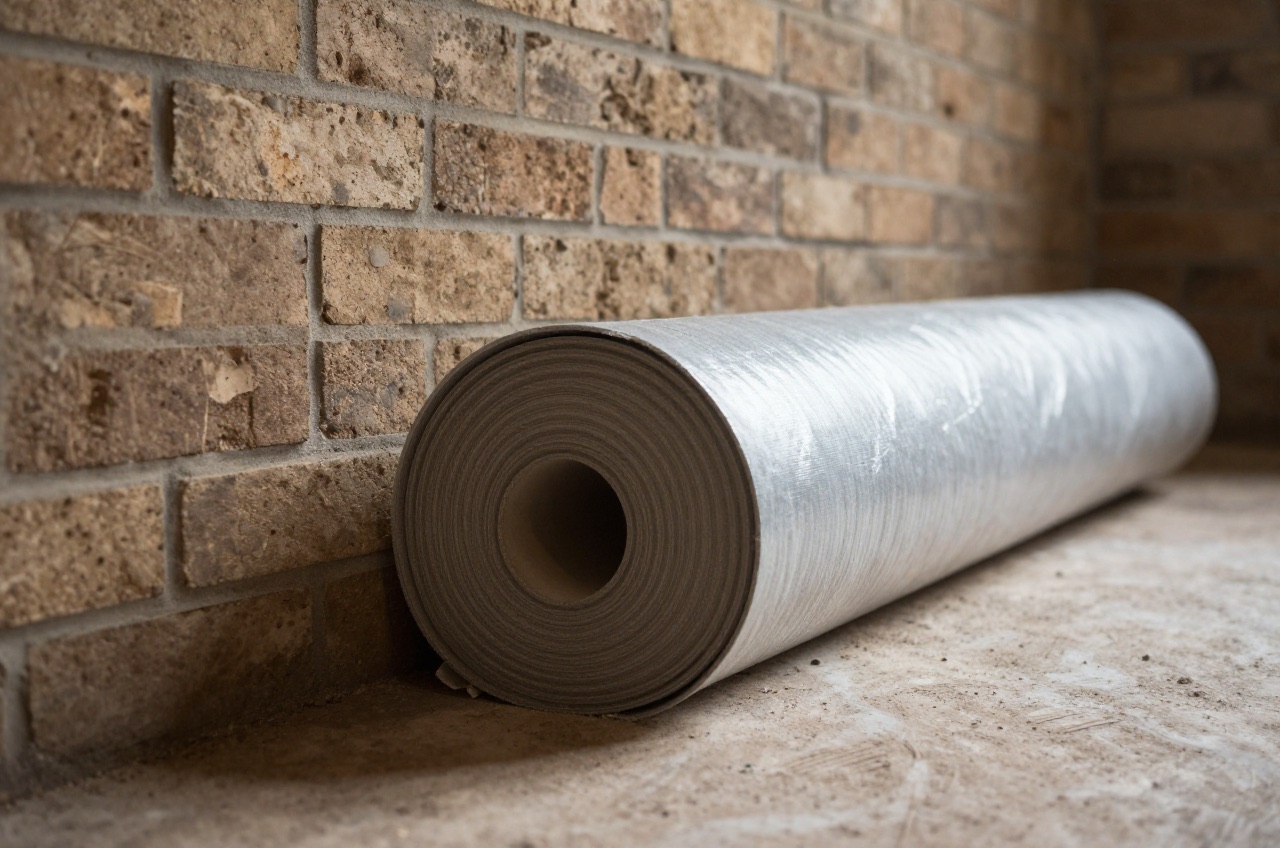
Cavity drain membranes (also called egg-cup or studded membranes) are mechanically fixed to the face of a damp wall, creating an air gap that allows moisture to drain to a channel at floor level and out via a sump pump or gravity to a drain. They do not stop water entering the wall, they manage it.
Tanking slurry (cementitious waterproofing) is applied directly to the wall face as a physical barrier. It bonds to the substrate and resists water pressure from behind. It is more common in basements below water table where hydrostatic pressure makes cavity drain impractical.
Which physical system suits which situation:
| Situation | Recommended system |
|---|---|
| Basement below water table, hydrostatic pressure | Tanking slurry (Type A BS 8102) |
| Basement or cellar, retro-fit, some water ingress | Cavity drain membrane + sump (Type C BS 8102) |
| Ground-floor solid wall, severe rising damp | Cavity drain at low level, or injection + tanking combination |
| Listed building (lime walls) | Cavity drain preferred; injection where mortar course accessible |
Cost comparison for a full cellar conversion (approx. 40 m² floor area, 2.2 m walls):
| System | Approximate installed cost |
|---|---|
| Cavity drain membrane + sump pump + channel | £4,000–£9,000 |
| Cementitious tanking (full wall and floor) | £5,000–£12,000 |
| DPC injection to ground-floor walls (domestic) | £400–£1,200 |
Injection vs Membrane: Which to Choose
| Criterion | DPC Injection | Physical Membrane |
|---|---|---|
| Best for | Ground floor rising damp, typical solid-wall terraces | Basements, cellars, severe or complex cases |
| Stops water at source? | Yes (capillary break) | No (manages water instead) |
| Disruption | Moderate, drilling and replastering | High, wall prep, chasing channels, sump installation |
| Listed buildings | Acceptable with care (check with conservation officer) | Often preferred as more reversible |
| Long-term maintenance | Low | Sump pump requires annual checking |
| Cost (typical ground floor terrace) | £2,000–£4,500 all-in including replaster | £3,500–£7,000 all-in |
| Guarantee | 20–30 years (CIGA scheme) | 10–25 years depending on installer |
For the typical UK semi or terraced house with rising damp in ground-floor solid walls, DPC injection followed by renovating plaster is the standard and cost-effective solution. For basements and cellars, particularly where water table is high or penetrating damp is also a factor, a cavity drain or tanking system is more appropriate.
What Building Regulations Require
Rising damp treatment itself does not trigger Building Regulations submission in most cases, as it falls under repair and maintenance. However, if the work forms part of a material change of use (converting a cellar to habitable space, for example), Part C (Site preparation and resistance to contaminants and moisture) will apply. A newly created habitable room must demonstrate adequate moisture resistance at walls and floor.1
Red Flags and Rogue Practices
The UK damp-proofing sector has a poor reputation for overselling. Be cautious of:
- Electrical meter readings only, these surface readers are affected by salt and plaster type, not just moisture. Insist on a carbide meter (destructive test) for a definitive diagnosis.
- Treating without replastering, injection cannot work if contaminated plaster is left in place.
- Injection into cavity walls, if the cavity is clear and dry, rising damp is unlikely. If the cavity is bridged (rubble, mortar), clearing the bridge is the correct fix.
- Guarantees without insurer backing, check the guarantee is backed by the CIGA (Certificated Guarantee Insurance Agency) or equivalent.
Get at least two independent surveys from surveyors with no remediation arm to their business before commissioning treatment.
References (1)
Figures in this note were checked against the sources below on 14 September 2026. Superscript numbers in the text point to them. Every source the site cites, by topic.
- 1technicalvery strongMinistry of Housing, Communities and Local Government.RN-NPO8FJThe statutory figures behind a damp diagnosis, and the numbers to quote when a note explains why ground levels or a bridged damp proof course cause rising damp. Paragraph 5.2 requires that in an external wall the damp-proof course should be at least 150mm above the level of the adjoining ground (Diagram 8) unless part of the building protects the wall, and that in an external cavity wall the cavity should be taken down at least 225mm below the level of the lowest damp-proof course, or a damp-proof tray provided (Diagram 9a). For suspended timber ground floors it requires a ventilated air space of at least 75mm from the ground covering to the underside of any wall-plates and at least 150mm to the underside of the suspended timber floor or insulation, with ventilation openings on two opposing external walls of not less than 1,500mm2 per metre run of external wall or 500mm2 per square metre of floor area, whichever is greater; for suspended concrete floors the clear ventilated space is at least 150mm with the same opening sizes. Section 2.39 onwards covers radon, referring to BRE Report BR 211 for protective measures. The 2013 edition was published on 3 September 2013 with changes in effect from 1 October 2013.
-
Approved Document C, Site preparation and resistance to contaminants and moisture, 2004 edition incorporating 2010 and 2013 amendments, Ministry of Housing, Communities and Local Government, accessed 14 September 2026. assets.publishing.service.gov.uk