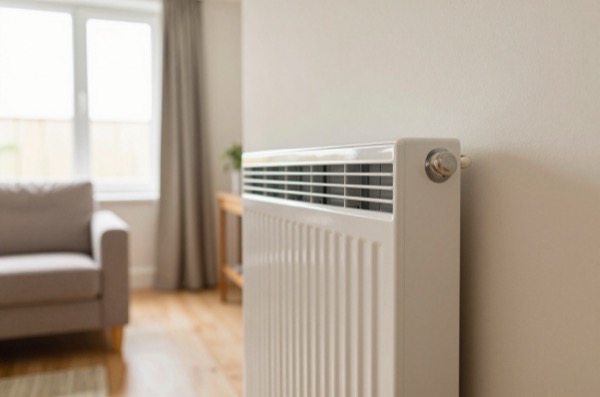
Radiator covers are a popular way to hide the utilitarian appearance of panel radiators, particularly in period properties where Victorian column radiators have been replaced with modern steel panels. The concern that covers reduce heating efficiency is valid, but it depends almost entirely on design. A well-specified cover with an open grille front, a reflective foil back panel, and unobstructed top can actually marginally improve radiated heat distribution. A poorly ventilated box will reduce output meaningfully.
Do Radiator Covers Reduce Heat?
This is the central question. The short answer: it depends on the design.
A central heating radiator emits heat by two mechanisms, convection (warm air rising over the surface) and radiation (heat emitted as infrared). A standard double panel convector radiator (the type fitted in most UK homes since the 1980s) relies heavily on convection. Any cover that restricts airflow over the panel will reduce convective output.
What Good Design Looks Like
- Open front grille: slatted timber, laser-cut MDF, or perforated steel. The more open area, the less restriction on airflow.
- Open top: warm air must be able to escape from the top of the cover freely. A solid-topped cover with a narrow gap will trap hot air and reduce output.
- Reflective back panel: a foil-backed layer between the radiator and the external wall reflects radiated heat back into the room rather than losing it to the wall.
- Unobstructed bottom: cool air must be able to enter at floor level.
If these four features are present, heat loss from a cover is typically 5–10% at most, and for some designs it is negligible. The Energy Saving Trust estimates that well-designed covers cause 5–7% output reduction, while poorly ventilated covers can reduce output by 15–25%.
Cost Overview
| Type | Price Range | Notes |
|---|---|---|
| Flatpack MDF, off the shelf | £50–£120 | Standard sizes; white paintable; basic grille |
| Painted MDF, mid-range ready-made | £100–£200 | Better grille design; some with shelves |
| Solid pine or oak, ready-made | £180–£350 | Better aesthetics; real wood shelf |
| Bespoke MDF, carpenter-built | £250–£500 | Made-to-measure; custom grille; integrated shelf |
| Bespoke hardwood, premium | £400–£800+ | Oak, ash, or painted solid wood; heirloom finish |
Ready-made covers are available in standard widths (usually 400–1,600 mm in 100 mm increments) and depths (typically 200–280 mm). If your radiator is non-standard or you want a cover to span a full wall bay, a carpenter-built bespoke cover is usually the only option.
Materials
MDF is the most common material for painted covers. It machines cleanly, accepts paint well (primer plus two coats of eggshell), and is cost-effective. The grille panels are typically router-cut from 6mm MDF or 9mm sheet. Avoid MDF in bathrooms or damp rooms, use moisture-resistant MDF or exterior-grade plywood.
Solid pine is a common choice for the main structure when a natural wood finish is preferred. It takes stain or oil well. Grilles are often router-cut hardwood or laser-cut in MDF.
Real oak or ash is used for premium covers. These take a beautiful stained or oiled finish and wear well over decades. Cost premium is significant.
Laser-cut steel or brass grilles are available from specialist suppliers and can be fitted into timber frames. These give a more contemporary or industrial look, with very high open-area ratios that minimise airflow restriction.
Ideas and Design Options
Alcove Radiator Cover
If your radiator sits in an alcove, a built-in cover that matches alcove cupboards on either side of a chimney breast creates a fully fitted look. The cover becomes part of the joinery scheme, with a shared shelf or shelf detail at cornice level.
Shelf-Top Cover
A deep cover with a timber shelf on top creates useful surface space, commonly used in hallways for keys, post, and lamps. The shelf should overhang the cover front by 20–40 mm and must be at least 50 mm above the top of the radiator grille to allow adequate airflow.
Bench Radiator Cover
In hallways or under windows, a bench-height cover (450–500 mm) with a cushioned lid creates a window seat. This design is particularly popular under bay windows. Vented sides and a slatted lid maintain reasonable airflow.
Period-Style Column Radiator Covers
If you have a Victorian property with a genuine cast-iron column radiator, a radiator cover is rarely appropriate, the column radiator is an attractive feature in its own right. Some homeowners fit low skirting-level enclosures to hide the pipework beneath, but covering the radiator itself reduces the excellent radiated heat output that cast-iron column radiators produce.
Thermostatic Radiator Valves (TRVs) and Covers
Many radiator covers are designed to conceal TRVs. This is acceptable provided the TRV is accessible for adjustment and the sensor is positioned where it can accurately read room temperature. Enclosing a TRV sensor inside a warm, restricted cover will cause it to mis-read, the valve will think the room is hotter than it is and throttle back prematurely. Specify a remote-head TRV (one with a separate wall-mounted sensor) where the radiator is to be enclosed.
Fitting a Radiator Cover
Most radiator covers are not fixed to the radiator itself but rather freestanding against the wall, secured by a small bracket at the back or by weight alone. Key things to confirm before buying or ordering:
- Overall radiator width (measured across the panel, not the valve end caps)
- Overall depth (the distance from wall to front face of radiator)
- Height of valves if side-exit (they must be accessible without removing the cover)
- Position of TRV (left, right, or top)
A cover that cannot be removed quickly in the event of a leak or boiler service access problem is a liability. Always ensure the design allows for straightforward removal.
Are Radiator Covers Worth It?
For aesthetic reasons in period or family homes, yes, the visual improvement is significant and the heat penalty, for a well-designed cover, is minimal. The main risk is purchasing a cheap off-the-shelf cover with a small solid-top aperture and blocked sides, which will noticeably cool the room at peak heating periods.
If energy efficiency is your primary concern, fitting a foil-backed insulation panel directly to the wall behind the radiator, at a cost of £10–£30 per radiator, gives more measurable benefit than any cover.