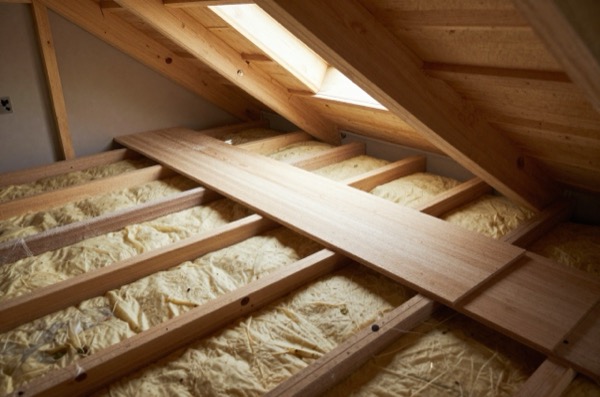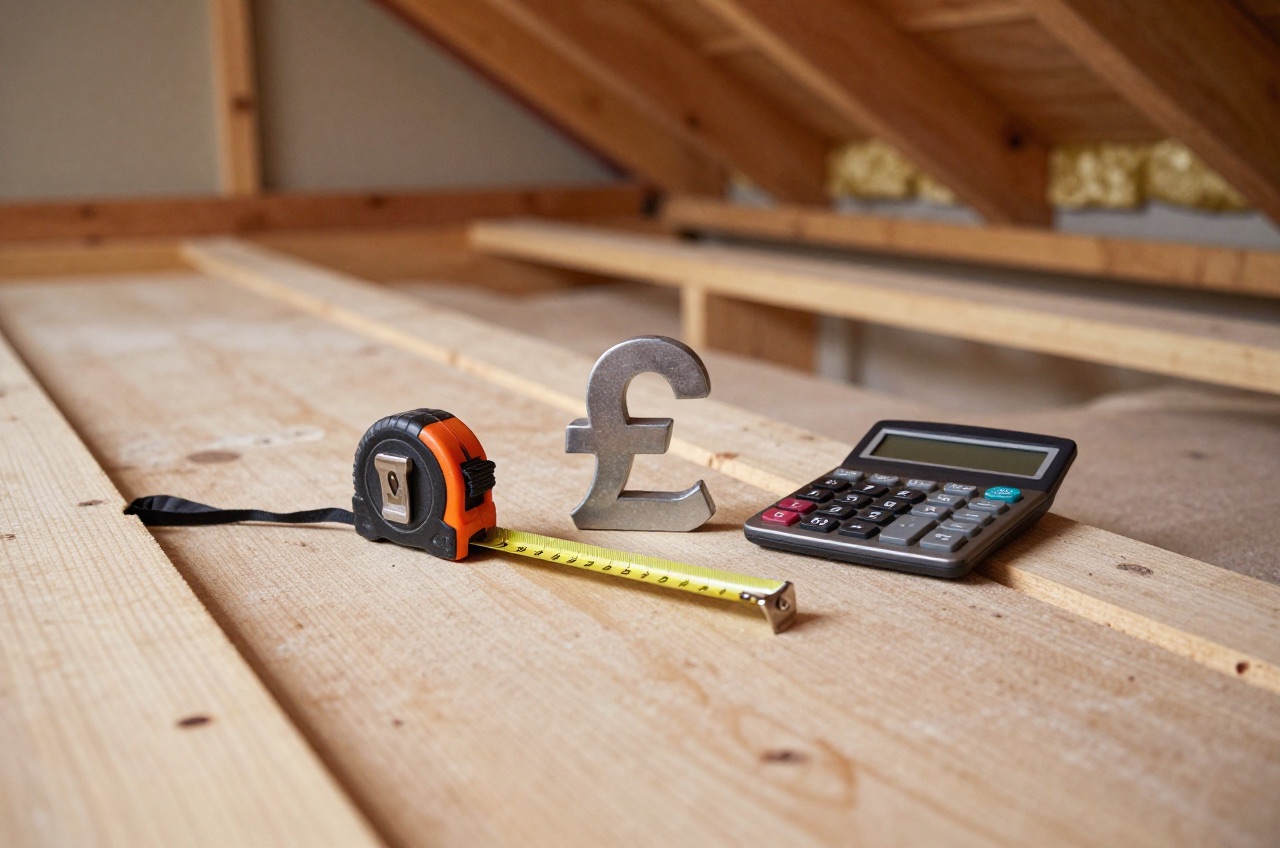
Boarding a loft is one of the more affordable home improvement projects. Raised boarding over about 20 m² in a three-bedroom semi costs from about £1,000 fitted, including VAT, before any new loft ladder, or considerably less if you are comfortable doing it yourself. The wide range reflects differences in loft size, whether you need a new loft ladder, the type of boarding specified, and whether the quote includes raised legs to preserve insulation.
What Affects the Cost?
Four factors drive loft boarding quotes more than anything else:
1. Area to be boarded. Loft boarding is priced primarily by square metre. A small hatch-to-storage-area job of 10–12 m² costs less than boarding an entire attic floor. Measure your loft before requesting quotes.
2. Raised boarding vs flat boarding. Flat boarding straight onto joists is cheaper in materials but compromises your insulation. Raised boarding using loft legs (to lift the deck clear of insulation) adds roughly £6–£7 per m² in materials but is the right approach for any loft that already has insulation or where you intend to add it.
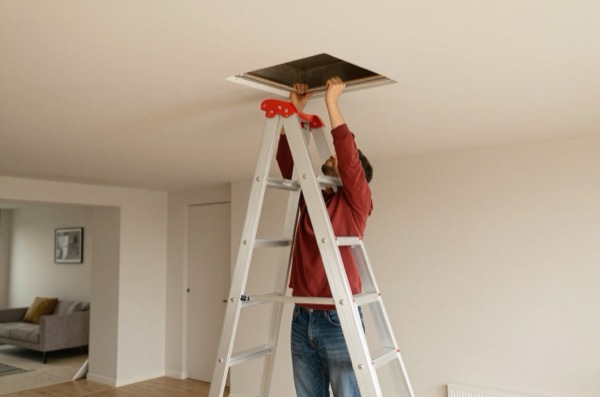
3. Loft ladder and hatch. Many loft boarding companies bundle in a new loft ladder and hatch, this is often the single biggest cost item. A decent aluminium loft ladder costs £80–£250 for the unit alone; fitting adds another £100–£200. If you already have a serviceable ladder, make this explicit when requesting quotes.
4. Condition and accessibility. A clear, accessible loft with good boarding-height joists is quicker to work in. If the loft is full of old insulation, has very low pitch at the eaves, or has poor access, labour time increases.
Cost per m²: Typical Ranges
| Scenario | Cost per m² |
|---|---|
| DIY materials only (flat, chipboard on joists) | about £13–£15 |
| DIY materials only (raised, legs + boards) | about £19–£22 |
| Professional installation, flat boarding | from about £43 (£36 + VAT) |
| Professional installation, raised boarding | from about £50 (£42 + VAT) |
| Loft boarding specialist (survey, legs, boards, tidy) | quoted per job, usually above the raised rate |
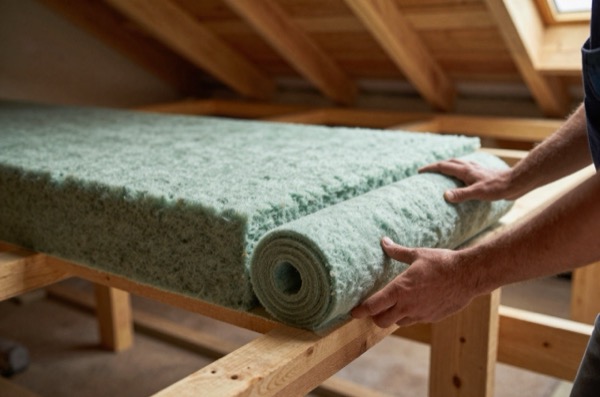
These figures exclude a new loft ladder (add £200–£450 fitted) and insulation top-up (add roughly £300–£700 to have a loft topped up to 270 mm, or £120–£350 for the materials if you do it yourself).
The DIY figures use 18 mm chipboard loft panels at about £12.61/m², the Wickes price in September 2026, plus about 10% for waste and screws.1 Loftleg’s 175 mm legs were £20.99 for a pack of 12 at Screwfix in September 2026.2 A pack covers up to 3.2 m² of boarding, which adds about £6.56/m².2 The professional figures start from one social landlord’s published schedule of rates, which prices overboarding a loft with 19 mm flooring-grade chipboard at £36.05/m² before VAT; raising the deck on legs adds at least the cost of the legs, and a homeowner commissioning a single job usually pays more.
Typical Total Job Costs
For reference, here are indicative all-in prices for a standard three-bedroom semi (approximately 20 m² boardable area):
| Package | Approximate Cost |
|---|---|
| DIY, materials only, flat board | £250–£300 |
| DIY, materials only, raised boarding | £400–£450 |
| Trade installation, raised boards only (no ladder) | from about £1,000 |
| Trade installation, raised boards + new ladder | from about £1,200 |
| Full service (survey, boards, ladder, insulation check) | from about £1,200, plus any insulation work |
All the totals above include VAT. Prices in London and the South East typically run higher than the national average because of higher labour rates. Scotland and Wales tend to be slightly below average.
DIY vs Professional Fitting
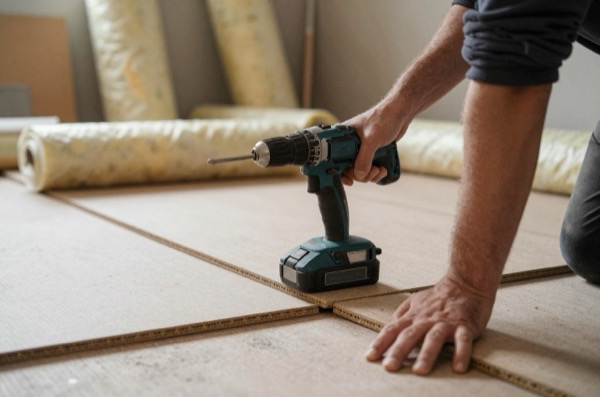
Loft boarding is one of the more accessible DIY jobs in home renovation. It does not require specialist skills, mostly measuring, cutting sheet material, and screwing down boards. The main risks are:
- Insulation compression: the usual recommendation is at least 270 mm of mineral wool, and if you lay boards flat on the joists you crush it and lose thermal performance. Use raised legs.3
- Joist loading: check your joists are adequate before piling in heavy storage. Ceiling joists in older houses are often only about 100 mm deep and were sized to carry a ceiling rather than a floor, so keep storage light unless a structural engineer confirms they can take more.
- Dust and debris: lofts are dusty. Wear a P2 mask and eye protection, particularly when disturbing existing mineral wool insulation.
A confident DIYer can board a 20 m² loft in a weekend. Hiring a professional typically results in a neater finish and slightly better structural awareness of the joist condition, but is not strictly necessary for a straightforward job.
Quote Checklist
Before accepting a quote, confirm the following with the contractor:
- Is the boarding raised off the insulation, and what leg system is specified?
- What board thickness and material? (18 mm or 22 mm tongue-and-groove chipboard is standard; avoid thinner panels that flex underfoot)
- Is the insulation being topped up, and if so to what depth?
- Is a new loft ladder included, and what model?
- Is there a written quote with a fixed price, or is it day rate?
- How is waste disposal handled?
Always get at least two quotes and ask each installer to walk through what is included.
Is It Worth It?
For most homeowners, yes, boarding a loft is among the best value-per-pound home improvements available. The benefits are immediate (usable storage space, reducing clutter in the house) and the cost is modest compared with a garage conversion or house extension.
From a resale perspective, a well-boarded loft with a good ladder is a genuine selling point, particularly in areas where built-in storage is otherwise limited. Estate agents sometimes describe a properly fitted loft storage space as adding value, though any uplift varies enormously by property and market and is rarely quantified.
If your goal is ultimately a full loft conversion into a bedroom or study, boarding is not a necessary precursor, you can proceed straight to conversion design. But if you simply want usable storage for the next 5–15 years, boarding makes excellent sense.
vs Loft Conversion Cost
For context, a basic Velux loft conversion (the cheapest conversion type) typically costs around £25,000–£38,000 and a rear dormer £45,000–£65,000 in 2026 prices. Boarding costs a fraction of that. If your loft already has reasonable head height (a common rule of thumb is at least 2.2 m from the top of the ceiling joists to the underside of the ridge) and you are not desperate for an additional bedroom, boarding first and converting later is a sensible staged approach.4
References (4)
Figures in this note were checked against the sources below on 2 October 2026. Superscript numbers in the text point to them. Every source the site cites, by topic.
- 1costsupplier figureWickes, guidance.RN-X5NPMZA price, true at 2026-09. A builders' merchant product listing for standard chipboard loft panels. It shows the common size is 18 × 320 × 1,220 mm; used because loft panels are sold unbranded and no maker's page lists the size.
- 2costsupplier figureScrewfix, guidance.RN-RALHPTA price, true at 2026-09. A merchant listing for Loft Leg, the most widely sold raised-boarding leg. It states the legs raise the loft floor 175 mm above the joists; the maker's own site renders in the browser and cannot be fetched.
- 3technicalfairLABC Front Door, guidance.RN-JC2HEOLABC's homeowner guide to roof and loft insulation. It recommends at least 270 mm of mineral wool, says squashing it under boards reduces its insulation value, and advises flooring on raised legs.
- 4technicalfairFederation of Master Builders, guidance.RN-MK8GBNThe builders' trade body's homeowner guide to loft conversions; it gives 2.2 m as the working head-height figure and says how to measure it.
-
Chipboard Loft Panels - 18 x 320 x 1220mm - Pack of 3, Wickes, accessed 2 October 2026. Priced at 2026-09 and left there. wickes.co.uk
-
Loftleg Loft Legs 175mm 12 Pack, Screwfix, accessed 2 October 2026. Priced at 2026-09 and left there. screwfix.com
-
Roof insulation, LABC Front Door, accessed 30 September 2026. labcfrontdoor.co.uk
-
Loft conversions: the ultimate guide, Federation of Master Builders, accessed 30 September 2026. fmb.org.uk