Infrared heating panels are one of the most debated products in the UK home heating market. Proponents call them efficient, low-maintenance, and healthy. Critics point out that running costs are high and the physics is frequently misrepresented in marketing. The reality sits somewhere in the middle, infrared panels are genuinely useful in specific applications, and genuinely poor value in others. This guide cuts through the claims.
How Infrared Heating Works
Conventional central heating (radiators, fan heaters, convectors) warms the air in a room. The air then heats surfaces, walls, floors, furniture, people, by convection. This is why open doors and draughts cool a room quickly: the warm air escapes.
Infrared heating works differently. Panels emit long-wave infrared radiation that travels through the air and is absorbed directly by solid surfaces: walls, floors, people, furniture. Those surfaces then re-radiate the heat slowly, creating a background warmth in the fabric of the room.
The practical differences:
- Quick to feel: warmth is felt immediately because radiation hits you directly
- Air temperature stays lower: a thermostatted infrared room often shows a lower air temperature than a conventionally heated one, not because it uses less energy, but because mean radiant temperature (what your body feels) is higher relative to air temperature
- Draughts matter less: warm surfaces hold heat after a brief air change
However, infrared panels are 100% efficient as electrical heaters, identical to a conventional plug-in fan heater at the unit level. Marketing claims that conflate radiant comfort with energy efficiency should be treated sceptically.
Panel Types
| Type | Typical wattage | Typical cost (supply) | Notes |
|---|---|---|---|
| Glass panel | 350W–750W | £150–£400 | Clean look, suitable for living rooms; can double as whiteboard or printed image |
| Mirror panel | 250W–600W | £200–£500 | Popular in bathrooms; doubles as a functional mirror |
| Ceiling panel | 300W–1,000W | £120–£350 | Installed flush to ceiling; maximises radiant angle to floor and occupants |
| Plinth/skirting | 250W–500W | £180–£400 | Low-level, heats rising air as well as radiating; suits kitchen plinths |
| Standard white | 250W–1,500W | £100–£280 | Most affordable option; wall or ceiling mount |
Running Costs
The Ofgem price cap electricity unit rate is 26.32p/kWh from 1 October 2026, and was 26.11p/kWh to 30 September (your actual tariff may vary by supplier and whether you are on a fixed or variable deal).1
At 26.32p/kWh:
| Panel wattage | Cost per hour | Cost per day (8 hrs use) | Monthly cost (8 hrs/day) |
|---|---|---|---|
| 250W | 6.6p | 53p | ~£15.80 |
| 500W | 13.2p | £1.05 | ~£31.60 |
| 750W | 19.7p | £1.58 | ~£47.40 |
| 1,000W | 26.3p | £2.11 | ~£63.20 |
| 1,500W | 39.5p | £3.16 | ~£94.80 |
These figures assume continuous operation. With a thermostat or smart controller, the panel cycles on and off to maintain temperature, so actual energy use is lower than the nameplate wattage suggests. A well-sized 500W panel in a 5m² bathroom might only run at 60–70% duty cycle on a cold day, bringing average draw to 300–350W.
Cost per kWh of heat delivered (2026 tariffs):
| System | Cost per kWh of heat | Notes |
|---|---|---|
| Gas boiler (90% efficient) | ~8.9p (gas at 7.97p/kWh) | About level with a heat pump at COP 3 |
| Heat pump (COP 3.0) | ~8.8p (electricity at 26.32p/kWh) | Varies with outdoor temperature |
| Infrared panel | 26.3p | Same as any direct electric heater |
| Standard convector heater | 26.3p | Identical cost to infrared |
Infrared panels are not cheaper to run than a gas boiler, gas heat is roughly one-third the price per unit. They cost three times as much as a heat pump. This does not make them useless, but it means they must be used selectively.
Room Coverage and Sizing
A commonly used rule of thumb is 1kW per 10m² for a well-insulated room with standard ceiling height (2.4m). In practice:
- Add 10–15% for rooms with large windows or external walls on multiple sides
- Add 20–30% for poorly insulated properties (pre-2000 construction without upgrades)
- Reduce by 15–20% for rooms below normal ceiling height or exceptionally well insulated (EPC A or B)
A 5m² bathroom would require approximately 500W. A 15m² home office would need 1,500W, or two panels of 750W each, ideally placed on opposite walls to improve radiant distribution.
Undersizing is the most common installation error. A panel that is too small for the space will run continuously and never reach the comfort level the occupant expects, while using nearly as much electricity as a correctly sized panel.
Installation: Plug-In vs Hardwired
Plug-in panels are simply plugged into a standard 13A socket. This makes them portable, requires no electrician, and is the cheapest way to trial the technology. Most panels up to 750W are available as plug-in units. The downside: leads trailing from walls look untidy, and socket placement may not match the ideal panel position.
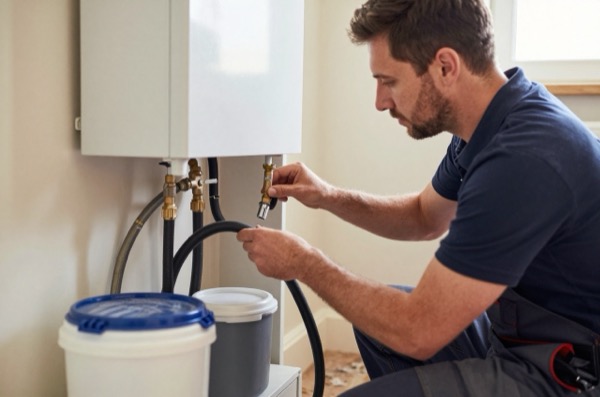
Hardwired panels are wired directly into a spur from the ring main or a dedicated circuit. This requires a qualified electrician and is notifiable work under Part P of the Building Regulations if it involves new wiring in a bathroom or if a new circuit is added. The result is cleaner, with no visible cable, and the panel can be ceiling-mounted more easily. A typical hardwiring job for a single panel costs £80–£150 including materials.2
For bathroom installations, the panel must be specified with an appropriate IP rating (IP44 minimum for Zone 2 locations, IP65 for Zone 1). Mirror panels with IP65 rating are common in bathrooms and can be installed above wash basins.
Infrared vs Heat Pump vs Gas Boiler
The honest comparison for a UK homeowner choosing a primary heating system:
Gas boiler: cheap to run for connected homes, and now about level with a heat pump at COP 3 on cost per unit of heat. Not eligible for the Boiler Upgrade Scheme grant. The government’s trajectory points to eventual phase-out, but remains the cost-effective default for existing homes on mains gas.
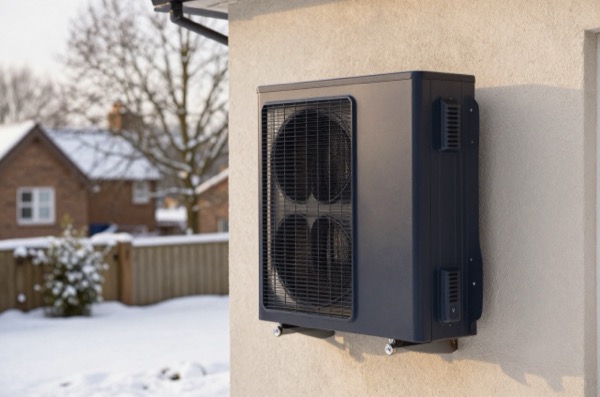
Air source heat pump: install cost £8,000–£17,000 before the £7,500 BUS grant. Running costs roughly one-third of direct electric at COP 3.0. Requires a hot water cylinder and may need radiator upgrades. Works best in well-insulated homes.
Infrared panels: very low install cost (£120–£600 per panel plus fitting), zero maintenance. High running costs as primary heat. No current UK government grant is available, not included in the Boiler Upgrade Scheme or ECO4, and the Great British Insulation Scheme closed on 31 March 2026. Best suited to zone and supplementary use.
Pros and Cons
Advantages of infrared panels:
- Very low purchase and installation cost compared to a full heating system
- No maintenance or annual service required
- Instant comfort sensation (radiant warmth)
- Effective for zone heating, only heat rooms you are using
- Silent operation
- Long lifespan (20+ years typical)
- Suitable for off-grid or low-gas-usage properties
Disadvantages:
- High running costs as primary heat, about three times more expensive per unit of heat than gas or a heat pump
- No thermal mass: once off, warmth dissipates faster than from a radiator system with water temperature
- Requires adequate wall or ceiling space close to occupants to be effective
- Not eligible for any current UK renewable heat incentive or grant
- Can be uncomfortable if the panel heats only part of the room; positioning matters
Good Use Cases
Infrared panels are well suited to:
- Bathrooms: a 500–600W mirror or ceiling panel provides focused warmth exactly where needed, for short periods of use. The running cost of 30 minutes at 13–16p/hour is negligible.
- Home offices: a 500–750W panel directed at the desk provides radiant comfort without heating the entire house. If you work from home but in a single room, this saves money compared to running the central heating all day.
- Garden rooms and outbuildings: where extending gas pipework is impractical, infrared provides easy, low-install-cost heating. Insulate the structure well first.
- Supplementary heating: adding warmth to a room that the central heating struggles to reach, such as a poorly insulated extension, without overcomplicating the system.
- Elderly occupants or cold-sensitive users: the sensation of warmth is immediate and the radiant quality is often described as more comfortable than convective heat.
Where infrared panels are a poor choice: as the sole primary heat source in a whole house, unless the property is very small, very well insulated, and the occupants are prepared for electricity bills significantly higher than gas equivalents.
Panel Cost Summary
- Budget white panels (250W–750W): £100–£200 supply
- Mid-range glass or mirror panels: £200–£400 supply
- Premium or designer panels: £400–£600 supply
- Plug-in installation: £0 (DIY)
- Hardwired installation: £80–£150 per panel (electrician)
- Thermostat or smart controller (if not built in): £30–£80
Total cost for a single bathroom installation: typically £250–£600 all-in. For a whole-house system replacing gas heating across a medium-sized property, you might install 8–12 panels at a combined cost of £2,000–£5,000, still far less than a heat pump, but with significantly higher ongoing energy costs.
The decision ultimately rests on your fuel situation, your usage patterns, and whether zone heating suits your lifestyle. For most gas-connected UK homes, infrared panels are a useful supplementary tool, not a primary heating replacement.
References (2)
Figures in this note were checked against the sources below on 14 September 2026. Superscript numbers in the text point to them. Every source the site cites, by topic.
- 1technicalvery strongOfgem.RN-YYE8U2The live source for any running-cost sum in a heating note. For 1 October to 31 December 2026 the direct debit cap is 26.32p per kWh for electricity with a 54.83p daily standing charge, and 7.97p per kWh for gas with a 29.68p daily standing charge, giving a typical annual dual fuel bill of £1,723, a 4% rise on the previous period. Ofgem states these are the average unit rate and standing charge for direct debit customers in England, Scotland and Wales; gas prices include 5% VAT while electricity carried no VAT in this period. The cap is reset every three months, so any note quoting a pence-per-kWh figure should be dated against this page.
- 2technicalvery strongMinistry of Housing, Communities and Local Government.RN-JYJ3I5The document that decides what electrical work a homeowner may legally do themselves, and the exact list of notifiable jobs. Regulation 12(6A), reproduced at paragraph 2.5, makes only three things notifiable: the installation of a new circuit, the replacement of a consumer unit, and any addition or alteration to existing circuits in a special location. Regulation 12(9) defines special location as, in a room containing a bath or shower, the zone extending vertically from finished floor level to 2.25 metres (or the shower head position if higher) and horizontally 600mm from the edge of the bath tub or shower tray. Paragraph 2.7 states that all other electrical installation work is not notifiable, namely additions and alterations to existing installations outside special locations, and replacements, repairs and maintenance anywhere. Paragraph 2.8 gives worked examples: a built-in cooker is not notifiable unless a new cooker circuit is needed, and connecting an electric gate or garage door to an existing isolator is not notifiable but running a new circuit from the consumer unit to that isolator is. Paragraph 2.2 confirms Part P reaches outdoor work including fixed garden lighting, pond pumps and outbuildings such as sheds, detached garages and domestic greenhouses. Notifiable work must be certified by self-certification by a registered competent person, third-party certification, or a building control body (paragraph 3.1), with the compliance certificate issued within 30 days (paragraph 3.4). Note that Approved Document P is a source of guidance rather than a ban: non-notifiable work still has to comply with BS 7671.
-
Energy price cap unit rates and standing charges, Ofgem, accessed 10 September 2026. ofgem.gov.uk
-
Approved Document P, Electrical safety: Dwellings, 2013 edition incorporating 2010 and 2013 amendments, Ministry of Housing, Communities and Local Government, accessed 14 September 2026. assets.publishing.service.gov.uk