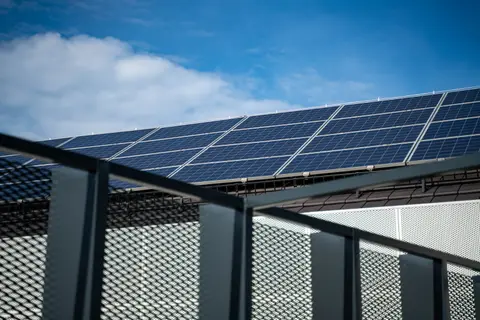
A solar battery lets you store electricity generated by your solar panels during the day and use it in the evening, when generation has stopped. Without a battery, any surplus solar power is exported to the grid, you receive the Smart Export Guarantee (SEG) rate of around 4–15 p/kWh depending on your tariff, but that is far less than the 24–28 p/kWh you pay to import. A battery captures that surplus at “zero cost” and uses it when you would otherwise be paying full rate.
The economics are better than they were three years ago: battery prices have fallen around 30% since 2022, and electricity unit rates remain high. But a battery is still not a slam-dunk for every household, the answer depends on your usage pattern, existing solar size, and how long you plan to stay in the property.
How Solar Battery Storage Works
Most home batteries are AC-coupled or DC-coupled lithium-ion systems:
- DC-coupled systems connect between the solar panels and the inverter. They are more efficient (less energy conversion) and are usually the better choice when installed at the same time as a new solar array.
- AC-coupled systems connect to your home’s AC circuit after the existing solar inverter. They can be retrofitted to any existing solar installation and are the only option for adding storage to an older system with a DC-optimised inverter.
Batteries are rated by usable capacity (kWh) and continuous power (kW). A 10 kWh battery at 5 kW continuous output can, for example, run a 5 kW air source heat pump for 2 hours, or supply a typical home’s evening load (1–2 kW) for 5–10 hours.
Solar Battery Costs (2026)
| Battery Size | Unit Type | Typical Installed Cost |
|---|---|---|
| 5 kWh | AC-coupled retrofit | £3,000–£4,500 |
| 10 kWh | AC-coupled retrofit | £4,500–£7,000 |
| 10 kWh | DC-coupled (with new solar) | £3,500–£6,000 |
| 15–16 kWh (stacked) | AC-coupled | £6,500–£10,000 |
| 20 kWh+ | AC-coupled | £9,000–£14,000+ |
Prices have dropped significantly from 2022 peaks and are expected to continue falling modestly through 2027–2028. Installation costs (scaffolding, electrical work) add £500–£1,000 if the battery is added separately from solar panels.
VAT on battery storage is 0% where a contractor supplies and installs it. Since 1 February 2024 that has covered a battery retrofitted to an existing solar system and a standalone battery charged from the grid, not only one fitted alongside new panels. The zero rate runs to 31 March 2027, after which installations revert to the reduced rate of 5%, not to 20%. A battery bought over the counter to fit yourself is standard-rated at 20%.
How Much Can You Save?
Savings depend on how much solar surplus you currently export and what time-of-use tariff you are on:
Without a Battery (Typical 4 kWp System)
- Annual generation: ~3,600 kWh
- Self-consumed: ~1,500 kWh (saves ~£420/year at 28 p/kWh)
- Exported: ~2,100 kWh, earns ~£210/year at 10 p/kWh SEG
- Total annual benefit: ~£630
With a 10 kWh Battery Added
- Self-consumed increases to ~2,800 kWh (saves ~£785/year)
- Exported falls to ~800 kWh, earns ~£80/year
- Total annual benefit: ~£865
- Additional saving from battery: ~£235/year
These figures assume a moderate household usage pattern. Households with high evening consumption (EV charging, heat pump, larger families) will save more. Low-consumption households may save less than the national average.
Time-of-Use Tariff Stacking
Some smart tariffs (such as Octopus Intelligent or Agile) allow you to charge your battery from the grid overnight at low rates (7–12 p/kWh) and discharge during peak evening periods (when rates may hit 35–45 p/kWh on Agile tariffs). This “grid arbitrage” can add £200–£600/year of additional savings for households that actively manage their battery, making the economics considerably more attractive.
Is It Worth the Investment?
| Scenario | Estimated Additional Annual Saving | Payback Period (10 kWh at £5,500) |
|---|---|---|
| Export-only solar, no EV, standard tariff | £200–£350 | 16–28 years |
| Export-only solar + EV on smart tariff | £400–£700 | 8–14 years |
| Grid arbitrage (Agile tariff) | £500–£800 | 7–11 years |
| Large household, high evening demand | £350–£600 | 9–16 years |
Battery lifespan: most lithium-ion home batteries carry a 10-year warranty and are rated for 4,000–6,000 charge cycles. Assuming one cycle per day, the warranty covers about 11–16 years of use. Capacity fade of 20–30% over 10 years is typical.
A simple 10 kWh battery with no grid arbitrage at a standard tariff does not have a compelling financial case for many households. The business case strengthens significantly with an EV (which can absorb a lot of solar self-consumption) or a time-of-use tariff.
Types of Battery Chemistry
| Chemistry | Energy Density | Cycle Life | Safety | Cost |
|---|---|---|---|---|
| Lithium iron phosphate (LFP) | Moderate | High (4,000–6,000+) | High (no thermal runaway risk) | Mid-range |
| Nickel manganese cobalt (NMC) | High | Moderate (3,000–4,500) | Moderate | Lower per kWh |
| Lead acid (VRLA) | Low | Low (500–1,000) | High | Lowest |
LFP is the dominant chemistry for new UK home installations as of 2026 due to its safety profile and longer cycle life. NMC systems may offer more capacity in a smaller footprint but degrade faster under frequent cycling.
Planning and Building Regulations
Home battery storage systems fall under permitted development in most cases for England (Part 14, Class H). Key limitations:
- Battery must not be installed on a wall or roof facing a highway
- Protrusion from wall must be less than 0.2 m
- Total volume must not exceed 0.2 m³ per installation (stacked systems sharing a single enclosure are treated as one)
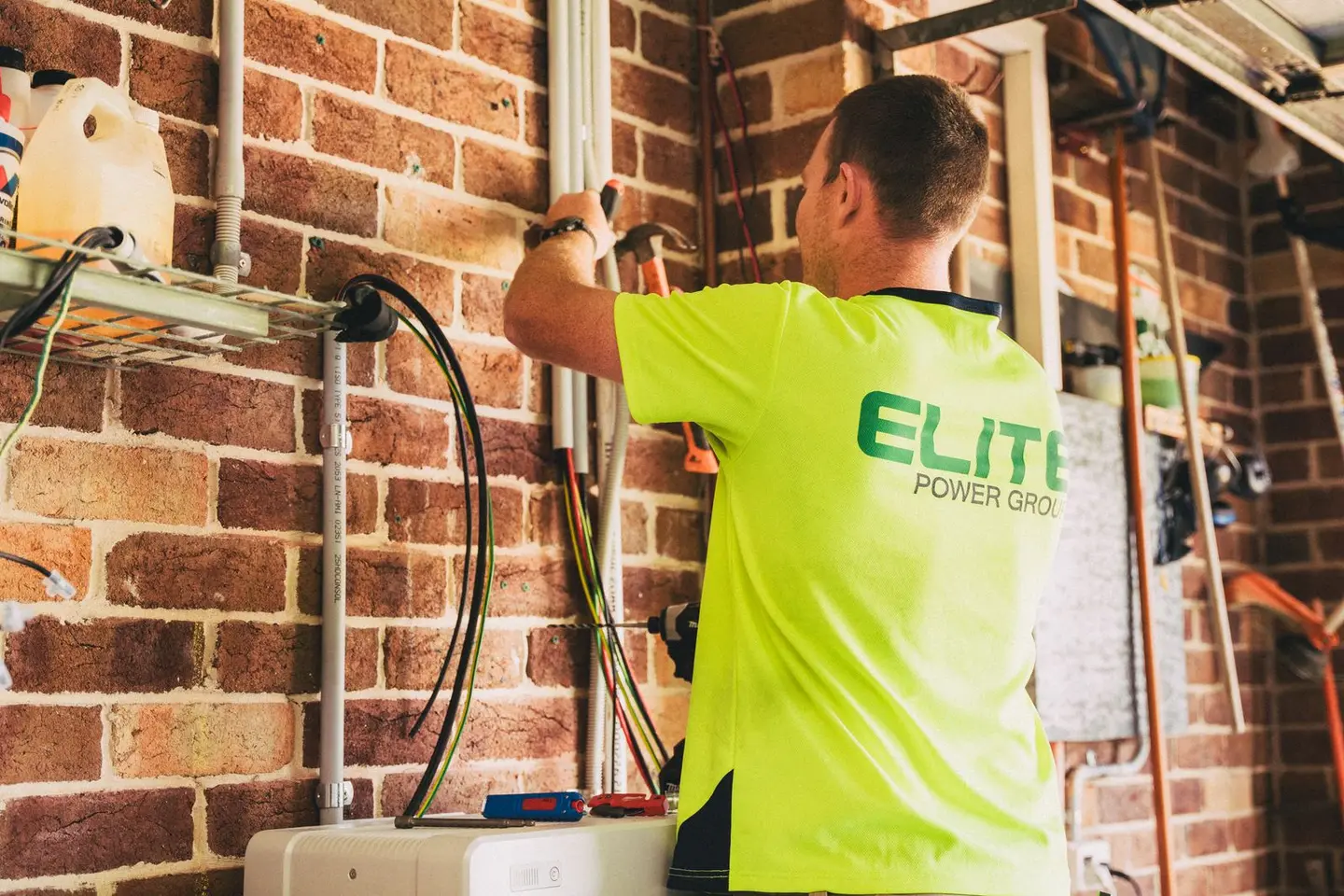
The electrical installation must comply with BS 7671 and is notifiable under Part P Building Regulations. Your MCS-registered installer handles the notification. For listed buildings, seek advice from your local planning authority before installation.1
Choosing an Installer and System
Look for installers who are MCS-accredited for battery storage (MIS 3012). MCS accreditation is required to claim Smart Export Guarantee (SEG) payments and ensures the installation meets minimum standards. Check the MCS installer finder at mcscertified.com.
Questions to ask:
- What is the usable capacity (not nominal) and continuous power rating of the battery?
- Is this DC-coupled or AC-coupled, and is the inverter compatible with my existing solar panels?
- What warranty does the battery carry, and what is the capacity retention guarantee at 10 years?
- Can the battery operate in “islanding” mode during a grid outage (not all do)?
- Does the system integrate with my energy tariff’s smart scheduling API?
Solar + Battery Together vs Retrofitting
If you are installing solar panels for the first time, adding a battery at the same time is nearly always cheaper than retrofitting later, you share scaffolding, electrical work, and potentially use a more efficient DC-coupled setup. The incremental cost of adding a battery alongside new panels is typically £2,500–£4,500 rather than £4,500–£7,000 for a retrofit.
The rules in this note are those that apply in England. Scotland, Wales and Northern Ireland have their own building standards and permitted development rights.
References (1)
Figures in this note were checked against the sources below on 14 September 2026. Superscript numbers in the text point to them. Every source the site cites, by topic.
- 1technicalvery strongMinistry of Housing, Communities and Local Government.RN-JYJ3I5The document that decides what electrical work a homeowner may legally do themselves, and the exact list of notifiable jobs. Regulation 12(6A), reproduced at paragraph 2.5, makes only three things notifiable: the installation of a new circuit, the replacement of a consumer unit, and any addition or alteration to existing circuits in a special location. Regulation 12(9) defines special location as, in a room containing a bath or shower, the zone extending vertically from finished floor level to 2.25 metres (or the shower head position if higher) and horizontally 600mm from the edge of the bath tub or shower tray. Paragraph 2.7 states that all other electrical installation work is not notifiable, namely additions and alterations to existing installations outside special locations, and replacements, repairs and maintenance anywhere. Paragraph 2.8 gives worked examples: a built-in cooker is not notifiable unless a new cooker circuit is needed, and connecting an electric gate or garage door to an existing isolator is not notifiable but running a new circuit from the consumer unit to that isolator is. Paragraph 2.2 confirms Part P reaches outdoor work including fixed garden lighting, pond pumps and outbuildings such as sheds, detached garages and domestic greenhouses. Notifiable work must be certified by self-certification by a registered competent person, third-party certification, or a building control body (paragraph 3.1), with the compliance certificate issued within 30 days (paragraph 3.4). Note that Approved Document P is a source of guidance rather than a ban: non-notifiable work still has to comply with BS 7671.
-
Approved Document P, Electrical safety: Dwellings, 2013 edition incorporating 2010 and 2013 amendments, Ministry of Housing, Communities and Local Government, accessed 14 September 2026. assets.publishing.service.gov.uk