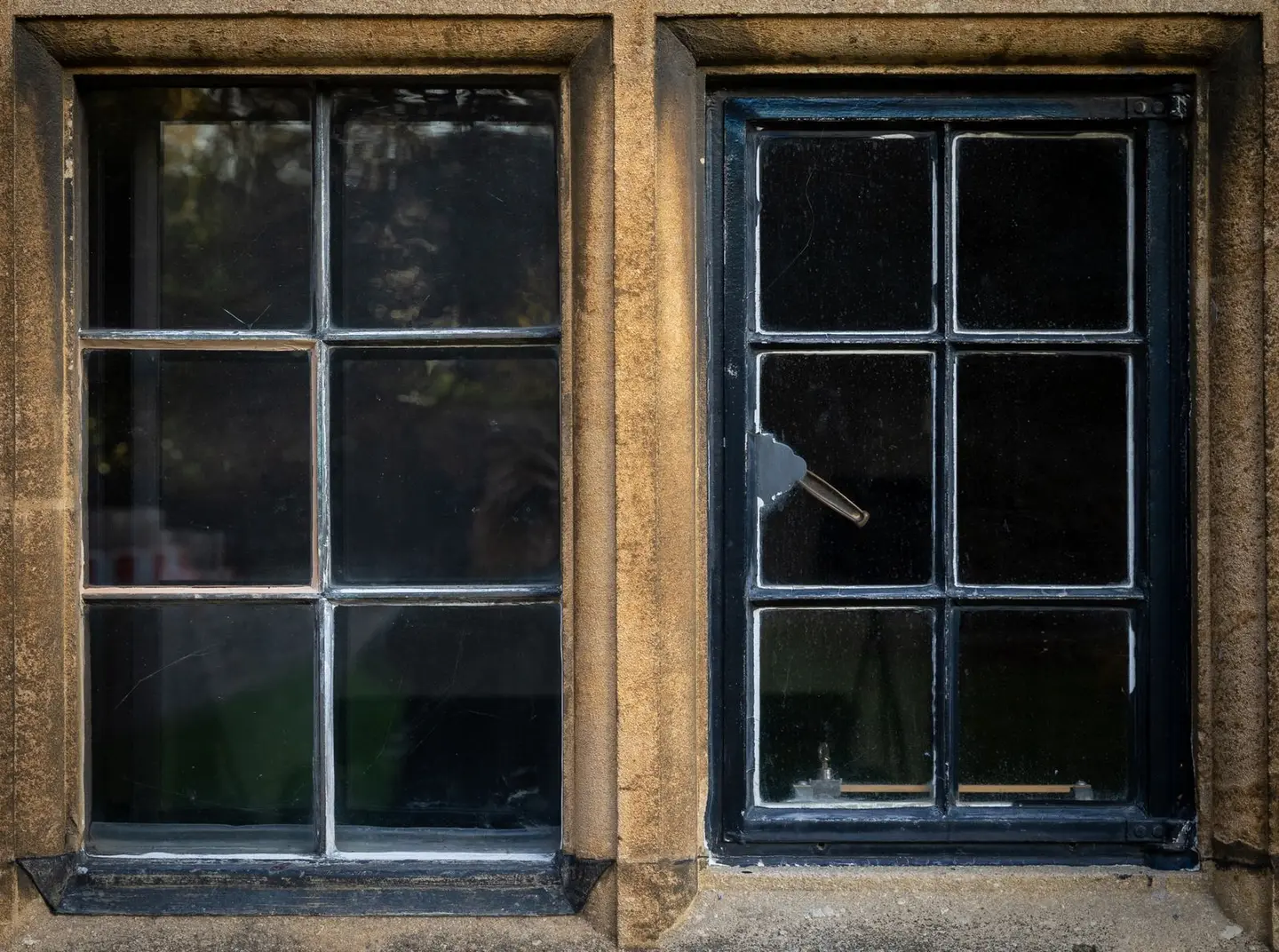
uPVC flush casement windows cost between £350 and £550 for a small unit (600×900 mm) and £450–£750 for a standard opening (900×1200 mm), supplied and fitted. Large bay window configurations sit at £900–£1,500. The defining feature, a sash that sits flush with the outer face of the frame rather than projecting forward, commands a modest premium of around 10–20% over standard casement windows of the same size and specification.
That price premium is often well justified. Flush casements are increasingly accepted by local planning officers in conservation areas where standard uPVC casements are refused outright, because their flat profile more closely resembles traditional timber joinery. Combined with solid 2026 energy performance (U-values of 1.0–1.4 W/m²K double-glazed, 0.8–1.0 triple-glazed) and a 20–35 year lifespan with minimal maintenance, they represent a practical choice for both period and contemporary properties.
What Is a Flush Casement Window?
A standard uPVC casement has an outer sash (the frame that holds the glass) that closes against the outer face of the fixed outer frame, meaning it projects slightly, typically 15–25 mm, when shut. A flush casement is rebated so the sash sits level with the frame, creating a flat, unbroken external elevation.
The difference is largely aesthetic, but it has practical implications:
- Conservation area planning: flush profiles better replicate the flat face of traditional painted timber windows, making approval more likely under Article 4 Directions that restrict uPVC in sensitive streetscapes.
- External appearance: the shadow gap around the sash is visible only as a fine line, giving a crisper, more architectural finish.
- Hardware: flush casements typically use hook and keep espagnolette locking in place of the standard cockspur handle, improving draught performance and security.
- Cleaning: the flat outer face is easier to wipe clean and accumulates less grime in the rebate than a projecting sash.
2026 UK Prices: uPVC Flush Casement Windows
All prices below are supply and fit, including removal of the old window, foam and membrane sealing around the frame, internal making-good, external mastic, and ironmongery. Scaffolding is excluded (add £200–£400 per lift day if required for first-floor work).
| Size / Configuration | Low | Typical | High |
|---|---|---|---|
| Small (600×900 mm), single sash | £350 | £450 | £550 |
| Standard (900×1,200 mm), single sash | £450 | £600 | £750 |
| Standard (900×1,200 mm), two sash | £500 | £700 | £900 |
| Large (1,200×1,200 mm), two sash | £650 | £850 | £1,100 |
| Large bay unit (1,800×1,200 mm) | £900 | £1,200 | £1,500 |
Colour premium: white is the base price. Foiled or spray-painted finishes in woodgrain effects (rosewood, golden oak, Irish oak) or solid colours (anthracite grey, chartwell green, cream) add 15–25% to the unit cost. Dual-colour (white internally, colour externally) adds around 20%.
Triple glazing: upgrading from double to triple glazing typically adds £80–£150 per window unit depending on size.
Frame & Material Comparison
Flush casements are not exclusive to uPVC, the profile is available in aluminium and timber too. The table below compares the main options on the key buying criteria.
| uPVC Flush Casement | Standard uPVC Casement | Timber Casement | Aluminium Casement | |
|---|---|---|---|---|
| Supply & fit (900×1,200 mm) | £450–£750 | £380–£650 | £750–£1,800 | £700–£1,400 |
| U-value (double-glazed) | 1.0–1.4 W/m²K | 1.2–1.4 W/m²K | 1.2–1.6 W/m²K | 1.0–1.5 W/m²K |
| Maintenance | Very low | Very low | Medium–high | Low |
| Lifespan | 20–35 years | 20–35 years | 30–50 years | 30–45 years |
| Conservation area | Often accepted | Often refused | Preferred | Sometimes accepted |
| Colour flexibility | Good (foil/paint) | Good (foil/paint) | Full (paint) | Excellent (RAL powder coat) |
| Appearance | Clean, modern | Standard | Traditional | Slim, modern |
Aluminium flush casements offer the slimmest sightlines and widest colour palette, but at a higher price. For most mid-range period or contemporary properties where cost is a factor, uPVC flush casements sit in the right balance between performance, appearance, and budget.
Energy Performance: U-Values and WER
The Window Energy Rating (WER) scheme, run by the British Fenestration Rating Council (BFRC), rates windows from G (poorest) to A++ (best). For 2026 products:
- Double-glazed flush casement uPVC with argon-filled 28 mm unit and low-E coating: WER A to A+, whole-window U-value 1.0–1.4 W/m²K
- Triple-glazed flush casement uPVC with argon-filled 32–44 mm unit: WER A+, whole-window U-value 0.8–1.0 W/m²K
Building Regulations Part L (England, 2022 amended standards) requires replacement windows in existing dwellings to achieve a whole-window U-value of ≤1.4 W/m²K or a WER of Band B or better.1 Any competent uPVC flush casement specification easily meets this threshold. The FENSA or CERTASS certificate from your installer self-certifies compliance, you need this certificate for property conveyancing.
Triple glazing is worth specifying in exposed northern or western elevations, rooms above habitable noise sources, or where a Passivhaus or low-energy target is being pursued. The incremental cost (£80–£150 per unit) is modest relative to the whole-window price.
Part F ventilation: replacement windows must retain background ventilation. Trickle vents are the standard solution, these slot into the frame head or transom and are included in most flush casement quotes. Check your specification explicitly: some cheaper quotes omit them, which creates Building Regulations non-compliance and condensation risk.2
Flush Casements in Conservation Areas
The most common planning reason for choosing flush casements over standard uPVC is their suitability in conservation areas. Under Article 4 Directions, many conservation areas remove permitted development rights from front-elevation changes, including window replacements. What this means in practice:
- Standard uPVC casements are frequently refused in conservation areas because the projecting sash profile looks visually different from the original timber windows on neighbouring properties.
- uPVC flush casements, particularly in white or heritage colours with slim sightlines and traditional furniture, are sometimes accepted as a cost-effective alternative where full timber replacement is not financially viable.
- Timber windows remain the preferred choice of most conservation officers, and will be required for listed buildings of all grades.
Before ordering, consult your local planning authority or submit a pre-application enquiry (typically £50–£150 for householder schemes). Conservation officers vary significantly in their acceptance of uPVC flush casements, some welcome them as a proportionate response, others still require timber. Get written guidance before ordering.
Listed buildings are a different matter: all window replacements (flush uPVC or otherwise) require Listed Building Consent, and uPVC is almost never acceptable. Timber in the original profile is required.
Secured by Design
The Secured by Design (SBD) scheme, the UK police-backed security initiative, certifies windows that meet PAS 24:2022 standards for enhanced security performance. Most reputable flush casement ranges offer SBD-accredited products, which include:
- Multi-point locking (hook and keep espagnolette as standard in flush casements)
- Shoot bolts at head and sill
- Hinge protection against lever attacks
- Laminated inner pane as an upgrade option
If you are in an area with a higher burglary rate or your insurer specifies enhanced window security, look for the SBD mark explicitly on the product datasheet.
How to Choose a uPVC Flush Casement Window
1. Check planning constraints first. If you are in a conservation area or Article 4 area, speak to your local planning authority before ordering. If the property is listed, uPVC is almost certainly not appropriate.
2. Specify the glazing unit correctly. For most UK exposures, a 28 mm double-glazed unit with argon and a quality low-E coating gives the best value. Triple glaze if the elevation is north- or west-facing, or if noise is a concern.
3. Consider colour carefully. White is the default and the most cost-effective. Anthracite grey and chartwell green are the most popular alternatives in 2026, adding 15–25%. Dual-colour (white inside, colour outside) is the most practical choice for a light interior without sacrificing kerb appeal.
4. Ask about WER rating and BFRC certification. A genuine A or A+ rated product will be certified by BFRC. Be sceptical of claims without certification documentation.
5. Confirm FENSA or CERTASS registration. Your installer must be registered with a Competent Person Scheme to self-certify Building Regulations compliance. Ask for the certificate number before installation, and retain the certificate on completion.
6. Check the warranty structure. Reputable uPVC flush casement suppliers offer 10-year frame warranties and 5-year glass unit warranties as a minimum. Some market-leading fabricators offer 20-year frame guarantees. The frame profile is only as good as the hardware: check that locks, hinges, and stays carry at least 5-year warranties separately.
Lifespan and Maintenance
uPVC flush casements require very little maintenance over their 20–35 year lifespan:
- Annual: wipe frame and sash with a mild detergent solution; lubricate hinges, friction stays, and locking points with a UPVC-rated lubricant (not WD-40, which can degrade gaskets).
- Every 5 years: check and replace external mastic sealant around the frame perimeter if it shows signs of cracking or separation.
- Occasional: trickle vent debris removal; check that drainage slots in the outer frame are clear.
The sealed glass unit has a separate lifespan of typically 20–25 years before the argon seal fails and misting appears between the panes. Unit replacement costs £80–£200 per unit depending on size, and a competent glazier can swap units in an existing frame without removing the whole window, extending the frame’s useful life.
Getting Quotes
For a fair comparison across installers, ask each one to quote against the same specification:
- Frame size and configuration (number of sashes, fixed panes)
- Glazing unit: 28 mm double-glazed argon low-E, or 44 mm triple-glazed argon low-E
- WER rating required
- Colour: white, foil, or dual-colour as applicable
- SBD certification: yes/no
- Trickle vents: included as standard
- FENSA or CERTASS registration: confirm
- Warranty periods for frame, glass unit, and hardware separately
Obtain at least three quotes. The range between the cheapest and most expensive for identical specifications can be 40–60%, driven more by installer margin and regional demand than by product quality.
The rules in this note are those that apply in England. Scotland, Wales and Northern Ireland have their own building standards and permitted development rights.
References (2)
Figures in this note were checked against the sources below on 14 September 2026. Superscript numbers in the text point to them. Every source the site cites, by topic.
- 1technicalvery strongMinistry of Housing, Communities and Local Government.RN-L0FCJXThe in-force U-value tables a DIY insulation or door note must quote, with the exact numbers. Table 4.2, limiting U-values for new fabric elements in existing dwellings, sets roof 0.15, wall 0.18, floor 0.18, swimming pool basin 0.25, window 1.4 or Window Energy Rating Band B minimum, rooflight 2.2, doors with more than 60 per cent of the internal face glazed 1.4 or Doorset Energy Rating Band C minimum, and other doors 1.4 or Doorset Energy Rating Band B minimum. Table 4.3, for existing elements, gives a roof threshold of 0.35 and an improved value of 0.16, which is the figure a loft insulation note needs: paragraph 4.12 says a retained element whose U-value is higher than the column (a) threshold, for example through a loft or garage conversion, should be upgraded to the column (b) value. Paragraph 4.13 allows a lesser upgrade only where the improved value is not technically or functionally feasible or would not achieve a simple payback of 15 years or less. Paragraph 4.8 requires a replacement element to be no worse than the one it replaces as well as meeting Table 4.2. Paragraph 4.10 gives the heritage exception: where character must be maintained, a centre pane U-value of no more than 1.2 or low-emissivity secondary glazing. Note 9 records that the timber window concession of 1.6 or Band C ended on 14 June 2023. The 2021 edition came into force on 15 June 2022; a 2026 edition exists at https://assets.publishing.service.gov.uk/media/69c122a6cfa346b9d4704a55/ADL1_2026.pdf.
- 2technicalvery strongMinistry of Housing, Communities and Local Government.RN-QD1SFFTable 1.1 sets minimum intermittent extract rates: kitchen with a cooker hood extracting outside 30 l/s, kitchen without one 60 l/s, utility room 30 l/s, bathroom 15 l/s, sanitary accommodation 6 l/s. Extract terminals and fans other than cooker hoods should be as high as practicable and no more than 400mm below the ceiling; a cooker hood should sit between 650mm and 750mm above the hob if the manufacturer gives no figure. Table 1.7 requires background ventilators of at least 8000mm2 equivalent area in habitable rooms and kitchens for a dwelling, 10,000mm2 for a single-storey dwelling. Background ventilators should be at least 1700mm above floor level and at least 500mm from a fan in the same room. On replacement windows, paragraph 3.14 says new windows must carry background ventilators no smaller than the originals, and paragraph 3.15 gives the fallback minimums where the old size is unknown: 8000mm2 habitable rooms, 8000mm2 kitchen, 4000mm2 bathroom. Paragraph 3.32 confirms that replacing an extractor fan or cooker hood on existing cabling is not notifiable.
-
Approved Document L: Conservation of fuel and power, Volume 1: Dwellings, 2021 edition incorporating 2023 amendments, HM Government (GOV.UK), accessed 7 September 2026. assets.publishing.service.gov.uk
-
Approved Document F, Ventilation, Volume 1: Dwellings, 2021 edition, Ministry of Housing, Communities and Local Government, accessed 14 September 2026. assets.publishing.service.gov.uk