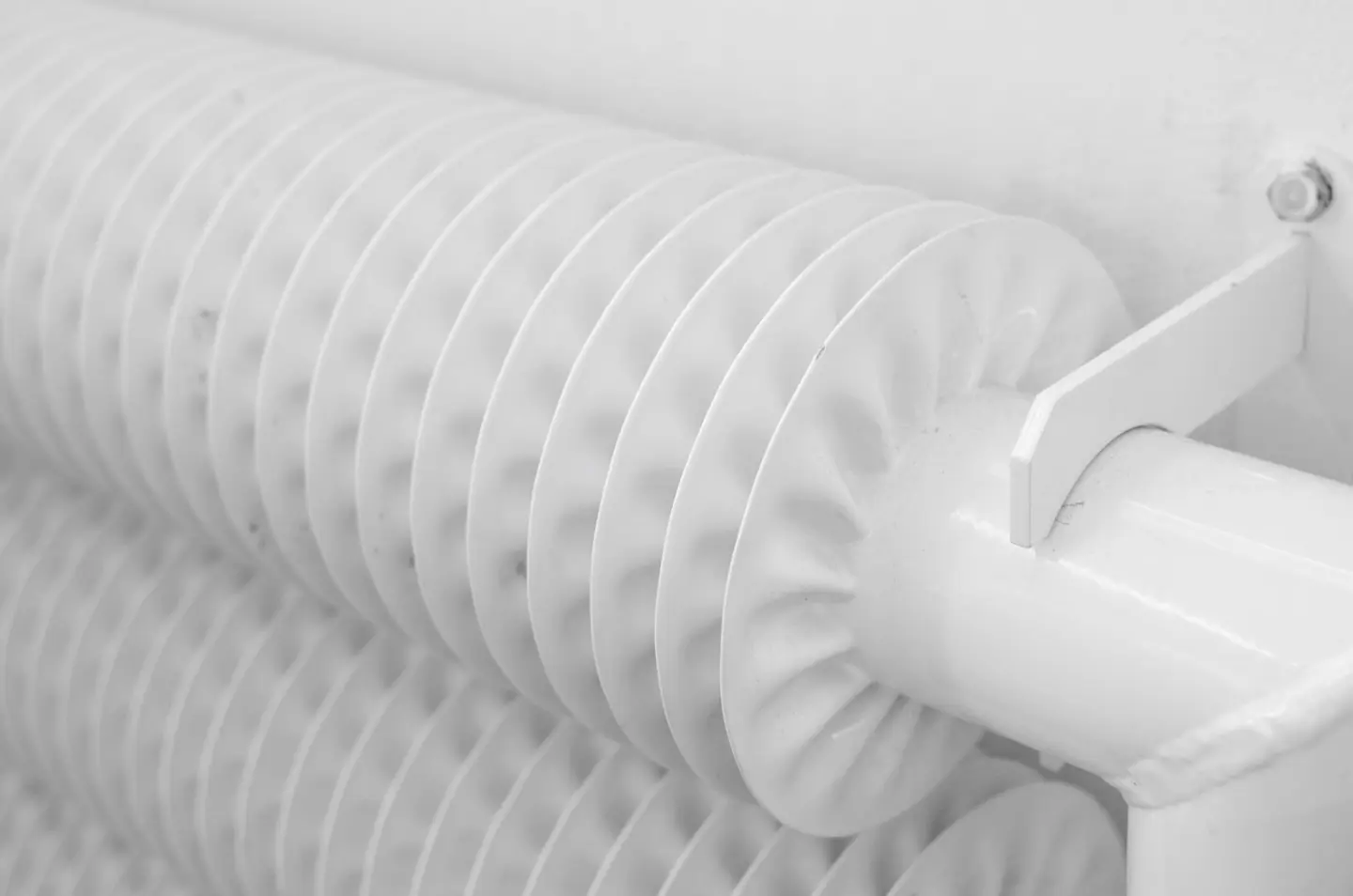
Electric heating is the default option when mains gas is not available, off-grid rural properties, flats in all-electric tower blocks, new builds designed around heat pumps, and extensions or conversions where extending a gas circuit is impractical. It is also growing in popularity as a supplementary heating source in well-insulated rooms where a standalone electric radiator is more cost-effective than extending pipework.
The critical caveat is running cost. Under the Ofgem price cap, electricity costs 26.11p/kWh on a standard variable tariff to 30 September 2026 and 26.32p/kWh from 1 October, compared with 7.33p/kWh for mains gas to 30 September and 7.97p/kWh from 1 October, plus a gas standing charge of 29.04p a day rising to 29.68p.1 All things being equal, electric resistance heating is three to four times more expensive to run than a gas system.1 This is partly offset by the ease of zonal control (only heat rooms in use), minimal installation cost compared to wet systems, and the absence of boiler servicing costs.
Types of Electric Heating
Panel Heaters (Electric Radiators)
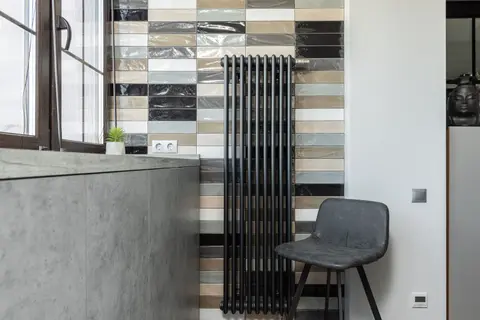
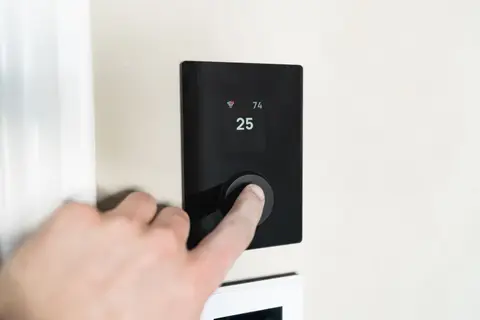
The modern successors to old storage heaters and fixed panel heaters. Contemporary electric radiators use a combination of convected heat and radiated warmth from a fluid-filled or dry-element core. Better models incorporate precise digital thermostats, 7-day programming, open-window detection (which cuts heating when a sudden temperature drop is detected), and WiFi or app control.
Key spec to check: the thermostat resolution. A heater that can maintain ±0.5°C is far more efficient than one that cycles on and off in 2°C steps.
Storage Heaters (Economy 7 / Economy 10)
Storage heaters charge overnight on a cheaper off-peak electricity tariff (Economy 7 typically gives 7 hours of cheaper power, usually between 11 pm and 6 am). Ceramic bricks or blocks absorb heat at night and release it through the day. Older models release heat in a relatively uncontrolled way, you end up with too much warmth in the morning and too little by evening.
Modern high heat retention storage heaters (HHRSH) are significantly better, with insulated cores that hold charge longer and electronic fan-assisted output control. These qualify for ECO4 scheme funding in some circumstances for eligible households.
Viability depends entirely on whether you are on a time-of-use tariff with a meaningful overnight differential. Under a standard single-rate tariff, storage heaters offer no advantage over direct-acting heaters.
Infrared Heating Panels
Infrared heaters do not warm the air, they radiate energy at wavelengths absorbed by objects and bodies in the room. Because air temperature is less relevant, rooms feel comfortable at a lower thermostat setting (typically 16–18°C perceived comfort vs 20–21°C for convective heating). This can reduce running costs in well-insulated rooms.
Panels are slim (typically 25–30 mm depth), mount flush to walls or ceilings, and can be finished in white, glass, mirror, or even as framed artwork. They are particularly effective in open spaces (kitchens, garden rooms) where convective heat would be lost through high air change rates.
Limitations: they heat by line of sight. If furniture blocks the panel, heating is less effective. They do not work as well in poorly insulated rooms where objects quickly lose the absorbed heat.
Air-Source Heat Pumps (ASHP)
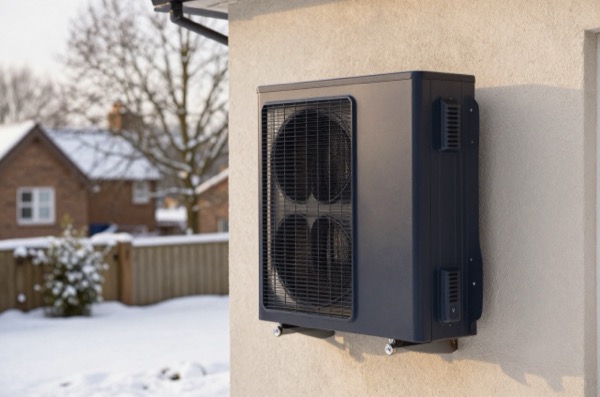
An ASHP is not an electric heater in the direct sense, it moves heat from outside air to water in a wet radiator or underfloor system, using electricity only to power the pump and compressor. The key metric is the Coefficient of Performance (COP): a heat pump delivering a COP of 3 is producing 3 kW of heat for every 1 kW of electricity consumed.
At a COP of 3 and 26p/kWh electricity, effective heat cost is about 8.7p/kWh, close to the mains gas unit rate. ASHPs are eligible for the Boiler Upgrade Scheme (BUS) grant of £7,500 in England and Wales (2026 rate), reducing upfront cost significantly.2
They require a wet heating system (radiators or UFH), outdoor space for the unit, and ideally good fabric insulation to perform efficiently.
Cost Comparison Table
| Heating type | Upfront cost | Installation | Typical running cost per kWh heat | Best for |
|---|---|---|---|---|
| Electric panel heater | £80–£600/unit3 | DIY or electrician; £50–£150/unit | 26p/kWh (100% efficient) | Supplementary; spare rooms; conversions |
| HHRSH storage heater | £250–£800/unit | £100–£200/unit fitted | ~12–14p/kWh (Economy 7 off-peak) | Whole-house off-grid; overnight charge |
| Infrared panel | £150–£800/panel | DIY or electrician; £50–£150/panel | ~18–22p/kWh effective | Open-plan; garden rooms; ceilings |
| Electric underfloor (mat) | £20–£40/m² mat4 | £400–£800/room (tiling incl.) | 26p/kWh | Bathrooms; tile floors; supplementary |
| Air-source heat pump | £8,000–£14,000 system5 | Included in system cost | ~7–10p/kWh (COP 2.5–3.5) | Whole-house replacement; new builds |
Running Cost Worked Example
A 5-bedroom detached house in the South East heating with electric radiators, worked through at the cap rate above:1
| Room | Radiator output | Hours/day (average Oct–Apr) | Daily cost at 26p/kWh |
|---|---|---|---|
| Living room | 2.5 kW | 6 h | £3.92 |
| Kitchen | 1.5 kW | 4 h | £1.57 |
| 3 bedrooms (each 1.0 kW) | 3.0 kW | 6 h | £4.70 |
| 2 smaller bedrooms/bathrooms | 1.0 kW | 3 h | £0.78 |
| Total | 8.0 kW avg | ~£10.97/day |
Over a 7-month heating season, this works out to approximately £2,300–£2,500/year, compared to perhaps £1,000–£1,400 for an equivalent gas system. The gap closes with zonal control (only heating rooms in use), good insulation, and smart thermostat management.2
Grants and Support in 2026
- ECO4 scheme: government-funded insulation and heating upgrades for households on qualifying benefits, running to 31 December 2026.66 Storage heaters may qualify where properties are off-gas-grid. Apply via energy suppliers.
- Boiler Upgrade Scheme (BUS): £7,500 grant toward ASHP installation (England and Wales). Not available for direct electric heaters.
- Great British Insulation Scheme (GBIS): funded loft and cavity insulation for owner-occupiers and tenants in lower-EPC homes until it closed on 31 March 2026.7 Reducing heat loss makes electric heating significantly more cost-effective.
- Smart Export Guarantee (SEG): if combining electric heating with solar PV and battery storage, the SEG allows export of surplus generation to the grid at rates set by energy suppliers.8
Building Regulations
Direct electric heaters (plug-in or hardwired) do not require planning consent. Hardwired heaters must be installed or notified under Part P of Building Regulations.9 A heat pump installation requires a Part L compliance check; the F-Gas Regulations apply to fluorinated refrigerants, so they do not catch the non-fluorinated ones used in some modern units such as CO2 (R744) or propane (R290), but any system with a fluorinated charge needs an F-Gas certificated engineer for the refrigerant circuit. F-Gas certification is the relevant one here, not Gas Safe, which covers gas burning appliances.
Any work to the consumer unit or new circuits must be certified by a competent person or notified to Building Control.
References (9)
Figures in this note were checked against the sources below on 13 September 2026. Superscript numbers in the text point to them. Every source the site cites, by topic.
- 1technicalvery strongOfgem.RN-YYE8U2The live source for any running-cost sum in a heating note. For 1 October to 31 December 2026 the direct debit cap is 26.32p per kWh for electricity with a 54.83p daily standing charge, and 7.97p per kWh for gas with a 29.68p daily standing charge, giving a typical annual dual fuel bill of £1,723, a 4% rise on the previous period. Ofgem states these are the average unit rate and standing charge for direct debit customers in England, Scotland and Wales; gas prices include 5% VAT while electricity carried no VAT in this period. The cap is reset every three months, so any note quoting a pence-per-kWh figure should be dated against this page.
- 2technicalvery strongGOV.UK.RN-9EFNVZThe grant values: £7,500 towards an air source heat pump, £7,500 towards a ground source heat pump including water source heat pumps and those on shared ground loops, and £5,000 towards a biomass boiler. A further £1,500 is available until March 2027 where the property is heated by oil or LPG and has no mains gas connection. Only one grant is available per property. Capacity limits are 45kWth for an individual system, 70kWth for multiple heat pumps and 300kWth for shared ground loops. Hybrid systems pairing a gas boiler with a heat pump are not eligible, and an existing low carbon heating system cannot be replaced under the scheme.
- 3costsupplier figureToolstation.RN-XVWQ9EA price, true at 2026-09. the retail price Toolstation publishes for the Smart Panel Heater White 2000W, which is the supply figure the cost book records for this item
- 4costsupplier figureToolstation.RN-6XPZNWA price, true at 2026-09. the retail price Toolstation publishes for the Klima electric underfloor heating mat, which is the supply figure the cost book records for this item
- 5costvery strongDepartment for Energy Security and Net Zero.RN-AC5XPIA price, true at 2025. The summary business case for the Boiler Upgrade Scheme 2026 to 2030. Sets out the grant amounts, the budget, expected installation volumes and the department's reasoning for continuing the scheme. This is where the scheme's own numbers come from, as opposed to the application page, which tells a householder what to do but not what it is expected to cost the state or how long the money lasts.
- 6technicalvery strongOfgem.RN-FPPUSLECO4 is the fourth phase of the Energy Company Obligation across Great Britain. It applies to measures installed from 1 April 2022 and runs until 31 December 2026 following a nine-month extension; ECO3 closed on 31 March 2022 and ECO4 came into force in July 2022. The scheme places a Home Heating Cost Reduction Obligation on medium and large energy suppliers to promote measures that improve the ability of low-income, fuel-poor and vulnerable households to heat their homes, funding insulation and heating upgrades for both homeowners and tenants. Ofgem also lists the Great British Insulation Scheme as a separate obligation on this page.
- 7technicalvery strongOfgem.RN-RDOIJRThe scheme, formerly known as ECO+, ran from April 2023 to 31 March 2026 and is now closed. It obliged medium and large energy suppliers to deliver measures reducing energy use in the least energy-efficient homes in Great Britain. Eligibility was homes with an EPC rating of D to G in Council Tax bands A to D in England, or A to E in Scotland and Wales, plus low-income and vulnerable households. Unlike ECO4, which funds whole-house packages, GBIS mostly delivered a single insulation measure per home. This is the page to cite when a note has to say a grant route has closed rather than leave a reader chasing it.
- 8technicalvery strongOfgem.RN-WLAM99The scheme that pays a household for exported solar electricity, and the successor to the Feed-in Tariff. It launched on 1 January 2020 and obliges certain licensed electricity suppliers, the SEG Licensees, to pay small-scale generators for low-carbon electricity exported to the National Grid. Eligible technologies are solar PV, wind, hydro, anaerobic digestion and micro-CHP, at installed capacities up to 5 MW, or up to 50 kW for micro-CHP. Crucially for a payback calculation, Ofgem does not set the rate: SEG Licensees determine the tariff rate, contract length and other terms, the only floor being that a SEG rate must always be above zero. Payments are calculated from export meter readings, so an export meter is a practical precondition. Ofgem publishes the list of current SEG Licensees annually, and advises generators to shop around between them.
- 9technicalvery strongMinistry of Housing, Communities and Local Government.RN-JYJ3I5The document that decides what electrical work a homeowner may legally do themselves, and the exact list of notifiable jobs. Regulation 12(6A), reproduced at paragraph 2.5, makes only three things notifiable: the installation of a new circuit, the replacement of a consumer unit, and any addition or alteration to existing circuits in a special location. Regulation 12(9) defines special location as, in a room containing a bath or shower, the zone extending vertically from finished floor level to 2.25 metres (or the shower head position if higher) and horizontally 600mm from the edge of the bath tub or shower tray. Paragraph 2.7 states that all other electrical installation work is not notifiable, namely additions and alterations to existing installations outside special locations, and replacements, repairs and maintenance anywhere. Paragraph 2.8 gives worked examples: a built-in cooker is not notifiable unless a new cooker circuit is needed, and connecting an electric gate or garage door to an existing isolator is not notifiable but running a new circuit from the consumer unit to that isolator is. Paragraph 2.2 confirms Part P reaches outdoor work including fixed garden lighting, pond pumps and outbuildings such as sheds, detached garages and domestic greenhouses. Notifiable work must be certified by self-certification by a registered competent person, third-party certification, or a building control body (paragraph 3.1), with the compliance certificate issued within 30 days (paragraph 3.4). Note that Approved Document P is a source of guidance rather than a ban: non-notifiable work still has to comply with BS 7671.
-
Energy price cap unit rates and standing charges, Ofgem, accessed 10 September 2026. ofgem.gov.uk
-
Boiler Upgrade Scheme: What you can get, GOV.UK, accessed 13 September 2026. gov.uk
-
Smart Panel Heater White 2000W, Toolstation, accessed 16 September 2026. Priced at 2026-09, so no calibration is needed. toolstation.com
-
Klima Underfloor Heating Mat 10m2 (0.5m x 20.0m), Toolstation, accessed 16 September 2026. Priced at 2026-09, so no calibration is needed. toolstation.com
-
Boiler Upgrade Scheme 2026-2030: Summary Business Case, Department for Energy Security and Net Zero, accessed 15 September 2026. Priced at 2025/26, so no calibration is needed. assets.publishing.service.gov.uk
-
Energy Company Obligation (ECO), Ofgem, accessed 13 September 2026. ofgem.gov.uk
-
Great British Insulation Scheme, Ofgem, accessed 7 September 2026. ofgem.gov.uk
-
Smart Export Guarantee (SEG), Ofgem, accessed 14 September 2026. ofgem.gov.uk
-
Approved Document P, Electrical safety: Dwellings, 2013 edition, Ministry of Housing, Communities and Local Government, accessed 14 September 2026. assets.publishing.service.gov.uk