Ventilation is one of the most commonly underspecified elements of a renovation or new build. In an older, draughty house, natural air leakage provides enough fresh air through gaps in the fabric, but improving insulation and airtightness without addressing ventilation creates a serious risk of condensation, mould, and poor indoor air quality. The right ventilation strategy depends on how airtight your building is and how much you are willing to spend.
MVHR (mechanical ventilation with heat recovery) is the gold standard for airtight buildings: it supplies fresh air to habitable rooms and extracts stale, humid air from wet rooms, recovering up to 95% of the heat in the extracted air and transferring it to the incoming supply. For a three-bedroom house, an MVHR system costs about £2,400–£4,200 supply and fit in a new build, or £3,300–£6,900 as a retrofit. For retrofits with less stringent airtightness, simpler ventilation strategies may be more appropriate.
Ventilation Strategies Compared
Natural ventilation
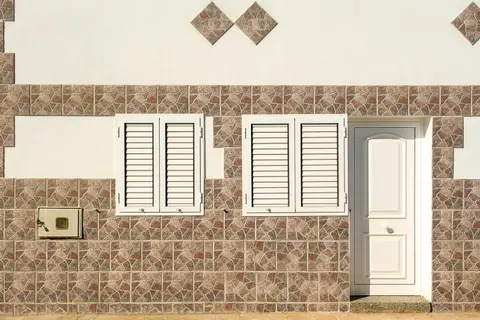
Relies on background ventilators (trickle vents in windows, wall vents) and intermittent extract fans in kitchens and bathrooms. No mechanical supply; relies on wind and stack effect. Suitable only for buildings with significant air permeability. Approved Document F gives guidance for natural ventilation only in less airtight dwellings: those with a design air permeability above 5 m³/(h·m²) at 50 Pa, or a tested result above 3 m³/(h·m²).1
dMEV: decentralised mechanical extract ventilation
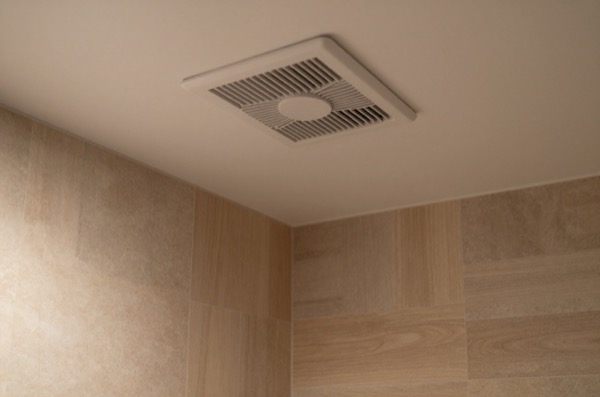
Individual continuously-running, low-speed extract fans in each wet room. No heat recovery. Cheaper to install than MVHR but recovers no heat. Typical installation cost: £600–£1,500 for a full house. Running costs: £30–£60/year. Suitable for moderately airtight properties where MVHR ducting is impractical.
cMEV: centralised mechanical extract ventilation
A single central fan unit serving all wet rooms via a duct network. No heat recovery. Simpler than MVHR; slightly more efficient than dMEV. Cost: £1,000–£2,500 installed. Suitable for moderately airtight refurbishments.
MVHR: mechanical ventilation with heat recovery
A balanced ventilation system: the unit simultaneously supplies filtered fresh air to living rooms and bedrooms and extracts stale air from kitchens and bathrooms. A heat exchanger transfers warmth from the exhaust air to the incoming supply air. A high-quality unit achieves 85–95% heat recovery efficiency (Passive House Institute certification requires more than 75%).
MVHR is appropriate when:
- Air permeability is below about 5 m³/(h·m²) at 50 Pa at design stage, or below 3 when tested by a blower door test
- The building is a new build or deep retrofit aiming for high energy performance
- The homeowner wants controlled, filtered ventilation regardless of outdoor conditions (pollen filtration, noise reduction)
Comparison table
| Strategy | Heat recovery | Best suited to | Installed cost (3-bed) | Running cost/year |
|---|---|---|---|---|
| Natural ventilation | None | Older leaky properties | £200–£600 (trickle vents) | Negligible |
| dMEV (fans per room) | None | Moderately airtight refurbs | £600–£1,500 | £30–£60 |
| cMEV (central fan) | None | Moderately airtight; simple layout | £1,000–£2,500 | £40–£80 |
| MVHR | 70–95% | Airtight new builds; deep retrofits | £2,400–£6,900 | £35–£80 |
| MVHR + summer bypass | 70–95% + free cooling | Airtight, any climate | Similar to MVHR (bypass often built in) | £35–£80 |
At the price cap unit rate of 26.32p per kWh from 1 October 2026, an MVHR unit drawing an average of 15–35 W around the clock uses about 130–310 kWh a year, roughly £35–£80.2
How MVHR Works
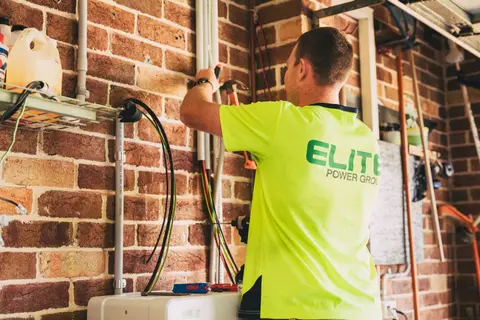
The MVHR unit is typically installed in a loft, utility room, or plant room. Two duct networks run throughout the house:
- Supply ducts from the unit to living rooms, bedrooms, and hallways, delivering fresh, filtered, pre-warmed air
- Extract ducts from kitchens, bathrooms, toilets, and utility rooms back to the unit, removing moisture, odours, and CO₂
Inside the unit, extract air and supply air pass through a heat exchanger (counter-flow, cross-flow, or rotary type) without mixing. Heat from the warm extract air warms the incoming cold outdoor air. In summer, a bypass mode allows cool outdoor air to enter without passing through the heat exchanger, providing passive cooling.
Key unit components:
- Heat exchanger, counterflow plate type achieves the highest efficiency (85–95%); rotary units transfer some moisture as well as heat (enthalpy recovery)
- Supply and extract fans, dual fans for balanced pressure; EC (electronically commutated) motors are most efficient
- Filters, G4 filters on supply and extract are standard; F7 (ePM2.5) on the supply side filter pollen and fine particles for allergy sufferers
- Condensate drain, moisture condensing from extracted air must drain; must be connected to a drain or soak-away
Building Regulations: Part F
Ventilation is governed by Approved Document F (ADF) of the Building Regulations in England. The current 2021 edition of ADF took effect on 15 June 2022 and tightened the guidance:1
- New dwellings must have a whole-building ventilation strategy designed to provide adequate air quality. MVHR, cMEV, dMEV, or natural ventilation with background ventilators are all acceptable routes depending on the calculated air permeability1
- For an MVHR system, the whole-dwelling ventilation rate must meet both a minimum set by the number of bedrooms (31 litres/second for a three-bedroom home) and a minimum of 0.3 litres/second per m² of total internal floor area1
- Commissioning and testing is required: air flow rates must be measured at each terminal and recorded on a commissioning sheet, and a commissioning notice given to building control1
- Work on existing homes: when energy efficiency measures are carried out, ADF asks for an assessment of what, if any, additional ventilation is needed, because reducing air leakage can leave a home under-ventilated1
A new 2026 edition of ADF takes effect in England on 24 March 2027 for most building work.3
For properties aiming for Passivhaus certification, the Passive House Institute certifies MVHR units only if their effective heat recovery efficiency is above 75% and their electrical consumption does not exceed 0.45 Wh/m³ of air moved.4
Installation: What to Expect
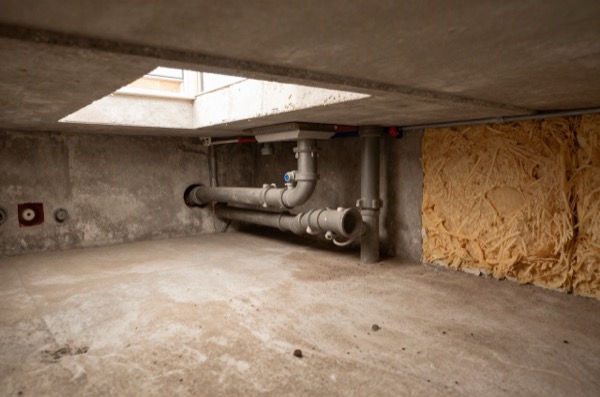
MVHR installation in a new build during construction is straightforward, rigid circular duct (typically 125 mm or 160 mm) is run within the structure before plasterboard. Retrofit MVHR in an existing occupied house is significantly more complex and expensive:
- Rigid ducts may need to be surface-mounted in service voids, ceiling slots, or concealed in joinery
- Alternatively, semi-rigid and flexible duct is used for retrofits, with reduced efficiency and higher noise risk
- Expect 3–5 days of installation work for a competent team in a typical three-bedroom house retrofit
- Airtightness testing (blower door test, from about £200 a test) should be carried out before and after to verify performance
Design is critical. Poor duct layout, inadequate duct sizing, or improper balancing causes noise, draughts, or poor air quality. An MVHR system should be designed by someone familiar with ADF and CIBSE guidance, not just adapted from a generic template.
Cost Breakdown
| Item | Typical cost |
|---|---|
| MVHR unit (mid-range, 250–550 m³/h capacity) | £1,000–£1,5005 |
| Ductwork materials (new build) | £400–£800 |
| Ductwork materials (retrofit) | £600–£1,500 |
| Installation labour (new build) | £800–£1,500 |
| Installation labour (retrofit) | £1,500–£3,500 |
| Commissioning and air flow balancing | £200–£400 |
| Total (new build, 3-bed) | £2,400–£4,200 |
| Total (retrofit, 3-bed) | £3,300–£6,900 |
Maintenance
MVHR is low-maintenance but not no-maintenance:
- Filter replacement every 3–12 months depending on outdoor air quality and system usage. G4 filters: £10–£25 per set; F7 filters: £25–£50. Neglecting filters sharply reduces efficiency and air quality
- Heat exchanger cleaning: check annually; clean every 2–3 years. Most units allow the exchanger to be removed and rinsed
- Duct inspection: inspect every 5–10 years for dust accumulation in supply ducts (extract ducts in kitchens are more prone to grease build-up)
- Annual check: listen for increased fan noise (bearing wear) and verify flow rates at terminals are still balanced
A properly maintained MVHR system has a design life of 15–25 years. Units from established manufacturers carry 2–5 year warranties extendable to 10 years in some cases.
Is MVHR Worth It?
For an airtight new build or deep retrofit, MVHR is essential, without it, the building will suffer condensation and poor air quality regardless of how good the insulation is. The question of “worth it” in those cases is not really optional.
For a standard cavity-wall semi with only moderate insulation improvements, dMEV or cMEV at a fraction of the cost may be more appropriate. The rule of thumb: if the design air permeability is above 5 m³/(h·m²) at 50 Pa (or a blower door test measures above 3), natural ventilation with extract fans remains an option under ADF; tighter than that, you need continuous mechanical extract or MVHR, and MVHR becomes the better choice the tighter the building gets. At Passivhaus levels of airtightness (around 0.6 air changes per hour at 50 Pa for a new build), MVHR is effectively mandatory.
References (5)
Figures in this note were checked against the sources below on 30 September 2026. Superscript numbers in the text point to them. Every source the site cites, by topic.
- 1technicalvery strongMinistry of Housing, Communities and Local Government.RN-QD1SFFTable 1.1 sets minimum intermittent extract rates: kitchen with a cooker hood extracting outside 30 l/s, kitchen without one 60 l/s, utility room 30 l/s, bathroom 15 l/s, sanitary accommodation 6 l/s. Extract terminals and fans other than cooker hoods should be as high as practicable and no more than 400mm below the ceiling; a cooker hood should sit between 650mm and 750mm above the hob if the manufacturer gives no figure. Table 1.7 requires background ventilators of at least 8000mm2 equivalent area in habitable rooms and kitchens for a dwelling, 10,000mm2 for a single-storey dwelling. Background ventilators should be at least 1700mm above floor level and at least 500mm from a fan in the same room. On replacement windows, paragraph 3.14 says new windows must carry background ventilators no smaller than the originals, and paragraph 3.15 gives the fallback minimums where the old size is unknown: 8000mm2 habitable rooms, 8000mm2 kitchen, 4000mm2 bathroom. Paragraph 3.32 confirms that replacing an extractor fan or cooker hood on existing cabling is not notifiable.
- 2costvery strongOfgem.RN-YYE8U2A price, true at 2026-09. The live source for any running-cost sum in a heating note. For 1 October to 31 December 2026 the direct debit cap is 26.32p per kWh for electricity with a 54.83p daily standing charge, and 7.97p per kWh for gas with a 29.68p daily standing charge, giving a typical annual dual fuel bill of £1,723, a 4% rise on the previous period. Ofgem states these are the average unit rate and standing charge for direct debit customers in England, Scotland and Wales; gas prices include 5% VAT while electricity carried no VAT in this period. The cap is reset every three months, so any note quoting a pence-per-kWh figure should be dated against this page.
- 3technicalvery strongMinistry of Housing, Communities and Local Government, guidance.RN-NHEW0DThe 2026 edition of ADF Volume 1 states it takes effect on 24 March 2027 in England for work not connected with higher-risk buildings, and 24 September 2027 otherwise.
- 4technicalfairPassive House Institute, guidance.RN-NGJUNZThe Passive House Institute's certification criteria for small MVHR units: effective dry heat recovery efficiency above 75% and electrical consumption not above 0.45 Wh/m³ of air moved.
- 5costsupplier figureThe Air Shop.RN-R7AJG6A price, true at 2026-09. The Air Shop's published price for the item the cost register files as "whole house MVHR unit, supply only", which is the figure a cost footnote on this page points at.
-
Approved Document F, Ventilation, Volume 1: Dwellings, 2021 edition, Ministry of Housing, Communities and Local Government, accessed 14 September 2026. assets.publishing.service.gov.uk
-
Energy price cap unit rates and standing charges, Ofgem, accessed 30 September 2026. Priced at 2026-09 and left there. ofgem.gov.uk
-
Approved Document F, Means of ventilation, Volume 1: Dwellings, 2026 edition, Ministry of Housing, Communities and Local Government, accessed 30 September 2026. assets.publishing.service.gov.uk
-
Ventilation systems with heat recovery (capacity < 600 m³/h): certification criteria, Passive House Institute, accessed 30 September 2026. passivehouse.com
-
Vent Axia MVHR Sentinel Kinetic Heat Recovery Units, The Air Shop, accessed 1 October 2026. Priced at 2026-09, so no calibration is needed. theairshop.co.uk