A leaking roof creates urgent pressure to get someone on the roof quickly, and that urgency is often exploited. Understanding what common roof faults actually cost to fix helps you assess whether a quote is fair and decide when a repair is worth doing versus when replacing the whole covering makes more sense. All costs below are 2026 UK figures including VAT, using a LOLER-compliant scaffold or access tower where required.
Common Faults and What Causes Them
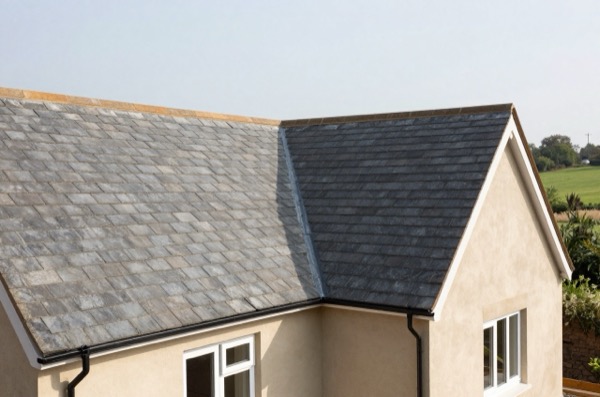
Slipped, Cracked or Missing Tiles and Slates
The most frequent roof call-out. Clay and concrete tiles crack from frost action or impact; natural slates slip when the fixing nail corrodes. On a well-maintained roof, individual tiles fail sporadically over time. If you are replacing more than 20% of the tiles on one slope in a single session, the underlying battens and/or the fixing nails across the roof are likely at end of life, at which point re-covering the whole slope is more cost-effective than patching.
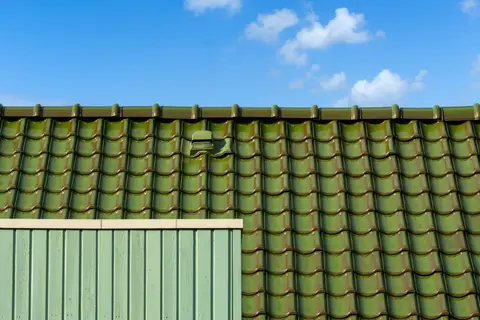
Ridge and Hip Mortar Failure
Ridge tiles are bedded and pointed in mortar. UK freeze-thaw cycles work this mortar loose over 15–25 years; you will see cracked pointing, hollow-sounding tiles when tapped, and in advanced cases entire ridge tiles sitting loose or absent. Hip tiles have the same vulnerability. Failed ridge pointing is a common water-entry route.
Flashing Failures
Lead or aluminium flashings seal the junction between the roof covering and vertical masonry, around chimneys, dormer walls, abutments and party walls. Lead flashings have a long life (50+ years) but can crack at fold lines, pull away from the mortar joint, or be poorly detailed in the first place. Aluminium and mineral felt flashings have shorter lives (15–20 years) and are a common weak point on extensions. Failed chimney flashings account for a significant proportion of bedroom ceiling leaks.
Valley Failures
Valleys, the internal angle where two roof slopes meet, concentrate water flow and are therefore high-risk zones. Older properties often have lead or mineral felt valleys; more recently, moulded GRP or purpose-made valley troughs are standard. Felt valleys can split, and lead valleys can crack at bends or be damaged by foot traffic. Valley repairs typically require temporary scaffolding or a roof ladder.
Flat Roof Membrane Failure
Covered in detail in our flat roof types article; briefly, splits, ponding damage and failed upstand seals are the typical fault modes on domestic flat roofs.
Gutter and Fascia Board Rot
Overflowing or leaking gutters saturate fascia boards, allowing rot to spread behind the soffit and into rafter feet. This is not a roof covering fault but presents as damp patches at ceiling level near eaves and is often misdiagnosed. Replacing fascias and soffits is sometimes the actual repair needed before retiling the eaves.
Repair Costs by Job Type
| Job | Typical Cost | High-End / Complexity Premium |
|---|---|---|
| Replace 1–5 slates or tiles (access tower) | £150–£350 | £400–£600 with new scaffold |
| Replace 6–20 slates or tiles | £300–£700 | £800–£1,200 |
| Repoint ridge or hip tiles (per linear metre) | £30–£55/m | n/a |
| Full ridge repoint, 3-bed semi (~12 m) | £400–£750 | £900 if dry-ridge system fitted |
| Chimney flashing replace (lead, 4 sides) | £600–£1,200 | £1,500 on tall chimney stack |
| Abutment flashing replacement (per 3 m) | £300–£550 | £700 with scaffold |
| Lead valley re-lay (per 3 m section) | £450–£850 | £1,100 steep pitch |
| GRP valley replacement (per 3 m) | £300–£600 | n/a |
| Moss treatment and clearing (per slope) | £200–£450 | n/a |
| Flat roof patch repair (per m²) | £60–£120/m² | £150/m² GRP re-lay |
| Emergency call-out tarp/board-up | £200–£500 | n/a |
Why Scaffold Costs Matter
Many domestic roof repairs can be reached with a roof ladder and harness (a PASMA access tower at ground level), but anything more than a one-tile swap on a steep or high roof requires a full scaffold for legal working-at-height compliance. Scaffold erection and hire for a typical semi costs £600–£1,500 for a 1–2 week hire period. This cost is shared across all the work done while it is up, so it makes sense to combine repairs where possible rather than having the scaffold up twice.
Repair vs Replace: The Decision Framework
The condition of the underlying roof structure, the age of the current covering and the proportion of tiles already replaced are the key factors.
| Scenario | Recommendation |
|---|---|
| Isolated damage on roof under 25 years old, structure sound | Repair |
| 15–25% of tiles replaced in last 5 years | Assess battens and nails, consider re-covering one slope |
| Roof over 40 years old, recurrent leaks, widespread nail failure | Replace |
| Flat roof over 20 years old with repeated patch history | Replace membrane |
| Chimney in poor structural condition | Repair flashing only if chimney is being retained; consider removal |
| Flat roof on extension with poor drainage falls | Replace membrane and address falls together |
Cost of a Full Roof Replacement
For context, a full strip and re-cover (removing old tiles, replacing battens and felt underlay, fitting new concrete or clay tiles) runs approximately:
- 3-bed semi (55–70 m² of roof slope): £8,000–£14,000
- 4-bed detached (90–120 m² of roof slope): £14,000–£22,000
- Bungalow with large roof area: £12,000–£20,000
These figures assume standard concrete interlocking tiles. Natural Welsh slate adds 50–80% to material costs. The roof structure (rafters, wall plates, purlins) is not included, structural repairs add £1,500–£6,000 depending on extent.
Identifying Problems Early
Annual inspections from a roof ladder or binoculars from the ground can catch problems before they become leaks:
- Slipped slates: visible step or gap in the tile line on the slope.
- Cracked ridge mortar: white or grey crumbling lines along the ridge; vegetation growth in the pointing is a reliable indicator.
- Moss accumulation: thick moss holds moisture, accelerates frost damage and can lift tiles. Biocide treatment (£200–£450) followed by clearance is worthwhile preventive maintenance every 5–8 years.
- Lead flashing condition: look for white calcium streaks below a chimney stack (calcium leaching from the mortar joint where the flashing has detached).
- Sagging roof line: deflection in the ridge or rafter line visible from the street suggests a structural issue requiring urgent investigation, this is beyond routine repair and may need a structural engineer.
Getting Quotes
For anything beyond a single tile, get at least two quotes in writing. The quote should specify:
- The precise scope of work (number of tiles, length of ridge, type of lead used).
- Whether scaffold or access tower is included, and for how long.
- The waste disposal method (tiles are heavy and landfill charges have risen sharply in 2025–2026).
- Whether a guarantee is offered, most roofers offer 1–5 years on labour; material guarantees vary.
Be wary of door-to-door roofers claiming they spotted your roof problems from the street, while the observation may sometimes be legitimate, this is a well-known sales tactic. Always get an independent second opinion before agreeing to extensive work quoted in this way.
For VAT: a routine roof repair is standard-rated at 20%, and so is work to a listed building, since the zero rate for approved alterations to a protected building was withdrawn on 1 October 2012. The reduced 5% rate can apply where the roof work forms part of renovating a dwelling that has not been lived in for the two years before the work starts, or part of a conversion that changes the number of dwellings.1
References (1)
Figures in this note were checked against the sources below on 14 September 2026. Superscript numbers in the text point to them. Every source the site cites, by topic.
- 1technicalvery strongHM Revenue and Customs, guidance.RN-FX7S48The section that carries the 5 per cent empty home rate, which most renovation budgets miss. A contractor may charge VAT at 5 per cent instead of 20 per cent on renovating or altering an eligible dwelling that has not been lived in during the 2 years immediately before the work starts. Paragraph 8.3.2 sets out what proves the two years: Electoral Roll and Council Tax records, utilities companies, or an Empty Property Officer at the local authority, and states that a letter from an Empty Property Officer certifying two years empty is sufficient on its own with no other evidence needed. Paragraph 8.3.3 lists occupation that can be ignored: illegal occupation by squatters, occupation by guardians installed to deter squatters and vandals, and non-residential use such as business storage, but expressly not occasional use as a second home, which defeats the relief. Paragraph 8.3.4 allows the reduced rate to continue on all the work even where people move in while the work is carried out, provided the two-year test was met when work started. Goods that are not building materials, such as carpets or fitted bedroom furniture, must still be standard rated including the installation charge.
-
Buildings and construction (VAT Notice 708), section 8: reduced rating the renovation or alteration of empty residential premises, HM Revenue & Customs, accessed 7 September 2026. gov.uk