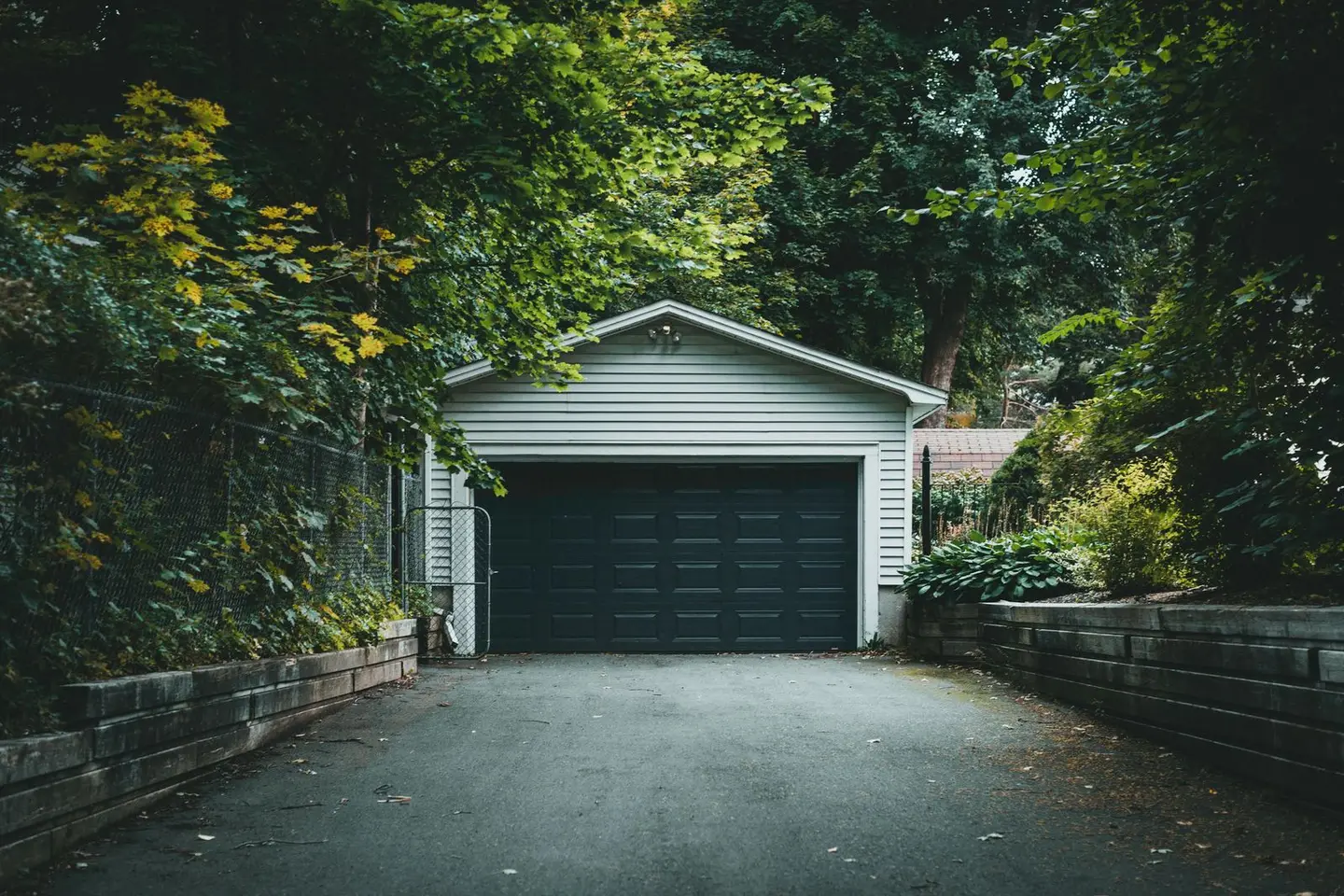
A driveway is one of the most cost-effective improvements you can make to a home, it adds usable space, reduces on-street parking stress, and can meaningfully improve kerb appeal. For a typical semi-detached with a 40–50 m² front plot, total installed costs range from around £1,500 for a simple gravel finish up to £5,500 for quality block paving or £6,000+ for resin bound surfacing. The choice of material, groundwork depth, drainage requirements and whether you need a dropped kerb all move the final bill considerably.
This guide compares every mainstream surface on installed cost per m², drainage compliance, longevity and maintenance, so you can match the right material to your budget and situation.
Materials Compared
Block Paving
Block paving (concrete or clay bricks) is still the most popular driveway finish in the UK. The interlocking pattern gives excellent load-bearing performance and individual damaged blocks can be replaced cheaply without patching the whole surface.
Concrete block paving sits at £50–£85/m² installed. Clay/brick pavers push to £80–£120/m² due to material cost. Both prices include a properly compacted MOT Type 1 sub-base (typically 150 mm), sharp sand laying course and pointing sand. The quality of the sub-base work matters far more than the blocks themselves, a 100 mm sub-base on weak ground will fail within a few years regardless of surface material.12 (2024 price, brought to 2026)
Block paving is inherently permeable between joints (jointing sand allows water infiltration), which means it satisfies SUDS requirements without further engineering, an important point addressed below.
Resin Bound
Resin bound surfacing bonds aggregate (typically granite, quartz or recycled glass) into a smooth, seamless finish using a UV-stable polyurethane or epoxy resin. It is fully permeable, water drains through the surface layer into a sub-base and thence to the ground, making it compliant with permitted development rules.3
Installed cost: £60–£100/m² for the surface layer alone, plus sub-base work at around £15–£25/m² if not already in place. The surface layer is typically 15–18 mm thick. Cheaper quotes (under £55/m²) often indicate polyester resin rather than polyurethane, polyester yellows, becomes brittle and typically fails within 5–8 years. Specify UV-stable, two-component polyurethane when comparing quotes.
Do not confuse resin bound with resin bonded: bonded aggregate is glued to the surface, not mixed through it, it is not permeable and loose stones shed over time.
Tarmac (Asphalt)
Tarmac remains the cheapest hard surface for driveways. A standard open-graded macadam is £30–£55/m² installed, with a typical 25–30 mm wearing course over 75–100 mm compacted sub-base. Decorative or coloured tarmac (often marketed as “macadam bitmac”) adds £5–£15/m².
Tarmac is impermeable and therefore triggers planning rules if the existing front garden is being hardened (see Drainage & SUDS below). It requires periodic re-sealing every 5–10 years and is susceptible to diesel fuel and solvent spills. Edge restraints, concrete haunching or proprietary kerbing, are essential to prevent the edges rolling and crumbling.
Concrete
In-situ concrete driveways are less common than tarmac but more durable: a properly laid 100 mm reinforced slab on a 150 mm granular sub-base will last 25–40 years with minimal maintenance. Installed cost runs £70–£130/m² depending on finish (plain, brushed, exposed aggregate or printed pattern). Pattern-imprinted concrete (PIC) is the premium end at £90–£150/m².
Concrete is impermeable unless you specify permeable concrete mixes or use block-jointed sections. Cracking at cold joints and crazing from freeze-thaw cycles are the main failure modes, proper curing and avoiding early trafficking are essential.
Gravel
Loose gravel is the cheapest option and the easiest to install DIY. A 40 mm layer of 20 mm angular gravel on a weed membrane over raked ground costs around £10–£25/m² installed (less if you skip professional groundwork). Pea shingle is cheaper but unsuitable for driveways, it is round, migrates easily and provides poor traction.
Gravel driveways are fully permeable and do not require planning permission or SUDS engineering. The downsides are well-known: gravel migrates, requires raking after use, and loose stones are carried into the house. Resin-bonded gravel on a membrane resolves migration but eliminates permeability.
Cost Summary Table
| Surface | Installed cost (£/m²) | Permeable? | Typical lifespan | Maintenance |
|---|---|---|---|---|
| Gravel (loose) | £10–£25 | Yes | 5–10 years | Raking, topping up |
| Tarmac / asphalt | £30–£55 | No | 15–20 years | Re-seal every 5–10 yr |
| Block paving (concrete) | £50–£854 | Partial (joints) | 20–30 years | Re-pointing every 10 yr |
| Block paving (clay) | £80–£120 | Partial (joints) | 30–50 years | Re-pointing every 10 yr |
| Resin bound | £60–£100 + sub-base5 | Yes | 15–25 years | Jet washing; repairs |
| Concrete (plain) | £70–£130 | No | 25–40 years | Crack sealing |
| Pattern-imprinted concrete | £90–£150 | No | 20–35 years | Re-sealing every 3–5 yr |
Prices are 2026 UK averages including groundwork; London and South East add 15–30%.
Drainage and SUDS Rules
The permitted development rules around driveways changed in 2008 (England) and are enforced under Schedule 2, Part 1, Class F of the Town and Country Planning (General Permitted Development) Order 2015. The rule is straightforward:
You do not need planning permission to pave your front garden if:
- The surface is permeable (water drains through or off the driveway to a lawn or border rather than directly to a public road), or
- The area being paved is under 5 m²
You do need planning permission if you are installing an impermeable surface over 5 m² that drains to a public road or pavement. This applies to tarmac, concrete and plain block paving with sealed joints. The application is made as a householder planning application, typical fee £548 in England as of 2026.67
Permitted development does not apply in designated areas (Conservation Areas, AONBs, National Parks, listed buildings) where any front hardstanding may require consent.3
In practice, most competent installers of block paving or resin bound surfaces will incorporate a permeable design to avoid the planning route. For block paving this means open sand-filled or gravel-filled joints; for other hard surfaces it means directing runoff to a planted border, soakaway or drainage channel, none of which need be expensive.
Building Regulations do not generally apply to driveways. Two different consents get confused if drainage is involved: connecting a drain to a public sewer is a right exercised by notice to the water company under section 106 of the Water Industry Act 1991, while a section 50 licence under the New Roads and Street Works Act 1991 is what you need to place or connect apparatus in the highway itself, which is the highway authority’s business rather than the water company’s.8
Dropped Kerb
If there is currently no vehicular access from the road, a dropped kerb (vehicle crossing) is required before you use the driveway. This is a highways authority matter, not planning, the council’s highways department or their approved contractor must carry out the work, and costs are non-negotiable.
Typical charges in 2026:
- London boroughs: towards £3,050 per crossing (some boroughs have fixed-fee schedules)
- Other English councils: from £1,575 per crossing, Manchester’s published minimum for a 3 metre crossing
- Traffic management / works notice: included in the above in most cases
You apply to the council’s highways department. Lead time varies from 4 weeks to 6 months depending on the authority. Some councils will not permit a dropped kerb if the frontage is on a classified road (A or B road), if visibility splays cannot be achieved, or if on-street parking is already heavily restricted.
The dropped kerb application is separate from any planning application for the surface itself. Both may be required simultaneously.
Groundwork: What Drives the Real Cost
The surface material is only part of the cost. Groundwork quality determines longevity. What’s typically included in a professional installation:
- Excavation: 150–300 mm depth depending on surface and sub-base requirement. Spoil removal adds £150–£400 per skip for a standard driveway.
- Sub-base: MOT Type 1 (crushed limestone or recycled aggregate), typically 150 mm compacted for standard vehicles; 200–250 mm where HGVs or SUVs are frequent.
- Edge restraints: Concrete haunching or block kerbing to contain the surface, essential for tarmac and block paving.
- Drainage: Channel drain or ACO drain at low points, connecting to a soakaway or existing surface water drain.
A quote that seems unusually cheap (say, block paving at £35/m²) almost certainly omits proper sub-base depth or spoil removal. Poorly compacted sub-bases are the single biggest cause of driveway failure, sunken, cracked or undulating surfaces typically within 3–5 years.
Typical Project Costs (All-In)
For a standard 40 m² driveway replacing an existing surface:
- Gravel (DIY-friendly): £600–£1,200
- Tarmac: £1,500–£2,400
- Block paving (concrete): £2,500–£4,200
- Resin bound: £3,200–£5,500
- Pattern-imprinted concrete: £4,000–£6,500
Adding a dropped kerb where none exists: add £1,575–£3,050 depending on council.
Choosing the Right Material
For most households the practical choice comes down to three factors: budget, maintenance appetite and planning compliance. Tarmac delivers the best cost-per-year ratio for those who simply want a clean, functional surface. Block paving remains the premium standard finish with a multi-decade lifespan if properly laid. Resin bound is the premium permeable option that avoids planning, looks excellent and requires minimal maintenance beyond annual jet washing.
Whichever surface you choose, the minimum standard to insist on from any contractor is: adequate excavation depth, minimum 150 mm compacted Type 1 sub-base, edge restraints and a written guarantee of at least 5 years on workmanship.
References (8)
Figures in this note were checked against the sources below on 14 September 2026. Superscript numbers in the text point to them. Every source the site cites, by topic.
- 1costvery strongValuation Office Agency, a government page.RN-RSLGJ5A price, true at 2024-04, brought forward on the Construction Output Price Index. The Valuation Office Agency's Rating Cost Guide 2026: estimated replacement costs per square metre for building types, used by the VOA for contractor's basis rating valuations. Each code gives a construction description, the unit of measurement and an ERC at a UK mean location factor of 1.00. It is official, free and unusually comprehensive, and it is a replacement cost for rating rather than a market tender price, which is why the guidance notes matter as much as the table.
- 2costsupplier figureLondon Stone (UK) Ltd.RN-89S54BA price, true at 2026-09. the retail price London Stone (UK) Ltd publishes for Clay Brick Pavers, which is the supply figure the cost book records for this item
- 3technicalvery strongThe National Archives, legislation.RN-OWGIY3Schedule 2 Part 1 of the GPDO 2015, development within the curtilage of a dwellinghouse. This is permitted development itself: Class A enlargement and alteration, with the limits and conditions, through the classes covering roof alterations, porches, outbuildings and hard surfaces. Every statement about what can be built without planning permission traces to this Part, and the exclusions at the start of each class are where most projects actually fall out.
- 4costsupplier figureB&Q (Kingfisher plc).RN-I41F99A price, true at 2026-09. the retailer's own statement that the prices it displays include VAT, which is why the figures taken from its product pages are recorded in the cost book as VAT-inclusive rather than adjusted
- 5costsupplier figureAdvanced Resin Solutions.RN-0MBQX9A price, true at 2026-09. a resin bound driveway installer publishing its own 2026 trade prices, for its own resin binder, split the way the work actually divides: £45 to £85 per m2 to lay an overlay on sound tarmac or concrete and £90 to £125 per m2 for a full system with excavation and a permeable sub-base, with the material alone at £22 to £32. It is the only source the cost book holds for that split, which every aggregated guide blurs into one range, and it is a contractor stating what it charges rather than a summary of what other people say they charge. Trade prices excluding VAT, so not what a householder pays
- 6technicalvery strongMinistry of Housing, Communities and Local Government (GOV.UK), a government page.RN-JM9I1NThe schedule of planning application fees in England from 1 April 2026. Fees rise annually with the September CPI under the 2023 amendment regulations; September 2025 CPI was 3.8%, so every fee from April 2025 rose by that and is charged from 1 April 2026. The table lists the new amount for each application type, which is the statutory figure a council must charge rather than a guide price.
- 7costvery strongPlanning Portal, guidance.RN-M2KUCTA price, true at 2026-04. The Planning Portal's consolidated guide to planning application fees in England from 1 April 2026, built from the 2012 fees regulations as amended and MHCLG's annual indexation. More usable than the regulations themselves because it puts each application type next to its current fee and its definition. The statutory amounts are in the regulations; this is the readable index to them.
- 8technicalvery strongThe National Archives (legislation.gov.uk), legislation.RN-PS0WRUThe statutory right that decides whether garden or driveway surface water can go to the sewer at all. Subsection (1) gives the owner or occupier of premises, and the owner of a private sewer, the right to have their drain or sewer communicate with the public sewer and to discharge foul water and surface water, subject to the section. Subsection (4) lets the sewerage undertaker refuse within 21 days of notice where the drain or sewer does not satisfy the standards reasonably required by the undertaker, or where the communication would be prejudicial to the undertaker's sewerage system. Subsection (2) prohibits connections that would allow discharge of liquid from a factory (other than domestic sewage or surface or storm water), any liquid whose discharge is prohibited by an enactment, foul water into a surface-water sewer or (without approval) surface water into a foul sewer, and any direct connection into a storm-water overflow sewer. The undertaker may require the lateral drain to vest under section 102. Disputes about the reasonableness of a refusal or requirement are determined by the Authority under section 30A.
-
Rating Cost Guide 2026, codes 33U1KA, 33U1KF and 33U1P5, Valuation Office Agency, accessed 15 September 2026. Priced at 2024-04; brought to 2026 on the Construction Output Price Index, housing repair and maintenance (Great Britain), published by Office for National Statistics, a factor of 1.0239. assets.publishing.service.gov.uk
-
Clay Brick Pavers, London Stone (UK) Ltd, accessed 15 September 2026. Priced at 2026-09, so no calibration is needed. londonstone.co.uk
-
The Town and Country Planning (General Permitted Development) (England) Order 2015, Schedule 2, Part 1, The National Archives, accessed 14 September 2026. legislation.gov.uk
-
Terms and conditions, B&Q (Kingfisher plc), accessed 16 September 2026. Priced at 2026-09, so no calibration is needed. diy.com
-
Resin Bound Driveway Costs 2026 (UK), Trade and Contractor Guide, Advanced Resin Solutions, accessed 17 September 2026. Priced at 2026-09, so no calibration is needed. advancedresinsolutions.co.uk
-
Fees for planning applications in England from 1 April 2026, Ministry of Housing, Communities and Local Government (GOV.UK), accessed 7 September 2026. assets.publishing.service.gov.uk
-
A guide to fees for Planning Applications in England, 1 April 2026, V2026, Planning Portal, accessed 15 September 2026. Priced at 2026-04, so no calibration is needed. ecab.planningportal.co.uk
-
Water Industry Act 1991, section 106: Right to communicate with public sewers, The National Archives, accessed 14 September 2026. legislation.gov.uk